
Keep Your Family Warm and Safe—No Matter What
Many of Garden City's early-1900s Tudor and Colonial homes already have a masonry fireplace—the question is whether it's actually doing any work. Find the right stove or insert and connect with a trusted local dealer.
Every Project Starts From One of These Five Situations
A village built on chimneys that mostly sit idle.
Garden City's winters are mild by national standards—average lows hover around 27°F and the village logs about 4,561 heating degree days a year, a fraction of what a place like Burlington, VT sees. But the housing stock tells a different story. Much of Garden City was built between 1900 and the 1930s, and a large share of those homes came with a working masonry fireplace as a centerpiece feature. Today, most of those fireplaces are decorative—open, drafty, and losing more heat up the flue than they ever produce.
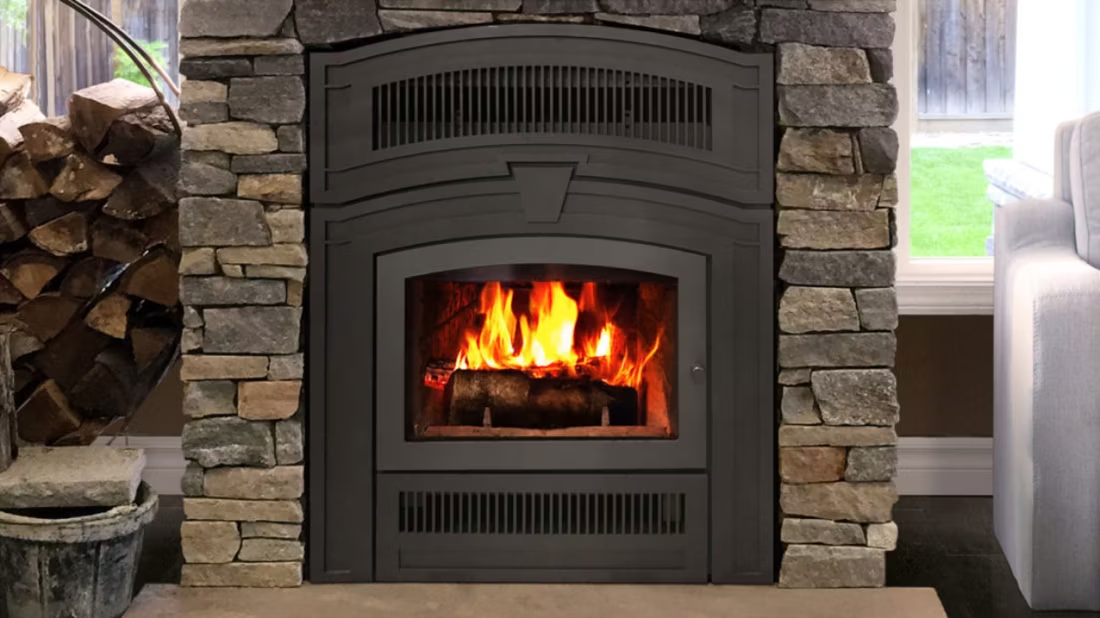
A wood insert changes that math. It slides into the existing masonry opening, uses the chimney you already have, and turns a heat-losing feature into a genuine supplemental heat source for the family room or den. There's no national forest nearby for a cutting permit—Nassau County firewood comes from local tree services and delivery suppliers, with oak, maple, birch, and ash the standard cordwood species on Long Island. With LIPA's residential electric rate running near 24.6 cents per kWh, a properly sized wood insert or stove can meaningfully offset winter electric heat costs on the coldest nights, even in a mild-winter market like this one.
Three steps. No salesperson until you're ready.
Tell us about your project
Your zip code, your situation, and the fuel you're leaning toward—or let the answers point you to one.
See what's actually available
The brands dealers within 100 miles genuinely carry—real options, never a catalog mirage.
Get your dealer & Project Guide
A trusted local dealer, plus the free Project Guide & Parts List that names every component of the job.
Frequently Asked Questions
How much does a wood stove or insert installation cost in Garden City?
On Long Island, a wood insert installed into an existing masonry fireplace typically runs somewhere in the $5,000 to $9,000 range once you factor in a stainless steel chimney liner, a new hearth extension if code requires it, and labor rates that run higher here than in most parts of the country. A freestanding wood stove in a home without an existing chimney costs more—often $9,000 to $14,000—because it requires new Class A pipe run through a roof or wall. Village of Garden City permit fees and Nassau County inspection requirements are typically handled by the installer as part of the project.
Do I need a permit to install a wood stove in Garden City?
Yes. New wood-burning installations require a permit through the Village of Garden City Building Department, and the appliance itself must meet current EPA 2020 NSPS emissions standards. Garden City has no air quality non-attainment designation and no winter burn curtailment periods like the wildfire-prone West Coast, so once your unit is installed and inspected, you can burn without seasonal restrictions. Most local hearth retailers file the permit paperwork as part of the installation.
My house already has a fireplace—do I need a stove, or just an insert?
If you're one of the many Garden City homeowners with an original masonry fireplace from the early 20th century, an insert is almost always the right move. It fits directly into your existing firebox, reuses your existing chimney with a new stainless liner, and converts what's currently an inefficient, heat-losing feature into a real secondary heat source. A freestanding stove only makes sense if you don't have an existing masonry chimney, are finishing a basement, or want wood heat in a room—like an addition or converted garage—that never had a fireplace to begin with.
Where does firewood in Garden City actually come from?
Unlike rural parts of the country with national forest cutting permits, there's no public land to self-cut wood on Long Island. Firewood here comes from local tree services, landscapers, and dedicated firewood delivery businesses that serve Nassau County, typically selling seasoned oak, maple, birch, and ash by the cord or half-cord. Expect to pay a premium compared to rural markets—Long Island firewood delivery commonly runs $350 to $500 per cord for properly seasoned hardwood, more if you want it stacked. Buying wood a full season ahead and letting it dry under cover will save you money and burn far cleaner than green wood.
What's the best wood stove or insert for a Garden City home?
Because winters here are moderate—HDD around 4,561 and lows rarely dipping much below 20°F—you don't need an extreme-cold, 20-hour-burn catalytic stove built for interior Montana. A mid-size non-catalytic insert from a brand like Pacific Energy, Lopi, or Regency, sized for supplemental heat in a family room or den, is typically the right fit. Homeowners looking to actually offset a meaningful share of their LIPA electric bill on the coldest nights should ask a local retailer about higher-efficiency catalytic hybrid models, which hold a longer, steadier burn.
How often does my chimney need to be swept in Garden City?
The CSIA recommends an annual inspection for any wood-burning appliance, and that holds true here even though Garden City's burn season is shorter than colder-climate markets. Older Garden City chimneys—many original to homes built in the 1910s and 1920s—often need a Level 2 inspection with a video scan the first time a new insert or liner is installed, since decades-old masonry and unlined flues are common. After that, an annual sweep before the season starts is enough for typical residential use.
Are there any air quality or burning restrictions in Garden City?
No. Nassau County and Garden City have no wood smoke non-attainment designation and no seasonal burn curtailment program, unlike Western markets that restrict burning during winter inversions. That means once your wood stove or insert is installed and permitted, you can use it whenever you like without checking a daily air quality advisory. Basic courtesy still applies in a dense village with close lot lines—a well-seasoned load of hardwood in a modern EPA-certified unit produces far less visible smoke than an old, unlined open fireplace.
How do I find a certified wood stove installer near Garden City?
Look for NFI (National Fireplace Institute) or CSIA-certified installers, which most established Long Island hearth retailers carry. Given how many Garden City installs involve fitting an insert into a decades-old masonry chimney, experience with older Long Island housing stock matters—a certified installer will run a camera scan of the existing flue before quoting a liner size, rather than guessing. Avoid general contractors without hearth-specific certification; incorrect liner sizing or clearance work in an older home is the most common cause of chimney fires.
Wood insert vs. pellet stove—which makes more sense for my home?
A wood insert uses your existing fireplace and chimney, works during a power outage, and burns locally delivered oak, maple, or ash—a real advantage on an island where storm-driven outages happen. A pellet stove burns bagged pellets from regional suppliers like Energex or Hamer Pellet Fuel, is easier to operate day-to-day, and burns cleaner, but needs electricity to run its auger and blower, so it goes dark in an outage unless paired with a battery backup. For Garden City's occasional nor'easter power loss, a wood insert has the edge for resilience; for pure daily convenience with no chimney to maintain, pellet is worth a look.
Why won't my new wood stove get going like my old one?
New wood stoves are 70%+ efficient, so far less heat goes up the flue—which also means less draft to get a fire established. The rule: build a genuinely hot fire for about 45 minutes before you choke it down. Skip that and you get smoke in the room, creosote in the chimney, and a fire that never takes off. Most performance complaints trace straight back to this.
Why is my open fireplace making my house colder?
Open fireplaces suck—literally. As the fire burns, it consumes air your furnace already paid to heat and pulls it out through the chimney, so the house is actually colder after the fire goes out than before you lit it. An insert fixes this: it seals the chimney, puts fixed glass across the front, and turns that hole in your house into a real heat source.
Does a fireplace add value to my home?
On average, a fireplace adds back to the home about the same amount you spent installing it. Add the monthly savings from heating the rooms you actually use instead of the whole house—often hundreds of dollars a year—and the value case is strong before you even count what a fire does for how your family uses the room.
Should the dealer who sells my fireplace also install it?
Ideally, yes. A fireplace project involves vent pipe, gas line, electrical, and often tile or stone. Hire three or four separate trades and you own the liability and the game of telephone between them. One company selling and installing means one accountable party, start to finish—ask about factory training, on-time completion records, and what happens if an inspection fails.
Nearby Dealers
Hearth shops serving Garden City and the surrounding area.
Costello's Hearth & Spa - Garden City Park
Find your wood fireplace in Garden City.
Tell us about your home and your existing fireplace, if you have one, and we'll match you with a trusted local dealer and a free Project Guide & Parts List—the exact insert or stove, vent kit, and installation plan for your Garden City home.
Find Your Fireplace →