
Efficient, automated heat for Chemung County's cold winters.
From the Chemung River valley through Horseheads and Big Flats, pellet stoves deliver steady, thermostat-controlled heat without the splitting and stacking wood heat demands. Find the right unit and connect with a trusted local dealer.
Every Project Starts From One of These Five Situations
Automated warmth without the wood-splitting.
Chemung County sits in New York's Southern Tier, tucked along the Pennsylvania border in the Chemung River valley. Winters here run long and genuinely cold—an average winter low near 16°F and a winter heating load in the same range as Buffalo, NY, a couple hours to the northwest. Homes throughout Elmira, Horseheads, Big Flats, and the surrounding rural townships need real, sustained heat for four to five months a year, and a growing number of homeowners are choosing pellet stoves and inserts to get it without the labor of a wood-burning setup.
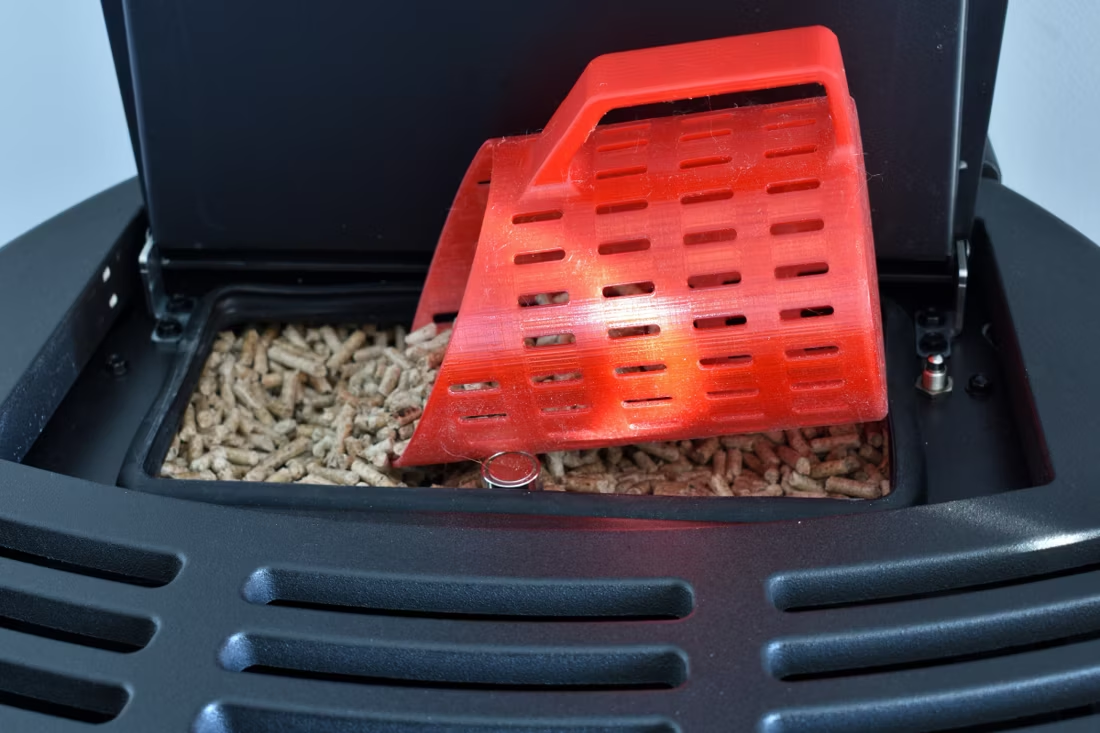
Pellet stoves run on compressed hardwood pellets—often made from the same oak, maple, birch, and ash that fill Chemung County's woodlots—and regional brands like Energex, Hamer Pellet Fuel, and Greene Team Pellet Fuel keep bags reliably stocked at local hearth shops and farm supply stores throughout the heating season. A hopper-fed pellet stove burns cleaner than cordwood, holds a consistent temperature for 24+ hours on a single load, and requires none of the splitting, stacking, or seasoning that wood demands—while still giving you a real flame and genuine supplemental heat when the furnace can't quite keep up on a January night.
Three steps. No salesperson until you're ready.
Tell us about your project
Your zip code, your situation, and the fuel you're leaning toward—or let the answers point you to one.
See what's actually available
The brands dealers within 100 miles genuinely carry—real options, never a catalog mirage.
Get your dealer & Project Guide
A trusted local dealer, plus the free Project Guide & Parts List that names every component of the job.
Frequently Asked Questions
How much does a pellet stove installation cost in Chemung County?
Most freestanding pellet stove installations in Chemung County run roughly $3,000 to $6,500, depending on the unit and whether you need a new vent run through an exterior wall. Pellet inserts installed into an existing masonry fireplace typically land between $3,500 and $7,000, since the installer has to fit a liner and venting kit sized for the existing chimney opening. Homes without any existing hearth or chimney—a new install in a finished basement or family room, for example—tend to sit at the higher end once wall penetration and electrical work for the hopper motor and blower are factored in. A local dealer can give you a firm number after seeing your space.
Do pellet stoves work during a power outage?
This is worth understanding before you buy, because it's the main tradeoff against wood. Pellet stoves rely on an electric auger to feed fuel and a blower to circulate heat, so a standard unit stops working the moment the power goes out—which matters in Chemung County, where ice storms and heavy lake-effect snow bands can knock out NYSEG service for a day or more in rural stretches of the county. Some pellet stove models offer battery backup options or can run off a small generator or inverter; ask your local dealer which models in their lineup support that. If uninterrupted heat during outages is a priority for your household, a wood stove or a dual-fuel setup is worth discussing alongside pellet options.
Where can I buy pellets locally, and how much do they cost?
Regional brands including Energex, Hamer Pellet Fuel, and Greene Team Pellet Fuel are commonly stocked at hearth shops, farm and feed stores, and hardware retailers throughout Chemung County, with pricing typically in the $250 to $320 per ton range depending on brand and time of year. Buying a full season's supply—usually 2 to 4 tons for a primary heat source, less for supplemental use—in late summer or early fall often gets you better pricing and guarantees stock before winter demand picks up. Pellets need to be stored somewhere dry; a garage or basement works, but bags sitting directly on a damp concrete floor will absorb moisture and burn poorly.
What size pellet stove do I need for my home?
Sizing depends on square footage, ceiling height, insulation, and whether the stove is your primary or supplemental heat. As a general guide for Chemung County's climate: a smaller unit rated around 40,000 BTU handles a single large room or an addition, a mid-size stove in the 50,000–60,000 BTU range covers most main living areas in a typical Elmira or Horseheads home, and larger units are appropriate for open floor plans or homes using pellet heat as the primary source. Older farmhouses and homes with less insulation common in the county's rural townships often need to size up a step from what square footage alone would suggest. A local dealer will walk your space and size it for free.
Do I need a permit to install a pellet stove in Chemung County?
Yes—a building permit is generally required for a new pellet stove or insert installation, issued through your local municipal code enforcement office rather than the county itself. Elmira, Horseheads, Big Flats, and the other towns and villages in Chemung County each handle permitting through their own code office, so requirements can vary slightly by jurisdiction. Most established hearth dealers pull the permit as part of the installation and coordinate the required inspection, so you're not left figuring out paperwork on your own. Bring your address up front when you get a quote so the installer can confirm the correct office.
How often does a pellet stove need cleaning and maintenance?
Pellet stoves need more frequent light maintenance than wood stoves, but far less heavy cleaning. Plan on emptying the ash pan every few days to weekly during regular use, and a full cleaning of the burn pot, exhaust passages, and hopper roughly every 4 to 6 weeks depending on how much you run it. An annual professional service—checking the auger motor, exhaust blower, gaskets, and igniter—is recommended before each heating season, similar to servicing a furnace. Skipping this tends to show up as reduced heat output or the auger jamming mid-season, right when you need the stove most.
What's the difference between a pellet stove and a pellet insert?
A pellet stove is a freestanding unit that sits on the floor and vents through a wall or existing chimney—it can go almost anywhere with the right clearances. A pellet insert is built to slide into an existing masonry fireplace opening, using a liner run up your existing chimney and sealing off the old open hearth. For Chemung County homes with an existing wood-burning fireplace that rarely gets used, an insert is often the more practical upgrade since it reuses the chimney you already have. Homes without an existing fireplace, or those adding heat to a room that never had one, are better suited to a freestanding stove.
Pellet vs. wood stove—which is right for my Chemung County home?
Wood stoves burn cordwood—plentiful in the region given the oak, maple, birch, and ash that fill Southern Tier woodlots—and they keep working during a NYSEG outage since they need no electricity to run. Pellet stoves are more automated: load the hopper, set a thermostat, and the stove maintains a steady temperature with less ash and a cleaner burn, but the auger and blower stop the moment the power goes out. For homes prioritizing hands-off convenience and consistent heat output, pellet usually wins. For homes where losing heat during a winter storm is a real concern—common in the county's more rural, exposed townships—wood remains the safer backup. Some households run both: pellet for daily convenience, wood as the outage backstop.
Are there rebates available for pellet stove installations in New York?
NYSERDA has periodically offered incentives for high-efficiency, EPA-certified biomass appliances, including pellet stoves, though program availability and amounts change from year to year—it's worth checking current NYSERDA offerings before you buy. Some pellet stove manufacturers also run seasonal rebates through participating dealers, particularly on higher-efficiency models. A local Chemung County dealer will typically know what's currently active and can apply eligible rebates directly to your quote rather than leaving you to track down paperwork after the fact.
Why is my open fireplace making my house colder?
Open fireplaces suck—literally. As the fire burns, it consumes air your furnace already paid to heat and pulls it out through the chimney, so the house is actually colder after the fire goes out than before you lit it. An insert fixes this: it seals the chimney, puts fixed glass across the front, and turns that hole in your house into a real heat source.
Why is a fireplace insert so efficient?
An insert does two things: it seals the chimney completely, so you stop losing air you already paid to heat, and it radiates warmth into the room through the firebox and glass. Most add a heat-exchange fan that pulls cool room air underneath, wraps it around the hot firebox, and pushes it back out warm. Your home is more efficient before you've even lit the first fire.
Can a fireplace actually lower my heating bill?
Yes—by creating a comfort zone. A furnace heats every square foot of the house just to warm the one room you're in; a gas fireplace on low burns roughly a sixth of the gas a typical furnace does. Set the furnace around 55–60 degrees as a baseline, then heat the rooms your family actually uses. Families who heat this way commonly save $20–$60 a month.
What is an in-home preview and do I need one?
It's a visit where a hearth professional measures your space, confirms the model you picked actually works in your home, and walks the specs—framing, gas line, venting, finish work—before anything is ordered. Some details you just can't know until you see the house. Never make a down payment without one; it's the single most-skipped step that burns buyers.
Pellet Brands Stocked Around Chemung County
Manufacturers will point you to the nearest stocking dealer.
Find your pellet stove in Chemung County.
Tell us a bit about your home and we'll put together a free Project Guide & Parts List—the right pellet stove or insert, the exact vent kit your home needs, and a trusted local Chemung County dealer to install it.
Find Your Fireplace →