
Pellet heat is uncommon in Centereach—but it isn't nonexistent.
Most Centereach homes run on natural gas or electric heat. A pellet stove is a deliberate, secondary choice here—and it can still be the right one.
Every Project Starts From One of These Five Situations
On Long Island, pellet stoves are the exception, not the rule.
Centereach sits in Suffolk County at just under 100 feet of elevation, with a moderate coastal climate—winter lows average around 25°F and the area logs a winter heating load in the same mid-range ballpark as Fargo, ND, rather than a true wood-and-pellet belt. There's no cutting-permit culture here, no wildfire-smoke or inversion concerns, and no local pellet mill. Natural gas service is widespread across this part of Suffolk County, and most Centereach homes heat primarily with a gas furnace or an electric heat pump rather than biomass.
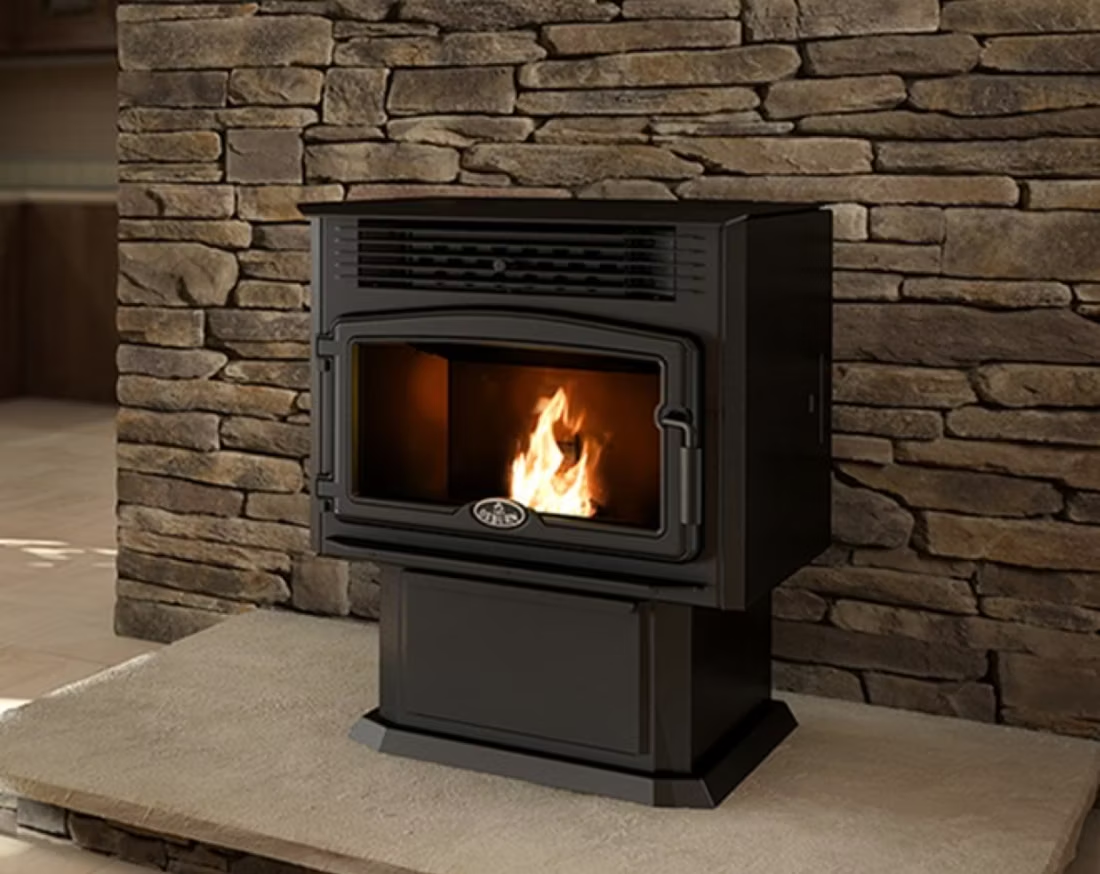
That doesn't mean pellet stoves are absent—it means the reasons homeowners choose one are more specific. The homeowners we hear from in Centereach are usually adding a pellet stove as backup heat for LIPA outages during nor'easters and hurricanes (Long Island's grid has a well-earned reputation for extended storm outages), or installing one in a finished basement, garage, or sunroom that the main HVAC system doesn't reach well. Regional pellet brands like Energex, Hamer Pellet Fuel, and Greene Team Pellet Fuel are sold throughout the Northeast and are readily available here, even though pellet stoves themselves are a smaller share of the local hearth market than gas inserts.
Three steps. No salesperson until you're ready.
Tell us about your project
Your zip code, your situation, and the fuel you're leaning toward—or let the answers point you to one.
See what's actually available
The brands dealers within 100 miles genuinely carry—real options, never a catalog mirage.
Get your dealer & Project Guide
A trusted local dealer, plus the free Project Guide & Parts List that names every component of the job.
Frequently Asked Questions
Are pellet stoves actually common in Centereach?
No, not really—and we'd rather tell you that upfront than pretend otherwise. Centereach is a natural-gas-first market; most homes run gas furnaces or electric heat pumps as primary heat, and the local hearth trade here leans heavily toward gas fireplace and insert installs. Pellet stoves still get installed, but usually as a second unit—backup heat for grid outages, or supplemental warmth in a basement, garage, or sunroom. If that's your use case, a pellet stove can absolutely make sense; it's just a smaller, more specialized slice of the local market than gas.
What does a pellet stove installation cost in Centereach?
Because pellet stoves are a niche install here, exact local pricing varies more than in pellet-heavy markets. Nationally, a pellet stove install (unit, direct-vent through an exterior wall, and electrical hookup for the auger and blower) typically runs $3,000 to $6,000, and that range holds up reasonably well on Long Island. Expect the lower end if you're venting through an existing exterior wall with straightforward access, and the higher end if the installer has to route venting through masonry or run new circuits for the electronics. Since Suffolk County has no active air quality restrictions on solid-fuel appliances, permitting itself isn't the cost driver—installer availability and venting complexity are.
Where can I buy pellets in or near Centereach?
Regional brands like Energex, Hamer Pellet Fuel, and Greene Team Pellet Fuel are distributed throughout the Northeast and are the ones most Suffolk County hearth dealers and hardware stores stock or can order in bulk. Because pellet stoves are less common here than gas units, don't assume every big-box store carries pellets year-round—call ahead in early fall, since local supply can sell through faster than in denser pellet markets, and dealers don't always keep large reserve stock for a smaller customer base.
Do I need a permit to install a pellet stove in Centereach?
Most municipalities in Suffolk County require a building permit for a new solid-fuel appliance installation, including pellet stoves, since it involves wall penetration for venting and sometimes new electrical circuits. There are no air-quality curtailment rules to worry about here—Centereach has no listed air quality concerns, unlike inversion-prone Western markets—so the permit process is mostly about verifying clearances and venting termination distances from windows, doors, and property lines. A local installer who regularly pulls permits in your town will know the specific submission requirements for your building department.
Will a pellet stove work if the power goes out?
This is the question that matters most for Centereach buyers, and the honest answer is: not without help. Pellet stoves rely on an electric auger to feed fuel and a blower to circulate heat—no power, no fire, unlike a wood stove that burns on its own. If your goal is backup heat for LIPA outages during a nor'easter or hurricane, you'll want to pair the stove with a battery backup system or a small generator sized to run the auger and blower. Some pellet stove models draw very little wattage and can run for days off a modest battery bank—ask your installer which models are the most efficient on standby power before you buy.
Pellet vs. gas—which makes more sense for a Centereach home?
For most Centereach homes, gas wins on convenience: instant on-off operation, no fuel storage, and it's the fuel the local hearth market is built around, so installers, parts, and service are easy to find. Pellet makes more sense in specific situations—a room without gas access, a desire to hedge against LIPA's rate volatility (residential rates here run from roughly $0.246 to $0.382 per kWh depending on utility, among the higher rates in the state), or a genuine want for solid-fuel backup heat during storm season. If your main goal is everyday primary heat, gas is the more supported choice locally. If you're solving for a specific room or a specific outage scenario, pellet is worth a serious look.
What size pellet stove do I need?
Sizing depends on the space you're actually trying to heat, which for most Centereach installs is a finished basement, attached garage, or single large room rather than a whole house. A small pellet stove (under 1,000 sq ft output) covers most single-room or basement setups; a medium unit (1,000–1,800 sq ft) can handle an open first floor if it's being used as genuine supplemental heat. Given how few homes here run pellet as primary heat, oversizing is a common mistake—a unit sized for a whole small house will run at low, inefficient settings most of the time in a single-room application. A local installer can size this properly during an in-home visit.
Are pellet stoves cheaper to run than my electric heat?
Potentially, yes—and this is one of the stronger arguments for pellet in this specific market. Long Island Power Authority residential rates run around $0.246 per kWh (higher still on Fisher's Island at roughly $0.382 per kWh), among the more expensive electricity in the state. A pellet stove burning bagged fuel from Energex, Hamer, or Greene Team can offset a meaningful chunk of electric resistance heating costs in a supplemental-use scenario, even after accounting for the stove's own modest electrical draw. It won't replace a gas furnace on cost, but against straight electric heat in a converted room, the math often favors pellet.
How much maintenance does a pellet stove need?
Less than a wood stove, but it's not zero. Plan on emptying the ash pan every few days during regular use, cleaning the burn pot weekly to keep the fire feeding evenly, and a full professional service annually—cleaning the auger, exhaust fan, and venting, and inspecting gaskets and electronics. Because pellet stove technicians are less common in Centereach than gas service techs, it's worth confirming service availability with your installer before you buy, rather than after.
What's the difference between an insert and a zero-clearance fireplace?
An insert is a fireplace that slides into a pre-existing wood-burning fireplace—if you don't have one, there's nothing to insert it into. A zero-clearance fireplace is built into a framed wall, which makes it the answer for remodels and new construction. Simple test: existing masonry fireplace means insert; blank or framed wall means zero-clearance.
Why is a fireplace insert so efficient?
An insert does two things: it seals the chimney completely, so you stop losing air you already paid to heat, and it radiates warmth into the room through the firebox and glass. Most add a heat-exchange fan that pulls cool room air underneath, wraps it around the hot firebox, and pushes it back out warm. Your home is more efficient before you've even lit the first fire.
How much should I budget for a fireplace?
For an average home—covering the fireplace, the vent pipe, and basic installation—a budget between $3,900 and $5,500 gives you a lot of options across wood, gas, and pellet. By the time you add finish work, gas line, and electrical, the average complete installation lands between $5,000 and $12,000 all-in. In a remodel or new build, a good rule is to put about 2.5% of the total project cost toward the fireplace.
Can a fireplace actually lower my heating bill?
Yes—by creating a comfort zone. A furnace heats every square foot of the house just to warm the one room you're in; a gas fireplace on low burns roughly a sixth of the gas a typical furnace does. Set the furnace around 55–60 degrees as a baseline, then heat the rooms your family actually uses. Families who heat this way commonly save $20–$60 a month.
Nearby Dealers
Hearth shops serving Centereach and the surrounding area.
Pellet Brands Stocked Around Centereach
Manufacturers will point you to the nearest stocking dealer.
Find your pellet stove option in Centereach.
Tell us about your home and how you plan to use pellet heat—backup power, a converted basement, or something else—and we'll match you with a trusted local dealer and a free Project Guide & Parts List for your project.
Find Your Fireplace →