
Find the right pellet stove for Broome County's long, cold winters.
With a long, demanding heating season and winter lows averaging 16°F, Broome County homes need heat that shows up night after night. See what a trusted local dealer can actually install near you.
Every Project Starts From One of These Five Situations
Consistent, thermostat-controlled heat for a Southern Tier winter.
Broome County sits in the Susquehanna River valley in New York's Southern Tier, and its climate zone 6A designation isn't an abstraction—with a long heating season stretching from October well into April and winter lows averaging 16°F, this is a heating season that stretches from October well into April. Binghamton, Vestal, Johnson City, and Endicott all see the kind of sustained cold that makes set-it-and-forget-it heat appliances genuinely useful, not just convenient. Pellet stoves fit that need well: load the hopper, set the thermostat, and get even, consistent heat without the daily tending a wood stove demands.
Regional pellet brands including Energex, Hamer Pellet Fuel, and Greene Team Pellet Fuel are all produced and distributed within reach of the county, which keeps fuel sourcing straightforward for local homeowners—no scrambling for supply mid-winter the way some other regions do. Broome County has no unusual air quality restrictions on solid-fuel heating, so pellet appliances install and operate here without the curtailment periods or non-attainment concerns you'll find in some other parts of the country. For homes near oak, maple, birch, and ash woodlots where cordwood is abundant, pellet stoves still offer something wood can't: automated feed, lower ash output, and heat that runs itself while you're at work or asleep.
Three steps. No salesperson until you're ready.
Tell us about your project
Your zip code, your situation, and the fuel you're leaning toward—or let the answers point you to one.
See what's actually available
The brands dealers within 100 miles genuinely carry—real options, never a catalog mirage.
Get your dealer & Project Guide
A trusted local dealer, plus the free Project Guide & Parts List that names every component of the job.
Frequently Asked Questions
How much does a pellet stove installation cost in Broome County?
Pellet stove and insert installations in Broome County typically run in a similar range to other solid-fuel appliances once venting, a dedicated electrical outlet, and any hearth pad work are factored in—expect the final number to depend heavily on whether you're installing into an existing fireplace opening versus a fresh wall installation in a home without one. A local dealer will walk your specific space—whether that's a ranch house in Vestal or an older two-story in Binghamton's West Side—and give you a firm quote after seeing the venting path and electrical access.
What size pellet stove do I need for my Broome County home?
Sizing depends on square footage, insulation quality, and whether the stove is your primary or supplemental heat source. Broome County's older housing stock—plenty of homes in Binghamton, Endicott, and Johnson City predate modern insulation standards—often runs drafty, so undersizing is a common mistake. A mid-size unit rated for 1,500 to 2,000 square feet handles most single-family homes in the county, but a home with high ceilings or older single-pane windows may need to size up even at the same square footage. A local dealer will size your home for free during an in-home visit rather than relying on a generic square-footage chart.
Where can I find certified pellet stove installers near me?
Look for installers with NFI (National Fireplace Institute) certification, which specifically covers pellet-burning appliance training separate from wood or gas. A trusted local dealer will handle the venting run, the dedicated electrical circuit the auger and blower require, and any hearth clearance work as part of the install—which matters because pellet stoves have different clearance and venting rules than wood stoves, and a generalist contractor may not know the difference. Avoid big-box installs for this reason; venting sized wrong is the most common issue we see reported after the fact.
What's the difference between a pellet stove and a pellet insert?
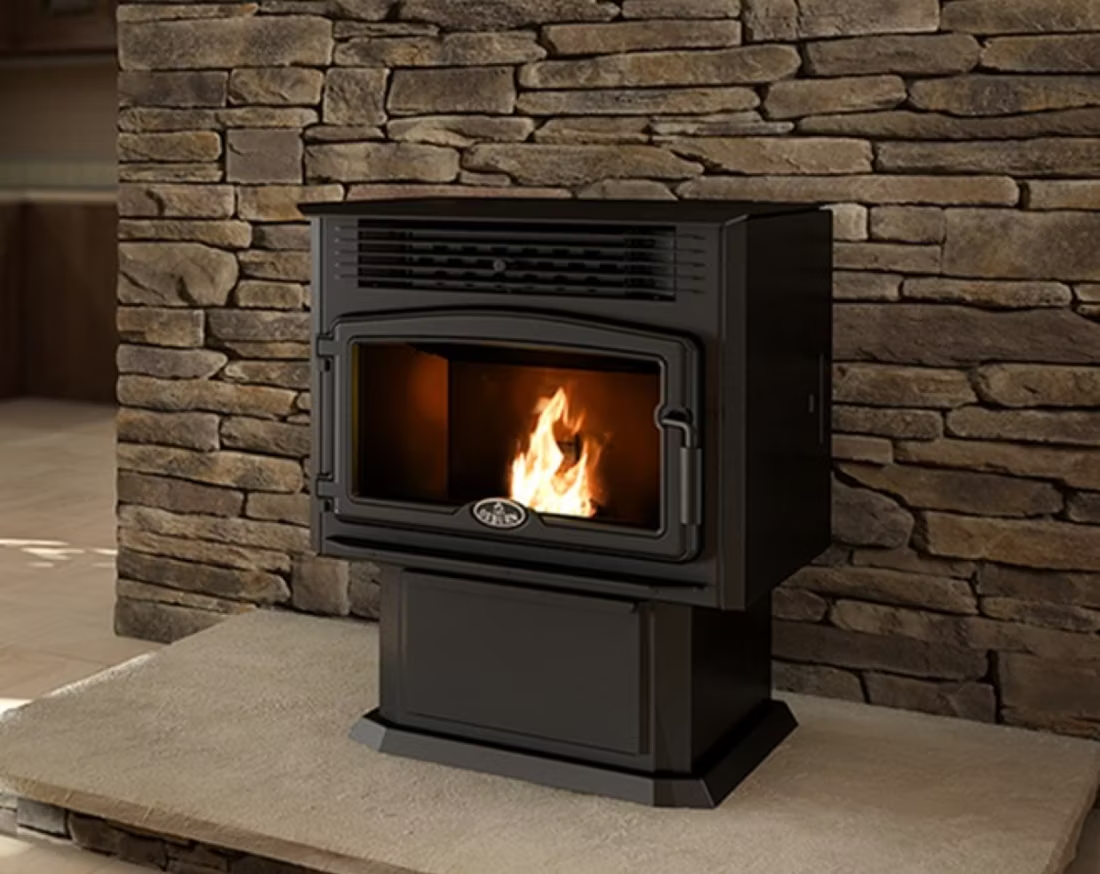
A pellet stove is a freestanding unit that sits on its own hearth pad and vents through a wall or existing chase—it can go almost anywhere with the right clearances and a nearby outlet. A pellet insert is built to slide into an existing masonry fireplace, turning a rarely-used wood-burning fireplace into an automated heat source while reusing the existing opening. For Broome County homes with an older masonry fireplace already in place—common in Binghamton's pre-war housing—an insert is often the more cost-effective route since it doesn't require framing a new hearth from scratch.
Do I need a permit to install a pellet stove in Broome County?
Yes—pellet stove installations require a building permit through the local municipal building department, whether that's the City of Binghamton, the Town of Vestal, or another Broome County municipality, since each town in the county handles its own permitting. Most established local dealers handle the permit application as part of the installation, so you're not filing paperwork yourself. Because pellet stoves also require a dedicated electrical circuit for the auger and combustion blower, some installations involve a coordinated electrical permit as well—another reason to work with a dealer who manages the full project rather than piecing it together yourself.
What's the best pellet stove for Broome County's climate?
For a heating season comparable to Duluth, Minnesota in terms of sustained cold, look for pellet stoves with a strong low-burn setting for shoulder-season use in October and April as well as a high-output setting for the coldest stretches of January. Models with larger hopper capacities (60+ pounds) reduce how often you're refilling during the coldest weeks, which matters when temperatures stay in the teens for days at a stretch. A local dealer can match hopper size and BTU output to your specific square footage and how often you're home to refill during the day.
How often should my pellet stove be cleaned and serviced?
Pellet stoves need less maintenance than wood stoves but shouldn't be ignored. Plan on a full cleaning and inspection once a year, ideally before the heating season starts in the fall, including the burn pot, exhaust venting, and auger mechanism. Homes running the stove as a primary heat source through a full Broome County winter—burning multiple tons of pellets—may need a mid-season burn pot cleaning if ash buildup slows combustion. A local dealer or service technician can also check the combustion blower and gaskets annually, since a worn door gasket is one of the more common efficiency complaints with heavily used units.
Where can I buy pellets in Broome County?
Regional brands including Energex, Hamer Pellet Fuel, and Greene Team Pellet Fuel are commonly stocked at hardware stores, farm supply retailers, and hearth dealers throughout the Southern Tier, and their regional production keeps supply relatively steady through the winter compared to areas that rely on pellets shipped in from farther away. Buying a full season's supply—typically several tons for a primary-heat home—in late summer or early fall before demand peaks is the most reliable way to avoid the supply crunches that sometimes hit in January when everyone needs a bag at once.
Pellet stove vs. wood stove—which is right for my Broome County home?
Wood stoves burn cordwood—plentiful locally given the oak, maple, birch, and ash in Broome County's forests—work without electricity, and offer the most authentic fire experience, which matters during winter storm outages. Pellet stoves are more automated, burn cleaner with less visible ash, and hold a steadier output overnight, but they require electricity to run the auger and blower, so they go dark in a power outage unless paired with a battery backup. For Broome County homeowners who want set-it-and-forget-it heat and don't mind the electrical dependency, pellet is usually the better daily-use choice. For those prioritizing emergency-heat resilience during ice storms or extended outages, wood remains the more dependable backup. Some households in the county run both—pellet for daily convenience, wood as an outage backstop.
What's the difference between an insert and a zero-clearance fireplace?
An insert is a fireplace that slides into a pre-existing wood-burning fireplace—if you don't have one, there's nothing to insert it into. A zero-clearance fireplace is built into a framed wall, which makes it the answer for remodels and new construction. Simple test: existing masonry fireplace means insert; blank or framed wall means zero-clearance.
How often does a pellet stove need cleaning?
A clean pellet stove is a happy pellet stove. Plan on cleaning the burn pot about once a week when you're burning regularly—ash and clinkers gum up the air holes just like a pellet barbecue. Most pellet stove problems trace back to skipped cleaning that nobody explained up front. Some designs make it easy with a trapdoor burn pot: pull a lever and the gunk drops into the ash pan.
How much should I budget for a fireplace?
For an average home—covering the fireplace, the vent pipe, and basic installation—a budget between $3,900 and $5,500 gives you a lot of options across wood, gas, and pellet. By the time you add finish work, gas line, and electrical, the average complete installation lands between $5,000 and $12,000 all-in. In a remodel or new build, a good rule is to put about 2.5% of the total project cost toward the fireplace.
What is an in-home preview and do I need one?
It's a visit where a hearth professional measures your space, confirms the model you picked actually works in your home, and walks the specs—framing, gas line, venting, finish work—before anything is ordered. Some details you just can't know until you see the house. Never make a down payment without one; it's the single most-skipped step that burns buyers.
Stove and Fireplace Dealers in Broome County
Listings include WhyFire partner dealers, dealers we have verified as authorized for the brands we recommend, and established local businesses that carry hearth products. Every listing shows which one it is. The ones marked Preferred run on WhyFire's software, so they can show you real pricing and book your appointment right here. No manufacturer pays for placement. How we verify dealers →
TAll Pines Farm Store & Fireplaces
Johnson's Pools & Spas, LLC
Countryside Stove & Chimney
Pellet Brands Stocked Around Broome County
Manufacturers will point you to the nearest stocking dealer.
Get matched with a Broome County pellet stove dealer.
Tell us about your home and heating needs, and we'll match you with a trusted local dealer and send over a free Project Guide & Parts List—the exact parts, vent kit, and dealer recommendation for your Broome County pellet project.
Find Your Fireplace →