
Instant heat for Binghamton University's long winters.
Southern Tier winters run long and gray. Find the right gas fireplace or insert for your home near campus, and connect with a trusted local dealer.
Every Project Starts From One of These Five Situations
Reliable warmth without wrangling firewood.
The area around Binghamton University sits at just under 1,000 feet in the Susquehanna River valley, in a climate zone (6A) with winters on par with Burlington, Vermont for severity. Average winter lows hover around 15°F, and the heating season here runs from October well into April. For students, faculty, and homeowners in the surrounding Vestal and Binghamton neighborhoods, a fireplace that lights instantly and holds a steady temperature through a five-month heating season is worth more than one that requires daily tending.
NYSEG (New York State Electric & Gas Corporation) serves both electric and natural gas accounts throughout most of the Binghamton University area, which means a direct-vent gas fireplace or insert can usually tie into an existing gas line without much extra infrastructure work. Outside the immediate campus corridor, in the more rural stretches of Broome County, propane remains the standard alternative. Either way, gas delivers the kind of on-demand, thermostat-controlled heat that pairs well with older housing stock and rental properties near campus, where hauling and storing firewood isn't always practical.
Three steps. No salesperson until you're ready.
Tell us about your project
Your zip code, your situation, and the fuel you're leaning toward—or let the answers point you to one.
See what's actually available
The brands dealers within 100 miles genuinely carry—real options, never a catalog mirage.
Get your dealer & Project Guide
A trusted local dealer, plus the free Project Guide & Parts List that names every component of the job.
Frequently Asked Questions
How much does a gas fireplace installation cost near Binghamton University?
A gas fireplace installation in the Binghamton University area typically runs $4,500 to $11,000, depending on the unit, the venting path, and whether new gas line work is required. A direct-vent insert going into an existing masonry fireplace with a gas line already run to the house sits at the lower end. New construction, or units in older homes without existing gas service, cost more once NYSEG line work and framing are factored in. Local installers will confirm a firm number after seeing the space in person.
Can I convert an existing wood-burning fireplace to gas?
Yes—it's a common project in the older housing stock around Vestal and Binghamton, where many homes still have the original masonry fireplace built decades ago. A gas insert slides into that existing firebox and uses a stainless liner run up the same chimney, so you keep the look of the fireplace while gaining instant, thermostat-controlled heat. Cost typically runs $4,500 to $9,500 depending on whether the home already has natural gas service from NYSEG or needs a new line run from the street.
Is natural gas available everywhere near Binghamton University, or do I need propane?
Natural gas service from NYSEG covers most of the immediate campus area, Vestal, and the city of Binghamton, so homes there can usually tap into an existing gas main. Once you get out into the more rural parts of Broome County—toward the Chenango or Tioga County lines—gas mains thin out and propane becomes the standard fuel, delivered and stored in a tank on the property. Most gas fireplace models can run on either fuel; your installer just sets the orifice and regulator for whichever you have.
Will a gas fireplace still work if the power goes out?
Most modern gas fireplaces will, which matters here—the Southern Tier gets its share of ice storms and lake-effect snow squalls that can knock out power for hours or days. Units with intermittent pilot ignition (IPI) run on a small battery backup that kicks in automatically, so the fireplace lights and runs normally even with the grid down. Valor fireplaces take it a step further: their pilot assembly generates its own electricity through the thermocouple, so there's no battery to remember or replace. Ask your local dealer which ignition system is on the model you're considering.
What's the difference between a gas fireplace, gas insert, and gas stove?
A gas fireplace is a fully built-in unit, usually installed during new construction or a remodel. A gas insert is sized to slide into an existing masonry firebox—the right call for the older homes common near campus and in downtown Binghamton. A gas stove is a freestanding cast-iron or steel unit that sits on the floor like a wood stove but runs on gas, which works well in a room without an existing chimney. Most homeowners in this area with an old fireplace already in place go with an insert.
Do I need a permit to install a gas fireplace near campus?
Yes. Depending on where the home sits, permitting runs through either the Town of Vestal Building Department or the City of Binghamton's building office, and both require a building permit plus sign-off on the gas line work, which has to be done by a licensed gas-fitter. Most hearth retailers in the area coordinate the permit, the gas line hookup with NYSEG, and the final inspection as part of the installation, so it's rarely something the homeowner has to manage piece by piece.
Should I get a vented or vent-free gas fireplace?
Vented, direct-vent units draw combustion air from outside and exhaust it back outside through sealed pipe—they're the safer, more universally recommended choice, and they're what most local dealers install by default. Vent-free (ventless) units burn directly into the room and are legal in New York within strict room-size and ventilation limits, but they release some combustion byproducts indoors, which matters in a tightly sealed, energy-efficient home built for winters as harsh as this one. For a primary heat source running most of a five-month winter, a direct-vent unit is the better fit.
How often does a gas fireplace need to be serviced?
Plan on an annual inspection, ideally before the heating season starts in October. A certified technician checks the burner, pilot assembly, venting, and gas connections, and cleans the glass and interior—usually $150 to $250 for the visit. It's a lighter lift than sweeping a wood chimney, but skipping it is how small igniter or venting issues turn into a fireplace that won't light on the coldest night of the year.
Gas or wood—which makes more sense for a home near Binghamton University?
Wood is still common in the older farmhouses and rural properties around Broome County, where oak, maple, birch, and ash are the local go-to species and firewood is easy to source. It also keeps working with no power. Gas wins on convenience: no splitting, stacking, or ash cleanup, and a flip-of-a-switch flame that's easier to manage for renters, students, and anyone who wants heat without the daily upkeep. For homes near campus with NYSEG gas already run to the street, gas is usually the simpler, lower-maintenance choice for a primary living space.
Can I put a TV above my fireplace?
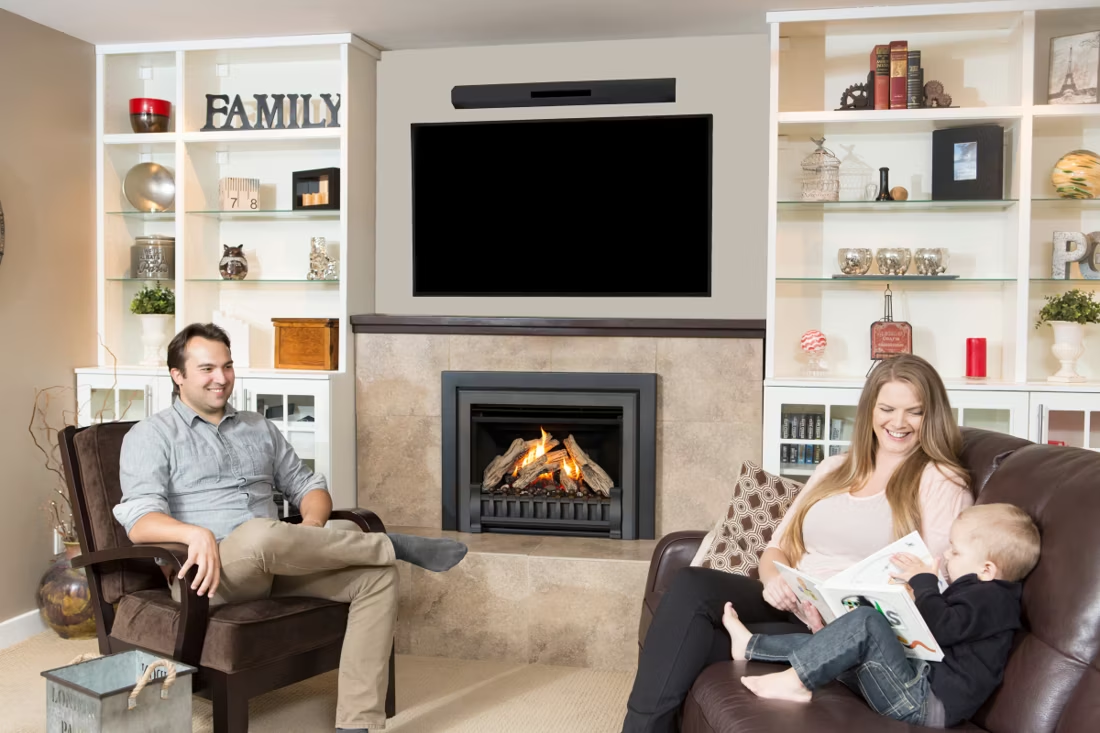
Yes—with an asterisk. Fireplaces are hot and TVs don't like heat. Either put a mantel between them to deflect rising warmth, or choose a fireplace with heat-management technology that creates a cool zone on the wall above—the wall stays around 125 degrees, barely warm, while the room still gets full heat. If you like clean lines and don't want a mantel, heat management is the answer.
Why is my open fireplace making my house colder?
Open fireplaces suck—literally. As the fire burns, it consumes air your furnace already paid to heat and pulls it out through the chimney, so the house is actually colder after the fire goes out than before you lit it. An insert fixes this: it seals the chimney, puts fixed glass across the front, and turns that hole in your house into a real heat source.
Does a fireplace add value to my home?
On average, a fireplace adds back to the home about the same amount you spent installing it. Add the monthly savings from heating the rooms you actually use instead of the whole house—often hundreds of dollars a year—and the value case is strong before you even count what a fire does for how your family uses the room.
What is an in-home preview and do I need one?
It's a visit where a hearth professional measures your space, confirms the model you picked actually works in your home, and walks the specs—framing, gas line, venting, finish work—before anything is ordered. Some details you just can't know until you see the house. Never make a down payment without one; it's the single most-skipped step that burns buyers.
Nearby Dealers
Hearth shops serving Binghamton University and the surrounding area. Every listing shows whether it is a WhyFire partner, a dealer we have verified as authorized for the brands we recommend, or a local business carrying hearth products. No manufacturer pays for placement. How we verify dealers →
TAll Pines Farm Store & Fireplaces
Johnson's Pools & Spas, LLC
Find your gas fireplace near Binghamton University.
Tell us a bit about your home and we'll match you with a trusted local dealer, plus a free Project Guide & Parts List—the exact parts, including the vent kit, for your gas fireplace project.
Find Your Fireplace →