
Instant heat for Binghamton University's coldest nights—no chimney required.
Zero-clearance, no-vent heat for the apartments, rentals, and older homes that ring the BU campus in Vestal and Broome County.
Every Project Starts From One of These Five Situations
Electric heat that fits campus-area rentals and historic homes alike.
Binghamton University sits at roughly 950 feet in Broome County's Southern Tier, in a 6A climate zone with a long, seven-month heating season—winters here run long, with average lows near 15°F from December through February, not far off what Buffalo sees on the other side of the state. Much of the housing stock immediately around campus in Vestal and the surrounding zip 13902 area is rental apartments, converted older homes, and condos, many of which have no masonry chimney, no gas line, and lease terms that rule out anything involving combustion or venting.
That's exactly the gap electric fireplaces fill. A plug-in insert or a built-in wall unit needs no chimney, no gas hookup, and in most cases no building permit—just an outlet or, for larger built-ins, a dedicated circuit run by a licensed electrician. Electricity here comes through New York State Electric & Gas Corp (NYSEG) at a residential rate around $0.1775 per kWh, which makes an electric fireplace a sensible way to add zone warmth to a bedroom, living room, or home office without touching the building's existing forced-air or baseboard heat.
Three steps. No salesperson until you're ready.
Tell us about your project
Your zip code, your situation, and the fuel you're leaning toward—or let the answers point you to one.
See what's actually available
The brands dealers within 100 miles genuinely carry—real options, never a catalog mirage.
Get your dealer & Project Guide
A trusted local dealer, plus the free Project Guide & Parts List that names every component of the job.
Frequently Asked Questions
How much does it cost to install an electric fireplace near Binghamton University?
Most projects here fall into two categories. A plug-in electric insert or freestanding unit runs $300 to $700 installed—often just placing the unit and plugging it into an existing outlet, which is why they're popular in BU-area rentals where landlords won't allow permanent changes. A built-in wall unit or a mantel-style electric fireplace with a dedicated 20-amp or 240V circuit runs $900 to $1,800, since it requires a licensed electrician to run new wiring, plus any carpentry to frame a surround. Neither approach touches your existing furnace or baseboard heat—they're both add-on, zone-heating solutions.
Do I need a permit to install an electric fireplace in Vestal or the City of Binghamton?
A plug-in unit that draws power from a standard outlet typically needs no permit at all—it's treated like any other appliance. If you're installing a built-in unit that requires a new dedicated circuit, that electrical work needs to be pulled through whichever jurisdiction covers your address—Town of Vestal for most campus-adjacent housing, or the City of Binghamton Building Department for addresses inside city limits. Either way, the electrician handling the circuit will typically pull that permit as part of the job, so it's rarely something a homeowner has to manage directly.
What size electric fireplace do I need for a BU-area apartment or house?
For a single bedroom or living room in the apartments and older houses common around campus, a compact 1,000-1,500 watt insert or wall-mounted unit is enough to noticeably warm a 200-400 square foot room. Larger, open living areas—common in the bigger rental houses off campus—usually call for a 1,500-watt unit paired with a larger heating element or two smaller units in different rooms. Electric fireplaces are rated in watts rather than BTUs for heat output, and 1,500 watts (about 5,100 BTU equivalent) is the practical ceiling for a standard 15-amp circuit.
Will an electric fireplace actually keep my apartment warm through a Broome County winter?
On its own, no—with a long, seven-month heating season and average winter lows around 15°F, this area needs a real furnace, boiler, or heat pump as the primary heat source, and an electric fireplace should be thought of as supplemental. What it does well is add focused warmth to the room you're actually using, letting you turn down the thermostat elsewhere in the unit. Most residents here pair one with existing forced-air or baseboard heat rather than relying on it through a January cold snap.
Electric vs. gas vs. wood—what actually makes sense for BU-area housing?
Wood stoves need a chimney and cordwood storage (oak, maple, birch, and ash are the common local species), which most apartments and rentals near campus simply don't have room or permission for. Gas fireplaces need either an existing gas line or new line work, plus venting through an exterior wall—workable in some houses but usually a landlord decision, not a tenant one. Pellet stoves need a hopper, a nearby fuel supplier (Energex, Hamer Pellet Fuel, and Greene Team Pellet Fuel all distribute in this part of New York), and still draw electricity to run the auger. Electric is the only one of the four that a renter can typically install and remove without touching the building at all, which is a big part of why it's the default choice in this market.
How much does it cost to run an electric fireplace on NYSEG rates?
At the local NYSEG residential rate of about $0.1775 per kWh, a 1,500-watt electric fireplace costs roughly 27 cents per hour to run on full heat. Running it five hours an evening through a cold month adds up to around $40 in electricity—noticeably less than most people expect, and far less than heating an entire apartment with resistance heat alone. Most units also have a flame-only mode that uses just a few watts, so you can run the ambiance without the heater on shoulder-season evenings.
Are there rebates available for electric heating upgrades in New York?
NYSERDA offers rebates and incentives for whole-home efficiency upgrades and heat pump systems, but a standalone electric fireplace—which is a supplemental zone heater, not a primary heating system—generally doesn't qualify on its own. If you're weighing a larger heating change for a BU-area property, it's worth asking a local electrician or HVAC contractor whether a ductless heat pump paired with an electric fireplace for ambiance makes more sense than either alone; NYSERDA's Clean Heat program is the right place to check current incentive amounts.
What electric fireplace brands do local dealers carry near Binghamton University?
Hearth dealers serving the Binghamton and Southern Tier market typically stock recognized electric fireplace brands like Dimplex, Napoleon, and Touchstone, ranging from compact plug-in inserts to larger built-in wall units and mantel packages. A trusted local dealer can tell you which models are actually in stock and which ones fit a rental-friendly install versus a permanent built-in—that's a better source than guessing from an online listing, since availability shifts and not every model ships with the trim kit your fireplace opening needs.
How much maintenance does an electric fireplace need?
Very little compared to wood or gas. There's no chimney to sweep, no gas line to inspect, and no combustion byproducts to worry about. Maintenance is mostly dusting the unit, occasionally vacuuming the intake vents, and replacing the LED flame bulbs every few years as they dim—most manufacturers rate them for 20,000+ hours of use. There's no annual inspection requirement the way there is for a wood-burning chimney or a gas appliance, which is one more reason electric works well for a rental property near campus where nobody wants to schedule seasonal service.
Can I put a TV above my fireplace?
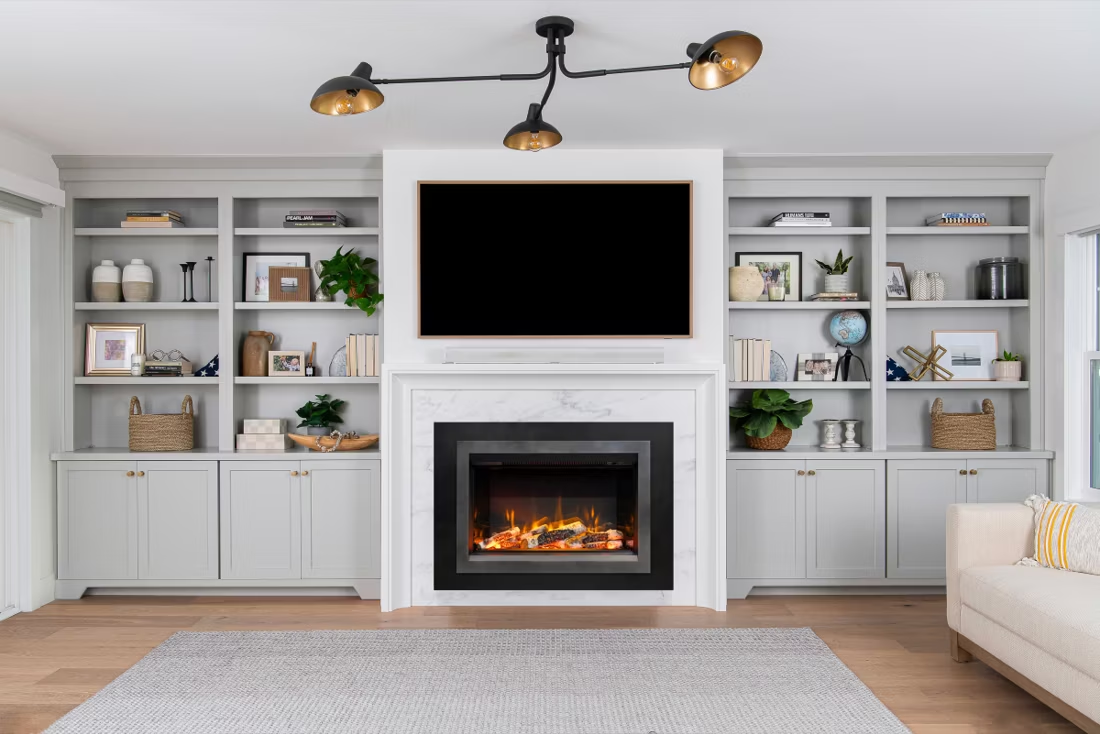
Yes—with an asterisk. Fireplaces are hot and TVs don't like heat. Either put a mantel between them to deflect rising warmth, or choose a fireplace with heat-management technology that creates a cool zone on the wall above—the wall stays around 125 degrees, barely warm, while the room still gets full heat. If you like clean lines and don't want a mantel, heat management is the answer.
Do electric fireplaces actually produce heat?
Yes—most put out around 4,800–5,000 BTUs from a standard outlet, which comfortably warms a bedroom, office, or den as a comfort-zone heater. What they won't do is carry a whole house the way wood, gas, or pellet can. Think of electric as ambiance-first with honest supplemental heat: flames on with no heat in July, flames plus warmth in January.
How much should I budget for a fireplace?
For an average home—covering the fireplace, the vent pipe, and basic installation—a budget between $3,900 and $5,500 gives you a lot of options across wood, gas, and pellet. By the time you add finish work, gas line, and electrical, the average complete installation lands between $5,000 and $12,000 all-in. In a remodel or new build, a good rule is to put about 2.5% of the total project cost toward the fireplace.
Can I install a fireplace myself?
If you're putting a fire in your house on purpose, it's best to work with an expert. Unless you're genuinely experienced in framing, gas line, vent pipe, and the national code on clearances to combustibles, have a professional do it—and ideally the same company that sells you the fireplace, so warranty, service, and liability all live under one roof.
Nearby Dealers
Hearth shops serving Binghamton University and the surrounding area. Every listing shows whether it is a WhyFire partner, a dealer we have verified as authorized for the brands we recommend, or a local business carrying hearth products. No manufacturer pays for placement. How we verify dealers →
TAll Pines Farm Store & Fireplaces
Johnson's Pools & Spas, LLC
Electric Service in Binghamton University
An electric fireplace's heater draws about 1,500 watts—pennies per hour at local rates.
New York State Elec & Gas Corp
Find your electric fireplace near Binghamton University.
Tell us about your apartment, house, or rental near campus and we'll match you with a trusted local dealer and send a free Project Guide & Parts List for your electric fireplace project.
Find Your Fireplace →