
Keep Your Family Warm and Safe—No Matter What
Most Baldwin homes run on gas or electric heat, but a smaller number of homeowners still want a real wood fire for backup heat or ambiance. Here's what actually works on a South Shore lot.
Every Project Starts From One of These Five Situations
Baldwin runs on gas and electric—wood is the exception.
Baldwin sits at sea level on Long Island's South Shore, in the Town of Hempstead, with a mild coastal climate (Zone 4A) and winter lows that average around 26°F. At roughly 5,000 heating degree days, this isn't the kind of climate where a household needs a wood stove running around the clock to survive January—most homes here are built close together on modest post-war lots, and heating is handled by natural gas or electric service from Long Island Power Authority (LIPA), whose residential rate runs about $0.246 per kWh.
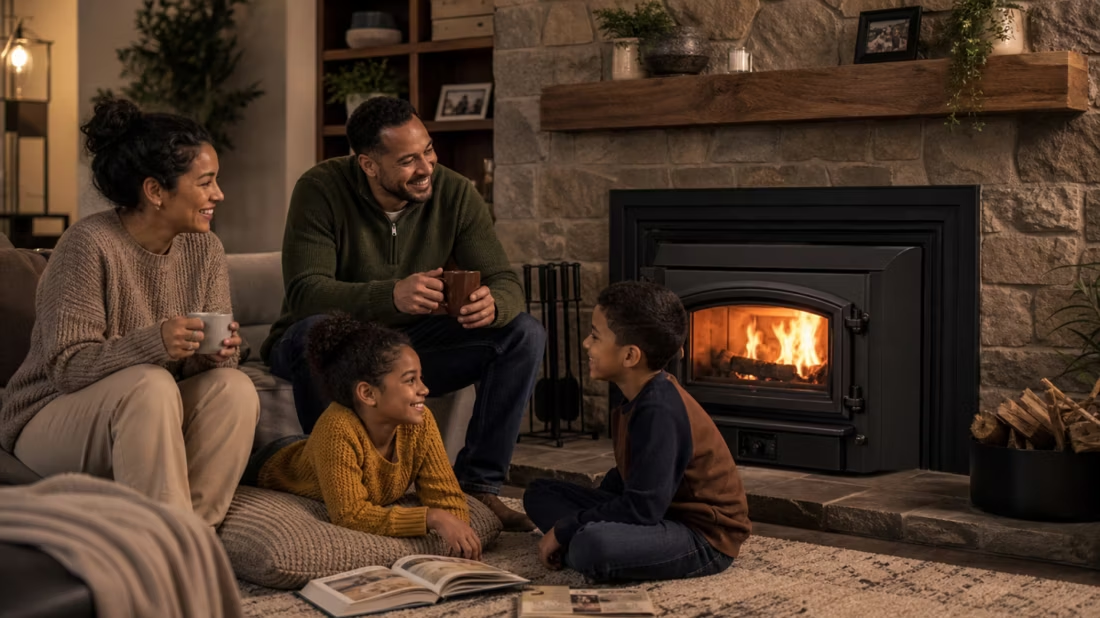
That said, wood heat hasn't disappeared from Baldwin. A number of homeowners with existing masonry fireplaces install a wood-burning insert for supplemental warmth, ambiance, or as a genuine backup during nor'easters and the multi-day power outages that occasionally follow storms on Long Island. There's no national forest land nearby for cutting your own wood—locally available species like oak, maple, birch, and ash are purchased by the cord from tree services and firewood suppliers rather than self-cut on public land. If you're one of the households in Baldwin considering wood heat, the calculus is different than it would be somewhere with wall-to-wall forest, and it pays to work with a dealer who understands that.
Three steps. No salesperson until you're ready.
Tell us about your project
Your zip code, your situation, and the fuel you're leaning toward—or let the answers point you to one.
See what's actually available
The brands dealers within 100 miles genuinely carry—real options, never a catalog mirage.
Get your dealer & Project Guide
A trusted local dealer, plus the free Project Guide & Parts List that names every component of the job.
Frequently Asked Questions
Is a wood stove actually a good fit for a home in Baldwin?
For most Baldwin homeowners, no—not as a primary heat source. With mild winters (average lows around 26°F) and reliable gas and electric infrastructure already in place, the economics favor those fuels for everyday heating. Where wood does make sense here is as a secondary heat source: a fireplace insert that keeps a room warm and functional if LIPA power drops during a nor'easter, or a stove installed mainly for the ambiance of a real fire on a winter evening. If that's your goal, it's a legitimate project—just not one most of your neighbors are doing.
How much does a wood stove or insert installation cost in Baldwin?
Expect roughly $4,000 to $8,500 for a typical freestanding stove or insert installation, including a hearth pad and Class A chimney or liner work. Costs run higher—sometimes $9,000-plus—if your home has no existing masonry fireplace and needs a new chimney chase built from scratch, which is common in Baldwin's post-war Cape Cods and colonials. Because wood installs are less common here than in upstate or New England markets, plan on getting a couple of quotes; dealers serving Nassau County sometimes travel from central Long Island or western Suffolk County for this type of work.
Do I need a permit to install a wood stove in Baldwin?
Yes. Baldwin is an unincorporated hamlet within the Town of Hempstead, and any new wood-burning appliance requires a building permit through the Town of Hempstead Building Department, with Nassau County code enforcement also applying to structural and chimney work. The stove itself needs to meet current EPA 2020 NSPS emissions standards—most retailers only carry certified units for exactly this reason. A licensed local installer will typically pull the permit and coordinate the inspection as part of the job.
Where does firewood come from if there's no forest nearby?
Unlike inland or western regions with public land cutting permits, Baldwin has no national forest access for self-cut wood. Firewood here is purchased by the cord from local tree services, landscapers, and firewood delivery businesses that operate around Nassau and Suffolk Counties. Oak, maple, birch, and ash are the most common species sold regionally, and a seasoned cord typically runs $300 to $400 delivered. Buying wood that's been split and dried for at least six months makes a real difference in how cleanly it burns and how little creosote builds up in the chimney.
My lot is small and my house is close to my neighbor's—does that rule out a wood stove?
Not necessarily, but it does change the recommendation. Baldwin's tight post-war lots often make clearance-to-combustible requirements for a freestanding stove harder to satisfy without reconfiguring a room. If your home already has a masonry fireplace, a wood insert is usually the better answer—it fits into the existing opening, uses the existing chimney (relined as needed), and doesn't require the same floor clearance as a freestanding unit. A local installer can walk your specific layout and tell you within minutes which option is realistic.
Why not just get a pellet stove instead?
Pellet stoves face the same practical headwind as wood in this market: regional pellet brands like Energex, Hamer, and Greene Team are available through some New England and upstate dealers, but pellet appliances aren't a common stock item among Long Island hearth retailers, and the units require electricity to run the auger and blower—which defeats the main advantage wood has here, operating during a LIPA outage. If backup heat during a storm is your priority, a wood-burning insert is the more dependable choice on the South Shore.
How often does a wood-burning fireplace or insert need to be inspected?
Once a year, ideally before burning season starts in the fall. Even with light, occasional use—which is typical for a supplemental or backup unit in Baldwin—creosote still accumulates, and an annual Level 1 inspection and sweep from a CSIA-certified chimney professional is the standard safety baseline. If you're only burning a handful of times each winter, don't assume that means you can skip years; infrequent, low-temperature fires can actually leave more creosote residue than a stove run daily and hot.
Will my homeowner's insurance cover a wood stove installation?
Most insurers will cover it, but many require documentation first—typically proof that the installation meets NFPA 211 clearance standards and was inspected by a certified professional (WETT, NFI, or CSIA credentials). Given how uncommon wood stoves are in Baldwin relative to gas appliances, it's worth calling your carrier before installation rather than after; some require a rider or updated inspection report, and a few ask for photos of the completed hearth pad and chimney termination. A reputable local installer can usually provide the paperwork insurers ask for.
If gas heat is standard here, why would anyone install wood instead?
Gas is the practical default for everyday heating in Baldwin—instant on, no ash, no wood handling. Wood's real advantage is independence: it works with zero electricity and zero gas service, which matters on Long Island when a nor'easter knocks out LIPA power for days at a time. For most Baldwin households the right answer is gas as primary heat, with a wood insert reserved for the handful of homeowners who specifically want that storm-proof backup or the ambiance of a real fire. It's a smaller, more deliberate decision here than in colder climates—which is exactly why matching with a dealer who understands the local context matters.
Why is a fireplace insert so efficient?
An insert does two things: it seals the chimney completely, so you stop losing air you already paid to heat, and it radiates warmth into the room through the firebox and glass. Most add a heat-exchange fan that pulls cool room air underneath, wraps it around the hot firebox, and pushes it back out warm. Your home is more efficient before you've even lit the first fire.
Can a wood stove burn all night?
The right one can. If waking up to a warm house and live coals matters to you, say exactly that when you're shopping—firebox size and burn-rate control determine overnight performance far more than any number on a spec sheet. It's a much more useful question than asking about BTUs.
Does a fireplace add value to my home?
On average, a fireplace adds back to the home about the same amount you spent installing it. Add the monthly savings from heating the rooms you actually use instead of the whole house—often hundreds of dollars a year—and the value case is strong before you even count what a fire does for how your family uses the room.
Should the dealer who sells my fireplace also install it?
Ideally, yes. A fireplace project involves vent pipe, gas line, electrical, and often tile or stone. Hire three or four separate trades and you own the liability and the game of telephone between them. One company selling and installing means one accountable party, start to finish—ask about factory training, on-time completion records, and what happens if an inspection fails.
Nearby Dealers
Hearth shops serving Baldwin and the surrounding area.
Costello's Hearth & Spa - Garden City Park
Find your wood stove in Baldwin.
Tell us about your home and how you'd use a wood stove or insert—backup heat, ambiance, or both—and we'll match you with a trusted local dealer and a free Project Guide & Parts List for your specific space.
Find Your Fireplace →