
Keep Your Family Warm and Safe—No Matter What
At 5,173 feet on the edge of the Navajo Nation, pinyon and juniper have heated homes here for generations. Find the right stove and connect with a trusted local dealer.
Every Project Starts From One of These Five Situations
Wood heat runs deep in this high desert corner of San Juan County.
Upper Fruitland sits at just over 5,100 feet on the Colorado Plateau, where the San Juan River valley narrows into piñon-juniper country. Winters here aren't as punishing as Bismarck, ND, but the average low still settles around 16°F, and with a long, demanding heating season that runs much of the year, homes need real, sustained heat for months at a stretch—not just a few cold weeks. For a small community like this one, wood has long been the practical answer.
Fuelwood is close at hand: pinyon and juniper cover the surrounding mesas and burn hot and aromatic, while ponderosa pine grows at the higher elevations toward the Chuska and San Juan mountains. Many residents cut their own from permit areas administered through San Juan National Forest, and a growing number are also watching for wildfire smoke advisories in dry summer months before they burn. On Navajo Tribal Utility Authority lines, rural outages can run longer than in nearby Farmington, which makes a wood stove more than a nice-to-have—it's a heat source that keeps working when the grid doesn't.
Firewood Cutting Permits Near Upper Fruitland
Three steps. No salesperson until you're ready.
Tell us about your project
Your zip code, your situation, and the fuel you're leaning toward—or let the answers point you to one.
See what's actually available
The brands dealers within 100 miles genuinely carry—real options, never a catalog mirage.
Get your dealer & Project Guide
A trusted local dealer, plus the free Project Guide & Parts List that names every component of the job.
Frequently Asked Questions
How much does a wood stove installation cost in Upper Fruitland?
Across the Four Corners region, a typical wood stove installation runs roughly $3,500 to $8,500, depending on the stove model, whether you're venting through an existing masonry chimney or running new Class A pipe, and any hearth pad work needed for clearance. Because Upper Fruitland is a small, spread-out community, expect most installers to travel from Farmington or Aztec—factor a trip charge into quotes if you're getting bids from multiple retailers. New installations in homes without an existing chimney tend to land on the higher end once full through-roof venting is included.
What size wood stove do I need for my home out here?
With winter lows averaging around 16°F and drafty older manufactured or site-built homes common in this part of San Juan County, undersizing is the bigger risk. Small stoves suit a single room or a smaller manufactured home; medium stoves (roughly 1,000–2,000 sq ft) cover most main living areas; larger stoves handle a well-insulated whole home. A local retailer can size your space correctly during an in-home visit—oversizing leads to smoldering, creosote-heavy fires, which is its own problem in a region already watching for wildfire smoke.
Where can I find a certified wood stove installer near Upper Fruitland?
Given the size of Upper Fruitland, most certified installers—look for NFI (National Fireplace Institute) or CSIA (Chimney Safety Institute of America) credentials—are based in Farmington or Aztec and serve the surrounding San Juan County communities, including Upper Fruitland and Kirtland. The retailer who sells you the stove typically handles installation directly, which keeps warranty coverage and code compliance in one hand instead of splitting the job between a big-box seller and an unrelated contractor.
Wood stove or wood insert—which fits an Upper Fruitland home better?
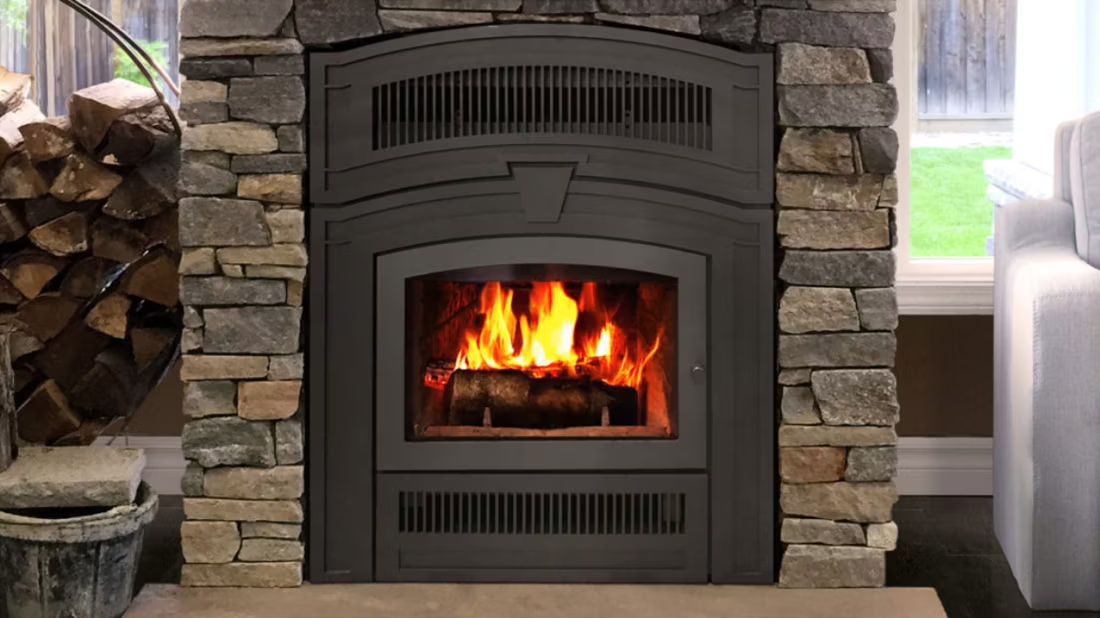
A freestanding wood stove sits on its own hearth pad and can go almost anywhere with proper clearances—a good fit for the region's many manufactured and single-story homes without an existing masonry fireplace. A wood insert slides into an existing masonry fireplace opening and uses the chimney you already have, turning a drafty open hearth into real, efficient heat. If your home already has a fireplace, an insert is usually the more cost-effective upgrade; if it doesn't, a freestanding stove is the more straightforward install.
Do I need a permit to install a wood stove in Upper Fruitland?
Because Upper Fruitland spans both unincorporated San Juan County land and Navajo Nation trust land, permitting depends on your specific parcel—check with the San Juan County Building Department for county land, or the appropriate Navajo Nation building authority if your home sits on tribal trust land. Either way, new wood-burning appliances should meet current EPA emissions standards, and most retailers who install the stove will help sort out which jurisdiction applies. Burning itself doesn't require a permit, but keep an eye on wildfire smoke advisories during dry, high-fire-risk stretches of the year.
What's the best wood stove for this climate?
With a long, demanding heating season and stretches of single-digit overnight lows, a stove that holds a long, steady burn matters. Catalytic stoves from brands like Blaze King can hold a fire 20+ hours on a load of dense hardwood, though most local fuelwood here is pinyon and juniper—both burn hot and fast, so a mid-size non-catalytic stove from Pacific Energy or Lopi that's easy to reload often suits the local wood supply better than a catalytic model built around slower-burning hardwoods. A local retailer can match the stove to what you'll actually be burning.
How often should my chimney be inspected in Upper Fruitland?
Plan on an annual inspection and sweep, ideally in late summer before the heating season starts and before any wildfire-smoke-heavy stretches complicate scheduling. Piñon and juniper both leave a resinous creosote buildup, so households burning several cords a winter as their primary heat source should watch for buildup and consider a mid-season check if the stove sees heavy daily use. CSIA-certified sweeps serving the Farmington and Aztec area typically cover Upper Fruitland as part of their route.
Where can I get or cut firewood near Upper Fruitland?
Many residents cut their own fuelwood under permits from San Juan National Forest, which administers cutting permits for the wider Four Corners region at $5 to $20 per cord during the May-to-October season. Pinyon and juniper are the most commonly harvested species locally, with ponderosa pine available at higher elevations. If you'd rather buy split and seasoned wood delivered, local sellers around Farmington and Kirtland typically price by the cord, with pinyon commanding a premium for its aroma and heat output.
Wood stove or pellet stove—which makes more sense here?
Wood stoves burn cordwood you can cut yourself through a San Juan National Forest permit, and they keep working with no electricity—a real advantage given that Navajo Tribal Utility Authority service in rural stretches near Upper Fruitland can see longer outage times than in Farmington proper. Pellet stoves, running regional brands like Forest Energy or Lignetics, are more convenient to load and burn cleaner, but the auger and blower need continuous power, so they go dark in an outage unless paired with a battery backup. For a household prioritizing storm-proof heat, wood usually wins; for daily convenience with reliable grid power, pellet is worth a look.
Why is my open fireplace making my house colder?
Open fireplaces suck—literally. As the fire burns, it consumes air your furnace already paid to heat and pulls it out through the chimney, so the house is actually colder after the fire goes out than before you lit it. An insert fixes this: it seals the chimney, puts fixed glass across the front, and turns that hole in your house into a real heat source.
What's the difference between an insert and a zero-clearance fireplace?
An insert is a fireplace that slides into a pre-existing wood-burning fireplace—if you don't have one, there's nothing to insert it into. A zero-clearance fireplace is built into a framed wall, which makes it the answer for remodels and new construction. Simple test: existing masonry fireplace means insert; blank or framed wall means zero-clearance.
What is an in-home preview and do I need one?
It's a visit where a hearth professional measures your space, confirms the model you picked actually works in your home, and walks the specs—framing, gas line, venting, finish work—before anything is ordered. Some details you just can't know until you see the house. Never make a down payment without one; it's the single most-skipped step that burns buyers.
Should the dealer who sells my fireplace also install it?
Ideally, yes. A fireplace project involves vent pipe, gas line, electrical, and often tile or stone. Hire three or four separate trades and you own the liability and the game of telephone between them. One company selling and installing means one accountable party, start to finish—ask about factory training, on-time completion records, and what happens if an inspection fails.
Nearby Dealers
Hearth shops serving Upper Fruitland and the surrounding area. Every listing shows whether it is a WhyFire partner, a dealer we have verified as authorized for the brands we recommend, or a local business carrying hearth products. No manufacturer pays for placement. How we verify dealers →
Bob's Fireplace
San Juan Hearth
Slavens True Value Hardware
Choice Building Supply
Find your wood fireplace in Upper Fruitland.
Tell us about your home and we'll match you with a trusted local dealer and send a free Project Guide & Parts List—the stove, venting, and hearth parts sized for your Upper Fruitland install.
Find Your Fireplace →