
Warmth Without the Woodpile or the Wildfire Smoke.
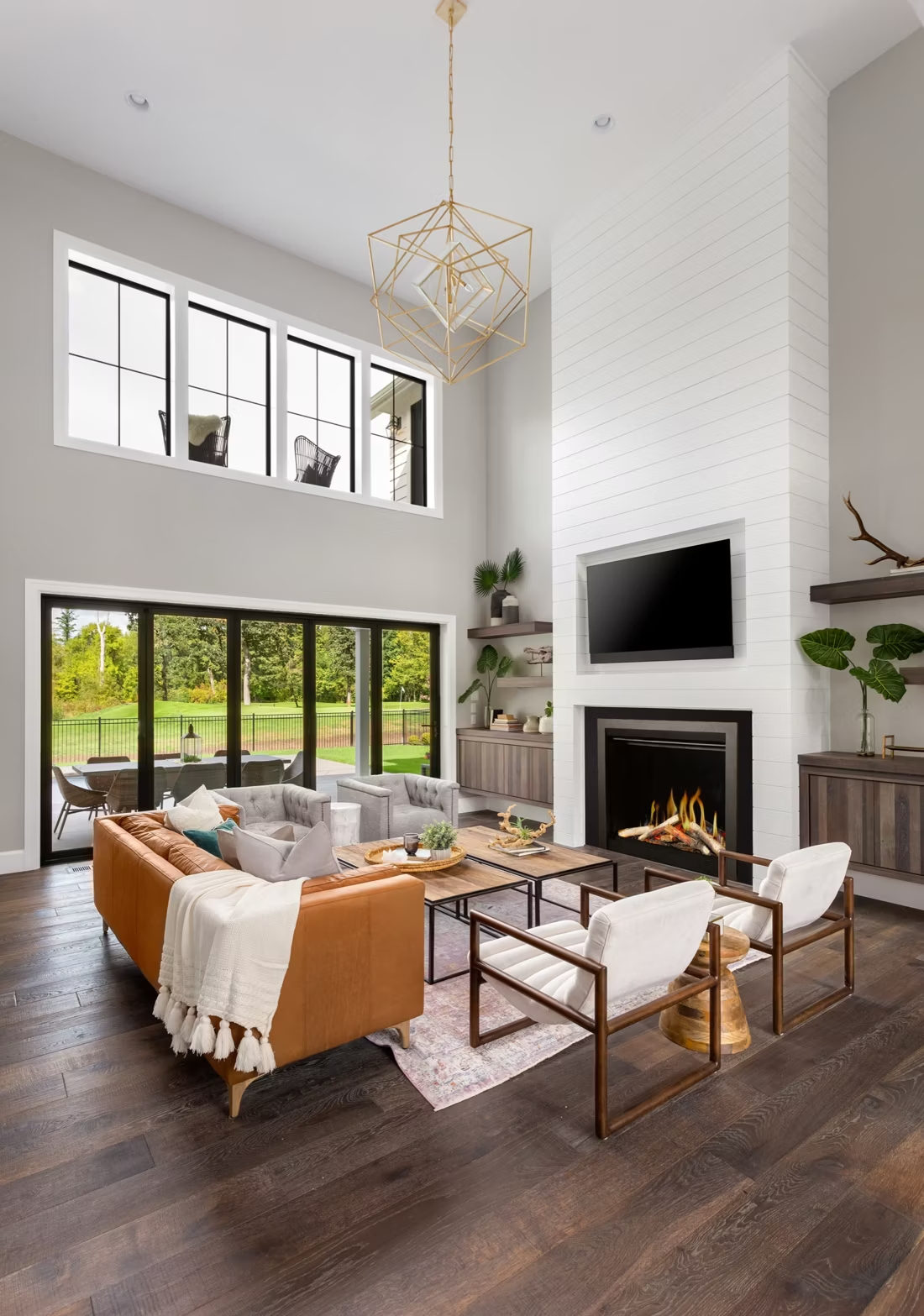
With winters this mild, an electric fireplace covers the chill in Tularosa without a chimney, a permit fight, or a cord of pinon to split. Find the right unit and connect with a trusted local dealer.
Every Project Starts From One of These Five Situations
Mild winters make electric heat make sense.
Tularosa sits at 4,514 feet at the foot of the Sacramento Mountains, in a climate zone (3B) that's a world away from places like Fargo, ND or Duluth, MN. With an average winter low of 29°F and a heating season far lighter than those colder cities, most homes here don't need a full-time primary heat source running around the clock—they need something that takes the edge off a cool desert evening in a living room, bedroom, or converted casita. That's exactly the job an electric fireplace is built for.
Three electric providers serve the Tularosa area—Public Service Co of NM, Otero County Electric Cooperative, and Rio Grande Electric Cooperative—with residential rates ranging from about 15.6 to 18.5 cents per kWh depending on which lines reach your property. An electric fireplace needs no gas line, no chimney, and in most plug-in cases no building permit at all, which matters in a village this size where many homes still rely on wood—pinon, juniper, and ponderosa pine cut under Lincoln National Forest permits—for backup heat. When wildfire smoke settles into the valley during dry season, an electric unit gives you real ambiance and real warmth without adding to the smoke.
Three steps. No salesperson until you're ready.
Tell us about your project
Your zip code, your situation, and the fuel you're leaning toward—or let the answers point you to one.
See what's actually available
The brands dealers within 100 miles genuinely carry—real options, never a catalog mirage.
Get your dealer & Project Guide
A trusted local dealer, plus the free Project Guide & Parts List that names every component of the job.
Frequently Asked Questions
How much does an electric fireplace cost to install in Tularosa?
Plug-in freestanding or mantel units typically run $300 to $1,500 installed, since they connect to a standard 120V outlet and require no venting, gas line, or masonry work. Built-in wall or linear inserts that need a dedicated 240V circuit run higher, generally $800 to $2,500, mostly for the electrician's time running a new circuit from the panel. Either way, electric installs in Tularosa cost a fraction of a wood or gas project because there's no chimney, no liner, and no Otero County mechanical permit involved—just, in some cases, a straightforward electrical permit.
Will an electric fireplace actually heat my house, or just look nice?
Most electric fireplaces put out around 4,600 to 5,100 BTUs (roughly 1,500 watts), which is enough to comfortably heat a single room—a living room, bedroom, or den—especially given Tularosa's mild 29°F average winter low. They're not designed to replace your central heat on a whole-home basis, but for supplemental zone heating on a cool desert night, they do real work. On the rare hard freeze, pair the fireplace with your existing furnace or a backup wood stove rather than relying on it alone.
Do I need a permit to install an electric fireplace in Tularosa?
In most cases, no. A plug-in unit that runs off an existing outlet doesn't trigger a building or mechanical permit the way a wood or gas installation would. If you're installing a hardwired, built-in electric fireplace that needs a new dedicated 240V circuit, an electrical permit through Otero County is standard—your electrician will typically pull it as part of the job. Either way, you skip the chimney inspections and clearance requirements that come with wood-burning appliances entirely.
Which electric utility serves my home in Tularosa, and does it matter?
It depends on exactly where your property sits. Public Service Co of NM (PNM) covers a good portion of the village core, while Otero County Electric Cooperative and Rio Grande Electric Cooperative serve more of the surrounding rural county. Rates differ meaningfully between them—from about 15.6 cents per kWh up to 18.5 cents—so it's worth checking a recent bill before budgeting for a fireplace's operating cost. At the higher end, running a 1,500-watt unit for several hours a night still costs less than most people expect, but it's a real variable worth knowing.
Electric vs. wood—which makes more sense for a Tularosa home?
Wood is deeply embedded in this part of Otero County—pinon, juniper, and ponderosa pine cut under Lincoln National Forest permits (May through October, $5 to $20 per cord) heat a lot of local homes, and wood keeps working when the power doesn't. Electric can't do that; a grid outage means the fireplace goes dark, and rural lines served by the electric co-ops can go down during high wind or wildfire events. What electric offers instead is a smoke-free option that keeps working during air quality advisories or burn restrictions when wildfire smoke is already a concern in the area, plus zero cutting, splitting, or ash cleanup. Many Tularosa households keep both: wood or a wood stove as backup heat, electric for everyday ambiance and zone warmth.
What size electric fireplace do I need?
Sizing comes down to the room, not the whole house. A compact wall-mounted or recessed unit (26 to 40 inches wide) suits a bedroom or small living area. A 50-to-60-inch linear insert handles a larger open living space and doubles as a visual focal point. Since nearly all standard electric fireplaces top out around 1,500 watts regardless of size, the width you choose is mostly about the look and the room's proportions—a local dealer can walk through wall space, viewing distance, and outlet or circuit access before you buy.
How much does it cost to run an electric fireplace in Tularosa?
Most units draw about 1,500 watts on the heat setting. At Tularosa-area rates of roughly 15.6 to 18.5 cents per kWh, that works out to about 23 to 28 cents an hour to run on full heat—noticeably cheaper than most people assume, and far less than the cost of propane where natural gas service isn't available. Running the flame effect alone, without heat, draws only a few watts and costs pennies a day, which is why plenty of homeowners run theirs year-round just for the look.
Will my electric fireplace still work if the power goes out?
No—unlike a wood stove, an electric fireplace is entirely dependent on grid power, and rural lines served by Otero County Electric Cooperative and Rio Grande Electric Cooperative can go down during high wind events or nearby wildfire activity. If backup heat during an outage matters to you, an electric fireplace should be a supplement to, not a replacement for, a wood stove, fireplace insert, or other non-electric heat source in the home.
What's the difference between an electric fireplace and a regular space heater?
Both typically draw around 1,500 watts and put out similar heat, but an electric fireplace is built to look like a real hearth—a realistic flame effect, a mantel or wall-mounted frame, a thermostat, and usually a remote—and installs as a piece of furniture or built-in feature rather than sitting on the floor. Many models also include tip-over and overheat safety shutoffs similar to a quality space heater, so the practical safety difference is minimal. The real difference is aesthetics and permanence: an electric fireplace becomes part of the room, where a space heater is temporary.
Do electric fireplaces actually produce heat?
Yes—most put out around 4,800–5,000 BTUs from a standard outlet, which comfortably warms a bedroom, office, or den as a comfort-zone heater. What they won't do is carry a whole house the way wood, gas, or pellet can. Think of electric as ambiance-first with honest supplemental heat: flames on with no heat in July, flames plus warmth in January.
Can I put a TV above my fireplace?
Yes—with an asterisk. Fireplaces are hot and TVs don't like heat. Either put a mantel between them to deflect rising warmth, or choose a fireplace with heat-management technology that creates a cool zone on the wall above—the wall stays around 125 degrees, barely warm, while the room still gets full heat. If you like clean lines and don't want a mantel, heat management is the answer.
How much should I budget for a fireplace?
For an average home—covering the fireplace, the vent pipe, and basic installation—a budget between $3,900 and $5,500 gives you a lot of options across wood, gas, and pellet. By the time you add finish work, gas line, and electrical, the average complete installation lands between $5,000 and $12,000 all-in. In a remodel or new build, a good rule is to put about 2.5% of the total project cost toward the fireplace.
What is an in-home preview and do I need one?
It's a visit where a hearth professional measures your space, confirms the model you picked actually works in your home, and walks the specs—framing, gas line, venting, finish work—before anything is ordered. Some details you just can't know until you see the house. Never make a down payment without one; it's the single most-skipped step that burns buyers.
Nearby Dealers
Hearth shops serving Tularosa and the surrounding area. Every listing shows whether it is a WhyFire partner, a dealer we have verified as authorized for the brands we recommend, or a local business carrying hearth products. No manufacturer pays for placement. How we verify dealers →
The Stove And Spa Store
Foxworth-Galbraith Lumber
Rawson Builders Supply
Western Stoves And Fireplaces
Raks Building Supply
Hi Tech Home Services
Chaves County Door & Supply
Electric Service in Tularosa
An electric fireplace's heater draws about 1,500 watts—pennies per hour at local rates.
Public Service Co Of Nm
Rio Grande Electric Coop, Inc
Otero County Electric Coop Inc
Find your electric fireplace in Tularosa.
Tell us a bit about your home and we'll match you with the right electric fireplace or insert, plus a free Project Guide & Parts List and a trusted local dealer to install it.
Find Your Fireplace →