
From Desert Floor to Mountain Village: Fireplace Options for Every Otero County Home.
Wood, gas, pellet, and electric fireplace resources for every city and mountain community in Otero County—from Alamogordo on the Tularosa Basin floor up to Cloudcroft in the Sacramento Mountains. Find the right unit for your elevation and connect with a trusted local hearth retailer.
Every Project Starts From One of These Five Situations
Mild desert winters, mountain snow—heating across Otero County, New Mexico.
Otero County stretches from the Tularosa Basin's high desert floor near Alamogordo—about 4,350 feet in elevation—up into the Sacramento Mountains, where Cloudcroft sits near 8,600 feet and sees real winter snowpack. That elevation swing matters more than the county-wide numbers suggest: with a fairly short, mild heating season and a winter low averaging 33°F, Otero County overall is mild compared to places like Bozeman, Montana or Duluth, Minnesota—but Cloudcroft's mountain winters run considerably colder and snowier than the basin floor. Local wood supply reflects the terrain: pinyon, juniper, and ponderosa pine are the common species, most cut under Lincoln National Forest permits in the Sacramentos. Wildfire smoke, not winter inversion, is the region's primary air-quality concern—fire season in the surrounding forest shapes when and how residents are asked to limit outdoor burning, more than any cold-weather curtailment program.
This hub gathers hearth retailers, service technicians, and fuel suppliers across every Otero County community—Alamogordo and Tularosa on the basin floor, Cloudcroft and High Rolls up in the mountains, Mescalero on tribal land bordering the national forest, and smaller communities like La Luz and Boles Acres. Pick a fuel below for local dealer listings, cost ranges, and recommended units for your elevation. A mountain cabin near Cloudcroft has very different heating needs than a stucco home in Alamogordo, and the right retailer will know the difference.
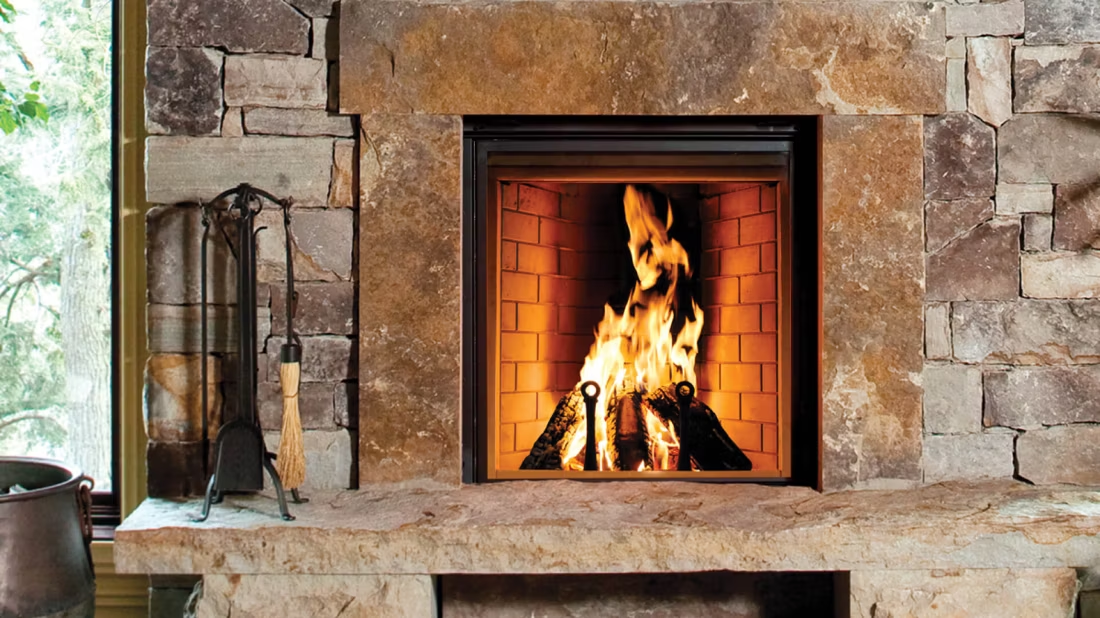
Four fuels. One honest answer for Otero County.
Three steps. No salesperson until you're ready.
Tell us about your project
Your zip code, your situation, and the fuel you're leaning toward—or let the answers point you to one.
See what's actually available
The brands dealers within 100 miles genuinely carry—real options, never a catalog mirage.
Get your dealer & Project Guide
A trusted local dealer, plus the free Project Guide & Parts List that names every component of the job.
Frequently Asked Questions
Which fuel works best in Otero County?
It depends heavily on where in the county you live. In Alamogordo and Tularosa, on the desert floor, winters are mild—average lows around 33°F and a fairly short, mild heating season for the county overall—so wood and pellet stoves there tend to serve more of a supplemental or ambiance role, with gas or electric handling day-to-day comfort. Up in Cloudcroft and High Rolls, at 7,000-8,600 feet in the Sacramento Mountains, wood and pellet heat carry a lot more of the real heating load through snowy winters; pinyon, juniper, and ponderosa pine—all cut locally under Lincoln National Forest permits—are the standard firewood species. Gas works well anywhere propane or natural gas service reaches, and pellet stoves loaded with regional brands like Forest Energy or Lignetics are a solid middle ground for mountain homes that want wood-style heat without the woodpile. Electric fireplaces are common as secondary or ambiance units basin-wide, since the mild climate doesn't demand a primary heat source in most rooms.
Do I need a permit to install a fireplace in Otero County?
Generally yes, for anything beyond a plug-in electric unit. Wood stoves, wood inserts, gas fireplaces, gas inserts, gas stoves, and pellet stoves typically require a building permit, and gas installations need a separate permit and licensed gas-fitter for the line work. Within Alamogordo city limits, permits are handled by the City of Alamogordo's building department; in Tularosa, Cloudcroft, Mescalero, and the unincorporated parts of the county, permits route through Otero County. Most local retailers handle this paperwork as part of the installation, so it typically isn't something you have to manage yourself.
Are there air quality restrictions on wood burning in Otero County?
Otero County doesn't deal with the winter temperature inversions you see in some Western basins—the county's air quality concern is wildfire smoke, tied to fire season in the surrounding Lincoln National Forest and Sacramento Mountains rather than winter woodstove use. During periods of high fire danger, the Forest Service may restrict outdoor burning and campfires, and it's worth checking current conditions before doing any debris burning near Cloudcroft or the forested edges of the county. Woodstove use itself isn't subject to mandatory winter curtailment days here the way it is in some Pacific Northwest air basins, but newer stoves are still expected to meet current EPA emissions standards at installation.
Can one local hearth retailer handle all four fuel types?
Several Otero County retailers do. Dealers based in Alamogordo—the county's largest hearth market—commonly stock wood, gas, pellet, and electric units and can walk you through the trade-offs if you're not sure what fits your home. Retailers serving Cloudcroft and the mountain communities tend to lean harder into wood and pellet, since that's what most mountain homes actually run through the winter, with gas and electric as secondary options. If you're comparing fuels side by side, a multi-fuel Alamogordo dealer with working showroom displays is usually the easiest starting point before narrowing down to a specialist for your elevation.
How does service work in the mountain parts of Otero County, like Cloudcroft?
Most chimney sweeps and gas or pellet technicians serving Otero County are based in Alamogordo and travel up into the Sacramento Mountains for service calls in Cloudcroft, High Rolls, and the surrounding communities. Winter storms occasionally slow travel on US-82 through the mountains, so scheduling annual service in the fall—before the first heavy snow—is easier than trying to book an emergency repair in January. Expect a modest travel fee for mountain service calls given the elevation change and drive time from the basin floor.
What's the typical cost range for fireplace installation across all fuel types in Otero County?
Costs run somewhat lower here than in colder, higher-elevation markets, since venting and chimney work are often less extensive on the basin floor. Wood stove or insert installation: roughly $3,500–$7,500 for a typical job, more for new chimney construction in older Alamogordo or Tularosa homes. Gas fireplace, insert, or stove: about $4,000–$9,000 depending on whether a new gas or propane line is needed. Pellet stove or insert: typically $4,000–$6,500. Electric fireplace: $200–$2,500 for the unit itself, plus $300–$1,000 in labor for anything beyond a simple plug-in install. Mountain installations in Cloudcroft can run slightly higher due to snow-season access and more demanding venting for sustained winter use. See the county + fuel pages above for retailer-specific pricing.
Wood, gas, pellet, or electric—how do I choose?
Match the fuel to your life, not the other way around. Wood: lowest fuel cost and total power-outage independence, but you're hauling and stacking. Gas: press a button, set a thermostat, no maintenance to speak of. Pellet: wood economics with automatic feeding, in exchange for weekly cleaning and a need for electricity. Electric: plugs in anywhere with honest supplemental heat. Nobody regrets the fuel that fits how they actually live.
Can I install a fireplace myself?
If you're putting a fire in your house on purpose, it's best to work with an expert. Unless you're genuinely experienced in framing, gas line, vent pipe, and the national code on clearances to combustibles, have a professional do it—and ideally the same company that sells you the fireplace, so warranty, service, and liability all live under one roof.
Can a fireplace actually lower my heating bill?
Yes—by creating a comfort zone. A furnace heats every square foot of the house just to warm the one room you're in; a gas fireplace on low burns roughly a sixth of the gas a typical furnace does. Set the furnace around 55–60 degrees as a baseline, then heat the rooms your family actually uses. Families who heat this way commonly save $20–$60 a month.
Does a fireplace add value to my home?
On average, a fireplace adds back to the home about the same amount you spent installing it. Add the monthly savings from heating the rooms you actually use instead of the whole house—often hundreds of dollars a year—and the value case is strong before you even count what a fire does for how your family uses the room.
Stove and Fireplace Dealers in Otero County
Listings include WhyFire partner dealers, dealers we have verified as authorized for the brands we recommend, and established local businesses that carry hearth products. Every listing shows which one it is. The ones marked Preferred run on WhyFire's software, so they can show you real pricing and book your appointment right here. No manufacturer pays for placement. How we verify dealers →
The Stove And Spa Store
Foxworth-Galbraith Lumber
Rawson Builders Supply
Western Stoves And Fireplaces
Hi Tech Home Services
Jack White Building Specialties
Southwest Chimney Sweeps Inc
K.d. Scholten Co.
Find your fireplace in Otero County.
Tell us your fuel and your town—Alamogordo, Cloudcroft, Tularosa, or elsewhere in the county—and we'll match you with a trusted local dealer and send a free Project Guide & Parts List: the exact parts, including the vent kit, and the dealer best suited to install it correctly for your elevation.
Find Your Fireplace →