
Find the right pellet stove for Taos County's high desert winters.
Consistent, low-maintenance heat for elevations above 7,000 feet—from Taos to Questa to Peñasco. We match you with a trusted local dealer and a free plan for your project.
Every Project Starts From One of These Five Situations
A steady burn for a county built on pinyon and juniper.
Taos County sits high in northern New Mexico, with the town of Taos itself above 6,900 feet and outlying communities like Angel Fire and Red River climbing higher still. With average winter lows near 12°F, the cold here is comparable to what you'd find in Madison, Wisconsin—not the brutal extremes of the northern plains, but a long, steady heating season that runs from October well into April. Wood has always been the traditional fuel in this region, with pinyon, juniper, and ponderosa pine cut locally through Carson National Forest and Santa Fe National Forest permits. But pellet stoves have carved out a real niche here for homeowners who want consistent heat without the daily work of splitting and stacking cordwood.
Pellet appliances make particular sense in Taos County for a few reasons: wildfire smoke season periodically makes air quality a concern, and pellet stoves burn cleaner and more completely than open wood burning; many newer or remodeled adobe and Territorial-style homes in and around Taos have thinner walls and no existing masonry chimney, which pellet venting handles easily; and thermostatic control matters at 7,000+ feet, where a well-fed stove can hold a steady temperature through long, cold nights without tending. Regional pellet brands like Forest Energy and Lignetics supply the area, and local dealers can walk you through hopper capacity and burn-rate needs specific to your home's elevation and exposure.
Three steps. No salesperson until you're ready.
Tell us about your project
Your zip code, your situation, and the fuel you're leaning toward—or let the answers point you to one.
See what's actually available
The brands dealers within 100 miles genuinely carry—real options, never a catalog mirage.
Get your dealer & Project Guide
A trusted local dealer, plus the free Project Guide & Parts List that names every component of the job.
Frequently Asked Questions
How much does a pellet stove installation cost in Taos County?
Pellet stove and insert installations in Taos County typically run in a moderate range compared to wood or gas projects, since venting is simpler—pellet stoves vent through a small-diameter pipe rather than a full chimney system. Costs vary based on whether the unit is a freestanding stove or an insert going into an existing fireplace opening, whether new electrical needs to be run for the hopper auger and blower, and the distance from Taos proper for delivery to more remote parts of the county like Peñasco or Amalia. A local dealer will give you a firm number after seeing your home and existing venting situation, if any.
Will a pellet stove work if the power goes out?
This is the single biggest tradeoff to understand before choosing pellet over wood. Pellet stoves rely on an electric auger to feed fuel and a blower to circulate heat, so they stop working the moment power drops—no exceptions, regardless of brand. In Taos County, where winter storms and high-wind events can knock out rural power for hours or occasionally longer, this matters more than it would in town. Some homeowners pair a pellet stove with a small battery backup or generator specifically to bridge outages; others keep a wood stove or fireplace as backup heat. If uninterrupted off-grid heat is a top priority for your property, a pellet-only setup may not be the right fit—ask your local dealer about hybrid options.
How much space does a pellet stove need, and what size do I need for my home?
Pellet stoves are sized by BTU output and hopper capacity rather than footprint alone. For a well-insulated home in the 1,200 to 2,000 square foot range at Taos elevations, a mid-size unit is typically enough for supplemental or even primary heat in the main living space. Larger or older adobe homes with less insulation, or homes at higher elevations near Angel Fire or Red River, often need a larger hopper and higher BTU rating to keep pace on the coldest nights. A local dealer will factor in your ceiling height, insulation, and elevation during an in-home visit—sizing is where a real consultation beats a guess at a big-box store.
Where do pellet fuel bags come from, and is pellet fuel reliably available in Taos County?
Regional pellet brands like Forest Energy and Lignetics supply hearth retailers throughout northern New Mexico, and most local dealers stock bags year-round or can point you to seasonal suppliers. Because Taos County sits somewhat off the main interstate corridors, it's worth asking your dealer about typical delivery timing heading into the fall rush, when demand for pellets climbs across the region. Buying a season's supply early—rather than waiting until the first cold snap—is standard practice for a lot of Taos County homeowners.
Do I need a permit to install a pellet stove in Taos County?
Most pellet stove and insert installations require a building permit, since the venting penetrates an exterior wall or existing chimney and the unit needs a code-compliant hearth pad and clearances. Requirements can differ slightly between the Town of Taos and unincorporated Taos County, so it's worth confirming with your building department before work starts. In practice, most local dealers and installers handle the permit application as part of the installation, so it's rarely something a homeowner has to manage directly.
What's the difference between a pellet stove and a pellet insert?
A pellet stove is a freestanding unit set on a hearth pad, vented through a wall or existing chimney—it can go almost anywhere in a room with the right clearances. A pellet insert is built to slide into an existing masonry fireplace opening, which is a common upgrade for Taos County homes with an old open wood fireplace that's inefficient or rarely used. The insert uses the existing masonry chimney (typically with a liner) for venting and instantly turns a heat-losing fireplace into an efficient, thermostatically controlled heat source. For homes without an existing fireplace, a freestanding stove is the simpler path.
How does pellet heat compare to wood heat in Taos County's climate?
Wood has deep roots here—pinyon, juniper, and ponderosa pine are cut locally through Carson National Forest and Santa Fe National Forest permits for $5 to $20 per cord during the May-to-October cutting season, and wood stoves work without electricity, which matters during storm-related outages. Pellet stoves trade that off-grid resilience for convenience: no splitting or stacking, more consistent and thermostatically controlled heat, less ash, and cleaner combustion during wildfire-smoke-affected air quality days. For a primary residence in town with reliable power, pellet is often the lower-effort choice. For a remote property in the county where outages are more common, a wood stove—or a pellet stove with battery backup—is usually the more resilient setup.
How often does a pellet stove need cleaning and maintenance?
Pellet stoves need more frequent light maintenance than wood stoves, but far less deep cleaning. Plan on emptying the ash pan every few days during regular use, cleaning the burn pot weekly to keep the fire feeding evenly, and a full professional service once a year—checking the auger, exhaust blower, gaskets, and venting for wear. Local dealers who sell pellet stoves in Taos County typically offer this annual service, and it's worth scheduling before the start of the heating season each fall rather than after a problem shows up mid-winter.
Pellet stove vs. gas insert—which makes more sense for my Taos County home?
Gas offers instant on-off operation and doesn't require refilling a hopper, but it depends on either a natural gas line or a propane tank, and propane is the more common setup outside town given limited natural gas infrastructure in parts of the county. Pellet stoves use a renewable, regionally available fuel, burn cleaner than open wood fires during wildfire-smoke season, and give you thermostatic control similar to a furnace—but they need electricity to run. If you already have reliable propane service and want the lowest-maintenance option, gas is worth a look. If you'd rather not depend on propane deliveries and don't mind loading a hopper every day or two, pellet is a strong fit for most Taos County homes with stable power.
Why is my open fireplace making my house colder?
Open fireplaces suck—literally. As the fire burns, it consumes air your furnace already paid to heat and pulls it out through the chimney, so the house is actually colder after the fire goes out than before you lit it. An insert fixes this: it seals the chimney, puts fixed glass across the front, and turns that hole in your house into a real heat source.
How often does a pellet stove need cleaning?
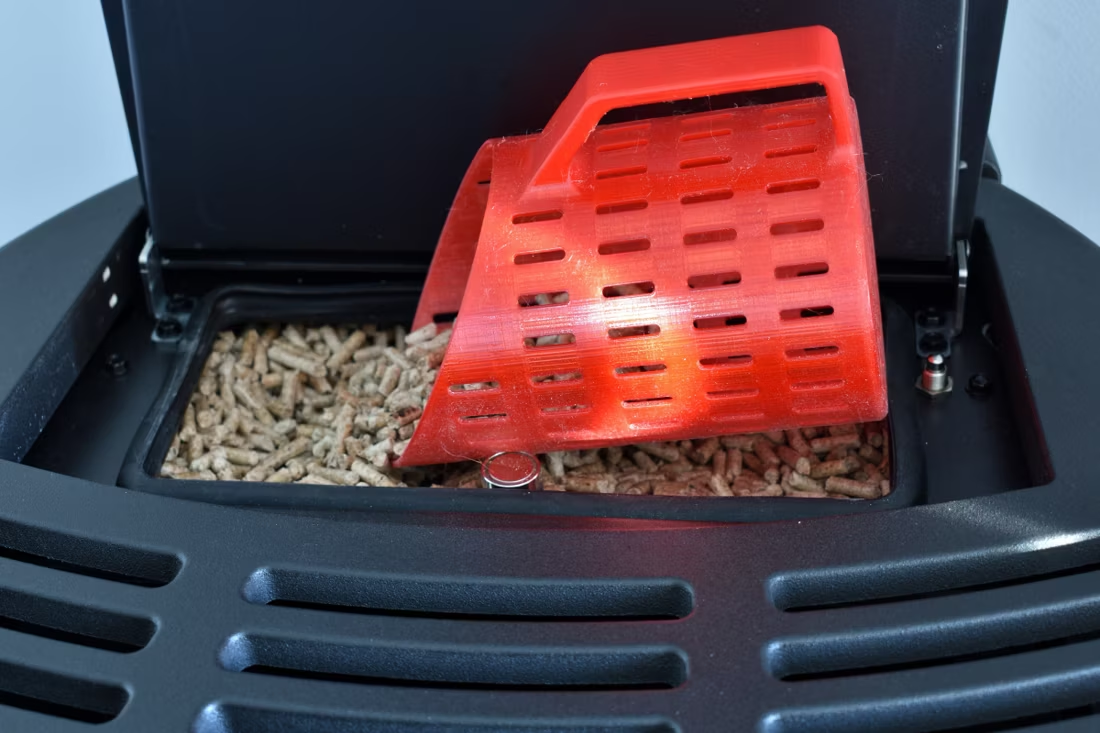
A clean pellet stove is a happy pellet stove. Plan on cleaning the burn pot about once a week when you're burning regularly—ash and clinkers gum up the air holes just like a pellet barbecue. Most pellet stove problems trace back to skipped cleaning that nobody explained up front. Some designs make it easy with a trapdoor burn pot: pull a lever and the gunk drops into the ash pan.
Can I install a fireplace myself?
If you're putting a fire in your house on purpose, it's best to work with an expert. Unless you're genuinely experienced in framing, gas line, vent pipe, and the national code on clearances to combustibles, have a professional do it—and ideally the same company that sells you the fireplace, so warranty, service, and liability all live under one roof.
Should the dealer who sells my fireplace also install it?
Ideally, yes. A fireplace project involves vent pipe, gas line, electrical, and often tile or stone. Hire three or four separate trades and you own the liability and the game of telephone between them. One company selling and installing means one accountable party, start to finish—ask about factory training, on-time completion records, and what happens if an inspection fails.
Stove and Fireplace Dealers in Taos County
Pellet Brands Stocked Around Taos County
Manufacturers will point you to the nearest stocking dealer.
Find your pellet stove in Taos County.
Tell us a bit about your home and elevation, and we'll match you with a trusted local dealer and send over a free Project Guide & Parts List—the exact parts, vent kit included, for your pellet project in Taos County.
Find Your Fireplace →