
Find the right pellet stove for Quay County's high plains winters.
Steady, thermostat-controlled heat for Tucumcari, San Jon, Logan, and the ranch country in between. I'll match you with a trusted local dealer who can get the right unit installed correctly.
Every Project Starts From One of These Five Situations
Consistent heat without hauling cordwood across the plains.
Quay County sits on the eastern New Mexico high plains, with mild-cold winters averaging around 25°F on the low end and a winter heating season roughly comparable to a moderate mountain-region climate—noticeably milder than a place like Bismarck ND, but still cold enough that homes in Tucumcari, San Jon, and out along Route 66 need real supplemental heat for several months. Wood is available locally through pinyon, juniper, and ponderosa pine, but many Quay County homeowners—especially those in town lots without easy access to a woodpile, or those managing wildfire-smoke-conscious properties near grassland and rangeland—prefer the cleaner, more controlled burn of a pellet stove.
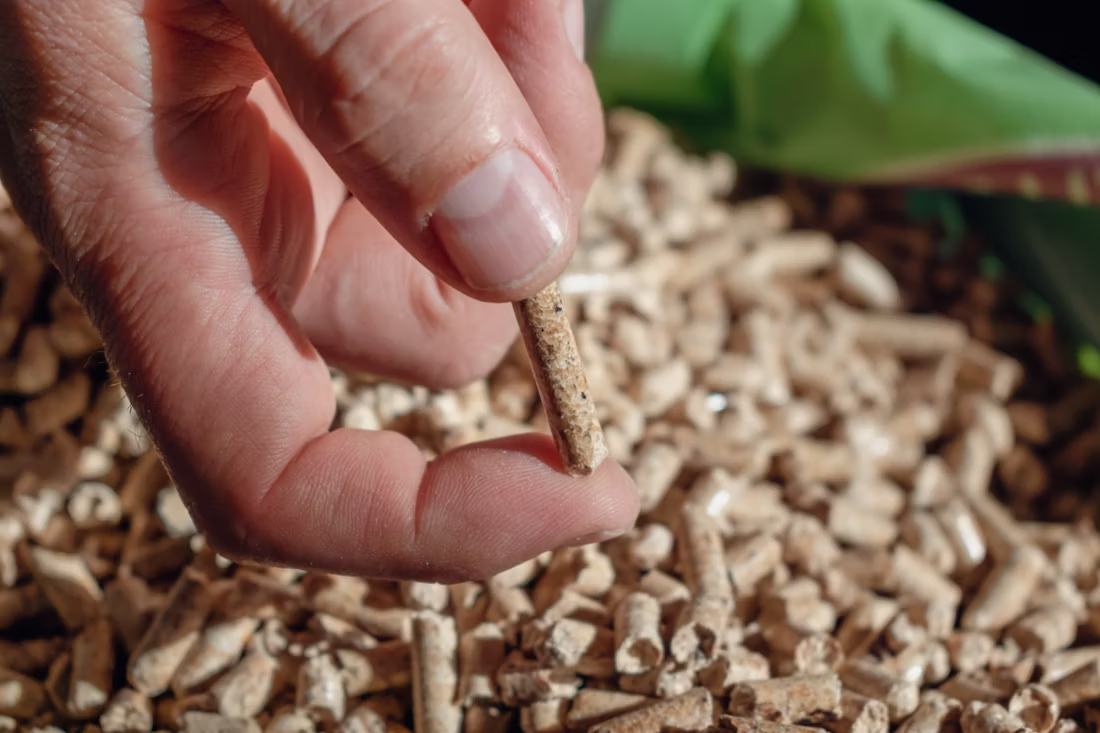
Pellet stoves give you thermostat-style operation, a hopper you load every day or two instead of splitting wood, and a burn that's dramatically lower in visible smoke than an open wood fire—a real consideration in a county where wildfire smoke is already a seasonal concern. Regional pellet brands like Forest Energy and Lignetics are distributed through the area, so fuel isn't hard to come by even though Quay County is sparsely populated. A local dealer can size the right unit for your square footage and show you where pellets are stocked locally versus what needs to be ordered ahead of winter.
Three steps. No salesperson until you're ready.
Tell us about your project
Your zip code, your situation, and the fuel you're leaning toward—or let the answers point you to one.
See what's actually available
The brands dealers within 100 miles genuinely carry—real options, never a catalog mirage.
Get your dealer & Project Guide
A trusted local dealer, plus the free Project Guide & Parts List that names every component of the job.
Frequently Asked Questions
How much does a pellet stove installation cost in Quay County?
A typical pellet stove installation in Quay County runs in the range you'd see across most of New Mexico's high plains—generally lower than wood or gas installs because pellet venting is simpler. Costs depend on whether you're installing a freestanding stove that vents through an exterior wall or a pellet insert going into an existing masonry fireplace opening in an older Tucumcari home. Because Quay County is rural with a small population, expect installers to factor in some travel time if you're out toward Logan, San Jon, or House—ask about that up front when you get a quote.
Is pellet fuel actually available in Quay County, or will I have to drive far for it?
Regional brands like Forest Energy and Lignetics are distributed through the area, so pellets aren't a fringe product here—but Quay County's population is under 7,000 spread across a large stretch of the high plains, so you won't find pellet fuel stocked on every corner the way you might in a denser market. Most pellet stove owners here buy several tons ahead of the winter heating season rather than picking up a bag or two at a time. A local dealer can tell you exactly where pellets are stocked near Tucumcari and whether pre-season ordering makes sense for your situation.
How does a pellet stove compare to burning local wood like pinyon or juniper?
Pinyon, juniper, and ponderosa pine are all common locally and burn well in a wood stove, but they require splitting, seasoning, and hauling—and open wood burning adds to smoke output at a time when wildfire smoke is already a periodic concern on the high plains. A pellet stove sidesteps the wood-handling entirely: you load a hopper with bagged pellets instead of managing a woodpile, and the burn is markedly cleaner. For Quay County homeowners without easy access to standing timber, or those on smaller town lots in Tucumcari where storing cords of wood isn't practical, pellet heat is often the more realistic choice.
Do I need electricity for a pellet stove to work, and is that a problem in Quay County?
Yes—pellet stoves use an electric auger to feed fuel and a blower to distribute heat, so they won't run during a power outage without a backup power source. That's worth thinking through in Quay County, where rural electric service can be affected by high-plains wind events. Some homeowners pair a pellet stove with a battery backup or small generator for exactly this reason. If uninterrupted heat during outages is your top priority, a wood stove burning local pinyon or juniper is the more reliable backup option—many rural Quay County homes actually keep both.
What size pellet stove do I need for my Quay County home?
Sizing depends on square footage, insulation, and whether you're using the stove as primary or supplemental heat. Quay County's climate zone 4B winters are milder than the northern mountain counties in the state, with a moderate-length heating season, so most homes here don't need the largest units on the market—a mid-size pellet stove is often enough for a well-insulated main living area. Older, less-insulated homes around Tucumcari or drafty ranch houses out toward San Jon may need to size up. A local dealer will size your space during an in-home consultation.
Do I need a permit to install a pellet stove in Quay County?
Most pellet stove installations require a building permit, and the specific process depends on whether your property is inside Tucumcari city limits or in unincorporated Quay County. A local installer who regularly works in the area will know which jurisdiction to file with and can typically handle the permitting as part of the install so you don't have to navigate it yourself. Because pellet stoves vent through a simpler wall-thimble system rather than a full masonry chimney, the permitting and inspection process is usually more straightforward than a wood stove installation.
How often does a pellet stove need maintenance?
Pellet stoves need more frequent light maintenance than wood stoves, but less heavy-duty work. Plan on emptying the ash pot every few days during regular use, cleaning the burn pot weekly to keep the flame consistent, and a full professional cleaning and inspection once a year—ideally before the heating season starts in the fall. Because pellet stoves have moving mechanical parts (the auger motor and combustion blower), it's worth having a technician check those components annually rather than only cleaning the firebox.
Pellet stove vs. wood stove—which is right for my Quay County home?
Wood stoves burning local pinyon, juniper, or ponderosa pine work without electricity, offer lower ongoing fuel cost if you're cutting your own, and give you backup heat during a power outage—a real consideration given rural electric service on the high plains. Pellet stoves offer easier day-to-day operation, a cleaner burn with less visible smoke (helpful during wildfire-smoke season), and more consistent, thermostat-like heat output without splitting or stacking wood. For in-town Tucumcari homes without wood storage space, pellet often wins. For rural properties where power reliability and self-sufficiency matter more, wood is often the better fit. Some Quay County homeowners install both.
Are pellet stoves a good fit for Quay County's climate overall?
Yes—Quay County's climate zone 4B winters, with lows averaging around 25°F and a moderate-length heating season, are a solid match for pellet heat. This isn't an extreme cold climate like the northern Rockies or upper Midwest, so a pellet stove sized correctly for your home can comfortably serve as primary or supplemental heat through most of the winter season without needing an oversized unit. The main tradeoff to plan around is fuel sourcing given the county's small, spread-out population—stocking up ahead of the season is the standard local approach.
How often does a pellet stove need cleaning?
A clean pellet stove is a happy pellet stove. Plan on cleaning the burn pot about once a week when you're burning regularly—ash and clinkers gum up the air holes just like a pellet barbecue. Most pellet stove problems trace back to skipped cleaning that nobody explained up front. Some designs make it easy with a trapdoor burn pot: pull a lever and the gunk drops into the ash pan.
Why is a fireplace insert so efficient?
An insert does two things: it seals the chimney completely, so you stop losing air you already paid to heat, and it radiates warmth into the room through the firebox and glass. Most add a heat-exchange fan that pulls cool room air underneath, wraps it around the hot firebox, and pushes it back out warm. Your home is more efficient before you've even lit the first fire.
Can I install a fireplace myself?
If you're putting a fire in your house on purpose, it's best to work with an expert. Unless you're genuinely experienced in framing, gas line, vent pipe, and the national code on clearances to combustibles, have a professional do it—and ideally the same company that sells you the fireplace, so warranty, service, and liability all live under one roof.
How much should I budget for a fireplace?
For an average home—covering the fireplace, the vent pipe, and basic installation—a budget between $3,900 and $5,500 gives you a lot of options across wood, gas, and pellet. By the time you add finish work, gas line, and electrical, the average complete installation lands between $5,000 and $12,000 all-in. In a remodel or new build, a good rule is to put about 2.5% of the total project cost toward the fireplace.
Pellet Brands Stocked Around Quay County
Manufacturers will point you to the nearest stocking dealer.
Get your Quay County pellet stove Project Guide & Parts List.
Tell me a bit about your home and I'll match you with a trusted local dealer and send over a free Project Guide & Parts List—the right pellet stove, the exact vent kit, and a plan for getting it installed correctly.
Find Your Fireplace →