
Keep Your Family Warm and Safe—No Matter What
Placitas sits off the natural gas grid in the Sandia foothills, where pinyon smoke and wood heat have been part of winter for generations. Find the right stove or insert, and connect with a trusted local dealer.
Every Project Starts From One of These Five Situations
Wood heat fits life off the gas line.
Placitas is an unincorporated Sandoval County community tucked into the foothills of the Sandia Mountains at nearly 5,800 feet, bordered by Cibola National Forest to the south and Santa Fe National Forest to the north. Winters here are milder than the northern Rockies—the winter heating need here is just a fraction of what a place like Bismarck, ND sees—but overnight lows still settle into the low 20s, and natural gas mains don't reach this far into unincorporated Sandoval County. Most homes here run on propane, electricity from PNM, or wood, often in some combination.
Pinyon and juniper, harvested from the surrounding national forest land, are the signature firewood species in this part of New Mexico—pinyon smoke is practically the smell of winter in the Sandia foothills. With PNM's residential rate running about 15.6 cents per kWh, a wood stove or insert offers real savings as a supplemental or backup heat source, and it keeps a home warm during the outages that occasionally hit rural Sandoval County. Wildfire smoke is the area's main air quality concern rather than winter inversion, which means well-maintained, EPA-certified stoves and responsible defensible-space wood storage matter more here than curtailment schedules.
Firewood Cutting Permits Near Placitas
Three steps. No salesperson until you're ready.
Tell us about your project
Your zip code, your situation, and the fuel you're leaning toward—or let the answers point you to one.
See what's actually available
The brands dealers within 100 miles genuinely carry—real options, never a catalog mirage.
Get your dealer & Project Guide
A trusted local dealer, plus the free Project Guide & Parts List that names every component of the job.
Frequently Asked Questions
How much does a wood stove installation cost in Placitas?
A typical wood stove or insert installation in Placitas runs $4,000 to $8,500, with the final number driven mostly by chimney work. Many older Placitas homes have a traditional adobe-style kiva fireplace, and converting one to a modern insert with a stainless liner tends to land in the middle of that range. New freestanding stoves in homes without an existing chimney—common on newer lots off Highway 165—run toward the higher end once Class A pipe and roof penetration are factored in. Sandoval County requires a building permit for the work, and most local installers include that in their quote.
What size wood stove do I need for a Placitas home?
Sizing depends on square footage, ceiling height, and whether the stove is your primary heat or a supplement to propane or electric baseboard. As a rough guide for this area's milder high-desert winters: small stoves suit casitas and single rooms under 1,000 square feet, medium stoves handle most main living areas up to about 2,000 square feet, and larger stoves are usually overkill unless you're heating a full adobe or territorial-style home with open sightlines. Because Placitas winters aren't as brutal as higher-elevation Rockies towns, oversizing is the more common mistake—a local retailer can size your space correctly during an in-home visit.
Where can I find certified wood stove installers near Placitas?
Look for NFI (National Fireplace Institute) or CSIA (Chimney Safety Institute of America) certification—Placitas itself is small enough that most certified installers are based in Bernalillo, Rio Rancho, or Albuquerque and serve the Sandia foothills as part of their regular territory. That's fine; what matters is the certification, not the mailing address. Avoid a general handyman for chimney and venting work, especially on a kiva fireplace conversion, where liner sizing and clearance-to-combustible rules are easy to get wrong on adobe construction.
Should I convert my kiva fireplace to a wood insert?
If your Placitas home has a traditional adobe kiva fireplace, it's almost certainly losing more heat up the flue than it puts into the room—open masonry fireplaces are notoriously inefficient. Converting it to a modern EPA-certified wood insert keeps the Southwestern look of the existing hearth while dramatically improving heat output and cutting the amount of wood you burn. This is one of the more common projects local retailers handle in this part of Sandoval County, and it typically reuses the existing masonry structure with a new stainless steel liner run up the flue.
Do I need a permit to install a wood stove in Placitas?
Yes—since Placitas is unincorporated, permitting runs through the Sandoval County Building Department rather than a city office, and any new wood stove or insert needs to meet current EPA emissions standards. Most local installers handle the paperwork as part of the job. On the fuel side, if you're cutting your own wood on national forest land, you'll need a permit from Cibola National Forest or Santa Fe National Forest, both of which sell cutting permits for $5 to $20 per cord during the May-through-October season.
What's the best wood stove for Placitas's climate?
Placitas doesn't see the sustained sub-zero stretches that make 20-hour catalytic burn times essential, so a well-built non-catalytic stove from a brand like Pacific Energy or Lopi is a solid fit for most homes here, especially if the stove is supplementing propane or electric heat rather than carrying the whole house. Homes at higher elevation on the mesa or further into the foothills, where wind and nighttime cold are more pronounced, may still benefit from a catalytic model for longer overnight burns. A local retailer can match the stove to your specific site and elevation.
How often should my chimney be inspected in Placitas?
Plan on an annual inspection, ideally before burning season starts in the fall. This matters more than it might seem in Placitas because pinyon, the area's favorite firewood, is resinous and pitchy—it burns hot and smells great, but it can build creosote faster than a less sappy species if it isn't well-seasoned. A CSIA-certified sweep can tell you quickly whether your burning habits and wood moisture content are keeping creosote in check, which is the single biggest chimney fire risk for households burning pinyon regularly.
Where can I get firewood in the Placitas area?
Local and regional suppliers around Bernalillo and Algodones deliver pinyon, juniper, and ponderosa pine by the cord to Placitas addresses, with prices generally running in line with the rest of central New Mexico depending on species and seasoning. For self-cut wood, both Cibola National Forest and Santa Fe National Forest sell cutting permits for $5 to $20 per cord, valid May through October—a good option given how close Placitas sits to both forest boundaries.
Wood stove vs. pellet stove—which makes sense in Placitas?
Wood stoves burn cordwood, work with zero electricity, and pair naturally with the pinyon and juniper already available through nearby Forest Service permits—a real advantage given that rural Sandoval County does see occasional power outages. Pellet stoves, using regional brands like Forest Energy or Lignetics, are more convenient to load and burn cleaner, but the auger and blower need electricity, so they go dark in an outage unless paired with a battery backup. For a Placitas home without natural gas service, many owners lean toward wood for its off-grid reliability, while using a pellet stove or insert as a lower-maintenance option in a secondary living space.
Why is a fireplace insert so efficient?
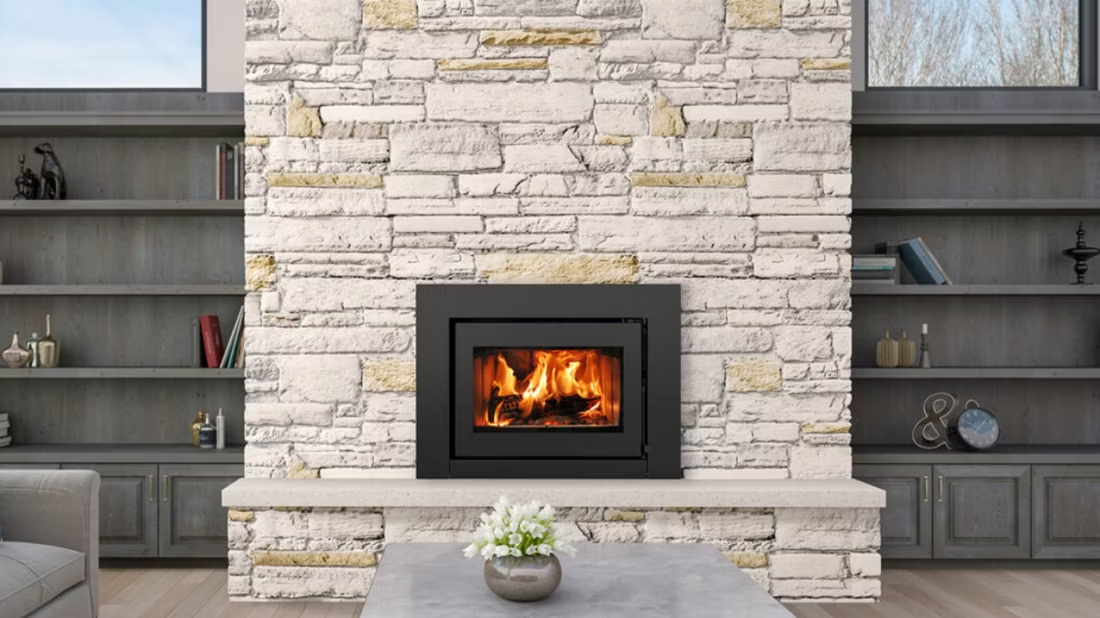
An insert does two things: it seals the chimney completely, so you stop losing air you already paid to heat, and it radiates warmth into the room through the firebox and glass. Most add a heat-exchange fan that pulls cool room air underneath, wraps it around the hot firebox, and pushes it back out warm. Your home is more efficient before you've even lit the first fire.
What's the difference between an insert and a zero-clearance fireplace?
An insert is a fireplace that slides into a pre-existing wood-burning fireplace—if you don't have one, there's nothing to insert it into. A zero-clearance fireplace is built into a framed wall, which makes it the answer for remodels and new construction. Simple test: existing masonry fireplace means insert; blank or framed wall means zero-clearance.
What is an in-home preview and do I need one?
It's a visit where a hearth professional measures your space, confirms the model you picked actually works in your home, and walks the specs—framing, gas line, venting, finish work—before anything is ordered. Some details you just can't know until you see the house. Never make a down payment without one; it's the single most-skipped step that burns buyers.
Does a fireplace add value to my home?
On average, a fireplace adds back to the home about the same amount you spent installing it. Add the monthly savings from heating the rooms you actually use instead of the whole house—often hundreds of dollars a year—and the value case is strong before you even count what a fire does for how your family uses the room.
Nearby Dealers
Hearth shops serving Placitas and the surrounding area. Every listing shows whether it is a WhyFire partner, a dealer we have verified as authorized for the brands we recommend, or a local business carrying hearth products. No manufacturer pays for placement. How we verify dealers →
Western Building Supply
HeatSource
Banker Insulation
Mountain West Sales, Inc.
Builders Materials Inc.
Kinney Brick
Find your wood stove in Placitas.
Tell us a bit about your home and we'll match you with the right wood stove or insert for the Sandia foothills, plus a free Project Guide & Parts List—including the vent kit—from a trusted local dealer.
Find Your Fireplace →