
Keep Your Family Warm and Safe—No Matter What
With winter lows averaging 30°F and only a fairly light winter heating load overall, most Picacho Hills homes get by fine on gas or electric. A handful of homeowners still want the real thing—here's what that actually involves.
Every Project Starts From One of These Five Situations
A desert climate that rarely needs it.
Picacho Hills sits in the Mesilla Valley just west of Las Cruces, at about 4,145 feet in the Chihuahuan Desert. Winters here are short and mild—average lows hover around 30°F, and the area sees a comparatively light winter heating load overall. Compare that to a genuinely cold-climate town like Fargo, ND, which faces a winter heating load more than three times as heavy, and it's easy to see why wood heat never became a local necessity. Most homes in Doña Ana County are built and heated around gas furnaces or electric systems served by El Paso Electric, not cordwood.
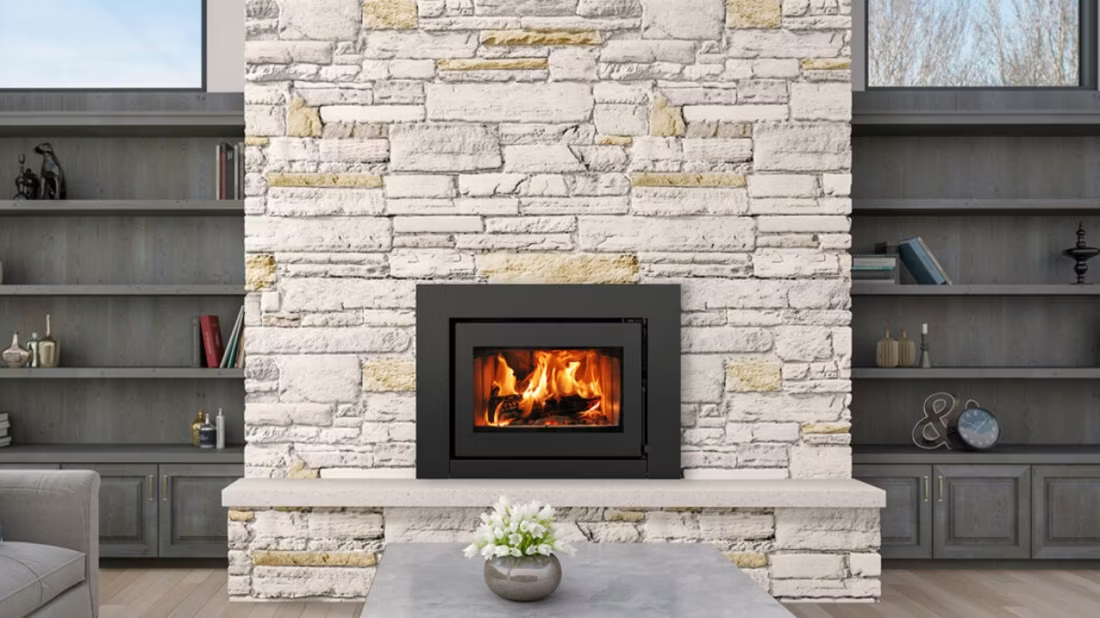
That doesn't mean nobody wants one. A small number of Picacho Hills homeowners install a wood-burning fireplace or stove for the ambiance, for the occasional January cold snap, or because a rural lot and a detached casita make an off-grid backup appealing. If that's you, regional species like pinyon, juniper, and ponderosa pine are all available, and Doña Ana County does see periodic wildfire-smoke advisories in dry years—worth keeping in mind if you're weighing how often you'd actually burn. It's a real project, just not a common one, which is exactly why matching with a dealer who understands the local permitting and venting realities matters more here than in a place where every third house already has one.
Firewood Cutting Permits Near Picacho Hills
Three steps. No salesperson until you're ready.
Tell us about your project
Your zip code, your situation, and the fuel you're leaning toward—or let the answers point you to one.
See what's actually available
The brands dealers within 100 miles genuinely carry—real options, never a catalog mirage.
Get your dealer & Project Guide
A trusted local dealer, plus the free Project Guide & Parts List that names every component of the job.
Frequently Asked Questions
Are wood stoves or fireplaces common in Picacho Hills?
Not really, and it's worth saying plainly: with average winter lows around 30°F and a fairly light winter heating load overall, Picacho Hills doesn't have the sustained cold that makes wood a practical primary or supplemental heat source. Most homes rely on gas or electric heating year-round. Wood-burning units still show up occasionally—usually for ambiance, a detached guest casita, or backup heat on a large rural lot—but they're the exception rather than the norm in this part of Doña Ana County.
If wood heat isn't necessary here, why would anyone install a wood stove or fireplace?
The appeal in a place like Picacho Hills usually isn't heating efficiency, it's atmosphere and independence. A wood-burning fireplace gives you a real fire on the handful of genuinely cold nights each winter, and a wood stove in a detached studio or casita gives you heat that doesn't depend on the grid. For homeowners who grew up with wood heat elsewhere, or who simply want a fireplace as the visual centerpiece of a great room, it's a lifestyle choice more than a heating necessity out here.
What does a wood stove or fireplace installation cost in Picacho Hills?
Because wood installs are uncommon locally, there isn't a well-established local price range the way there is for gas or electric units. Nationally, a freestanding wood stove installation typically runs $3,000 to $7,000 depending on the stove, chimney work, and hearth pad requirements, with masonry or zero-clearance wood fireplaces running higher once framing and Class A chimney pipe are involved. A trusted local dealer serving the Las Cruces area can give you a firm number after seeing your home, since freight, chimney routing, and code details vary more here than in markets where wood is the norm.
What wood species are actually available to burn near Picacho Hills?
Pinyon, juniper, and ponderosa pine are the regional species most commonly available in southern New Mexico. Pinyon in particular is prized locally for its aromatic smoke and dense, long-burning coals, while juniper burns hot and fast and is often mixed with pine for a more even fire. None of these are sold on every corner the way firewood is in wetter, colder states, so plan on sourcing from a dedicated firewood supplier or cutting your own under permit rather than picking some up at a grocery store.
Can I cut my own firewood near Picacho Hills, and do I need a permit?
Yes, through the Lincoln National Forest, which issues personal-use cutting permits for $5 to $20 per cord during the May-through-October season. Lincoln National Forest isn't right next door—it's a drive north into the Sacramento Mountains near Ruidoso and Alamogordo—so this is more of a stock-up trip than a weekend errand. If you're planning to burn regularly, most Picacho Hills homeowners find it easier to buy pinyon or juniper from a local firewood seller than to make the round trip themselves.
Are there air quality restrictions on wood burning in Doña Ana County?
Doña Ana County doesn't have the winter-inversion wood smoke problems you'd see in a mountain valley, but wildfire smoke is a recognized regional air quality concern, especially in dry years when smoke from fires in New Mexico and Arizona settles over the Mesilla Valley. There's no formal residential burn curfew tied to wood stoves here the way there is in some Western states, but choosing an EPA-certified stove or insert still cuts down real smoke output, and it's simple good-neighbor practice in a community as low-density as Picacho Hills.
Is gas or electric a better fit than wood for heating in Picacho Hills?
For actual heating load, almost certainly yes. Natural gas and electric service (through El Paso Electric, at roughly 13.5 cents per kWh) handle the region's mild winters without the ash, chimney maintenance, or fuel storage that wood requires. A gas fireplace or insert gets you instant flame and real supplemental heat with a fraction of the upkeep, and an electric fireplace can add ambiance to a room with no venting at all. Wood is worth considering mainly when you specifically want a live fire, off-grid backup, or a rustic aesthetic that gas or electric can't fully replicate.
Can I install a wood-burning fireplace purely for looks, even if I won't rely on it for heat?
Yes—plenty of Southwestern homes build a masonry or zero-clearance wood fireplace as the visual anchor of a great room and use it a handful of nights each winter rather than for daily heat. If low maintenance matters more to you than a real fire, a gas log set or gas insert delivers a similar look with none of the ash or chimney sweeping. If you do want an actual wood fire on Doña Ana County's cooler nights, just size the unit modestly—a fireplace built to heat a 2,000-square-foot home in a place like Bozeman, MT would be significant overkill for occasional evening use here.
How do I find someone to install a wood stove or fireplace in a market where they're rare?
This is exactly where it helps to work with someone who knows the local territory rather than guessing off a big-box listing. Because wood installs are infrequent around Picacho Hills, the dealers who do handle them tend to work out of the broader Las Cruces area and split their business across gas, electric, and the occasional wood project. We match you with a trusted local dealer who can size the unit correctly, handle the county permitting, and vent it properly—not just sell you a box off a truck.
Why is my open fireplace making my house colder?
Open fireplaces suck—literally. As the fire burns, it consumes air your furnace already paid to heat and pulls it out through the chimney, so the house is actually colder after the fire goes out than before you lit it. An insert fixes this: it seals the chimney, puts fixed glass across the front, and turns that hole in your house into a real heat source.
Why is a fireplace insert so efficient?
An insert does two things: it seals the chimney completely, so you stop losing air you already paid to heat, and it radiates warmth into the room through the firebox and glass. Most add a heat-exchange fan that pulls cool room air underneath, wraps it around the hot firebox, and pushes it back out warm. Your home is more efficient before you've even lit the first fire.
Can a fireplace actually lower my heating bill?
Yes—by creating a comfort zone. A furnace heats every square foot of the house just to warm the one room you're in; a gas fireplace on low burns roughly a sixth of the gas a typical furnace does. Set the furnace around 55–60 degrees as a baseline, then heat the rooms your family actually uses. Families who heat this way commonly save $20–$60 a month.
What is an in-home preview and do I need one?
It's a visit where a hearth professional measures your space, confirms the model you picked actually works in your home, and walks the specs—framing, gas line, venting, finish work—before anything is ordered. Some details you just can't know until you see the house. Never make a down payment without one; it's the single most-skipped step that burns buyers.
Nearby Dealers
Hearth shops serving Picacho Hills and the surrounding area. Every listing shows whether it is a WhyFire partner, a dealer we have verified as authorized for the brands we recommend, or a local business carrying hearth products. No manufacturer pays for placement. How we verify dealers →
Western Stoves And Fireplaces
Rawson Builders Supply
Hi Tech Home Services
Find your wood option in Picacho Hills.
Tell us a bit about your home and whether you're after everyday heat, occasional ambiance, or off-grid backup. We'll match you with a trusted local dealer and send over a free Project Guide & Parts List for your wood project, including the vent kit and what it'll take to do it right in Picacho Hills.
Find Your Fireplace →