
Reliable Heat for Mora County's High Mountain Winters.
Propane-fueled gas heat for the villages of the Mora Valley and beyond—Cleveland, Guadalupita, Chacon, Ledoux, and the county seat itself. Find the right unit and connect with a trusted local dealer.
Every Project Starts From One of These Five Situations
Instant heat without the wood-hauling ritual.
Mora County is one of New Mexico's smallest and most rural counties by population—just over 1,300 residents spread across villages tucked into the foothills of the Sangre de Cristo range, with elevations running from around 6,500 feet in the valley bottoms near Mora up past 8,000 feet toward Guadalupita and Chacon. Zone 5B winters here mean long stretches of hard freezes from November through March, and generations of families have heated with pinyon, juniper, and ponderosa pine cut from the surrounding hills. That wood heritage is real—but it's also a lot of labor, and a growing number of Mora County homeowners are adding gas for the parts of the day (or the winter) when convenience matters more than tending coals.
There's no natural gas utility pipeline serving Mora County's small, scattered population, so propane is the standard fuel behind nearly every gas fireplace, insert, or stove installed here—supplied by regional propane companies that already deliver tanks to homes and ranches throughout the Mora Valley. For older adobe homes with traditional corner kiva fireplaces, a direct-vent propane insert can convert a smoky, inefficient hearth into a clean, push-button heat source without touching the original fireplace's look. And with wildfire smoke closures occasionally limiting outdoor burning and even wood-cutting access in dry years, having a propane backup gives Mora County households a heat source that doesn't depend on hauling or splitting a single log.
Three steps. No salesperson until you're ready.
Tell us about your project
Your zip code, your situation, and the fuel you're leaning toward—or let the answers point you to one.
See what's actually available
The brands dealers within 100 miles genuinely carry—real options, never a catalog mirage.
Get your dealer & Project Guide
A trusted local dealer, plus the free Project Guide & Parts List that names every component of the job.
Frequently Asked Questions
How much does a gas fireplace installation cost in Mora County?
Most gas fireplace and insert installations in Mora County run somewhere between roughly $3,500 and $9,000, with the biggest cost swings driven by whether a propane tank is already on the property and how much gas line work is needed to reach the unit. A direct-vent insert going into an existing adobe kiva fireplace or masonry hearth, with a propane tank already in place, lands on the lower end. New construction, cabin builds near Guadalupita or Chacon, or homes needing a fresh propane tank installation and longer line runs push toward the higher end. Given the distances between villages in the county, expect a modest travel charge folded into quotes from installers based out of Las Vegas, NM or Taos.
Can I convert my traditional adobe fireplace to gas?
Yes—this is a common project for older homes throughout the Mora Valley. A direct-vent gas insert or a vented gas log set can be fitted into an existing corner kiva or masonry fireplace, often using a stainless liner run through the existing flue. It preserves the adobe hearth's look and thermal mass while adding push-button heat and eliminating the smoke and ash that come with an open wood fire. Because most homes in the county run on propane rather than piped gas, your installer will also confirm your existing tank size can support the added appliance, or help you size a new tank.
Do I need natural gas, or does everyone here use propane?
Propane is the standard fuel for gas fireplaces throughout Mora County—there's no natural gas pipeline utility serving the county's small, dispersed population, so nearly every installation runs on propane from a tank, whether it's a shared community setup or a tank dedicated to your property. Regional propane suppliers already deliver fuel to homes and ranches across the Mora Valley for cooking, water heating, and space heat, so adding a gas fireplace or insert to that existing propane account is usually straightforward.
Will my gas fireplace still work if the power goes out?
Most modern gas fireplaces are designed to run through a power outage, which matters in Mora County—mountain snowstorms and downed lines along the rural corridors between villages can knock out power for hours or longer. Units with IPI (intermittent pilot ignition) include a battery backup that automatically takes over when the electricity drops, so the fireplace still lights on demand. Valor's gas fireplaces go a step further: their pilot generates its own electricity through the thermocouple, so there's no battery to check or replace at all. Either option gives you real heat when a storm knocks out the grid—ask your local dealer which ignition system is on the model you're considering.
What's the difference between a gas fireplace, gas insert, and gas stove?
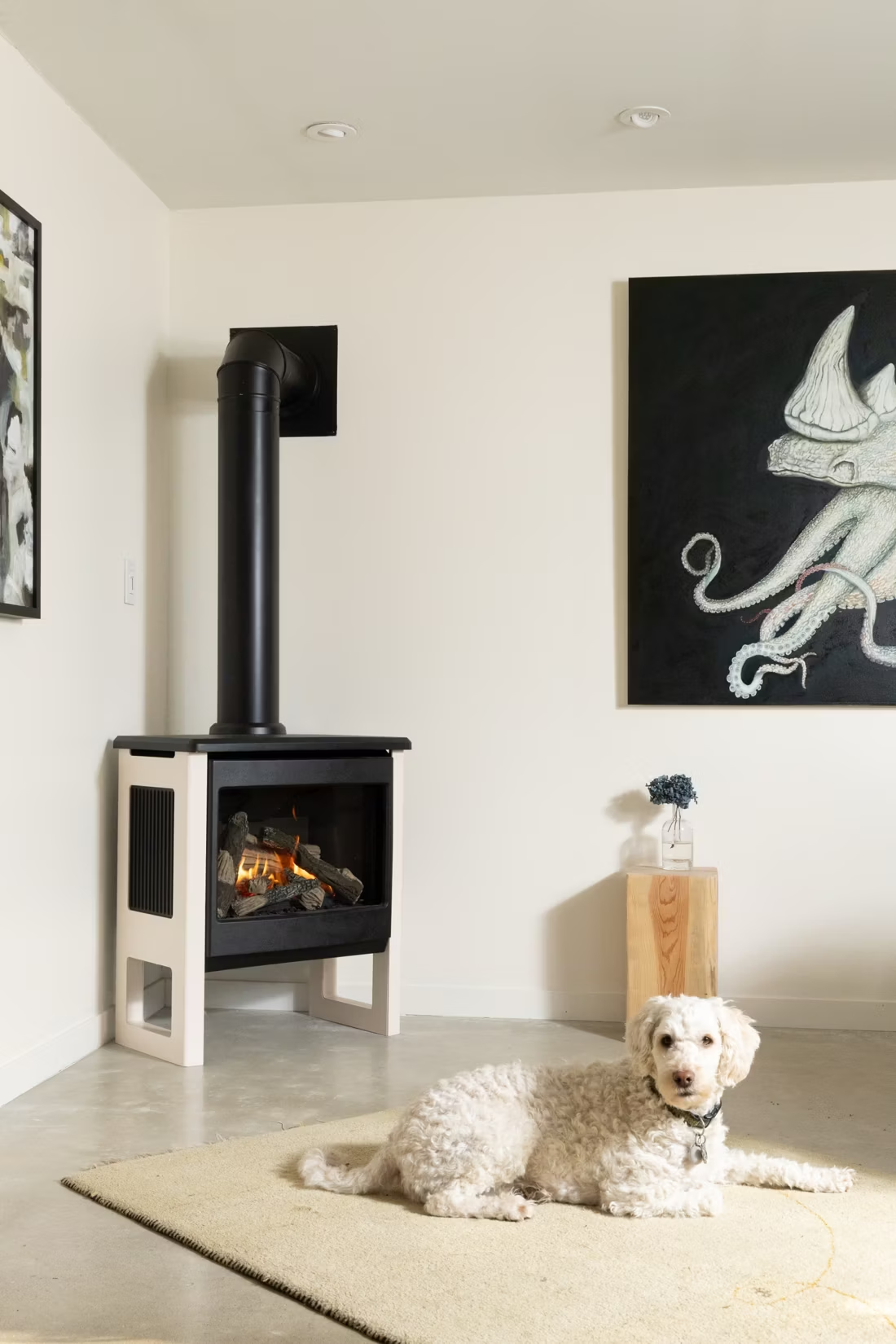
A gas fireplace is a fully built-in unit framed into a wall—the right choice for new construction or a remodel that doesn't have an existing hearth. A gas insert is built to slide into an existing fireplace opening, which in Mora County often means an adobe kiva or traditional masonry hearth, converting it into a sealed, efficient heat source that still vents through the existing chimney or flue. A gas stove is a freestanding cabinet-style unit that sits on a hearth pad, which works well in a cabin or outbuilding without an existing fireplace at all. For most Mora County homes with an existing hearth, an insert is the simplest upgrade.
Do I need a permit to install a gas fireplace in Mora County?
Yes—new gas fireplace or insert installations typically require a building permit through the Mora County Building Department, and any propane line or tank work needs to be done by a licensed propane technician or gasfitter. Most established hearth and propane companies serving the county handle the permitting as part of the install, which is one of the real advantages of working with a licensed local dealer rather than a handyman install—they coordinate the tank, the gas line, and the inspection together.
Should I choose a vented or vent-free gas fireplace at this elevation?
Vented, direct-vent gas fireplaces pull combustion air from outside and exhaust it back outside—they're the safest option and the most universally recommended, especially at Mora County's elevation, where homes at 7,000-plus feet already have less oxygen available indoors. Vent-free units burn fuel directly into the living space and are legal in New Mexico with strict room-sizing and ventilation rules, but combustion appliances generally perform less predictably at altitude and need altitude-adjusted orifices to burn cleanly. With wildfire smoke already an occasional air quality concern in the region during dry summers, most Mora County homeowners are better served sticking with a direct-vent unit that keeps combustion byproducts outside entirely.
How often should my gas fireplace be serviced?
Plan on an annual inspection, ideally before the cold sets in each fall. A qualified propane technician will check the burner, pilot assembly, venting, and gas connections, and clean the glass and firebox interior—a lighter-touch service than wood chimney sweeping, but just as important for safety, particularly in older adobe homes where flue conditions can vary. Annual service typically runs in the $150 to $250 range and is worth scheduling with the same company that handles your propane delivery or installed the unit.
Gas vs. wood—which makes more sense for a Mora County home?
Wood heat has deep roots here—pinyon, juniper, and ponderosa pine cut locally under national forest permits have heated Mora Valley homes for generations, and a wood stove keeps working with no propane delivery and no power at all. Gas offers something different: instant on-off heat with no hauling, splitting, or ash cleanup, and a backup that's ready the moment you need it, including during the wildfire-smoke-driven burn restrictions that occasionally limit wood burning in dry years. Many households in the county end up with both—wood as the primary or backup heat source they trust in a real outage, and a gas insert or stove in the main living space for daily convenience.
What's the difference between an insert and a zero-clearance fireplace?
An insert is a fireplace that slides into a pre-existing wood-burning fireplace—if you don't have one, there's nothing to insert it into. A zero-clearance fireplace is built into a framed wall, which makes it the answer for remodels and new construction. Simple test: existing masonry fireplace means insert; blank or framed wall means zero-clearance.
Why is my open fireplace making my house colder?
Open fireplaces suck—literally. As the fire burns, it consumes air your furnace already paid to heat and pulls it out through the chimney, so the house is actually colder after the fire goes out than before you lit it. An insert fixes this: it seals the chimney, puts fixed glass across the front, and turns that hole in your house into a real heat source.
Can I install a fireplace myself?
If you're putting a fire in your house on purpose, it's best to work with an expert. Unless you're genuinely experienced in framing, gas line, vent pipe, and the national code on clearances to combustibles, have a professional do it—and ideally the same company that sells you the fireplace, so warranty, service, and liability all live under one roof.
What is an in-home preview and do I need one?
It's a visit where a hearth professional measures your space, confirms the model you picked actually works in your home, and walks the specs—framing, gas line, venting, finish work—before anything is ordered. Some details you just can't know until you see the house. Never make a down payment without one; it's the single most-skipped step that burns buyers.
Find your gas fireplace in Mora County.
Tell us a bit about your home and elevation, and we'll match you with the right gas fireplace, insert, or stove—plus a free Project Guide & Parts List with your recommended local dealer and the exact parts, including the vent kit, for your Mora County installation.
Find Your Fireplace →