
Heat that holds through a high-country Mora County winter.
Wood, gas, pellet, and electric fireplace resources for every village and rural homestead in Mora County—from the town of Mora to Wagon Mound, Cleveland, and Guadalupita. Find the right unit and connect with a trusted local hearth retailer.
Every Project Starts From One of These Five Situations
High-desert, high-elevation heating in Mora County, New Mexico.
Mora County sits in the foothills of the Sangre de Cristo range in north-central New Mexico, with valley floors around 6,900 feet climbing toward 9,000 feet near the Pecos Wilderness boundary. With just over 1,300 residents spread across small villages, this is one of the least densely populated counties in the state, and winters here bring hard freezes and elevation-driven snow load comparable to Helena, Montana. Wood heat—pinyon, juniper, and ponderosa pine cut under personal-use permits from the Carson and Santa Fe National Forests—has been the backbone fuel here for generations, and it still is for many households.
What you'll find on this hub: hearth retailers, service technicians, and fuel suppliers serving the whole county—from the county seat of Mora south through Cleveland and Watrous, east to Wagon Mound, and up into Guadalupita and Chacon. Natural gas infrastructure is limited across this rural county, so propane, wood, pellet, and electric fill most of the demand, with Mora-San Miguel Electric Cooperative serving the grid. Pick your fuel below to drill into specifics—local dealers, installation costs, recommended units, and the resources that match your project.
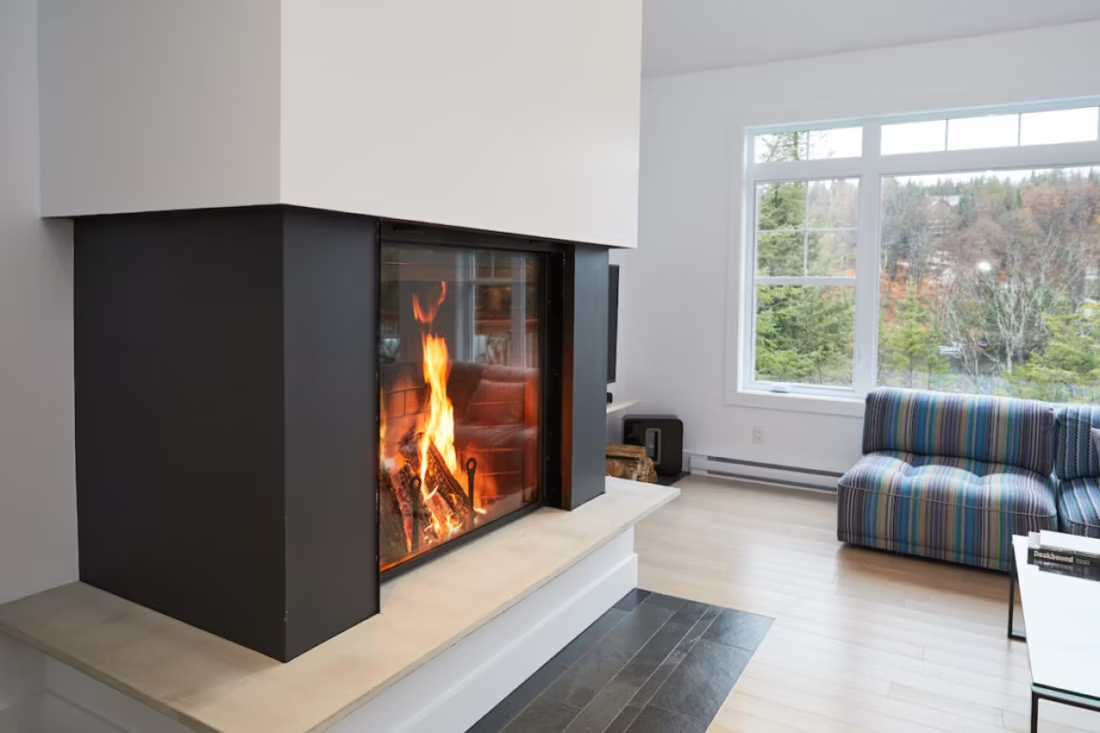
Four fuels. One honest answer for Mora County.
Three steps. No salesperson until you're ready.
Tell us about your project
Your zip code, your situation, and the fuel you're leaning toward—or let the answers point you to one.
See what's actually available
The brands dealers within 100 miles genuinely carry—real options, never a catalog mirage.
Get your dealer & Project Guide
A trusted local dealer, plus the free Project Guide & Parts List that names every component of the job.
Frequently Asked Questions
Which fuel works best in Mora County?
It depends on your home and how remote it is. Wood remains the primary heat source for a large share of Mora County households—pinyon and juniper burn hot and are cut locally, often under a personal-use permit from the Carson or Santa Fe National Forest, and a wood stove keeps working when the power lines to a village like Chacon or Guadalupita go down. Gas here almost always means propane, since piped natural gas infrastructure doesn't reach most of the county—propane fireplaces and inserts give instant heat without hauling wood. Pellet stoves are a solid middle option, with Forest Energy and Lignetics both distributed regionally, though homeowners should plan ahead since bagged pellet supply in a county this small isn't always stocked locally year-round. Electric fireplaces are supplemental—good for a single room or as backup ambiance, but not something to rely on as primary heat through an elevation winter that runs cold from November into April.
Do I need a permit to install a fireplace in Mora County?
In most cases, yes, though requirements are lighter here than in more populated counties. New wood stoves, wood inserts, and gas appliances generally require a building permit through the Mora County building permit office, and propane installations need a licensed propane fitter to make the tank and line connection. Because much of the county is unincorporated and rural, some outbuildings and older homes may not have prior permit history—a local retailer or installer can usually tell you quickly whether your specific property needs a new permit or falls under an existing one. Electric fireplaces typically don't require a permit unless you're adding a new hardwired circuit for a built-in unit.
Does wildfire smoke affect wood burning in Mora County?
Yes, but the concern here runs the opposite direction from winter inversion smoke you'd see in a mountain basin—Mora County's air quality issue is wildfire smoke tied to fire season, not woodstove smoke in winter. During periods of high fire danger, the Carson and Santa Fe National Forests can impose Stage 1 or Stage 2 fire restrictions that limit or suspend outdoor burning and sometimes personal-use firewood cutting permits until conditions improve. Home heating with a certified, properly installed wood stove isn't restricted by these orders, but if you cut and store your own firewood, it's worth checking current forest restrictions before a cutting trip, especially in dry, windy stretches of late spring and early summer.
Can one local hearth retailer handle all four fuel types in a county this small?
Not usually, and that's normal for a county with just over 1,300 residents. Most dealers who actually maintain a showroom are based outside Mora County—in Las Vegas, Taos, or Santa Fe—and drive in for installs and service calls. Locally, you're more likely to find a propane supplier who also handles propane appliance installs, or a general contractor who installs wood stoves as part of a broader remodeling business, rather than a single storefront stocking wood, gas, pellet, and electric side by side. If you want to compare fuels in person, plan on a trip to a regional hub retailer; if you already know your fuel, a local installer can often source the unit and handle the whole job.
How does installation and service work for homes in remote parts of Mora County?
Expect longer lead times and a travel fee. Technicians and installers serving villages like Wagon Mound, Guadalupita, and Chacon are typically based 40 to 60 miles away, so scheduling ahead—especially before the first hard freeze in October—makes a real difference versus trying to book an emergency mid-winter repair. Many rural homeowners here keep a backup fuel source specifically because of this: a wood stove as backup if the propane truck can't get in during a heavy snow event, or vice versa. If you're planning new construction or a remodel, it's worth coordinating your fireplace install with your propane tank placement or electrical service upgrade at the same time, since a single trip from an installer covers more ground that way.
What's the typical cost range for fireplace installation across fuel types in Mora County?
Costs run a bit higher here than in more populated parts of New Mexico, largely due to travel time built into contractor quotes. Wood stove or insert installation: roughly $5,000–$10,000 for a typical install, more if a masonry chimney needs rebuilding at elevation. Propane fireplace, insert, or stove: $4,500–$11,000 depending on whether a new tank and line need to be run to the home. Pellet stove or insert: $4,500–$8,000, with venting costs varying by wall type. Electric fireplace: $200–$3,000 for the unit itself, plus $400–$1,200 in labor for anything beyond a simple plug-and-play install. Getting two or three local quotes matters more here than in a bigger market, since travel distance can swing the number significantly.
Does a fireplace add value to my home?
On average, a fireplace adds back to the home about the same amount you spent installing it. Add the monthly savings from heating the rooms you actually use instead of the whole house—often hundreds of dollars a year—and the value case is strong before you even count what a fire does for how your family uses the room.
I know I want a fireplace—where do I actually start?
Do two things today: snap a photo of the wall or fireplace you want to transform, and take a tape measure to the space—width, height, depth. Those two artifacts answer most of a hearth professional's first questions. Then settle fuel (wood, gas, pellet, or electric) and set a realistic budget: $3,900–$5,500 covers fireplace, vent, and basic install for most homes.
Can I install a fireplace myself?
If you're putting a fire in your house on purpose, it's best to work with an expert. Unless you're genuinely experienced in framing, gas line, vent pipe, and the national code on clearances to combustibles, have a professional do it—and ideally the same company that sells you the fireplace, so warranty, service, and liability all live under one roof.
What is an in-home preview and do I need one?
It's a visit where a hearth professional measures your space, confirms the model you picked actually works in your home, and walks the specs—framing, gas line, venting, finish work—before anything is ordered. Some details you just can't know until you see the house. Never make a down payment without one; it's the single most-skipped step that burns buyers.
Stove and Fireplace Dealers in Mora County
Listings include WhyFire partner dealers, dealers we have verified as authorized for the brands we recommend, and established local businesses that carry hearth products. Every listing shows which one it is. The ones marked Preferred run on WhyFire's software, so they can show you real pricing and book your appointment right here. No manufacturer pays for placement. How we verify dealers →
Hacienda Home Centers
Dan's Flooring
Find your fireplace in Mora County.
Pick your fuel below and I'll match you with a trusted local dealer who knows what actually works at this elevation—plus a free Project Guide & Parts List with the exact venting and parts your home needs.
Find Your Fireplace →