
Clean, smoke-free heat for Luna County's mild desert winters.
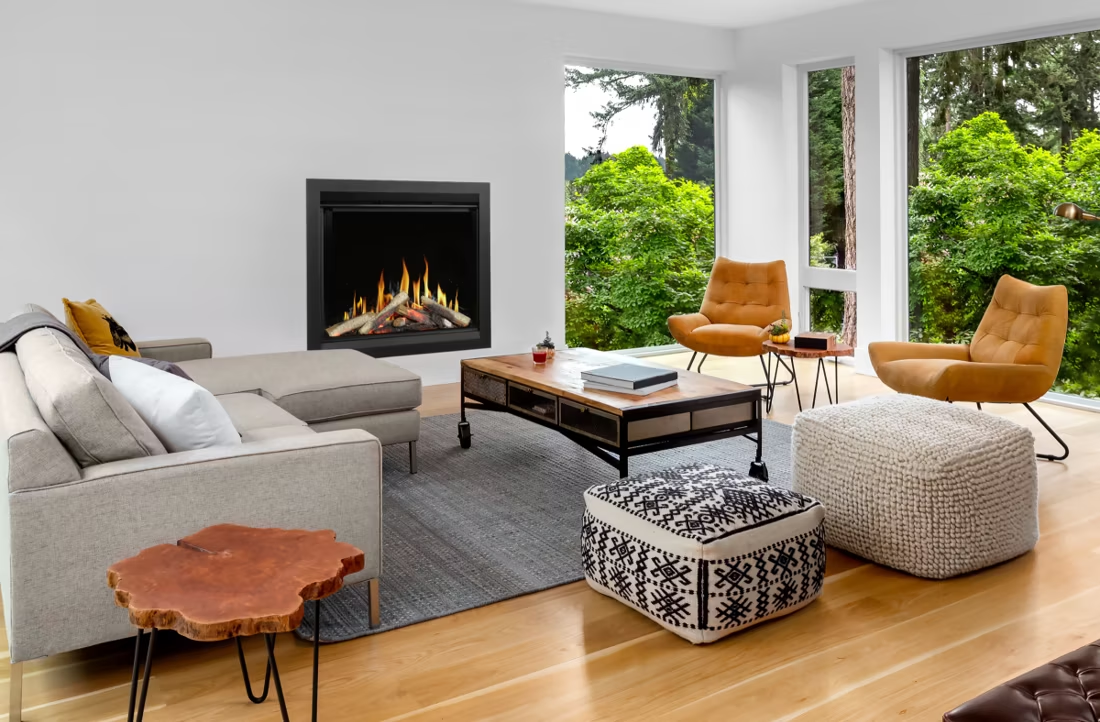
With winter lows averaging 28°F and just under 2,912 heating degree days a year, Luna County doesn't need a furnace-grade wood system to stay comfortable. Electric fireplaces deliver instant, no-smoke warmth for Deming, Columbus, and the ranch country between—and we'll connect you with a local dealer who installs them right.
Every Project Starts From One of These Five Situations
The right fit for a short, mild high-desert winter.
Luna County sits at roughly 4,300 feet in New Mexico's boot heel, in climate zone 3B—a category defined by hot summers and short, mild winters. At 2,912 heating degree days a year, Deming and Columbus see a fraction of the heating load of a place like Bismarck, ND, where homes routinely need 8,000-plus HDD of sustained heat just to function through winter. Here, the ask is different: a few months of morning chill and the occasional freeze, not months of sustained sub-zero cold. That's exactly the situation where an electric fireplace earns its keep—no chimney, no fuel storage, no combustion, just supplemental zone heat where and when you need it.
Wildfire smoke is Luna County's real air quality concern, tied to fire activity in and around the Gila National Forest during dry seasons. An electric fireplace adds zero smoke to that equation, which matters to households already managing indoor air quality during smoke advisories. Electric units also install cleanly in the manufactured and modular homes common throughout rural Luna County, where running new gas line or adding a masonry chimney isn't practical. El Paso Electric serves most of the county's grid, and a licensed local electrician or hearth dealer can get a unit wired and running in a single visit—no permits pulled for a Forest Service cutting unit, no chimney sweep required, ever.
Three steps. No salesperson until you're ready.
Tell us about your project
Your zip code, your situation, and the fuel you're leaning toward—or let the answers point you to one.
See what's actually available
The brands dealers within 100 miles genuinely carry—real options, never a catalog mirage.
Get your dealer & Project Guide
A trusted local dealer, plus the free Project Guide & Parts List that names every component of the job.
Frequently Asked Questions
How much does an electric fireplace installation cost in Luna County?
A basic plug-in electric fireplace insert or wall-mount unit typically runs $500 to $1,200 installed in Luna County, since most models simply plug into a standard outlet with no venting or gas line involved. A built-in electric fireplace that requires a dedicated 120V or 240V circuit, wall framing, or a mantel surround runs closer to $1,500 to $2,500 once an electrician is involved. Because there's no chimney, flue, or combustion venting to size, electric installs are consistently the fastest and least expensive fireplace project in the county—a local dealer can usually confirm your exact number after a short walkthrough.
Is electric heat actually enough for a Luna County winter?
For most homes in Luna County, yes—as supplemental or zone heat, and in some well-insulated homes, as primary heat for shoulder-season chill. With a 28°F average winter low and 2,912 heating degree days, Deming and Columbus don't see the sustained deep-cold stretches that push electric heat past its limits in places like Duluth, MN or Fargo, ND, where whole-home electric heating gets expensive fast. In Luna County's climate zone 3B, an electric fireplace paired with your existing central system comfortably covers the cool mornings and occasional cold front without straining your electric bill.
Do I need an electrician or a permit to install an electric fireplace?
Plug-in electric fireplace inserts that use a standard household outlet generally don't require a permit or an electrician—you can install one yourself in an afternoon. If you're adding a dedicated circuit for a larger built-in unit, that electrical work should go through a licensed electrician, and depending on the scope, may require a permit through the City of Deming or the Luna County Building Department for unincorporated areas like Columbus or Akela. Any reputable local dealer will tell you upfront whether your chosen unit needs new wiring.
What's the difference between an electric fireplace, insert, and stove?
An electric fireplace is typically a built-in or wall-mounted unit designed to look like a traditional hearth, often with a mantel surround. An electric insert is sized to slide into an existing masonry fireplace opening—a common upgrade for older Deming homes with a wood fireplace nobody uses anymore. An electric stove is a freestanding cabinet-style unit that mimics a wood stove's footprint without needing clearance to combustibles or a flue. All three run on standard household current and produce the same flame-effect, fan-forced heat—the choice comes down to your existing opening and the look you want.
Will my electric fireplace work during a power outage?
No—and this is the honest tradeoff of electric heat. Unlike a wood stove, an electric fireplace has no function without grid power, so it won't help during an outage. Luna County doesn't see frequent extended outages the way some rural mountain counties do, but if backup heat during a winter storm or wildfire-related shutoff is a real concern for your household, it's worth pairing an electric fireplace with a wood or propane backup rather than relying on electric alone for emergency heat.
What's the best electric fireplace for a Luna County home?
For most Deming and Columbus homes, a mid-size built-in or insert-style unit from a mainstream brand like Dimplex, Napoleon, or Touchstone covers a typical living room without needing a dedicated circuit. If you're converting an unused wood fireplace, an insert model sized to your existing opening gives the cleanest result and skips any masonry work. For manufactured or modular homes common throughout rural Luna County, a slim wall-mount unit is often the easiest retrofit since it avoids cutting into existing walls. A local dealer can match a specific model to your room size and existing electrical capacity.
Electric vs. wood—which makes more sense in Luna County?
Wood heat has real appeal here—pinyon, juniper, and ponderosa pine are all locally available, and a Gila National Forest cutting permit runs just $5 to $20 per cord during the May-through-October season. But wood also means smoke, and Luna County's periodic wildfire-smoke advisories make some households wary of adding more particulate to the air, even from a clean-burning stove. Electric fireplaces produce zero smoke and need no chimney, making them the simpler choice for a secondary room, a manufactured home, or anyone who wants fireplace ambiance without the wood-handling and air-quality tradeoffs. For a primary heat source on a rural property with abundant nearby timber, wood still has an edge; for convenience and clean air, electric wins.
Electric vs. pellet—which is right for my home?
Both depend on electricity to operate, which surprises people—a pellet stove needs its auger and blower running, so it's not a power-outage backup any more than an electric fireplace is. The difference is what they deliver: a pellet stove burns hopper-fed pellets (regionally available from Forest Energy and Lignetics) for real, substantial heat output, while an electric fireplace produces lighter, fan-forced heat aimed at zone comfort rather than whole-room BTUs. In Luna County's mild climate, most homeowners choosing between the two are after either serious supplemental heat with some hands-on loading (pellet) or simple, low-maintenance ambiance and light warmth (electric).
Electric vs. gas—which fits my Luna County home better?
Gas fireplaces (typically propane in the rural parts of Luna County, since natural gas service is limited outside town) deliver stronger, more consistent heat output and can be configured to run during a power outage with a battery-backup ignition system—a real advantage if outage resilience matters to you. Electric fireplaces skip the propane tank, gas line, and venting altogether, installing in a fraction of the time for a fraction of the cost, but they won't function without grid power and produce less usable heat per unit. For a hardworking secondary room or a rental property, electric is usually the practical choice; for a primary heat source you can lean on during a storm, gas is worth the extra investment.
Can I put a TV above my fireplace?
Yes—with an asterisk. Fireplaces are hot and TVs don't like heat. Either put a mantel between them to deflect rising warmth, or choose a fireplace with heat-management technology that creates a cool zone on the wall above—the wall stays around 125 degrees, barely warm, while the room still gets full heat. If you like clean lines and don't want a mantel, heat management is the answer.
Do electric fireplaces actually produce heat?
Yes—most put out around 4,800–5,000 BTUs from a standard outlet, which comfortably warms a bedroom, office, or den as a comfort-zone heater. What they won't do is carry a whole house the way wood, gas, or pellet can. Think of electric as ambiance-first with honest supplemental heat: flames on with no heat in July, flames plus warmth in January.
Does a fireplace add value to my home?
On average, a fireplace adds back to the home about the same amount you spent installing it. Add the monthly savings from heating the rooms you actually use instead of the whole house—often hundreds of dollars a year—and the value case is strong before you even count what a fire does for how your family uses the room.
What is an in-home preview and do I need one?
It's a visit where a hearth professional measures your space, confirms the model you picked actually works in your home, and walks the specs—framing, gas line, venting, finish work—before anything is ordered. Some details you just can't know until you see the house. Never make a down payment without one; it's the single most-skipped step that burns buyers.
Find your electric fireplace in Luna County.
Tell us about your home in Deming, Columbus, or anywhere else in Luna County, and we'll put together a free Project Guide & Parts List—the exact unit, wiring needs, and a trusted local dealer to install it right.
Find Your Fireplace →