
Instant heat for cold nights on the Pajarito Plateau.
Clean-burning gas heat for the mesa-top cold of Los Alamos, the canyon-rim homes of White Rock, and everywhere between—matched with a local dealer who knows this plateau.
Every Project Starts From One of These Five Situations
Clean heat built for 7,300 feet.
Los Alamos sits at roughly 7,300 feet on the Pajarito Plateau, with White Rock a bit lower along the canyon rim toward the Rio Grande. Winters here run cold—an average low near 20°F and winters similar in severity to Bozeman, Montana—and the county's mix of mid-century lab-town homes and Southwest-style adobes with traditional kiva fireplaces means heating needs vary block to block. Wood heat is uncommon here despite the pinyon, juniper, and ponderosa pine growing in the surrounding Santa Fe and Carson National Forests: the Cerro Grande Fire of 2000 and the Las Conchas Fire of 2011 left this county acutely aware of wildfire and smoke risk, and open burning is treated with real caution.
That history is a big part of why gas has become the default upgrade for Los Alamos County fireplaces. Natural gas service is available through the county's own Department of Public Utilities (DPU) within the Los Alamos townsite and much of White Rock, and propane fills in for outlying properties on the Plateau. A direct-vent gas insert or fireplace gives you instant, controllable heat without adding to fire danger or summer smoke concerns—and it means those old kiva-style fireplaces many county homes were built with can finally pull real weight on a 20-degree night instead of just looking nice.
Three steps. No salesperson until you're ready.
Tell us about your project
Your zip code, your situation, and the fuel you're leaning toward—or let the answers point you to one.
See what's actually available
The brands dealers within 100 miles genuinely carry—real options, never a catalog mirage.
Get your dealer & Project Guide
A trusted local dealer, plus the free Project Guide & Parts List that names every component of the job.
Frequently Asked Questions
How much does a gas fireplace installation cost in Los Alamos County?
Most gas fireplace and insert installations in Los Alamos County run roughly $4,000 to $10,000, depending on the unit, whether a gas line already reaches the room, and how much venting work is involved. A direct-vent insert dropped into an existing kiva fireplace or masonry firebox with gas already run to the house tends to land on the lower end. New construction or a remodel that requires framing, a fresh gas line from the meter, and full venting sits higher. Because Los Alamos sits at roughly 7,300 feet, some appliances also need an altitude-adjusted orifice kit for correct combustion—your local dealer will factor that into the quote.
Can I convert my kiva fireplace to gas?
Yes, and it's a common project in this county—many older Los Alamos and White Rock homes were built with traditional Southwest kiva-style fireplaces that look great but throw little real heat. A properly sized gas insert or log set can go into that same masonry opening, using a liner run up the existing flue or a new direct-vent path through the wall. Depending on whether gas service already reaches the room, conversions typically run $4,000 to $8,000. It preserves the adobe look of the fireplace while giving you heat you can actually rely on during a Plateau cold spell.
Do I need natural gas, or can I use propane?
Either works, and which one you use mostly comes down to where your property sits. Natural gas is available through the Los Alamos County Department of Public Utilities across most of the townsite and White Rock. Homes further out on the Plateau or in more rural parts of the county, where DPU gas lines don't reach, typically run on propane from a tank. Almost every gas fireplace, insert, or stove on the market can be configured for either fuel—your installer sets the correct orifice and regulator for the fuel you have.
Will my gas fireplace still work if the power goes out?
Most direct-vent gas fireplaces with an IPI (intermittent pilot ignition) system include a battery backup that keeps the unit running when the grid drops—which matters on the Plateau, where winter wind events and heavy snow can knock out DPU power for hours at a time. Valor units take a different approach: their pilot generates its own electricity through the thermocouple, so there's no battery to remember or replace. Ask your local dealer which ignition system a given model uses if outage backup matters to you.
Gas fireplace vs. gas insert vs. gas stove—what's the difference?
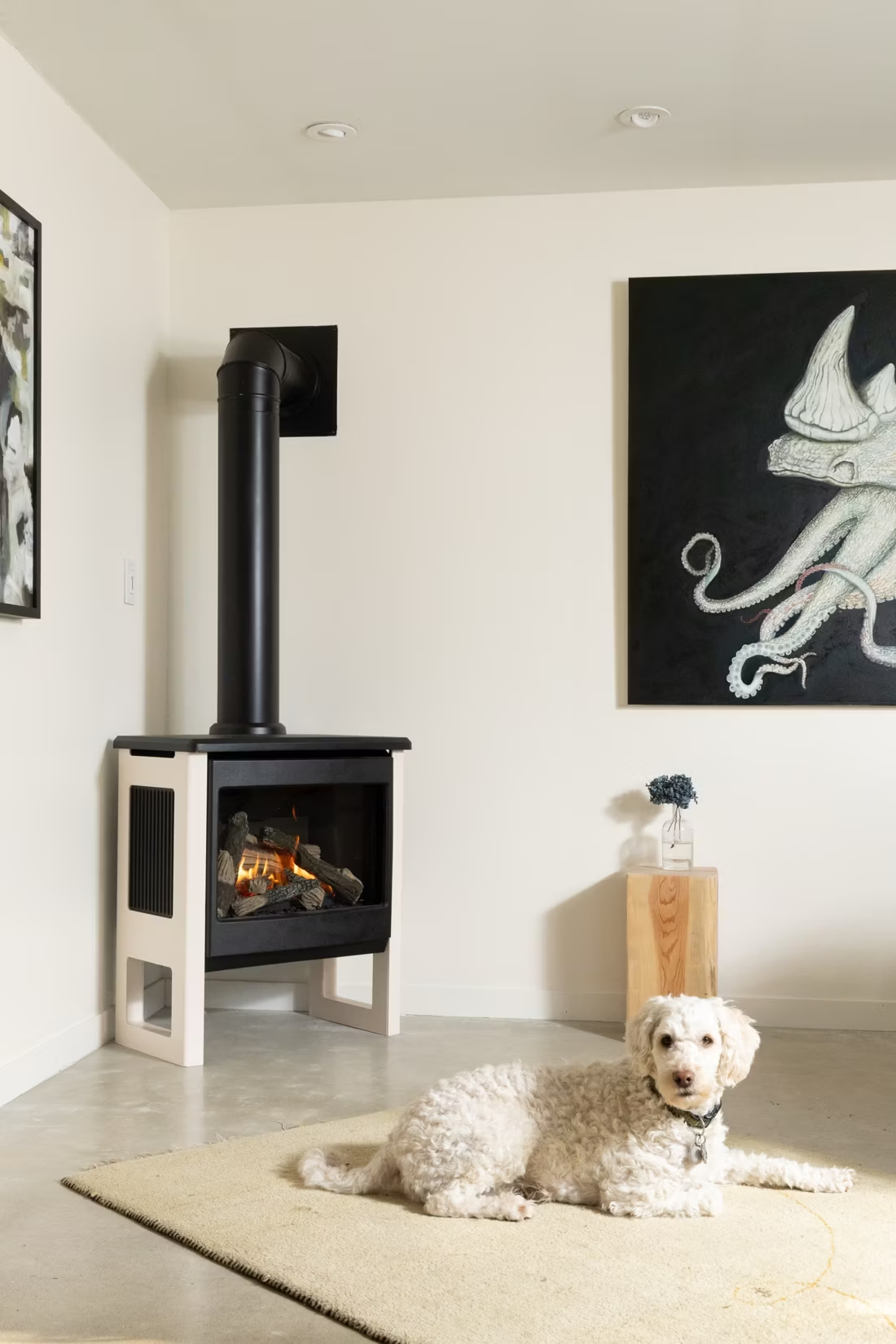
A gas fireplace is a fully built-in unit framed into a wall, typically used in new construction or a remodel. A gas insert is sized to slide into an existing masonry firebox—including the kiva-style openings common in older Los Alamos and White Rock homes—and uses that existing chase for venting. A gas stove is a freestanding cabinet unit that sits out in the room like a wood stove but burns gas. For most county homes with an existing fireplace opening, an insert is the straightforward answer; new rooms without one usually call for a built-in unit or freestanding stove.
Do I need a permit to install a gas fireplace in Los Alamos County?
Yes—Los Alamos County requires a building permit for the appliance installation and a separate gas permit for any new or modified gas line, both handled through the county's Building Safety Division. The gas line portion has to be pulled by a licensed gas-fitter. Working with an established local hearth dealer simplifies this considerably, since they coordinate the permitting, the gas line trade, and the final inspection instead of leaving you to manage several contractors separately.
Vented vs. vent-free—which makes sense at 7,300 feet?
Vented (direct-vent) gas fireplaces draw combustion air from outside and exhaust it back outside through sealed piping—the safer, more universally code-compliant option and the one most Los Alamos County dealers install by default. Vent-free units burn directly into the living space and are legal in New Mexico under specific room-sizing and oxygen-sensor rules, but combustion appliances generally need to be de-rated or refitted for altitude above about 4,500 feet, and Los Alamos sits well above that. Between the altitude adjustment and the tighter, well-sealed construction common in newer county homes, direct-vent units are the more practical choice here—ask your dealer to walk through both if you want the comparison.
How often should a gas fireplace be serviced?
Plan on an annual inspection, ideally before the first cold snap of the season. A technician checks the burner, pilot or ignition system, venting, and gas connections, and cleans the glass and interior. It's a lighter lift than chimney sweeping for a wood-burning unit, but skipping it is still the most common reason a gas fireplace stops lighting reliably mid-winter. Most Los Alamos County service providers charge in the $150–$250 range for a standard visit.
Why doesn't Los Alamos County see more wood-burning fireplaces?
Wood is genuinely uncommon as a primary heat source here, and for good reason: this is a county that lived through the Cerro Grande Fire in 2000 and the Las Conchas Fire in 2011, both of which reshaped how residents and the Forest Service think about fire and smoke on the Pajarito Plateau. Even though pinyon, juniper, and ponderosa pine are all around via Santa Fe and Carson National Forest cutting permits, most homeowners here—including those with older kiva-style fireplaces—have moved toward gas inserts specifically to get real heat without adding wood smoke or ember risk to a landscape that's already fire-stressed in dry years.
Why is a fireplace insert so efficient?
An insert does two things: it seals the chimney completely, so you stop losing air you already paid to heat, and it radiates warmth into the room through the firebox and glass. Most add a heat-exchange fan that pulls cool room air underneath, wraps it around the hot firebox, and pushes it back out warm. Your home is more efficient before you've even lit the first fire.
Is my gas fireplace wasting gas?
If it was installed more than 15 years ago, probably. Older gas fireplaces keep a standing pilot light burning all the time, and that little flame can cost a couple hundred dollars a year. Newer models use pilot-on-demand ignition—the pilot lights only when you use the fireplace and goes out when you turn it off.
Should the dealer who sells my fireplace also install it?
Ideally, yes. A fireplace project involves vent pipe, gas line, electrical, and often tile or stone. Hire three or four separate trades and you own the liability and the game of telephone between them. One company selling and installing means one accountable party, start to finish—ask about factory training, on-time completion records, and what happens if an inspection fails.
Can I install a fireplace myself?
If you're putting a fire in your house on purpose, it's best to work with an expert. Unless you're genuinely experienced in framing, gas line, vent pipe, and the national code on clearances to combustibles, have a professional do it—and ideally the same company that sells you the fireplace, so warranty, service, and liability all live under one roof.
Get your Project Guide & Parts List for a gas fireplace in Los Alamos County.
Tell us about your home—townsite, White Rock, or further out on the Plateau—and we'll match you with a trusted local dealer and send a free Project Guide & Parts List built around your kiva opening, elevation, and gas service.
Find Your Fireplace →