
Find your fireplace in Los Alamos County.
From the mesa top in Los Alamos down to White Rock, get matched with a trusted local dealer who knows what actually gets installed and inspected on the Pajarito Plateau—and why some fuels make more sense here than others.
Every Project Starts From One of These Five Situations
5,929 heating degree days, a 7,300-foot mesa, and a county rebuilt around wildfire risk.
Los Alamos County sits atop the Pajarito Plateau at roughly 7,300 feet, hemmed in by the Santa Fe, Carson, and Cibola National Forests. Winter lows average around 20°F and the county logs 5,929 heating degree days a year—a heating load in the same range as Helena, Montana, with a real heating season running from October into April. Pinyon, juniper, and ponderosa pine cover the surrounding forest and canyons, which is part of what makes this such a striking place to live, and also part of what makes it dangerous.
The Cerro Grande Fire in 2000 burned into the townsite itself, destroying hundreds of homes, and the Las Conchas Fire in 2011 threatened the county and the national laboratory again. Those two events reshaped how this county thinks about fire risk in the wildland-urban interface, and wood-burning and pellet appliances—anything involving stored solid fuel and a chimney flue in a fire-prone canyon community—are now genuinely uncommon here, even though the surrounding national forests are full of burnable pinyon and juniper. Most households instead rely on gas fireplaces, tied into the county-run utility system, with electric units filling in for bedrooms, casitas, and secondary living spaces. This hub covers both of those fuels for Los Alamos, White Rock, and the rest of the county, with honest notes on where wood and pellet do (rarely) still show up.
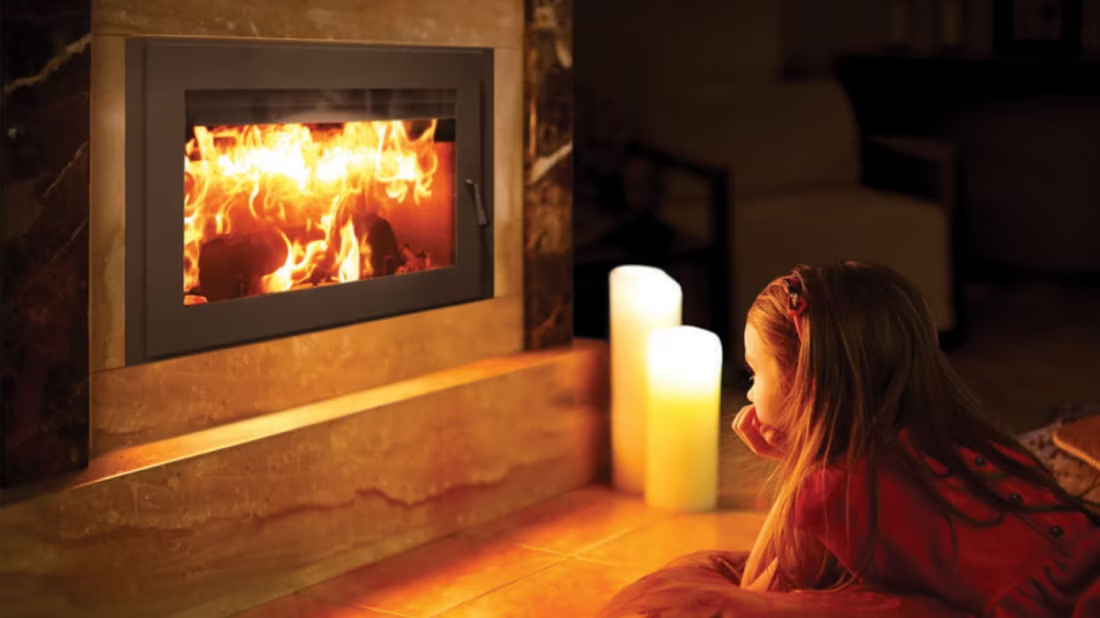
Four fuels. One honest answer for Los Alamos County.
Three steps. No salesperson until you're ready.
Tell us about your project
Your zip code, your situation, and the fuel you're leaning toward—or let the answers point you to one.
See what's actually available
The brands dealers within 100 miles genuinely carry—real options, never a catalog mirage.
Get your dealer & Project Guide
A trusted local dealer, plus the free Project Guide & Parts List that names every component of the job.
Frequently Asked Questions
Which fireplace fuel makes the most sense in Los Alamos County?
Gas is the default here. Most homes on the Pajarito Plateau are built or were rebuilt after the Cerro Grande Fire with gas service already run to the house, and a gas fireplace or insert is the straightforward, code-friendly choice for real heat through a 5,929-heating-degree-day winter. Electric fireplaces are common as a secondary source—bedrooms, casitas, home offices—since they need no venting and no flue penetration through a roof in a county that watches roof and chimney fire exposure closely. Wood and pellet stoves exist here, but they're the exception rather than the rule; if you're set on one, expect more scrutiny from your insurer and the county than you'd get for a gas or electric install.
why are wood-burning fireplaces so uncommon in Los Alamos County?
The short answer is fire history. The Cerro Grande Fire burned into the townsite in 2000 and destroyed hundreds of homes, and the Las Conchas Fire in 2011 pushed close to the county and the national laboratory again. Both events pushed local building practice toward reducing wildfire fuel and ignition sources near structures, and a wood-burning appliance with a chimney and a woodpile doesn't fit that picture well in a canyon-edge community surrounded by pinyon, juniper, and ponderosa pine forest. Some older homes still have original wood fireplaces, but new wood stove installs are rare, and homeowners considering one should expect closer permit review and likely a harder conversation with their insurance carrier than a gas or electric install would trigger.
Do I need a permit for a gas fireplace installation in Los Alamos County?
Yes. New gas fireplace installs, inserts, and gas log conversions need a building permit through the county's building permit office, plus a separate gas-line permit if you're extending service to a new location in the house. The gas connection itself has to be run by a licensed gas fitter, and given the county's elevation near 7,300 feet, your installer will also need to account for altitude derating when sizing the unit's BTU output. Most of the gas fireplace retailers we match homeowners with here handle this permitting directly as part of the installation quote.
Are pellet stoves available in Los Alamos County at all?
Technically, yes, but they're uncommon for the same wildfire-related reasons wood stoves are. Regional pellet brands like Forest Energy and Lignetics are distributed within reach of the county, so fuel isn't the limiting factor—it's more that a pellet appliance still involves a hopper of stored fuel and a vent penetration in a community that's built its codes around minimizing exactly that kind of ignition risk. Where we do see pellet stoves here, it's usually in a detached casita, a workshop, or a secondary structure rather than the primary home. If that's your situation, a local dealer can walk you through what the county will and won't sign off on.
What does a fireplace installation typically cost in Los Alamos County?
Gas fireplaces, inserts, and log set conversions generally run $4,500 to $11,000 depending on whether the installer needs to extend gas line to a new location and how much venting work is involved at altitude. Electric fireplaces are the more affordable option—$200 to $3,000 for the unit itself, plus $400 to $1,200 in labor if you're hardwiring a built-in rather than plugging in a freestanding model. Wood or pellet installs, where a homeowner pursues one despite the local fire-risk considerations, tend to run higher than in a typical forested county once you factor in the added permitting review and any required defensible-space work around the chimney or vent.
How does Los Alamos's elevation affect fireplace sizing and performance?
At roughly 7,300 feet, gas appliances need to be sized and adjusted for altitude—thinner air changes combustion efficiency, and a unit rated for BTU output at sea level won't perform the same on the mesa without a technician adjusting the orifice or selecting an altitude-rated model. Combined with winter lows averaging 20°F and 5,929 heating degree days a year, undersizing a gas fireplace here means it struggles on the coldest nights of a Los Alamos winter. A local installer familiar with the plateau's elevation will size the unit correctly the first time rather than leaving you to troubleshoot a unit that can't keep up once temperatures drop.
Can I install a fireplace myself?
If you're putting a fire in your house on purpose, it's best to work with an expert. Unless you're genuinely experienced in framing, gas line, vent pipe, and the national code on clearances to combustibles, have a professional do it—and ideally the same company that sells you the fireplace, so warranty, service, and liability all live under one roof.
Does a fireplace add value to my home?
On average, a fireplace adds back to the home about the same amount you spent installing it. Add the monthly savings from heating the rooms you actually use instead of the whole house—often hundreds of dollars a year—and the value case is strong before you even count what a fire does for how your family uses the room.
What are the biggest mistakes people make buying a fireplace?
Five come up constantly: budgeting for the unit but not the full job (vent, gas line, electrical, finish work); drowning in options instead of starting from style and fuel; buying without an in-home preview; handing installation to a handyman instead of a pro; and giving up out of sheer indecision. Every one is avoidable with a clear plan—step one, step two, step three.
Can a fireplace actually lower my heating bill?
Yes—by creating a comfort zone. A furnace heats every square foot of the house just to warm the one room you're in; a gas fireplace on low burns roughly a sixth of the gas a typical furnace does. Set the furnace around 55–60 degrees as a baseline, then heat the rooms your family actually uses. Families who heat this way commonly save $20–$60 a month.
Stove and Fireplace Dealers in Los Alamos County
Listings include WhyFire partner dealers, dealers we have verified as authorized for the brands we recommend, and established local businesses that carry hearth products. Every listing shows which one it is. The ones marked Preferred run on WhyFire's software, so they can show you real pricing and book your appointment right here. No manufacturer pays for placement. How we verify dealers →
Rocky Mountain Chimney Sweep
Tierra Woodstoves
High Desert Hearth Products
Get matched with a local Los Alamos County dealer.
Pick your fuel below and we'll put together a free Project Guide & Parts List—the right unit for the plateau's elevation and winters, the parts it needs, and the local dealer we recommend for your project.
Find Your Fireplace →