
Instant gas heat for Lee Acres, without the wood pile.
Reliable, on-demand heat for San Juan Basin winters. Find the right gas fireplace or insert, and connect with a trusted local dealer.
Every Project Starts From One of These Five Situations
Clean heat for a high desert basin.
Lee Acres sits at 5,493 feet on the edge of the San Juan Basin, where winter lows average 21°F and the heating season runs long—winters comparable to Helena, Montana, with a similarly long, cold stretch each year. Pinyon, juniper, and ponderosa pine have heated homes in this part of San Juan County for generations, but a growing number of Lee Acres households are choosing gas for the main living space, saving wood heat for backup or for the woodstove already in the garage or shop.
Here's the local wrinkle worth knowing: Lee Acres sits in the middle of the San Juan Basin, one of the largest natural gas producing regions in the country, yet this unincorporated community isn't uniformly served by a piped natural gas utility. Many homes here run on propane instead, delivered and stored on-site in a tank. Either fuel works fine in a modern direct-vent gas fireplace or insert—a local installer will configure the orifice and regulator for whichever you have. The payoff either way is heat at the flip of a switch, no ash or creosote, and (with the right ignition system) a fireplace that still lights during a power outage.
Three steps. No salesperson until you're ready.
Tell us about your project
Your zip code, your situation, and the fuel you're leaning toward—or let the answers point you to one.
See what's actually available
The brands dealers within 100 miles genuinely carry—real options, never a catalog mirage.
Get your dealer & Project Guide
A trusted local dealer, plus the free Project Guide & Parts List that names every component of the job.
Frequently Asked Questions
How much does a gas fireplace installation cost in Lee Acres?
Most gas fireplace and insert installations in the Lee Acres area run roughly $4,200 to $9,800, depending on the unit, the venting path, and whether propane tank or gas line work is involved. A direct-vent insert into an existing masonry fireplace with fuel already run to the hearth sits on the low end. Homes needing a new propane tank set, a longer fuel line run, or venting through an unusual wall configuration land toward the higher end. Because this is an unincorporated part of San Juan County, expect your installer to pull the permit through the San Juan County Building & Planning Department as part of the job.
Should I use natural gas or propane for my fireplace?
It depends on what's already run to your house. Lee Acres sits on top of the San Juan Basin gas fields, but piped natural gas service doesn't reach every parcel in this unincorporated community—many homes rely on propane delivered and stored in a tank on the property. If you already have propane appliances (a water heater or range), adding a fireplace configured for propane is the path of least resistance. If natural gas is available on your street, that's typically the lower ongoing cost. Either way, nearly every gas fireplace model on the market can be set up for propane or natural gas—your installer just swaps the orifice and adjusts the regulator to match.
Can I convert my existing wood fireplace or stove to gas?
Yes, and it's a common project for homes around Lee Acres that were originally built around a wood-burning pinyon or juniper fire. A gas insert typically slides into the existing masonry opening, using a stainless liner run through your current chimney, and runs $4,000 to $8,500 depending on the insert and whether new propane or gas line work is needed. You keep the look of the original fireplace but gain instant, thermostat-controlled heat and lose the ash cleanup and the need to keep a woodpile stocked through a long San Juan Basin winter.
Will my gas fireplace still work if the power goes out?
In most cases, yes. Gas fireplaces with an IPI (intermittent pilot ignition) system run on a small battery backup that kicks in automatically when the grid drops, so the fireplace lights on demand just like normal. That matters in Lee Acres, where power is delivered by Navajo Tribal Utility Authority across a spread-out rural service area—outages during winter storms aren't rare, and a fireplace that only works with a live pilot light won't help you when you need it most. Valor units take it a step further: their pilot generates its own electricity through the thermocouple, so there's no battery to remember to replace. Ask your local dealer about the ignition system on any unit you're considering.
What's the difference between vented and vent-free gas fireplaces?
Vented (direct-vent) gas fireplaces pull combustion air from outside and exhaust combustion byproducts back outside through sealed venting—they're the standard, code-compliant choice almost everywhere, including San Juan County. Vent-free units burn fuel directly into the room without outside venting; they're legal in New Mexico under strict room-sizing and oxygen-depletion-sensor rules, but they add moisture and combustion byproducts to indoor air. Given how dry and airtight most Lee Acres homes are built for the high desert climate, most local installers steer homeowners toward direct-vent units for both comfort and air quality reasons.
Do I need a permit to install a gas fireplace in Lee Acres?
Yes. Because Lee Acres is unincorporated, permitting runs through the San Juan County Building & Planning Department rather than a city building office. New gas fireplace installations typically require both a building permit and sign-off on the fuel line work, whether that's a natural gas tap or a new propane tank connection. A licensed installer handles the fuel-line portion and will coordinate the inspection, so most homeowners never have to deal with the county office directly.
Gas fireplace, insert, or freestanding gas stove—which fits my home?
A built-in gas fireplace works best for new construction or a remodel where you're framing a wall opening from scratch. A gas insert is the right call if you already have a masonry fireplace and want to upgrade it without changing its footprint—common in the older ranch-style homes scattered around Lee Acres. A freestanding gas stove sits on the floor like a wood stove but runs on gas or propane, and it's a good option for a shop, addition, or manufactured home where there's no existing chimney to work with.
How often does a gas fireplace need to be serviced?
Plan on an annual inspection, ideally before the coldest stretch of the San Juan Basin winter sets in. A technician checks the burner, pilot or ignition system, venting, and gas or propane connections, and cleans the glass and interior. This is a much smaller job than chimney sweeping for a wood stove, but skipping it is still the most common cause of pilot and ignition problems reported by local service techs. Expect to pay somewhere in the $150–$250 range for a standard annual visit.
Gas vs. wood—which makes more sense for a Lee Acres home?
Wood—pinyon, juniper, and ponderosa pine are all cut locally, with Forest Service permits through the San Juan National Forest running $5 to $20 per cord during the May-to-October season—offers real off-grid heat during outages and lower fuel cost if you're willing to cut and stack it yourself. Gas offers instant, no-mess heat with no wood handling, and with a battery-backed ignition system it still works when Navajo Tribal Utility Authority power drops during a storm. Plenty of homes in the area keep both: a wood stove in the shop or as backup, and a gas fireplace or insert as the everyday heat source in the main living space.
Can I put a TV above my fireplace?
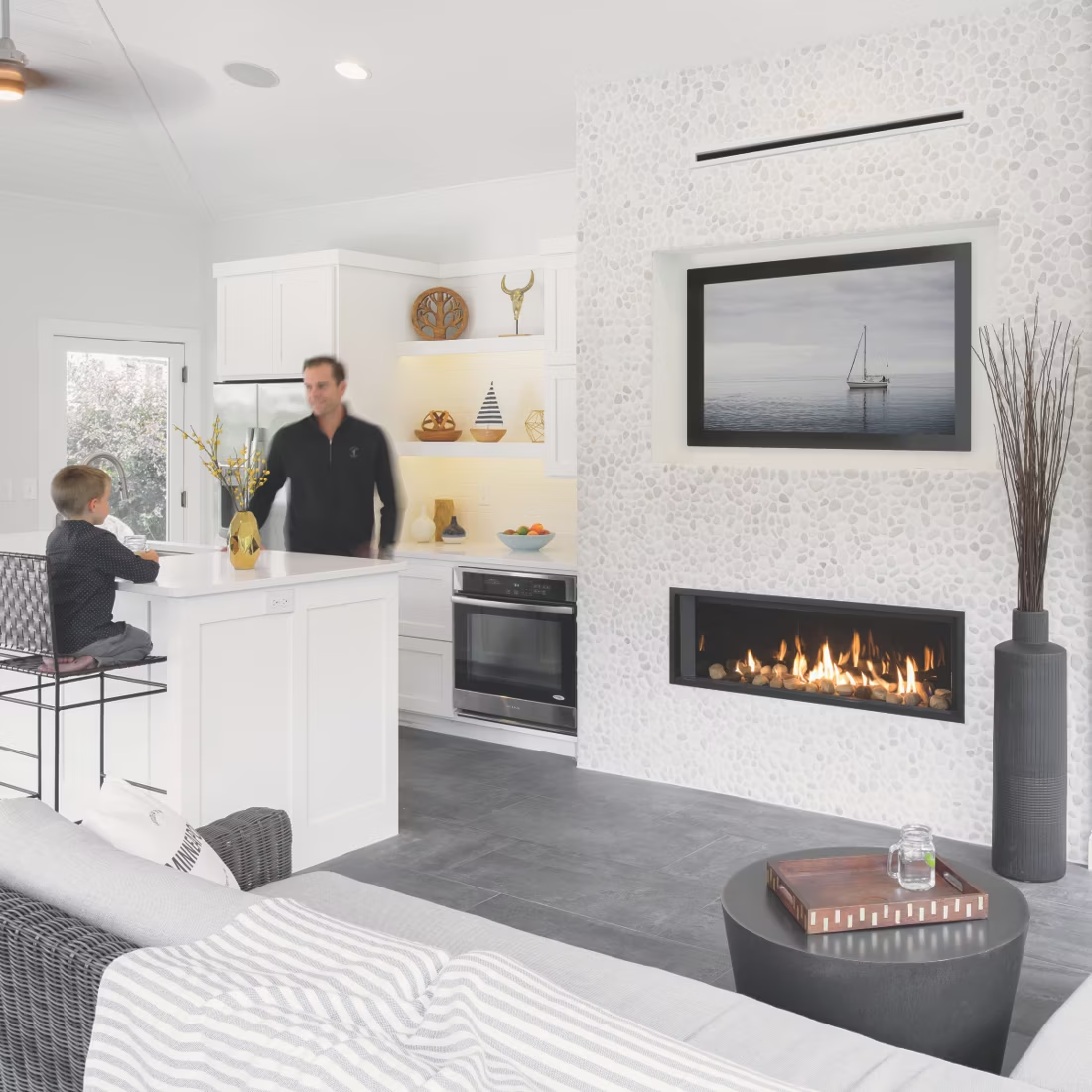
Yes—with an asterisk. Fireplaces are hot and TVs don't like heat. Either put a mantel between them to deflect rising warmth, or choose a fireplace with heat-management technology that creates a cool zone on the wall above—the wall stays around 125 degrees, barely warm, while the room still gets full heat. If you like clean lines and don't want a mantel, heat management is the answer.
Is my gas fireplace wasting gas?
If it was installed more than 15 years ago, probably. Older gas fireplaces keep a standing pilot light burning all the time, and that little flame can cost a couple hundred dollars a year. Newer models use pilot-on-demand ignition—the pilot lights only when you use the fireplace and goes out when you turn it off.
Can a fireplace actually lower my heating bill?
Yes—by creating a comfort zone. A furnace heats every square foot of the house just to warm the one room you're in; a gas fireplace on low burns roughly a sixth of the gas a typical furnace does. Set the furnace around 55–60 degrees as a baseline, then heat the rooms your family actually uses. Families who heat this way commonly save $20–$60 a month.
What is an in-home preview and do I need one?
It's a visit where a hearth professional measures your space, confirms the model you picked actually works in your home, and walks the specs—framing, gas line, venting, finish work—before anything is ordered. Some details you just can't know until you see the house. Never make a down payment without one; it's the single most-skipped step that burns buyers.
Nearby Dealers
Hearth shops serving Lee Acres and the surrounding area. Every listing shows whether it is a WhyFire partner, a dealer we have verified as authorized for the brands we recommend, or a local business carrying hearth products. No manufacturer pays for placement. How we verify dealers →
Bob's Fireplace
Find your gas fireplace in Lee Acres.
Tell us a bit about your home and fuel setup, and we'll match you with the right gas fireplace or insert—plus a free Project Guide & Parts List and a trusted local dealer to install it.
Find Your Fireplace →