
Warm up your Lee Acres home the simple way.
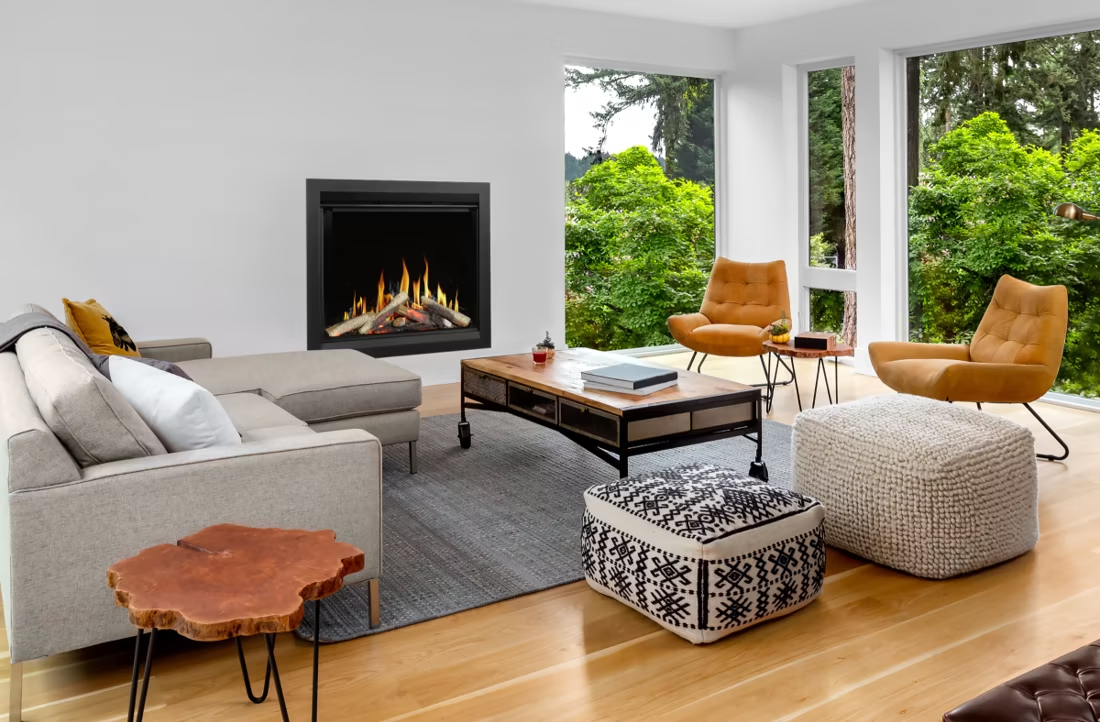
No chimney, no gas line, no venting—just plug in or wire up and add heat where you need it. Find the right electric fireplace or insert and connect with a trusted local dealer.
Every Project Starts From One of These Five Situations
Zone heat for a high-desert community without a lot of infrastructure.
Lee Acres sits in the Four Corners high desert at 5,493 feet, in San Juan County outside Farmington. Winters here are real but not extreme—average lows around 21°F and a solid winter heating load, milder than what a place like Helena, Montana sees, but still cold enough that a lot of homes need supplemental heat beyond the furnace, especially in the manufactured and older ranch-style houses common throughout the area.
Electric service in Lee Acres runs through the Navajo Tribal Utility Authority at about 16.6 cents per kWh, and that's part of why electric fireplaces and inserts do well here—no gas line to run, no masonry chimney to build or maintain, and no combustion byproducts to vent. That last point matters locally: San Juan County deals with wildfire smoke advisories in dry stretches, and an electric unit adds zone heat and ambiance without adding anything to the air, which is a real consideration on the days wood smoke is discouraged.
Three steps. No salesperson until you're ready.
Tell us about your project
Your zip code, your situation, and the fuel you're leaning toward—or let the answers point you to one.
See what's actually available
The brands dealers within 100 miles genuinely carry—real options, never a catalog mirage.
Get your dealer & Project Guide
A trusted local dealer, plus the free Project Guide & Parts List that names every component of the job.
Frequently Asked Questions
How much does an electric fireplace installation cost in Lee Acres?
A plug-in electric insert that drops into an existing fireplace opening or media console typically runs $300 to $1,500 installed—often just a matter of fitting the unit and trim kit, no electrician required. A built-in wall unit or a linear electric fireplace that needs a new dedicated circuit runs closer to $1,500 to $4,000 once a licensed electrician is involved, which is common in the manufactured and mobile homes found throughout Lee Acres where wiring capacity varies. A local dealer can tell you which category your home falls into after a quick look at your panel and wall framing.
Should I get an electric insert or a built-in wall unit?
If your home already has a wood-burning fireplace opening or an old wood stove niche—common in older Lee Acres houses—a zero-clearance electric insert is usually the easiest path. It slides into the existing opening and uses the current mantel and surround. If you're heating a room with no existing fireplace, or you live in a manufactured home where a masonry opening never existed in the first place, a built-in wall unit or a freestanding electric stove is the better fit. Either way, no venting or chimney is needed, which keeps the project simpler than a wood or gas conversion.
How much heat does an electric fireplace actually put out?
Most residential electric fireplaces run around 1,500 watts, which works out to roughly 5,000 BTU—enough to noticeably warm a single room in the 400 to 600 square foot range, not a whole house. Given Lee Acres' average winter lows around 21°F, an electric unit is best treated as zone heat for a living room, bedroom, or den rather than a replacement for your furnace on the coldest nights. A lot of homeowners here use one to take the edge off a chilly room without running the whole-house system harder than it needs to.
Is electric heat a good alternative when wildfire smoke is a concern?
Yes—this is one of the clearer advantages of electric in San Juan County. Wildfire smoke advisories happen here in dry summer and fall stretches, and on those days burning wood (even in a certified stove) adds to already poor air quality. An electric fireplace produces zero combustion byproducts, so it's a genuinely clean option for supplemental heat or ambiance regardless of outdoor air conditions. If you split time between wood heat for cold-weather backup and electric for daily use, that combination covers both the deep-winter and smoke-advisory scenarios well.
Do I need a permit for an electric fireplace in Lee Acres?
A plug-in insert that uses an existing standard outlet generally doesn't require a permit. A built-in unit that needs a new dedicated 20-amp circuit does typically require an electrical permit, since that's new wiring work—San Juan County handles building and electrical permitting for unincorporated areas like Lee Acres. For manufactured homes specifically, it's worth having a licensed electrician confirm the panel has capacity before committing to a hardwired unit; older mobile home panels sometimes need an upgrade first.
What will an electric fireplace cost me to run through NTUA?
Navajo Tribal Utility Authority bills residential electric at roughly 16.6 cents per kWh in the Lee Acres service area. A typical 1,500-watt electric fireplace run on high for five hours costs around $1.25 for that stretch—call it $35 to $40 a month if you run it most evenings through a cold spell. That's meaningfully cheaper to operate day-to-day than most people expect, though it's still more expensive per BTU than burning pinyon or juniper you cut yourself under a Forest Service permit.
Will my electric fireplace work during a power outage?
No—this is the honest tradeoff with electric heat. If the power goes out, the fireplace goes out with it, no exceptions. Rural stretches of San Juan County do see winter outages during storms, so if backup heat during an outage matters to you, an electric-only setup shouldn't be your only heat source. Many Lee Acres households pair an electric fireplace for everyday convenience and clean operation with a wood stove or fireplace burning local pinyon, juniper, or ponderosa pine as the outage-proof backup.
What's the best type of electric fireplace for a manufactured home?
For the manufactured and modular homes common in Lee Acres, look for a low-profile wall-mount or built-in linear unit designed for shallow framing depth—most don't require the wall cavity a wood or gas unit would need. Avoid units marketed for masonry-style installs unless your home actually has a framed fireplace surround to work with. A local dealer familiar with manufactured housing in San Juan County can confirm clearances and whether your electrical panel can support a hardwired unit versus a simpler plug-in model.
Electric vs. gas fireplace—which makes more sense for my home?
Electric is simpler and cheaper to install since it skips gas line work entirely—a real advantage in Lee Acres, where propane tank setup or gas line extension adds cost for homes not already plumbed for gas. Gas puts out more heat per unit (useful if you want a fireplace to seriously offset furnace use on the coldest nights) and, with a battery-backup ignition system, keeps working during a power outage—something electric can't do. If your priority is low upfront cost, easy retrofit, and zero emissions on smoke-advisory days, electric wins. If you want real supplemental heat output and outage backup, gas is worth the extra install cost.
Can I put a TV above my fireplace?
Yes—with an asterisk. Fireplaces are hot and TVs don't like heat. Either put a mantel between them to deflect rising warmth, or choose a fireplace with heat-management technology that creates a cool zone on the wall above—the wall stays around 125 degrees, barely warm, while the room still gets full heat. If you like clean lines and don't want a mantel, heat management is the answer.
Does an electric fireplace need a vent or chimney?
No—that's its superpower. An electric fireplace needs a wall and an outlet, period. No vent pipe, no gas line, no clearances to design around, which is why it works in bedrooms, offices, apartments, and walls where venting a gas or wood unit would be impractical or impossible. Installation is typically the simplest and least expensive of any fireplace type.
Does a fireplace add value to my home?
On average, a fireplace adds back to the home about the same amount you spent installing it. Add the monthly savings from heating the rooms you actually use instead of the whole house—often hundreds of dollars a year—and the value case is strong before you even count what a fire does for how your family uses the room.
Can I install a fireplace myself?
If you're putting a fire in your house on purpose, it's best to work with an expert. Unless you're genuinely experienced in framing, gas line, vent pipe, and the national code on clearances to combustibles, have a professional do it—and ideally the same company that sells you the fireplace, so warranty, service, and liability all live under one roof.
Nearby Dealers
Hearth shops serving Lee Acres and the surrounding area. Every listing shows whether it is a WhyFire partner, a dealer we have verified as authorized for the brands we recommend, or a local business carrying hearth products. No manufacturer pays for placement. How we verify dealers →
Bob's Fireplace
Electric Service in Lee Acres
An electric fireplace's heater draws about 1,500 watts—pennies per hour at local rates.
Navajo Tribal Utility Authority
Find your electric fireplace in Lee Acres.
Tell us about your home and we'll put together a free Project Guide & Parts List for your electric fireplace or insert—sized right and matched with a trusted local dealer near Lee Acres.
Find Your Fireplace →