
Find your electric fireplace in Lea County.
Ambiance and supplemental warmth for Hobbs, Lovington, Eunice, and the Permian Basin ranch and oilfield country in between. Find the right unit and connect with a trusted local dealer.
Every Project Starts From One of These Five Situations
Mild winters, dry air, and heat you can flip on.
Lea County sits on the high plains of southeastern New Mexico in climate zone 3B, where winters are short and comparatively mild—an average low around 30°F and a winter heating season that's just a fraction as long and demanding as what a place like Fargo, ND or Bismarck, ND goes through. Homes in Hobbs, Lovington, Eunice, Jal, and Tatum don't need a whole-house wood-burning solution to stay comfortable most winters; they need targeted warmth for the handful of genuinely cold nights, plus the visual pull of a fire in the living room the rest of the year.
That's exactly the niche electric fireplaces fill here. No flue, no combustion byproducts, no cutting into a chimney—which matters in an oil-and-gas economy where many newer homes and manufactured housing in the county were never built with masonry fireplaces in mind. Electric inserts and built-ins also sidestep the wildfire smoke and dust that periodically settle over the Permian Basin; there's no outdoor air intake to worry about and no particulate output indoors. For most Lea County households, an electric fireplace is a plug-in or straightforward 120V/240V install rather than a multi-trade project—a real advantage in a region where skilled hearth and gas-line labor can be booked out.
Three steps. No salesperson until you're ready.
Tell us about your project
Your zip code, your situation, and the fuel you're leaning toward—or let the answers point you to one.
See what's actually available
The brands dealers within 100 miles genuinely carry—real options, never a catalog mirage.
Get your dealer & Project Guide
A trusted local dealer, plus the free Project Guide & Parts List that names every component of the job.
Frequently Asked Questions
How much does an electric fireplace installation cost in Lea County?
Most electric fireplace projects in Lea County run from roughly $300 for a plug-in insert dropped into an existing firebox up to $2,000-$2,500 for a wall-mounted or built-in unit that requires a dedicated 240V circuit and finish carpentry around it. Because there's no venting or gas line to run, electric is consistently the least expensive fireplace fuel to install in the county—a meaningful factor for homeowners in Hobbs and Lovington doing a room remodel on a budget, or landlords equipping rental units near the oilfield workforce housing.
Should I get a plug-in electric insert or a hardwired built-in unit?
A plug-in insert slides into an existing fireplace opening and runs off a standard household outlet—it's the fastest, cheapest option and the right call if you already have a masonry or zero-clearance firebox in a Hobbs or Lovington home you want to modernize. A hardwired built-in, by contrast, gets recessed into a wall or custom mantel surround and typically needs a licensed electrician to run a dedicated circuit, especially for larger units drawing more amperage for the heater function. For new construction or a full remodel anywhere in the county, built-in units give a cleaner, more custom look; for a straightforward upgrade to an existing fireplace, a plug-in insert gets you most of the same visual result for a fraction of the cost.
Will an electric fireplace actually heat my Lea County home?
It can supplement your heat, but it's not designed to replace your furnace as the primary system in a full-size home. Most residential electric fireplaces put out around 5,000-9,000 BTU on the heater setting—plenty to take the chill off a bedroom, home office, or den on Lea County's colder nights, when lows can dip into the teens or single digits during a winter cold front off the plains. Given the county's relatively short, mild winter heating season, that supplemental output covers a lot of ground here compared to a place with a much longer, harder winter. Most homeowners run the flame feature year-round for ambiance and switch on the heater only during the coldest stretches.
Do I need a permit to install an electric fireplace in Lea County?
A simple plug-in insert generally doesn't require a permit since no new wiring or structural work is involved. A hardwired built-in unit that needs a new dedicated circuit typically does require an electrical permit, pulled by a licensed electrician, through your local building department—Hobbs and Lovington each handle permitting within city limits, while unincorporated parts of the county go through the Lea County building office. Most local dealers who sell built-in units will either handle the permit coordination themselves or refer you to an electrician who will.
What's the best electric fireplace for Lea County's climate?
Because Lea County's winters are mild and dry rather than brutally cold, the deciding factor for most homeowners here is less about raw BTU output and more about realistic flame appearance, quiet operation, and low running cost for near-daily ambiance use. Models with LED-driven flame technology and separate heater controls (so you can run the flame without the heat, useful for most of the year in a 3B climate) tend to be the better fit than units marketed hard on maximum heat output. Wall-mount and linear models are popular in newer Hobbs and Lovington construction where a low-profile fireplace fits a modern living room layout without competing with HVAC for space.
Electric vs. wood—which makes more sense in Lea County?
Wood heat has real roots here—pinyon, juniper, and ponderosa pine are all locally available species, and a fair number of rural Lea County homes and cabins on the caprock still burn wood for supplemental or backup heat. But wood also means chimney maintenance, ash cleanup, and smoke output at a time when the region already deals with periodic wildfire haze drifting across the plains. Electric fireplaces sidestep all of that—no combustion, no particulate, no chimney to sweep—which is why they've become the more common choice for in-town homes in Hobbs and Lovington that want fire ambiance without the upkeep. For a true backup heat source during a winter power outage, though, wood still has the edge, since electric units obviously stop working without power.
Electric vs. gas—which is right for my home?
Gas fireplaces are common in Lea County too, particularly in homes already plumbed for natural gas or set up with propane tanks common on ranch and oilfield properties outside city limits—they deliver stronger, more consistent heat and can be sized to genuinely warm a room on a cold night. Electric fireplaces trade some heat output for dramatically simpler installation, lower upfront cost, and zero combustion byproducts or venting to plan around. For a primary living space where you want real supplemental warmth, gas is usually the stronger performer; for a bedroom, office, or secondary room where ambiance and easy install matter more than serious heat, electric is usually the better fit.
What does it cost to run an electric fireplace in Lea County?
Running costs depend on your electric utility and how much you use the heater setting versus flame-only. Homes served by Xcel Energy in and around Hobbs, or by Lea County Electric Cooperative in more rural parts of the county, will see a typical electric fireplace draw somewhere between 1 and 1.5 kilowatts on the heater setting—a few cents per hour at most residential rates, and negligible cost when just running the flame effect without heat. That low, predictable operating cost is part of why electric units are popular as a secondary, near-daily-use fireplace rather than a once-in-a-while feature.
Electric vs. pellet stove—which should I choose?
Pellet stoves burning bags from regional suppliers like Forest Energy or Lignetics put out serious sustained heat and can genuinely offset a heating bill, but they require a hopper to load, a vent to install, and electricity to run the auger and blower—so they still go down in a power outage despite burning solid fuel. Electric fireplaces skip the fuel handling and venting entirely, install in a fraction of the time, and cost far less upfront, but they're built for ambiance and supplemental warmth rather than whole-room heating load. In a mild climate like Lea County's, where the heating season is short, most homeowners choosing between the two are prioritizing convenience and looks—which tips the scale toward electric for anyone who isn't specifically trying to reduce dependence on the grid for heat.
Can I put a TV above my fireplace?
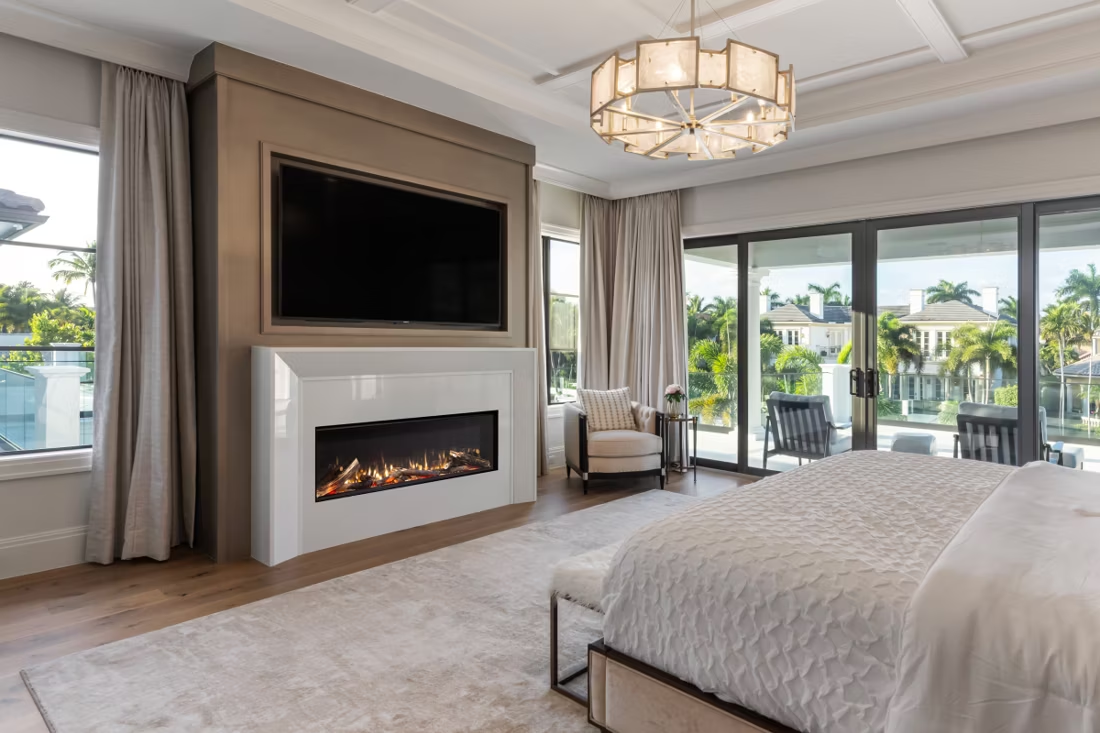
Yes—with an asterisk. Fireplaces are hot and TVs don't like heat. Either put a mantel between them to deflect rising warmth, or choose a fireplace with heat-management technology that creates a cool zone on the wall above—the wall stays around 125 degrees, barely warm, while the room still gets full heat. If you like clean lines and don't want a mantel, heat management is the answer.
Does an electric fireplace need a vent or chimney?
No—that's its superpower. An electric fireplace needs a wall and an outlet, period. No vent pipe, no gas line, no clearances to design around, which is why it works in bedrooms, offices, apartments, and walls where venting a gas or wood unit would be impractical or impossible. Installation is typically the simplest and least expensive of any fireplace type.
How much should I budget for a fireplace?
For an average home—covering the fireplace, the vent pipe, and basic installation—a budget between $3,900 and $5,500 gives you a lot of options across wood, gas, and pellet. By the time you add finish work, gas line, and electrical, the average complete installation lands between $5,000 and $12,000 all-in. In a remodel or new build, a good rule is to put about 2.5% of the total project cost toward the fireplace.
What is an in-home preview and do I need one?
It's a visit where a hearth professional measures your space, confirms the model you picked actually works in your home, and walks the specs—framing, gas line, venting, finish work—before anything is ordered. Some details you just can't know until you see the house. Never make a down payment without one; it's the single most-skipped step that burns buyers.
Stove and Fireplace Dealers in Lea County
Listings include WhyFire partner dealers, dealers we have verified as authorized for the brands we recommend, and established local businesses that carry hearth products. Every listing shows which one it is. The ones marked Preferred run on WhyFire's software, so they can show you real pricing and book your appointment right here. No manufacturer pays for placement. How we verify dealers →
Seal’s Energy Depot
Bill Placer's Chimney Sweep
Get matched with a Lea County electric fireplace dealer.
Tell us a bit about your home and we'll put together a free Project Guide & Parts List for your electric fireplace project—the right unit, the parts you'll need, and a recommended local dealer in Lea County who can install it.
Find Your Fireplace →