
Zone heat that works for Las Cruces winters.
Clean-burning, thermostat-controlled heat built for the Mesilla Valley's mild desert nights. Find the right pellet stove and connect with a trusted local dealer.
Every Project Starts From One of These Five Situations
Pellet heat fits the Mesilla Valley's mild winters.
Las Cruces sits at roughly 3,900 feet in the Chihuahuan Desert along the Rio Grande, where winter lows average around 30°F and the area sees a relatively light winter heating load each year—a fraction of what a place like Bismarck, ND or Fargo, ND racks up in a single winter. Most Las Cruces homes don't need a whole-house wood-burning workhorse; they need efficient, dial-it-in zone heat for the cool December-through-February stretch and the occasional cold snap that catches an older adobe or block home off guard.
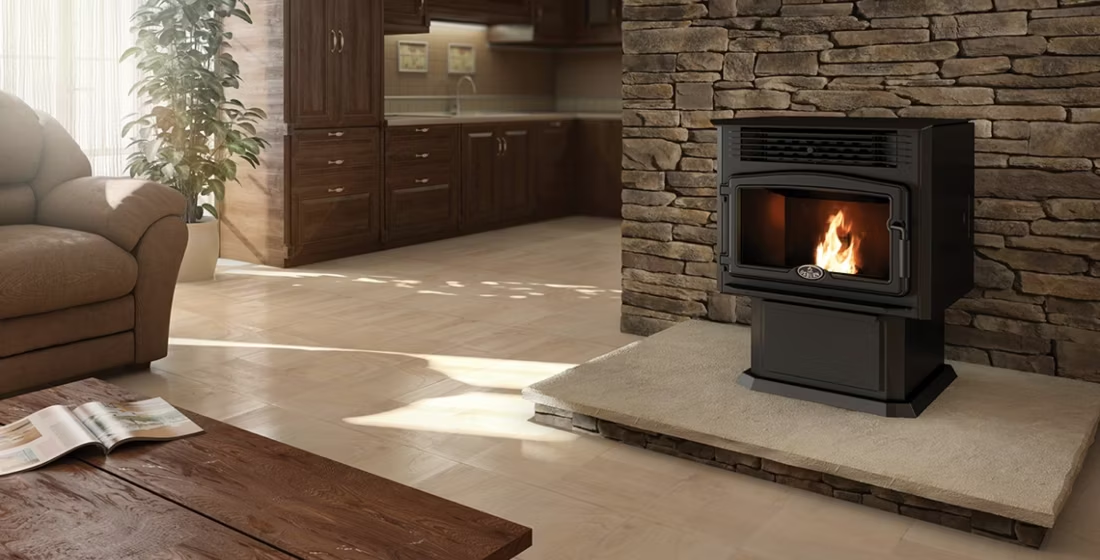
That's where pellet stoves and inserts earn their keep. They ignite at the push of a button, hold a set temperature automatically, and burn compressed hardwood pellets from regional suppliers like Forest Energy and Lignetics—no splitting, stacking, or seasoning wood required. With wildfire smoke a recurring air-quality concern across southern New Mexico during dry, windy stretches, pellet appliances also burn far cleaner than an open wood fire, which matters to homeowners who want supplemental heat without adding to the valley's smoke load.
Three steps. No salesperson until you're ready.
Tell us about your project
Your zip code, your situation, and the fuel you're leaning toward—or let the answers point you to one.
See what's actually available
The brands dealers within 100 miles genuinely carry—real options, never a catalog mirage.
Get your dealer & Project Guide
A trusted local dealer, plus the free Project Guide & Parts List that names every component of the job.
Frequently Asked Questions
How much does a pellet stove installation cost in Las Cruces?
Pellet stove and insert installations typically run $3,000 to $7,000 in Las Cruces, with the lower end covering a freestanding stove vented through an exterior wall and the higher end covering a pellet insert set into an existing masonry fireplace with a new liner and hopper feed. Because Las Cruces winters are mild by national standards, most homeowners here are sizing for a single large room or an open-concept living area rather than whole-house heat, which keeps unit size—and cost—on the smaller side compared to colder climates.
Where can I buy pellet fuel in Las Cruces?
Bagged hardwood pellets from brands like Forest Energy and Lignetics are the regional standard and are typically stocked at farm supply and hardware retailers around Doña Ana County, with pricing generally landing in the $250-$320 per ton range depending on the season and supplier. Unlike firewood, pellets are sold year-round in 40-pound bags, so you don't need seasoned wood on hand or a woodshed—a pallet stored in a garage or shed is usually enough to get a household through a mild Mesilla Valley winter.
What's the difference between a pellet stove and a pellet insert?
A pellet stove is a freestanding appliance that sits on a hearth pad and vents through an exterior wall or existing chimney chase—it can go almost anywhere with a clear wall path to the outside. A pellet insert is built to slide into an existing masonry fireplace opening, using a stainless liner run up the old chimney (or a direct wall vent) to exhaust combustion gases. For Las Cruces homes with an existing wood-burning fireplace that rarely gets used, an insert is often the simpler upgrade since it reuses the opening you already have; homes without a fireplace usually do better with a freestanding stove.
Do I need a permit to install a pellet stove in Las Cruces?
Yes—a building and mechanical permit is generally required for a new pellet appliance, whether that's through the City of Las Cruces Building Safety Division inside city limits or Doña Ana County Building and Code Enforcement in unincorporated areas of the county. Most local hearth dealers handle the permit paperwork and inspection scheduling as part of the installation, so this typically isn't something homeowners have to manage themselves. Pellet appliances are also exempt from most wood-smoke curtailment rules that apply to open wood burning, which matters during wildfire-season air quality advisories.
What size pellet stove do I need for a Las Cruces home?
Because Las Cruces has a relatively light winter heating load each year, most homes here don't need the largest pellet stoves on the market. A unit in the 40,000-50,000 BTU range comfortably heats an open living area of 1,000-1,500 square feet in this climate, and smaller units rated for 800-1,200 square feet work well for a single large room or a casita. Homeowners moving here from colder states sometimes oversize their pellet stove out of habit—a local dealer can right-size the unit based on your home's layout and insulation rather than assumptions carried over from a colder climate.
Will my pellet stove work during a power outage?
Not without a backup power source. Pellet stoves rely on an electric auger to feed fuel and a blower to circulate heat, so a standard unit shuts down the moment El Paso Electric service drops. Southern New Mexico's monsoon season and occasional winter wind events can knock out power for a few hours at a time, so some Las Cruces homeowners pair their pellet stove with a small battery backup unit or a portable generator specifically to keep the auger and blower running through short outages. If reliable off-grid backup heat is a priority, that's worth discussing with your local dealer alongside the stove selection itself.
Pellet vs. wood—which is right for my Las Cruces home?
Wood remains a real option here—pinyon, juniper, and ponderosa pine are the common local species, and Lincoln National Forest issues personal-use cutting permits from May through October for $5 to $20 per cord for those willing to cut and haul their own fuel. Wood also works without electricity, which matters for true off-grid backup heat. Pellet stoves trade that self-sufficiency for convenience: automatic feed, thermostatic control, minimal ash, and cleaner burns during wildfire-smoke advisories. For a Las Cruces household that wants set-it-and-forget-it zone heat without the wood-cutting commitment, pellet is usually the easier daily-use choice; for those who already have forest access and want a fuel source independent of the grid, wood still has a place.
How often does a pellet stove need cleaning and maintenance?
Plan on emptying the ash pan every few days to weekly depending on use, and a full professional cleaning and inspection once a year—typically before the cool season starts in October. That annual service includes cleaning the exhaust vent, checking the auger and igniter, and inspecting the burn pot and hopper. Because Las Cruces winters are short and mild, most pellet stoves here see lighter seasonal use than in colder climates, which generally means less frequent deep cleaning is needed compared to a unit run daily through a long northern winter.
Pellet vs. gas—which makes more sense for my home?
Gas fireplaces offer instant on-off operation and don't require any fuel storage, but they need either a natural gas line or a propane tank, and not every Las Cruces neighborhood has natural gas service readily available. Pellet stoves sidestep that issue entirely—they only need an electrical outlet and a stored supply of bagged pellets, making them a strong option for homes without convenient gas access or for detached casitas and workshops. Gas wins on convenience and zero fuel handling; pellet wins on independence from gas infrastructure and lower fuel cost per BTU in many cases. A local dealer can walk through both options against your home's existing utility setup.
What's the difference between an insert and a zero-clearance fireplace?
An insert is a fireplace that slides into a pre-existing wood-burning fireplace—if you don't have one, there's nothing to insert it into. A zero-clearance fireplace is built into a framed wall, which makes it the answer for remodels and new construction. Simple test: existing masonry fireplace means insert; blank or framed wall means zero-clearance.
Why is my open fireplace making my house colder?
Open fireplaces suck—literally. As the fire burns, it consumes air your furnace already paid to heat and pulls it out through the chimney, so the house is actually colder after the fire goes out than before you lit it. An insert fixes this: it seals the chimney, puts fixed glass across the front, and turns that hole in your house into a real heat source.
Can a fireplace actually lower my heating bill?
Yes—by creating a comfort zone. A furnace heats every square foot of the house just to warm the one room you're in; a gas fireplace on low burns roughly a sixth of the gas a typical furnace does. Set the furnace around 55–60 degrees as a baseline, then heat the rooms your family actually uses. Families who heat this way commonly save $20–$60 a month.
What is an in-home preview and do I need one?
It's a visit where a hearth professional measures your space, confirms the model you picked actually works in your home, and walks the specs—framing, gas line, venting, finish work—before anything is ordered. Some details you just can't know until you see the house. Never make a down payment without one; it's the single most-skipped step that burns buyers.
Nearby Dealers
Hearth shops serving Las Cruces and the surrounding area. Every listing shows whether it is a WhyFire partner, a dealer we have verified as authorized for the brands we recommend, or a local business carrying hearth products. No manufacturer pays for placement. How we verify dealers →
Western Stoves And Fireplaces
Rawson Builders Supply
Hi Tech Home Services
Pellet Brands Stocked Around Las Cruces
Manufacturers will point you to the nearest stocking dealer.
Find your pellet stove in Las Cruces.
Tell us about your home and we'll match you with the right pellet stove or insert, plus a free Project Guide & Parts List and a trusted local dealer to handle the installation.
Find Your Fireplace →