
The simplest way to add heat in La Luz, NM.
With winter lows averaging in the low 30s and only a short, mild heating season, La Luz doesn't need a furnace substitute—it needs supplemental warmth without a chimney or gas line. See what a local dealer can install.
Every Project Starts From One of These Five Situations
Mild winters, straightforward install.
La Luz sits at 4,714 feet in the foothills of the Sacramento Mountains, just north of Alamogordo, in a climate that's genuinely mild by New Mexico mountain standards. At a winter low average of 33°F, this isn't Bozeman or Fargo—most homes here need real heat for a handful of cold snaps a season, not a stove running around the clock from November through April. That's exactly the situation where an electric fireplace earns its keep: instant warmth in the room you're using, no cordwood to split, no chimney to sweep.
Electric service in the La Luz area comes through a mix of providers—Public Service Co of New Mexico, Otero County Electric Cooperative, and Rio Grande Electric Cooperative—with residential rates running roughly $0.156 to $0.185 per kWh depending on which lines serve your address. There's also a practical local angle: wildfire smoke is a recognized air quality concern here given the proximity to Lincoln National Forest, and during red flag conditions or burn restrictions, an electric unit gives you zone heat and fireplace ambiance without adding a single ounce of smoke to the air. For a lot of La Luz homeowners, that combination—mild climate, no permitting headaches, no smoke—makes electric the practical choice, even in a place where cutting your own pinyon and juniper is also an option.
Three steps. No salesperson until you're ready.
Tell us about your project
Your zip code, your situation, and the fuel you're leaning toward—or let the answers point you to one.
See what's actually available
The brands dealers within 100 miles genuinely carry—real options, never a catalog mirage.
Get your dealer & Project Guide
A trusted local dealer, plus the free Project Guide & Parts List that names every component of the job.
Frequently Asked Questions
How much does an electric fireplace installation cost in La Luz?
It depends heavily on the type of unit. A plug-in freestanding electric fireplace or a insert that drops into an existing opening and runs off a standard 120V outlet typically costs $200 to $800 for the unit itself, with no electrician or permit required—you're plugging it in like a large appliance. A built-in wall unit or a larger insert that needs a dedicated 240V circuit run by a licensed electrician usually lands between $800 and $2,500 all-in, including wiring and any surround or mantel work. Homes in La Luz served by Otero County Electric Cooperative or Rio Grande Electric Cooperative should confirm panel capacity before committing to a larger built-in—a local dealer can tell you which unit fits your home's electrical service without a panel upgrade.
Will an electric fireplace actually heat my home in La Luz?
Mostly, and that's by design. A typical 1,500-watt electric fireplace puts out around 5,000 BTU—enough to comfortably heat a single room of 300 to 400 square feet, not a whole house. Given La Luz's mild winter profile (average lows around 33°F and only a handful of truly cold nights each year), that's usually sufficient for the handful of genuinely cold nights each winter, especially as supplemental heat alongside a central system or wood stove. If you're hoping to heat an entire open-concept living area or a drafty older adobe-style home as the primary source, talk to a local dealer about a larger insert or multiple zoned units rather than expecting one unit to do it all.
What's the difference between an electric fireplace, insert, and stove?
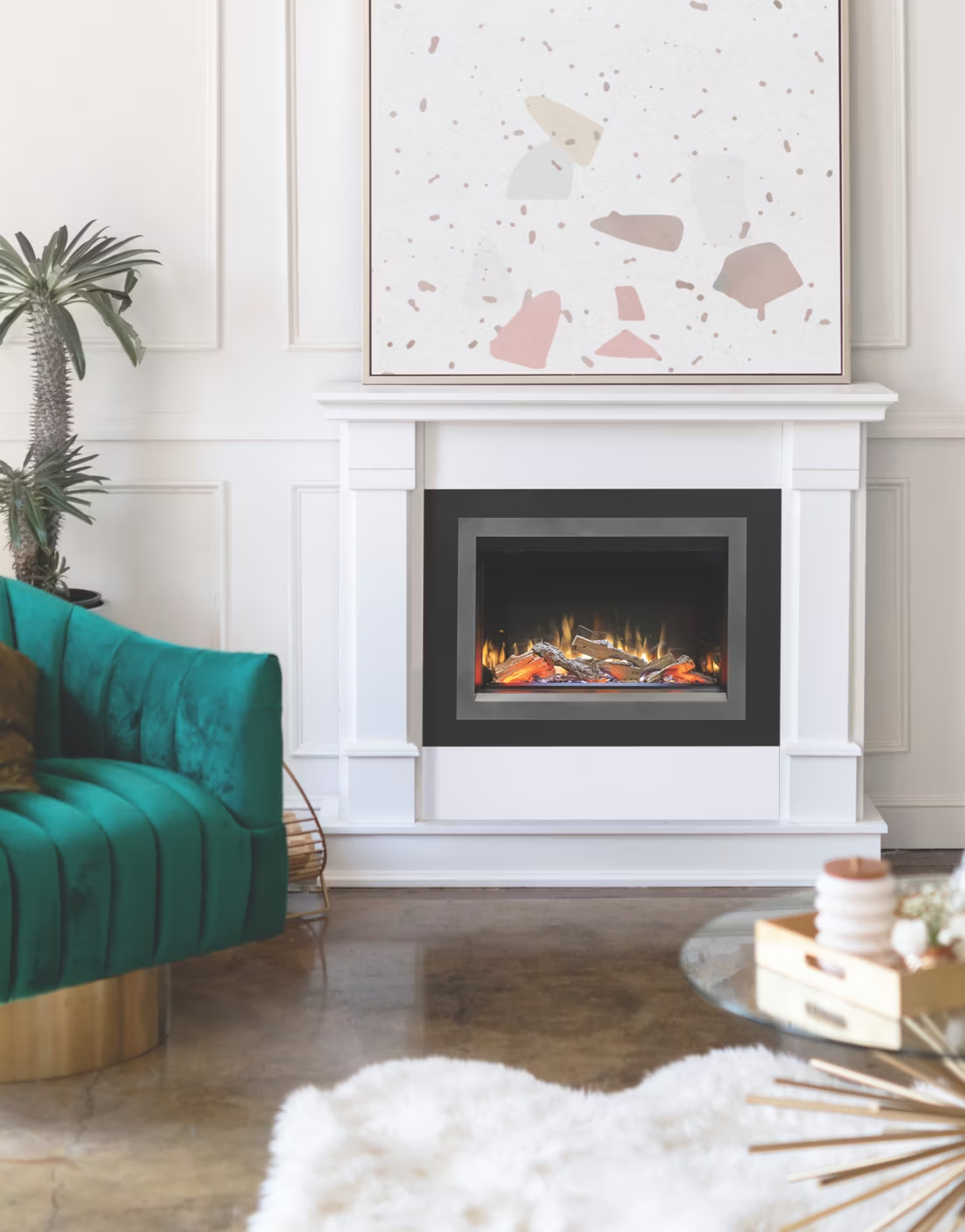
An electric fireplace is typically a built-in or wall-mounted unit designed to look like a traditional fireplace, often with a mantel or surround. An electric insert is sized to slide into an existing masonry or factory-built fireplace opening—a good option if La Luz has an older home with an existing fireplace you want to convert away from wood without touching the chimney. An electric stove is a freestanding cabinet-style unit that mimics a wood stove's footprint but plugs into a standard outlet. All three use the same core heating element and just differ in how they fit into your space—a local dealer can tell you which shape works with your existing opening or wall.
Do I need a permit to install an electric fireplace in La Luz?
In most cases, no. A plug-in electric fireplace that runs off an existing 120V outlet doesn't typically trigger a building or electrical permit in Otero County since there's no new wiring or gas work involved. If you're installing a larger built-in unit that requires a new dedicated circuit, the electrical work itself should be pulled and inspected by a licensed electrician under Otero County's electrical code—this is standard practice and most installers handle the paperwork as part of the job. There's no venting, no chimney, and no combustion byproduct to worry about, which is a big part of why electric permitting is so much lighter than wood or gas.
What will it cost to run an electric fireplace with La Luz's electric rates?
Running cost depends on which utility serves your address—PNM customers pay around $0.156 per kWh, Otero County Electric Cooperative customers around $0.177, and Rio Grande Electric Cooperative customers around $0.185. A standard 1,500-watt unit running on high for 6 hours a day costs roughly $1.40 to $1.65 per day depending on your provider, or about $40 to $50 a month if used daily through the coldest stretch. Most units also have a lower heat setting or ambiance-only (flame, no heat) mode, which cuts that cost dramatically for evenings when you just want the look of a fire without the added warmth.
Electric vs. wood—which makes more sense for a La Luz home?
Wood has deep practical roots here—Lincoln National Forest permits run $5 to $20 per cord during the May-to-October cutting season, and pinyon, juniper, and ponderosa pine are all common and burn well. For homes that want real backup heat during a power outage, wood still wins; an electric fireplace goes dark the moment the co-op line drops. But given La Luz's mild winter climate, a lot of homeowners don't want the chimney maintenance, the wildfire-season smoke concerns, or the wood-splitting commitment for what amounts to occasional supplemental heat. Electric is the lower-maintenance, smoke-free choice for day-to-day ambiance and warmth; wood remains the better call if reliable off-grid heat matters to you.
Electric vs. gas—which is the simpler install in La Luz?
Electric, by a wide margin. Natural gas infrastructure is limited in the La Luz area, so a gas fireplace here typically means propane—a tank, a regulated line, and a licensed gas-fitter to run and inspect it, which adds real cost and coordination. An electric fireplace skips all of that: no tank, no gas line, no combustion venting, just a plug or a single dedicated circuit. If you already have propane service for a water heater or range, gas is still a fine option and gives you backup-heat capability during outages that electric can't match. But for a straightforward, low-friction install, electric is the simpler path in this area.
Will my electric fireplace still work if the power goes out?
No—this is the one honest tradeoff worth knowing before you buy. Electric fireplaces need power to run, so during an outage from Otero County Electric Cooperative or Rio Grande Electric Cooperative lines, the unit simply won't turn on, regardless of how new or well-installed it is. If backup heat during outages matters to you—which is a real consideration on rural cooperative lines—pair an electric fireplace for everyday convenience with a wood stove or propane unit as your outage backup rather than relying on electric alone.
What's the best electric fireplace for a La Luz home?
For most La Luz homes, a mid-size built-in or insert from a brand like Dimplex or Napoleon in the 1,500-watt range covers a single living space well without overtaxing an older home's electrical panel. If you're converting an existing wood-burning fireplace opening, an insert sized to that opening—rather than a wall-mounted unit—will look more finished and won't require new framing. Homes on Rio Grande Electric Cooperative or Otero County Electric Cooperative service with older panels should have a local dealer confirm circuit capacity before selecting a larger unit; it's a five-minute check that avoids a surprise electrical upgrade later.
Does an electric fireplace need a vent or chimney?
No—that's its superpower. An electric fireplace needs a wall and an outlet, period. No vent pipe, no gas line, no clearances to design around, which is why it works in bedrooms, offices, apartments, and walls where venting a gas or wood unit would be impractical or impossible. Installation is typically the simplest and least expensive of any fireplace type.
Can I put a TV above my fireplace?
Yes—with an asterisk. Fireplaces are hot and TVs don't like heat. Either put a mantel between them to deflect rising warmth, or choose a fireplace with heat-management technology that creates a cool zone on the wall above—the wall stays around 125 degrees, barely warm, while the room still gets full heat. If you like clean lines and don't want a mantel, heat management is the answer.
How much should I budget for a fireplace?
For an average home—covering the fireplace, the vent pipe, and basic installation—a budget between $3,900 and $5,500 gives you a lot of options across wood, gas, and pellet. By the time you add finish work, gas line, and electrical, the average complete installation lands between $5,000 and $12,000 all-in. In a remodel or new build, a good rule is to put about 2.5% of the total project cost toward the fireplace.
Can a fireplace actually lower my heating bill?
Yes—by creating a comfort zone. A furnace heats every square foot of the house just to warm the one room you're in; a gas fireplace on low burns roughly a sixth of the gas a typical furnace does. Set the furnace around 55–60 degrees as a baseline, then heat the rooms your family actually uses. Families who heat this way commonly save $20–$60 a month.
Nearby Dealers
Hearth shops serving La Luz and the surrounding area. Every listing shows whether it is a WhyFire partner, a dealer we have verified as authorized for the brands we recommend, or a local business carrying hearth products. No manufacturer pays for placement. How we verify dealers →
The Stove And Spa Store
Foxworth-Galbraith Lumber
Rawson Builders Supply
Western Stoves And Fireplaces
Hi Tech Home Services
Jack White Building Specialties
Southwest Chimney Sweeps Inc
Chaves County Door & Supply
K.d. Scholten Co.
Electric Service in La Luz
An electric fireplace's heater draws about 1,500 watts—pennies per hour at local rates.
Public Service Co Of Nm
Rio Grande Electric Coop, Inc
Otero County Electric Coop Inc
Find your electric fireplace in La Luz.
Tell us a bit about your home and we'll put together a free Project Guide & Parts List—the right electric fireplace or insert for your space, matched with a trusted local dealer who can size the circuit and handle the install correctly.
Find Your Fireplace →