
The Fireplace Option Built for Base Housing.
No chimney, no gas line, no wildfire-smoke tradeoffs—just plug-in warmth suited to Holloman AFB's mild Tularosa Basin winters and privatized housing rules. Find the right unit and a trusted local dealer.
Every Project Starts From One of These Five Situations
Heat that plugs in, not vents out.
Holloman AFB sits in the Tularosa Basin at just over 4,000 feet, in climate zone 3B, where the average winter low hovers around 22°F and the area has a fairly mild, short heating season—much lighter than a cold-climate post like Duluth, MN, which faces nearly three times the winter heating demand. Most households here don't need a primary wood-burning heat source; they need supplemental warmth and ambiance that fits inside privatized base housing rules. That's a very different starting point than a mountain town where a stove has to carry the whole house through a hard winter.
Wood and pellet stoves are essentially off the table for on-base residents: privatized housing at Holloman (managed by Hunt Military Communities) generally prohibits solid-fuel appliances and structural chimney modifications, and the surrounding high desert already deals with seasonal wildfire smoke from the Lincoln National Forest and beyond. Electric fireplaces sidestep both problems entirely—no venting, no combustion, no smoke, and no permanent modification required for a freestanding or wall-mounted unit. Off base, Rio Grande Electric Cooperative and Otero County Electric Cooperative serve most Otero County homes at roughly 17.6 to 18.5 cents per kWh, keeping day-to-day operating costs modest for a unit that's mostly used for ambiance and zone heat rather than whole-house heating.
Three steps. No salesperson until you're ready.
Tell us about your project
Your zip code, your situation, and the fuel you're leaning toward—or let the answers point you to one.
See what's actually available
The brands dealers within 100 miles genuinely carry—real options, never a catalog mirage.
Get your dealer & Project Guide
A trusted local dealer, plus the free Project Guide & Parts List that names every component of the job.
Frequently Asked Questions
How much does an electric fireplace installation cost near Holloman AFB?
Most electric fireplace projects here fall into two categories. A freestanding or wall-hung plug-in unit—the most common choice in privatized base housing—typically runs $300 to $900 for the unit itself with no real installation cost beyond hanging it, since it uses a standard 120V outlet. A built-in electric insert or a linear unit set into a mantel surround, more common in off-base homes in Alamogordo or unincorporated Otero County, runs $1,200 to $2,800 once framing, a dedicated circuit, and finish carpentry are factored in. Because there's no venting or gas line, electric installs are consistently the least expensive fireplace option on this list.
Can I install an electric fireplace in Holloman AFB privatized housing?
In most cases, yes, without needing formal approval—a freestanding or recessed-mount electric fireplace that plugs into an existing outlet doesn't alter the structure and generally isn't flagged by housing management. Anything that involves cutting into a wall, mounting into a mantel surround, or adding a dedicated 240V circuit should go through Hunt Military Communities' resident services office first, the same way you'd clear any other modification request. Off-base homeowners in unincorporated Otero County follow a simpler path: an electrical permit through Otero County only if new wiring is being added, otherwise none is required.
Why isn't wood or pellet heat recommended for Holloman AFB?
It's not that wood doesn't exist locally—pinyon, juniper, and ponderosa pine are all cut under permit from the Lincoln National Forest for $5 to $20 per cord during the May-to-October season, and some rural Otero County households do burn wood. But within Holloman AFB itself, base housing policy doesn't allow solid-fuel stoves or chimney installations, and the Tularosa Basin already deals with wildfire smoke advisories in dry years. Given that combination, electric heat is simply the fuel that actually fits how most residents here live, whether that's a two-year PCS tour or a long-term off-base rental.
How much does it cost to run an electric fireplace at Holloman AFB electric rates?
A typical 1,500-watt electric fireplace running on high costs about 26 to 28 cents per hour at Rio Grande Electric Cooperative and Otero County Electric Cooperative's residential rates (17.65 to 18.51 cents per kWh). Most owners run the heater setting only during actual cold snaps—the flame effect alone uses only a few watts, so leaving it on for ambiance without heat costs pennies a day. That makes an electric unit cheap to run for the mild winters this climate zone actually delivers.
Do I need a permit to install an electric fireplace here?
For a plug-in freestanding or wall-mount unit, no permit is required on or off base. If you're adding a built-in insert that requires a new dedicated circuit, an off-base installation in unincorporated Otero County needs an electrical permit, which most licensed electricians pull as part of the job. On base, that same work needs sign-off from Hunt Military Communities before an electrician starts, since it touches the structure and wiring of a home the Air Force ultimately owns.
What's the best electric fireplace for a Holloman AFB home?
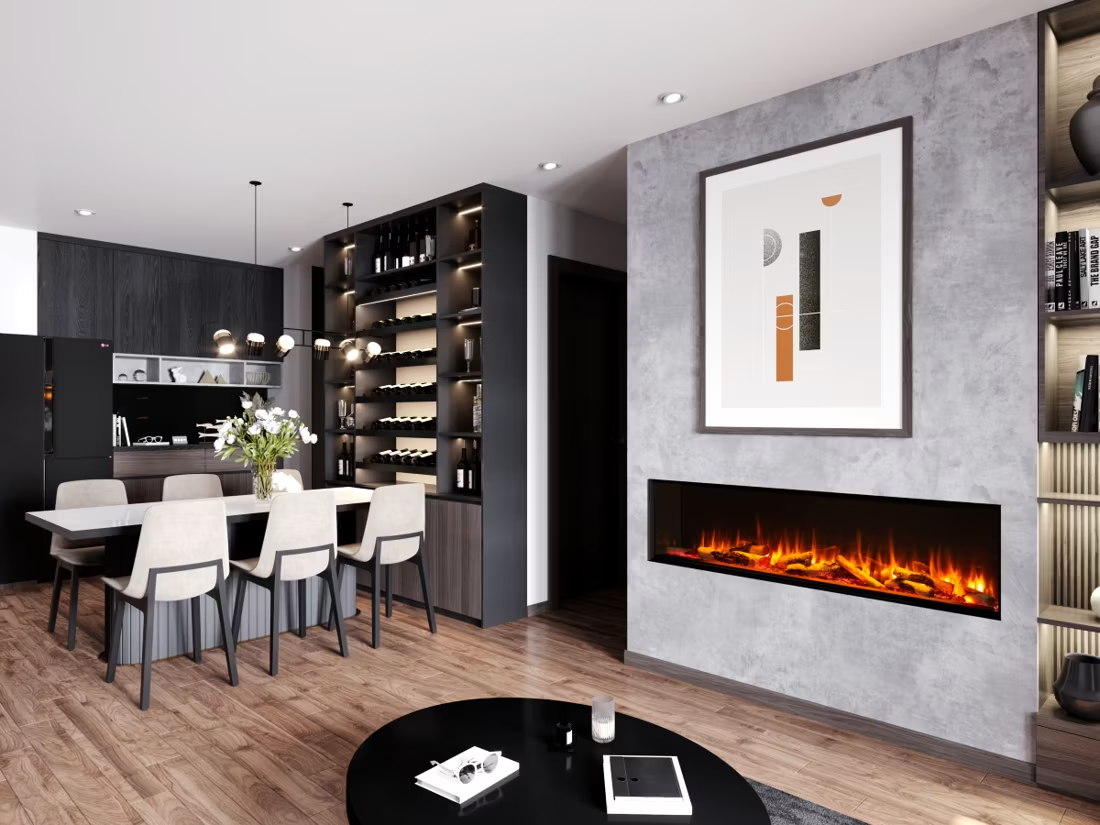
For base housing and smaller off-base rentals, a freestanding or wall-mount unit from Touchstone or Dimplex gives realistic flame effects without any modification to the home. For homeowners doing a mantel or media-wall build in Alamogordo or the surrounding county, a linear built-in from Napoleon or Amantii recessed into the wall gives a more custom look and can be sized to the room rather than a fixed cabinet. None of these need a chimney or gas line, so sizing is mostly about the visual footprint and heat output rather than venting math.
Electric vs. gas—which fits Holloman AFB better?
Gas fireplaces are a solid option for off-base homeowners, but since natural gas mains don't reach the Tularosa Basin's rural stretches, a gas unit here typically runs on propane, which means a tank, a fuel contract, and a full venting and gas-line installation. Electric skips all of that: no tank, no venting, and no fuel deliveries to schedule around a PCS move. For on-base housing where structural changes aren't an option, electric is effectively the default. For a permanent off-base home where someone wants a stronger heat source and doesn't mind managing a propane account, gas is worth comparing.
Are electric fireplaces safe for a home with kids or pets?
Yes—most modern electric fireplaces use LED flame effects behind a cool-touch glass front, so there's no open flame, no hot glass surface, and no combustion byproducts to worry about. That's a meaningful difference from a wood or gas unit's glass front, which can stay hot well after use. For young families rotating through base housing, that's one less safety concern to manage alongside everything else that comes with a move.
Can I take my electric fireplace with me when I PCS out of Holloman AFB?
If you go with a freestanding or wall-mount plug-in unit, absolutely—it's one of the practical advantages of electric heat for military families. Unbox it, unmount it, and it moves with your household goods like any other appliance. A built-in insert installed into a mantel or media wall stays with the home, which is worth factoring in if you're renting off base rather than planning to stay long-term.
Can I put a TV above my fireplace?
Yes—with an asterisk. Fireplaces are hot and TVs don't like heat. Either put a mantel between them to deflect rising warmth, or choose a fireplace with heat-management technology that creates a cool zone on the wall above—the wall stays around 125 degrees, barely warm, while the room still gets full heat. If you like clean lines and don't want a mantel, heat management is the answer.
Does an electric fireplace need a vent or chimney?
No—that's its superpower. An electric fireplace needs a wall and an outlet, period. No vent pipe, no gas line, no clearances to design around, which is why it works in bedrooms, offices, apartments, and walls where venting a gas or wood unit would be impractical or impossible. Installation is typically the simplest and least expensive of any fireplace type.
What is an in-home preview and do I need one?
It's a visit where a hearth professional measures your space, confirms the model you picked actually works in your home, and walks the specs—framing, gas line, venting, finish work—before anything is ordered. Some details you just can't know until you see the house. Never make a down payment without one; it's the single most-skipped step that burns buyers.
Can a fireplace actually lower my heating bill?
Yes—by creating a comfort zone. A furnace heats every square foot of the house just to warm the one room you're in; a gas fireplace on low burns roughly a sixth of the gas a typical furnace does. Set the furnace around 55–60 degrees as a baseline, then heat the rooms your family actually uses. Families who heat this way commonly save $20–$60 a month.
Nearby Dealers
Hearth shops serving Holloman AFB and the surrounding area. Every listing shows whether it is a WhyFire partner, a dealer we have verified as authorized for the brands we recommend, or a local business carrying hearth products. No manufacturer pays for placement. How we verify dealers →
The Stove And Spa Store
Foxworth-Galbraith Lumber
Rawson Builders Supply
Western Stoves And Fireplaces
Electric Service in Holloman AFB
An electric fireplace's heater draws about 1,500 watts—pennies per hour at local rates.
Rio Grande Electric Coop, Inc
Otero County Electric Coop Inc
Find your electric fireplace in Holloman AFB.
Tell us a bit about your home—on base or off—and we'll put together a free Project Guide & Parts List: the exact unit specs, any electrical work needed, and a recommended local dealer who can get it installed correctly.
Find Your Fireplace →