
Steady Heat for Edgewood's High Desert Winters.
At 6,685 feet in the East Mountains, Edgewood sees a long, demanding winter heating season and winter lows around 19°F. A pellet stove delivers that heat without the wood-cutting permit runs.
Every Project Starts From One of These Five Situations
Pellet heat trades permit runs for push-button convenience.
Edgewood sits along I-40 in the East Mountains east of Albuquerque, high enough at 6,685 feet that winter nights routinely dip into the teens and the area endures a winter heating season nearly as demanding as Bismarck, ND—tougher than nearby Santa Fe proper. Because natural gas mains never reached much of this stretch of Santa Fe County, propane and wood have long carried the heating load, and plenty of local households still make the annual trip to cut pinyon, juniper, or ponderosa pine under permits from the Santa Fe, Cibola, or Carson National Forests between May and October.
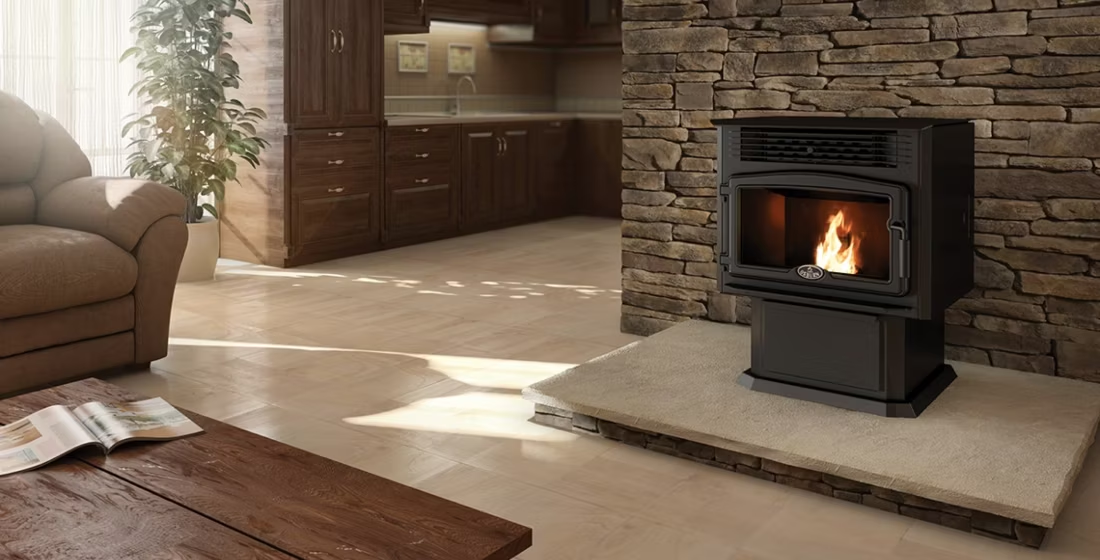
A pellet stove offers a real alternative to that routine: instead of a truck bed of split wood and a $5-to-$20-per-cord cutting permit, you're feeding 40-pound bags into a hopper that auto-feeds the fire for hours at a time. Regional suppliers like Forest Energy and Lignetics keep pellets moving through the East Mountains corridor, and because pellet stoves burn dramatically cleaner than open wood-burning, they're a good fit for a valley that deals with both winter inversions and wildfire smoke. The one tradeoff worth planning for: pellet stoves need electricity to run the auger and blower, and Central New Mexico Electric Cooperative service in this rural stretch can take longer to restore after a winter storm than power in town—so a battery backup or small generator is worth budgeting alongside the stove itself.
Three steps. No salesperson until you're ready.
Tell us about your project
Your zip code, your situation, and the fuel you're leaning toward—or let the answers point you to one.
See what's actually available
The brands dealers within 100 miles genuinely carry—real options, never a catalog mirage.
Get your dealer & Project Guide
A trusted local dealer, plus the free Project Guide & Parts List that names every component of the job.
Frequently Asked Questions
How much does a pellet stove installation cost in Edgewood?
Most pellet stove and insert installations in the Edgewood area run between roughly $3,500 and $7,000, depending on the unit and whether you're venting through an exterior wall or converting an existing masonry fireplace. Pellet venting is simpler than wood—it's a small-diameter PL vent pipe rather than a full masonry chimney—which keeps labor costs down compared to a wood stove install. Homes without an existing hearth or venting path will land toward the higher end once wall penetration and electrical work for the hopper's auger motor are factored in.
Will my pellet stove still work if the power goes out?
Not without backup power. Pellet stoves rely on an electric auger to feed fuel and a blower to circulate heat, so a standard unit goes dark the moment the grid does. That matters in Edgewood, where Central New Mexico Electric Cooperative service to outlying East Mountain properties can take longer to restore after a winter storm than power in a denser area like Santa Fe. Many local owners pair their pellet stove with a small battery backup unit or a portable generator sized for the stove's low draw—usually under 120 watts—so it can keep running through an outage.
Where can I buy pellets in the Edgewood area, and what do they cost?
Forest Energy and Lignetics are the two regional brands most commonly stocked by hearth retailers and farm supply stores serving the East Mountains, with a ton (about 50 bags) typically running somewhere in the $275 to $375 range depending on the season and how far it's trucked in. Because Edgewood is a smaller market than Albuquerque or Santa Fe, supply can tighten in a hard winter—most local owners buy their season's pellets in late summer or early fall rather than waiting until the first cold snap.
Should I get a pellet stove or just keep cutting my own wood?
It depends on how much you value convenience versus how much you enjoy the wood-cutting tradition. A lot of Edgewood households already hold Forest Service permits—$5 to $20 per cord through the Santa Fe, Cibola, or Carson National Forests during the May-through-October season—and cut their own pinyon, juniper, or ponderosa pine. That's real savings if you have the time and a truck. A pellet stove trades that seasonal cutting trip and wood storage for a stack of 40-pound bags, more consistent heat output, and a cleaner burn, but it costs more per BTU than self-cut wood and needs electricity to run.
Are pellet stoves better for air quality during winter inversions?
Generally, yes. Pellet stoves burn manufactured fuel at a controlled rate with a fan-assisted burn, which produces far less visible smoke and particulate than an open wood stove—a meaningful difference in a valley like Edgewood's that's prone to winter temperature inversions trapping smoke close to the ground. During heavy wildfire smoke events regionally, a clean-burning pellet stove is also less likely to compound the air quality problem than a poorly tuned wood stove. If you're choosing between the two partly for air quality reasons, pellet is the safer bet.
Do I need a permit to install a pellet stove in Edgewood?
Most new pellet stove installations require a building permit, typically through Santa Fe County's building department since Edgewood sits within Santa Fe County. The permit process mainly confirms proper clearances, venting, and hearth pad specifications—it's a lighter lift than a full wood-burning chimney permit since there's no masonry work involved. Most local installers pull the permit as part of the job, so it's worth confirming that's included in your quote before work starts.
Does Edgewood's elevation affect pellet stove performance?
It can. At 6,685 feet, the air is thinner than at sea level, which affects combustion air supply and can change how a stove's factory settings perform. Most manufacturers publish high-altitude venting and feed-rate adjustments for installations above 4,500 feet, and a local installer familiar with East Mountain elevations will know to make those adjustments during setup. Skipping this step is a common cause of poor burn quality or nuisance shutdowns in stoves installed at Edgewood's elevation.
How big of a pellet stove do I need for my home?
Sizing depends on square footage and how well-insulated the home is, but given Edgewood's cold nights and long heating season, most homeowners here should size toward the higher end of a stove's rated range rather than the low end. A hopper that holds 40 to 60 pounds of pellets will typically run 24 to 40 hours between refills depending on the burn setting, which matters if you're heating overnight through a 19-degree low. A local retailer carrying Forest Energy or Lignetics-compatible stoves can size the unit to your square footage during an in-home visit.
Pellet stove vs. propane—which makes more sense for an Edgewood home?
Since natural gas mains don't reach most of the Edgewood area, the real comparison for a lot of local homeowners is pellet versus propane, not pellet versus natural gas. Propane offers instant on-demand heat and doesn't require refilling a hopper, but tank rental or purchase and propane delivery costs can add up over a long heating season. Pellet stoves cost more upfront to install but generally run cheaper per BTU than propane once you're buying pellets by the ton, and they give you the visual and radiant qualities of a real flame that propane appliances don't always match. Homes already running on propane for cooking or water heating sometimes add a pellet stove specifically to cut propane use during the coldest months.
Why is my open fireplace making my house colder?
Open fireplaces suck—literally. As the fire burns, it consumes air your furnace already paid to heat and pulls it out through the chimney, so the house is actually colder after the fire goes out than before you lit it. An insert fixes this: it seals the chimney, puts fixed glass across the front, and turns that hole in your house into a real heat source.
How often does a pellet stove need cleaning?
A clean pellet stove is a happy pellet stove. Plan on cleaning the burn pot about once a week when you're burning regularly—ash and clinkers gum up the air holes just like a pellet barbecue. Most pellet stove problems trace back to skipped cleaning that nobody explained up front. Some designs make it easy with a trapdoor burn pot: pull a lever and the gunk drops into the ash pan.
How much should I budget for a fireplace?
For an average home—covering the fireplace, the vent pipe, and basic installation—a budget between $3,900 and $5,500 gives you a lot of options across wood, gas, and pellet. By the time you add finish work, gas line, and electrical, the average complete installation lands between $5,000 and $12,000 all-in. In a remodel or new build, a good rule is to put about 2.5% of the total project cost toward the fireplace.
Can I install a fireplace myself?
If you're putting a fire in your house on purpose, it's best to work with an expert. Unless you're genuinely experienced in framing, gas line, vent pipe, and the national code on clearances to combustibles, have a professional do it—and ideally the same company that sells you the fireplace, so warranty, service, and liability all live under one roof.
Nearby Dealers
Hearth shops serving Edgewood and the surrounding area. Every listing shows whether it is a WhyFire partner, a dealer we have verified as authorized for the brands we recommend, or a local business carrying hearth products. No manufacturer pays for placement. How we verify dealers →
HeatSource
Western Building Supply
Mountain West Sales, Inc.
Banker Insulation
Builders Materials Inc.
Rocky Mountain Chimney Sweep
Tierra Woodstoves
Pellet Brands Stocked Around Edgewood
Manufacturers will point you to the nearest stocking dealer.
Find your pellet stove in Edgewood.
Tell us about your home and heating goals, and we'll match you with a trusted local dealer and send over a free Project Guide & Parts List—sized for Edgewood's elevation and climate, with the vent kit and parts already worked out.
Find Your Fireplace →