
Warm Up Watsessing Winters Without the Wood Pile.
On narrow Essex County lots with gas already run to the house, a direct-vent fireplace is often the fastest, cleanest way to add real heat. Get matched with a trusted local dealer who can size and install it right.
Every Project Starts From One of These Five Situations
A dense, gas-piped neighborhood built for this fuel.
Watsessing sits low along the Passaic River basin at about 109 feet elevation, part of Bloomfield Township in Essex County. Winters here aren't extreme—average lows hover around 25°F and the area sees a moderate seven-month heating season—but the housing stock is what really shapes the decision. Much of the Watsessing Historic District dates to the 1910s through 1940s, full of Craftsman bungalows and Colonials on tight lots, many with an original masonry fireplace that was never built to carry the heating load a modern household wants from it.
Public Service Electric & Gas Co. (PSE&G) serves Watsessing for both electric and natural gas, and gas service reaches nearly every block in this part of Bloomfield, which makes a direct-vent gas insert or fireplace a straightforward retrofit rather than a new-utility project. Wood-burning is uncommon here—lot sizes are small, homes sit close together, and there's little of the self-cut firewood culture you'd find further out—so most homeowners upgrading an old fireplace, or adding heat to a den or converted attic, land on gas for the instant, thermostat-controlled warmth without smoke, ash, or a chimney to feed.
Three steps. No salesperson until you're ready.
Tell us about your project
Your zip code, your situation, and the fuel you're leaning toward—or let the answers point you to one.
See what's actually available
The brands dealers within 100 miles genuinely carry—real options, never a catalog mirage.
Get your dealer & Project Guide
A trusted local dealer, plus the free Project Guide & Parts List that names every component of the job.
Frequently Asked Questions
How much does a gas fireplace installation cost in Watsessing?
Most gas fireplace or insert projects in this part of Essex County run $4,500 to $10,000. A gas insert dropped into an existing masonry fireplace—common in Watsessing's older Craftsman and Colonial homes—with gas already reaching the house tends to land on the lower end. Projects that need a new gas line run from the meter, or a built-in direct-vent unit framed into a wall for a room without an existing chimney, push toward the higher end. Given how tight lots and shared walls are in this neighborhood, venting path is often the biggest cost driver—a local installer can walk your home and tell you quickly which side of that range you're on.
Can I convert my home's original fireplace to gas?
Yes, and it's one of the most common requests from Watsessing homeowners. Many of the district's early-1900s homes have a working masonry chimney that was designed for wood but rarely gets used today. A gas insert installed into that opening, with a stainless liner run up the existing flue, typically preserves the mantel and brick surround while turning an inefficient, drafty fireplace into a real heat source. Since PSE&G gas service already runs to most of these homes, the main added cost is usually the liner and insert itself rather than new utility work.
Is propane ever used instead of natural gas in Watsessing?
Rarely. PSE&G's natural gas network covers essentially all of Watsessing and greater Bloomfield, so propane tanks—common in more rural parts of New Jersey—aren't something you'll typically need here. If your home already has a gas water heater, range, or furnace, adding a fireplace usually means tapping into that existing gas service rather than starting from scratch. A licensed installer will confirm your line has enough capacity for the added appliance before finalizing the unit selection.
Will a gas fireplace still work if the power goes out?
Most direct-vent gas fireplaces will, which matters in a neighborhood that sees its share of nor'easter-driven outages along the Passaic. Units with IPI (intermittent pilot ignition) run on a battery backup—typically a few AA batteries inside the unit—that keeps the igniter working when PSE&G power drops. Valor fireplaces take a different approach: the pilot's thermocouple generates its own electricity, so there's no battery to remember at all. Either way, worth asking your local dealer which ignition system is on the model you're considering, especially if you're choosing this as a hedge against winter storm outages.
Gas fireplace, insert, or stove—what's the difference for a Watsessing home?
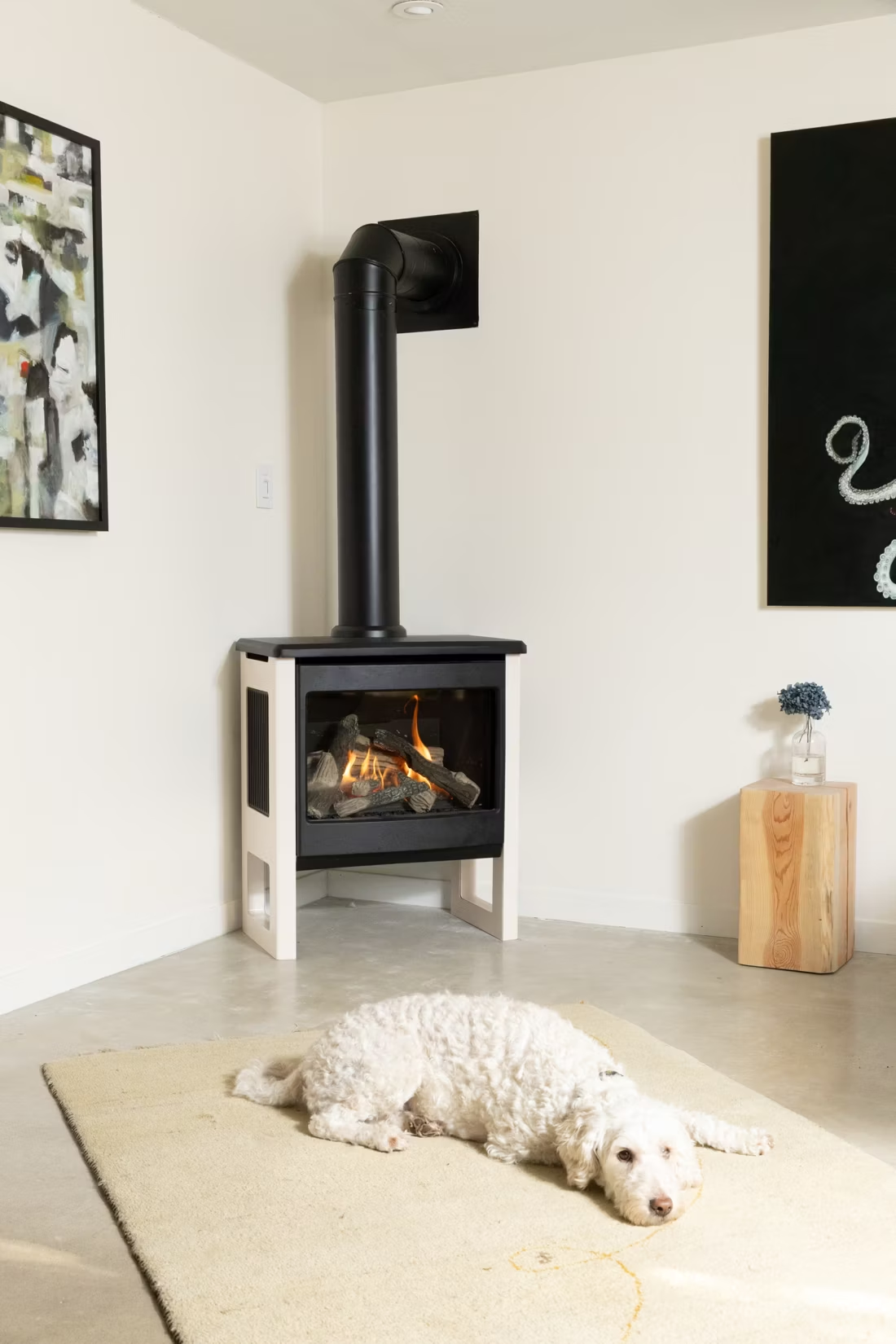
A gas fireplace is a fully framed-in unit, typically chosen for new construction, an addition, or a room without an existing chimney. A gas insert is built to slide into an existing masonry fireplace opening—the natural fit for Watsessing's older homes with original chimneys. A gas stove is a freestanding cabinet unit that vents through a wall or existing flue and works well in a smaller den or converted sunroom where floor space allows a stove rather than a built-in box. For most homes in this neighborhood with an original fireplace already in place, an insert is the simplest and least invasive upgrade.
What permits does Bloomfield Township require for a gas fireplace?
Bloomfield Township, which covers Watsessing, requires a construction permit for new gas fireplace or insert installations under New Jersey's Uniform Construction Code, along with a separate gas permit for any new or modified gas line. The gas line portion has to be done by a licensed NJ gas fitter or plumber. A reputable local hearth dealer will typically pull both permits and schedule the required inspections as part of the installation, so you're not coordinating separate trades yourself.
Should I get a vented or vent-free gas fireplace?
Vented, direct-vent units are by far the standard choice in Watsessing and across Bloomfield. They pull combustion air from outside and exhaust it back outside through a sealed pipe, which keeps them safe and code-compliant for New Jersey's Uniform Construction Code without any restrictions on room size. Vent-free units are technically permitted in New Jersey under strict room-volume and ventilation rules, but on the tight lots and close-set houses typical of this neighborhood, most local installers steer homeowners toward direct-vent models—they heat just as well without any tradeoff on indoor air quality, and they're the easier install when a chimney or wall vent path already exists.
How often does a gas fireplace need to be serviced?
Plan on an annual inspection, ideally in early fall before the heating season starts. A technician checks the burner, pilot assembly, gas connections, and venting, and cleans the glass and interior. This runs roughly $150 to $250 in the Essex County area—far less involved than a wood chimney sweep, but it's the step that keeps the unit's ignition system and battery backup reliable for the first cold snap and any storm-related outage that follows it.
Should I go with gas or an electric fireplace in Watsessing?
Gas delivers real, sustained heat output and can keep running through a power outage with battery or self-generating ignition, which matters given how often nor'easters knock out PSE&G service in this area. Electric fireplaces plug into a standard outlet, need no venting or gas line at all, and install in an afternoon for well under $1,000—but PSE&G's residential electric rate runs close to 19.8 cents per kWh, making electric heat noticeably more expensive to run for anything beyond occasional supplemental warmth. For a den, apartment, or rental unit where a full gas line isn't practical, electric is a reasonable fit. For a primary heat source in a Watsessing home with gas already at the curb, gas is almost always the better long-term value.
Can I put a TV above my fireplace?
Yes—with an asterisk. Fireplaces are hot and TVs don't like heat. Either put a mantel between them to deflect rising warmth, or choose a fireplace with heat-management technology that creates a cool zone on the wall above—the wall stays around 125 degrees, barely warm, while the room still gets full heat. If you like clean lines and don't want a mantel, heat management is the answer.
Why is a fireplace insert so efficient?
An insert does two things: it seals the chimney completely, so you stop losing air you already paid to heat, and it radiates warmth into the room through the firebox and glass. Most add a heat-exchange fan that pulls cool room air underneath, wraps it around the hot firebox, and pushes it back out warm. Your home is more efficient before you've even lit the first fire.
Can a fireplace actually lower my heating bill?
Yes—by creating a comfort zone. A furnace heats every square foot of the house just to warm the one room you're in; a gas fireplace on low burns roughly a sixth of the gas a typical furnace does. Set the furnace around 55–60 degrees as a baseline, then heat the rooms your family actually uses. Families who heat this way commonly save $20–$60 a month.
Does a fireplace add value to my home?
On average, a fireplace adds back to the home about the same amount you spent installing it. Add the monthly savings from heating the rooms you actually use instead of the whole house—often hundreds of dollars a year—and the value case is strong before you even count what a fire does for how your family uses the room.
Nearby Dealers
Hearth shops serving Watsessing and the surrounding area. Every listing shows whether it is a WhyFire partner, a dealer we have verified as authorized for the brands we recommend, or a local business carrying hearth products. No manufacturer pays for placement. How we verify dealers →
Harris Hearth And Home
Hot Concepts Fireplaces
Fireplaces R Us
Fire Design
Big Apple Fireplaces
D & D Design Center
Kjb Fireplaces
Costello's Hearth & Spa - Bernardsville
Flue Tech
Mcnamara Fireplace And Stove
County Woodstoves Inc
Chimney Sweep Energy Barn
Timberline Speciality Products
Timberline Stoves
Fireplaces By Design
Light N Grid
N & N Services
Find your gas fireplace in Watsessing.
Tell us about your home and your existing fireplace or chimney, and we'll put together a free Project Guide & Parts List—the right gas fireplace or insert, the vent kit it needs, and a trusted local Essex County dealer to install it.
Find Your Fireplace →