
Find the right fireplace for your Essex County home.
Fireplaces are the practical choice across Essex County's rowhouses, brownstones, and suburban single-family homes—from Newark to Livingston. I'll help you sort through what fits your house and connect you with a trusted local dealer who can install it correctly.
Every Project Starts From One of These Five Situations
Dense housing, deep gas infrastructure, and hearth heat across Essex County, New Jersey.
Essex County packs more than 465,000 people into 22 municipalities—from Newark's rowhouses and brownstones to the Victorian housing stock of Montclair and the larger colonial lots of Livingston, West Caldwell, and Millburn. Winters are moderate by national standards (climate zone 4A, a winter heating load a bit above Philadelphia's, average winter lows near 25°F), nothing like the deep cold of a Buffalo or Burlington winter, but cold enough that most households run a heating system five to six months a year. PSE&G's gas network covers essentially the whole county, which shapes what kind of hearth appliance actually makes sense here.
That's why this hub leans hard into gas and electric. Wood-burning and pellet appliances are genuinely rare in Essex County—attached housing, small lots, condo and co-op rules, and each municipality's own building and fire codes make new solid-fuel installs the exception rather than the rule. What you will find: gas insert and fireplace retailers who convert old masonry fireboxes in Newark, East Orange, and Irvington into clean-burning gas units, and electric fireplace installers serving the county's apartments, brownstones, and newer townhome construction in West Orange and Bloomfield. Pick your fuel below for local dealers, install costs, and next steps—whether you're in a Newark two-family or a Millburn colonial.
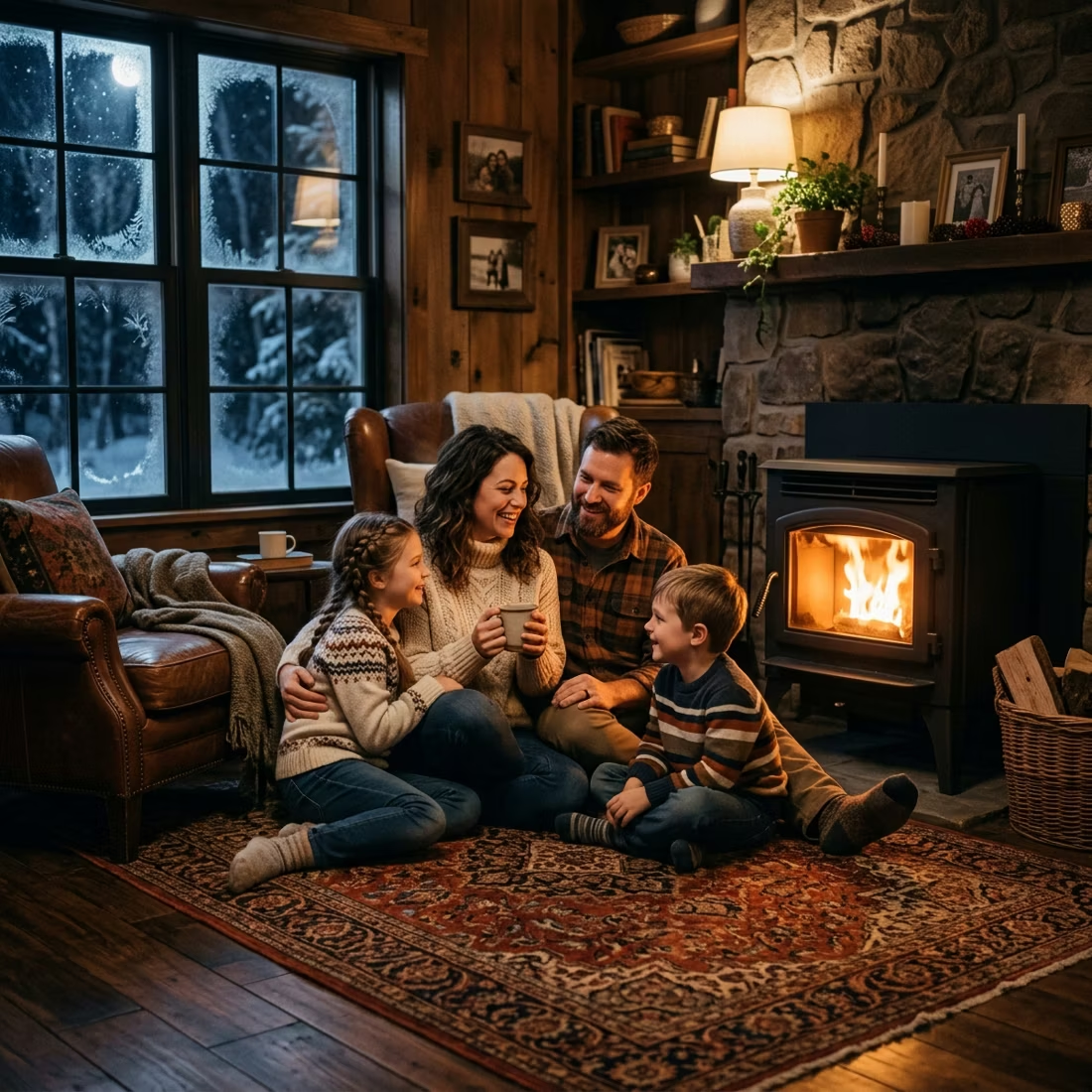
Four fuels. One honest answer for Essex County.
Three steps. No salesperson until you're ready.
Tell us about your project
Your zip code, your situation, and the fuel you're leaning toward—or let the answers point you to one.
See what's actually available
The brands dealers within 100 miles genuinely carry—real options, never a catalog mirage.
Get your dealer & Project Guide
A trusted local dealer, plus the free Project Guide & Parts List that names every component of the job.
Frequently Asked Questions
Which fuel works best in Essex County?
For most Essex County homes, it's gas or electric—not wood or pellet. Gas is the default for anyone with an existing masonry fireplace that needs a chimney liner and firebox insert conversion, which describes a lot of the older housing stock in Newark, East Orange, and Montclair; PSE&G's gas network makes hookups straightforward almost anywhere in the county. Electric is the go-to where there's no chimney or flue at all—apartments, brownstones, and newer townhome construction in West Orange and Bloomfield—since it needs no venting and no gas line. Wood and pellet appliances are uncommon here; the county's dense housing stock, small lots, and municipal fire codes make new solid-fuel installs the exception, though some suburban homes in Livingston, Millburn, and the Caldwells still burn oak, hickory, or maple in original masonry fireplaces built decades ago.
Do I need a permit to install a fireplace in Essex County?
Yes, in almost every case. Essex County doesn't have a single county building department—each of the 22 municipalities (Newark, Montclair, Bloomfield, Livingston, and so on) issues its own construction permits, so the process depends on where you live. Gas fireplace and insert installations require both a construction permit and a separate gas line permit, typically pulled by a licensed plumber or gas fitter. Electric fireplace installs usually don't need a permit for plug-in units, but built-ins that require new wiring or a dedicated circuit do. If you're converting an existing wood-burning masonry fireplace to gas, expect an inspection of the chimney liner as part of the permit process. Most local retailers handle this paperwork as part of the installation.
Can I still install a wood-burning fireplace in my Essex County home?
It's possible but uncommon. Newer wood stove or insert installs are rare in Essex County because of the housing stock—Newark rowhouses, East Orange multi-families, and Irvington two-families generally don't have the clearances, chimney access, or storage space a wood-burning appliance needs, and many municipal fire codes and condo/HOA rules restrict solid-fuel appliances outright. Where it does happen, it's usually in suburban single-family homes with yards and basements—Livingston, West Caldwell, Millburn—either restoring an original masonry fireplace or adding a wood insert for supplemental heat using local oak, hickory, or maple firewood. If that's your situation, a hearth retailer can tell you quickly whether your chimney and clearances will support it; for most Essex County homes, a gas insert into that same masonry opening is the more practical route.
Are pellet stoves an option in Essex County?
Rarely, and it comes down to space. Pellet stoves need room to store 40-lb bags in bulk and a venting path through an exterior wall or existing flue—something most Essex County rowhouses, apartments, and attached homes simply don't have. The handful of pellet installs in the county tend to be in larger suburban homes with basements, in towns like West Caldwell, Fairfield, or Millburn, sourcing fuel from regional brands like Energex, Hamer Pellet Fuel, or Greene Team Pellet Fuel through northern New Jersey suppliers. For nearly everyone else, an electric fireplace delivers a similar supplemental-heat, low-maintenance experience without the storage problem.
Can one local dealer handle both gas and electric fireplaces?
Yes—most Essex County hearth retailers carry both, since those are the two fuels that actually fit the county's housing mix. Dealers based in Bloomfield, Nutley, and West Orange typically stock direct-vent gas inserts for chimney conversions alongside a line of electric units for no-chimney installs, and can walk you through which one fits your specific fireplace opening or wall. A smaller number of dealers also handle wood-burning restoration work for suburban homes with existing masonry fireplaces, but that's a specialty service rather than the core business for most retailers here.
What's the typical cost range for gas and electric fireplace installation in Essex County?
Gas fireplace or insert installation typically runs $4,000-$9,000, with the higher end covering chimney liner work and PSE&G gas line extensions for homes without existing service nearby; straightforward inserts into an already-lined masonry fireplace tend to land on the lower end. Electric fireplace installation runs $200-$3,000 for the unit itself, plus $300-$1,000 in labor for anything beyond a plug-and-play wall unit—built-ins with new wiring or a mantel surround push toward the higher end. Existing wood-burning fireplace restoration or conversion work, where it applies, varies widely depending on chimney condition and is best quoted directly by a local retailer after an inspection.
Can I install a fireplace myself?
If you're putting a fire in your house on purpose, it's best to work with an expert. Unless you're genuinely experienced in framing, gas line, vent pipe, and the national code on clearances to combustibles, have a professional do it—and ideally the same company that sells you the fireplace, so warranty, service, and liability all live under one roof.
Does a fireplace add value to my home?
On average, a fireplace adds back to the home about the same amount you spent installing it. Add the monthly savings from heating the rooms you actually use instead of the whole house—often hundreds of dollars a year—and the value case is strong before you even count what a fire does for how your family uses the room.
Wood, gas, pellet, or electric—how do I choose?
Match the fuel to your life, not the other way around. Wood: lowest fuel cost and total power-outage independence, but you're hauling and stacking. Gas: press a button, set a thermostat, no maintenance to speak of. Pellet: wood economics with automatic feeding, in exchange for weekly cleaning and a need for electricity. Electric: plugs in anywhere with honest supplemental heat. Nobody regrets the fuel that fits how they actually live.
Can a fireplace actually lower my heating bill?
Yes—by creating a comfort zone. A furnace heats every square foot of the house just to warm the one room you're in; a gas fireplace on low burns roughly a sixth of the gas a typical furnace does. Set the furnace around 55–60 degrees as a baseline, then heat the rooms your family actually uses. Families who heat this way commonly save $20–$60 a month.
Stove and Fireplace Dealers in Essex County
Listings include WhyFire partner dealers, dealers we have verified as authorized for the brands we recommend, and established local businesses that carry hearth products. Every listing shows which one it is. The ones marked Preferred run on WhyFire's software, so they can show you real pricing and book your appointment right here. No manufacturer pays for placement. How we verify dealers →
Harris Hearth And Home
Fireplaces R Us
Hot Concepts Fireplaces
Fire Design
Costello's Hearth & Spa - Bernardsville
Kjb Fireplaces
Big Apple Fireplaces
Flue Tech
Chimney Sweep Energy Barn
Timberline Speciality Products
Timberline Stoves
D & D Design Center
Mcnamara Fireplace And Stove
N & N Services
County Woodstoves Inc
Fireplaces By Design
Light N Grid
Find your fireplace in Essex County.
Tell us about your home and we'll match you with a trusted local Essex County dealer and send over a free Project Guide & Parts List—the exact parts, including venting, and the dealer best suited to install it correctly.
Find Your Fireplace →