
Fireplace Warmth for Upper Montclair, Without the Renovation.
No chimney, no gas line, no exterior venting to clear with the historic district. Find the right electric unit for your home and connect with a trusted local dealer.
Every Project Starts From One of These Five Situations
The easiest upgrade for Montclair's historic housing stock.
Upper Montclair's tree-lined streets are full of Craftsman bungalows and Colonial Revival homes built in the early 1900s—many with decorative fireplaces whose original masonry chimneys were never designed for, or have since been decommissioned from, solid-fuel or gas use. At 339 feet elevation with winters that average a 22°F low and a moderate, fairly typical Northeast heating season, Upper Montclair sits in a moderate cold-climate zone: real winter cold, but nothing close to what a Duluth or Burlington homeowner deals with. That makes electric heat a legitimately practical choice here, not just a design compromise.
Public Service Electric & Gas (PSE&G) serves the area at a residential rate of roughly 19.8 cents per kWh—on the higher side nationally, which matters if you're weighing an electric fireplace as supplemental zone heat versus running your furnace longer. The bigger local factor, though, is the housing stock and design review: Montclair Township's historic preservation guidelines make exterior venting changes for wood or gas appliances a slower, more scrutinized process. An electric insert or built-in unit sidesteps that entirely—no chimney liner, no gas line, no roof penetration—while still giving a period fireplace surround a real flame-effect focal point.
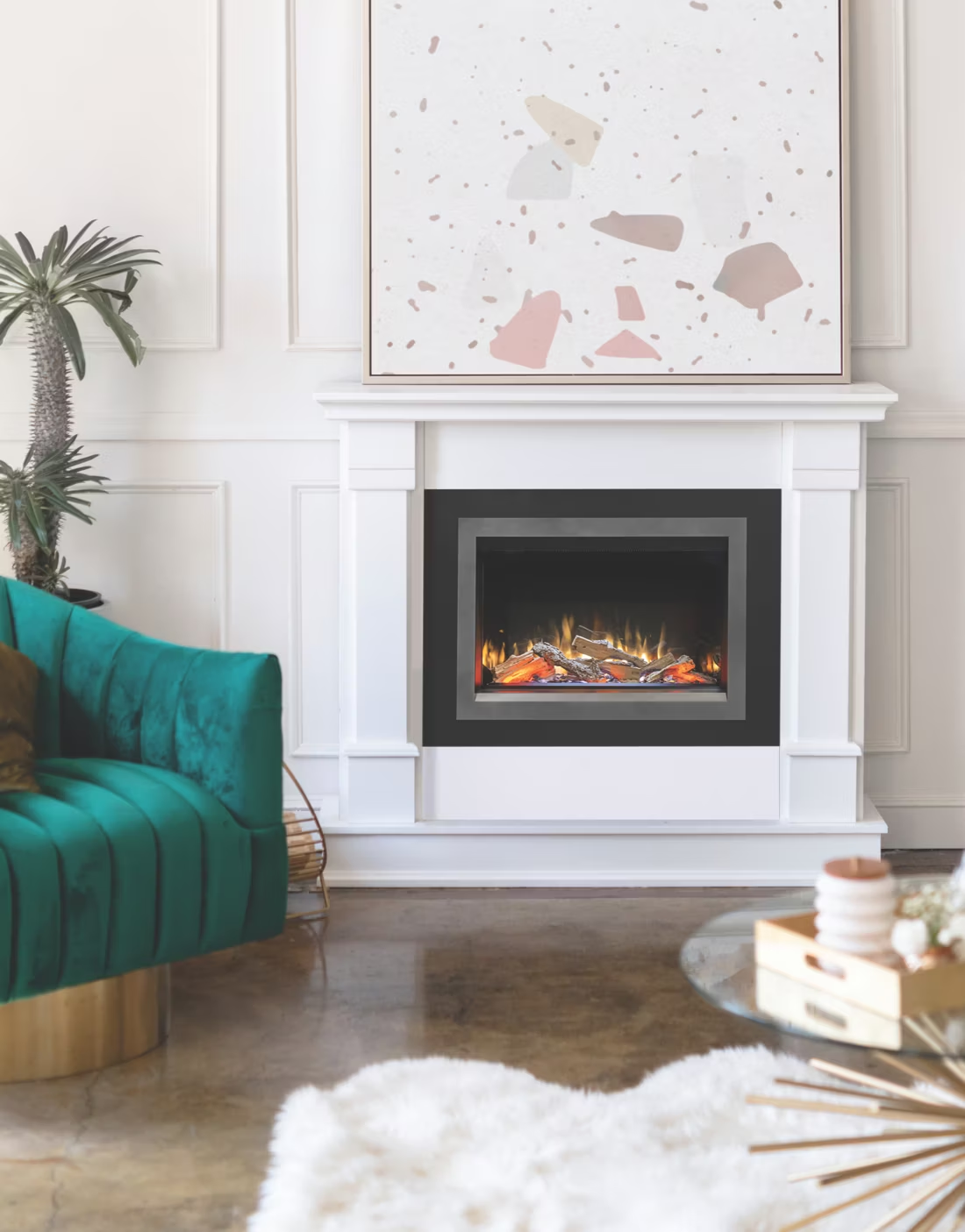
Three steps. No salesperson until you're ready.
Tell us about your project
Your zip code, your situation, and the fuel you're leaning toward—or let the answers point you to one.
See what's actually available
The brands dealers within 100 miles genuinely carry—real options, never a catalog mirage.
Get your dealer & Project Guide
A trusted local dealer, plus the free Project Guide & Parts List that names every component of the job.
Frequently Asked Questions
How much does an electric fireplace installation cost in Upper Montclair?
Plug-in electric inserts that slide into an existing masonry opening typically run $300 to $900 installed, since they use a standard outlet and require no electrical work beyond what's already there. Built-in or wall-mounted units wired to a dedicated 120V or 240V circuit run higher—usually $1,500 to $4,000—because they require an electrician to run new wiring, and in many Upper Montclair homes that means fishing wire through plaster walls or finished built-ins around the original fireplace surround. Local dealers will quote a firm number after seeing your specific fireplace opening or wall.
What does it cost to run an electric fireplace at PSE&G's rates?
At PSE&G's residential rate of about 19.8 cents per kWh, a typical 1,500-watt electric fireplace heater costs roughly 30 cents an hour to run on high heat, or about $2.40 for an 8-hour evening. Most units let you run the flame effect alone, with the heater off, for essentially no meaningful electric cost—useful in Upper Montclair homes where you want the ambiance in a living room or den without running a space heater every time.
Do I need a permit to install an electric fireplace in Upper Montclair?
A plug-in freestanding or insert unit that uses an existing outlet typically doesn't require a permit. A built-in electric fireplace wired to a new dedicated circuit does require an electrical permit through the Montclair Township Construction Code office, since it involves new wiring and, in some cases, a panel upgrade. If your home is within one of Montclair's designated historic districts, altering the visible fireplace surround or mantel may also trigger a review by the Historic Preservation Commission—worth checking before you commit to a specific unit's dimensions.
What's the best type of electric fireplace for an older Upper Montclair home?
For Craftsman and Colonial Revival homes with an existing but non-operational masonry fireplace, an electric insert built to slide into the original firebox opening is usually the cleanest solution—it preserves the mantel and surround while adding real supplemental heat and a realistic flame effect. For rooms without an existing fireplace, a wall-mounted linear unit or a media-console style fireplace works well in more contemporary spaces, like finished basements or additions, without requiring any structural change to the room.
What's the difference between an electric insert, a wall-mount unit, and a freestanding stove?
An electric insert is sized to fit into an existing fireplace opening and typically plugs into an outlet inside the firebox. A wall-mount unit hangs flat against a wall like a large TV and is wired directly, often used to create a new focal point in a room without a fireplace. A freestanding electric stove looks like a traditional wood stove but plugs into a standard outlet and can be placed almost anywhere, which makes it a popular choice for condos and rental units around Upper Montclair's Valley Road corridor where structural changes aren't an option.
Will an electric fireplace actually heat my home, or is it just for looks?
Electric fireplaces are built for zone heating, not whole-home heat—a typical unit puts out around 5,000 BTUs, enough to comfortably warm a single room of 300 to 400 square feet. Given Upper Montclair's moderate, fairly typical Northeast heating season, most homeowners here use electric fireplaces to take the edge off a den, sunroom, or home office rather than to replace their furnace, letting them turn the thermostat down elsewhere in the house on cold evenings.
Are electric fireplaces a good option for condos or rental units?
Yes—this is one of the more common uses in the Upper Montclair area, particularly in the condo and multi-family buildings near the Erie-Lackawanna line. Plug-in insert and freestanding stove models require no venting, no gas line, and no permanent alteration to the unit, which makes them compatible with most co-op and rental restrictions that prohibit wood or gas appliances. Check your building's specific rules on space heaters and supplemental electrical load before purchasing a higher-wattage model.
Electric vs. gas fireplace—which makes more sense for my Upper Montclair home?
Gas fireplaces deliver more heat output and a more traditional flame, but they require a gas line and venting work that can be a slower process in Montclair's historic districts, plus ongoing gas utility costs. Electric fireplaces install faster, need no venting or gas line, and cost less upfront, but produce less total heat and rely on PSE&G's roughly 19.8-cent electric rate, which is on the higher end for running a heater regularly. For homes with an existing decommissioned chimney that can't easily be relined for gas, or for renters and condo owners, electric is usually the simpler path. For homeowners doing a full fireplace renovation who want more heat output, gas is worth comparing.
How much maintenance does an electric fireplace need?
Very little compared to wood or gas. There's no chimney to sweep, no gas line to inspect, and no combustion byproducts to vent. Most maintenance is limited to periodically cleaning the glass front, checking that the LED ember bed and heater fan are dust-free, and occasionally replacing a heater blower motor after several years of heavy use—a repair most local electricians or hearth dealers can handle without specialized certification.
Do electric fireplaces actually produce heat?
Yes—most put out around 4,800–5,000 BTUs from a standard outlet, which comfortably warms a bedroom, office, or den as a comfort-zone heater. What they won't do is carry a whole house the way wood, gas, or pellet can. Think of electric as ambiance-first with honest supplemental heat: flames on with no heat in July, flames plus warmth in January.
Can I put a TV above my fireplace?
Yes—with an asterisk. Fireplaces are hot and TVs don't like heat. Either put a mantel between them to deflect rising warmth, or choose a fireplace with heat-management technology that creates a cool zone on the wall above—the wall stays around 125 degrees, barely warm, while the room still gets full heat. If you like clean lines and don't want a mantel, heat management is the answer.
How much should I budget for a fireplace?
For an average home—covering the fireplace, the vent pipe, and basic installation—a budget between $3,900 and $5,500 gives you a lot of options across wood, gas, and pellet. By the time you add finish work, gas line, and electrical, the average complete installation lands between $5,000 and $12,000 all-in. In a remodel or new build, a good rule is to put about 2.5% of the total project cost toward the fireplace.
Does a fireplace add value to my home?
On average, a fireplace adds back to the home about the same amount you spent installing it. Add the monthly savings from heating the rooms you actually use instead of the whole house—often hundreds of dollars a year—and the value case is strong before you even count what a fire does for how your family uses the room.
Nearby Dealers
Hearth shops serving Upper Montclair and the surrounding area. Every listing shows whether it is a WhyFire partner, a dealer we have verified as authorized for the brands we recommend, or a local business carrying hearth products. No manufacturer pays for placement. How we verify dealers →
Harris Hearth And Home
Kjb Fireplaces
Fire Design
Hot Concepts Fireplaces
Flue Tech
Fireplaces R Us
Mcnamara Fireplace And Stove
Big Apple Fireplaces
County Woodstoves Inc
Chimney Sweep Energy Barn
Fireplaces By Design
Light N Grid
Costello's Hearth & Spa - Bernardsville
N & N Services
D & D Design Center
Timberline Speciality Products
Timberline Stoves
Electric Service in Upper Montclair
An electric fireplace's heater draws about 1,500 watts—pennies per hour at local rates.
Public Service Elec & Gas Co
Find your electric fireplace in Upper Montclair.
Tell us a bit about your home and we'll put together a free Project Guide & Parts List—the right electric unit for your space, matched with a trusted local dealer who can install it.
Find Your Fireplace →