
Find the right gas fireplace near The College of New Jersey.
Direct-vent gas heat for Ewing Township homes and rentals near campus—no wood hauling, no ash, just a switch. Get matched with a trusted local dealer.
Every Project Starts From One of These Five Situations
Instant heat for a moderate, humid mid-Atlantic winter.
TCNJ sits in Ewing Township, Mercer County, just northwest of Trenton along the Delaware River valley at about 121 feet of elevation. Winters here average lows around 23°F with a real, steady heating season—but nowhere near the severity of harder winter climates like Burlington, VT or Madison, WI. That means five or six months of regular heat calls rather than the deep-freeze, hold-a-fire-all-night demands you'd see farther north or at higher elevation out West.
With no meaningful firewood-cutting culture or regional pellet supply chain in this stretch of Mercer County—oak, hickory, and maple grow locally but wood and pellet heat aren't the mainstream path here—gas is the practical, dominant choice for faculty, staff, and off-campus households near the college. Public Service Electric & Gas Co. (PSE&G) serves the area as both the electric and natural gas utility, so most homes near campus already have gas service run to the property, which usually makes adding a direct-vent fireplace or insert a straightforward tie-in rather than a major infrastructure project.
Three steps. No salesperson until you're ready.
Tell us about your project
Your zip code, your situation, and the fuel you're leaning toward—or let the answers point you to one.
See what's actually available
The brands dealers within 100 miles genuinely carry—real options, never a catalog mirage.
Get your dealer & Project Guide
A trusted local dealer, plus the free Project Guide & Parts List that names every component of the job.
Frequently Asked Questions
How much does a gas fireplace installation cost near The College of New Jersey?
In the Ewing Township and greater Trenton area, a direct-vent gas insert into an existing masonry fireplace with gas already run to the house typically lands in the $4,000-$7,000 range. A new built-in gas fireplace for a remodel or an addition—with framing, venting through an exterior wall, and a fresh gas line—usually runs closer to $7,000-$11,000. Homes without existing gas service will pay more for the utility hookup, though PSE&G's broad service territory in Mercer County means most addresses near campus already have gas available at the street. A local dealer will give you a firm number after seeing your home.
Can I convert an old wood-burning fireplace near campus to gas?
Yes, and it's a common project in this part of Mercer County—many of the older homes in Ewing and West Trenton near TCNJ were built with masonry fireplaces originally meant for oak or hickory cordwood, even though wood heat isn't really a going concern here today. A gas insert slides into that existing masonry opening and uses a stainless liner run up the old flue, so you keep the look of the original fireplace while getting real, on-demand heat. Since PSE&G already runs gas to most streets in the area, the main added cost is usually just the line extension from the meter to the fireplace, not a whole new utility connection.
Is natural gas available near The College of New Jersey, or will I need propane?
Natural gas is the standard fuel here—PSE&G serves Ewing Township and the surrounding Mercer County communities as the combined electric and gas utility, and most homes near campus already use gas for heating, cooking, or hot water. Propane is rarely necessary in this area, though it remains an option for outbuildings or properties genuinely off the gas main. If your home already has a gas water heater or furnace, adding a fireplace is usually just a matter of tapping into the existing line.
Will a gas fireplace still work if the power goes out?
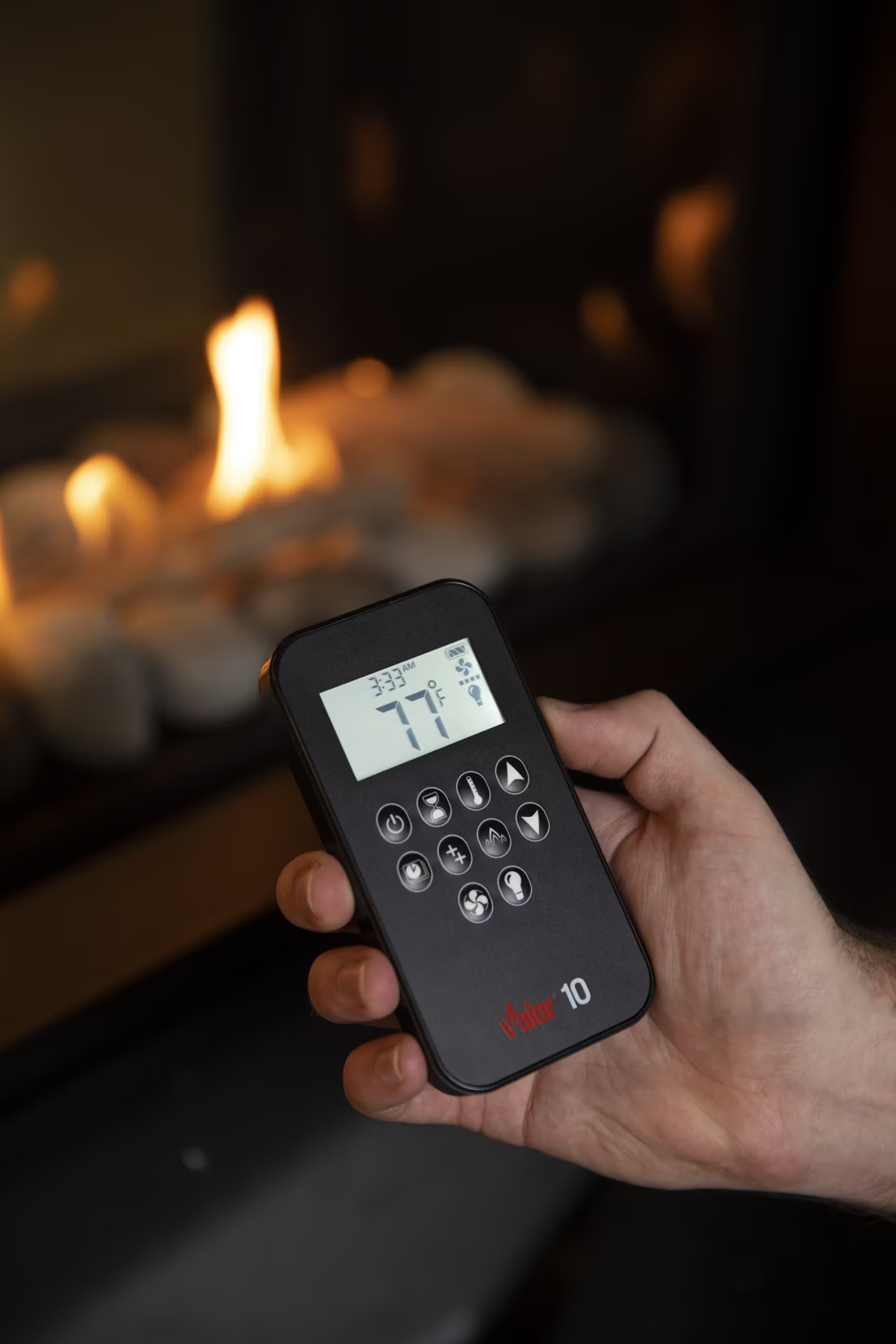
Most direct-vent gas fireplaces with intermittent pilot ignition (IPI) include a small battery backup that kicks in automatically when the power drops, so the fireplace lights and runs normally on batteries until service is restored. That matters in this part of New Jersey, where nor'easters and summer thunderstorm lines can knock out PSE&G service for a day or more. Valor units take a slightly different approach—their pilot's thermocouple generates its own electricity, so there are no batteries to remember at all. Ask your local dealer which ignition system a given model uses before you buy.
What's the difference between a gas fireplace, a gas insert, and a gas stove?
A gas fireplace is a fully built-in unit set into a framed wall opening—the right call for new construction or a remodel where there's no existing masonry firebox. A gas insert is sized to slide into an existing masonry fireplace opening, which describes a lot of the older housing stock around Ewing and West Trenton, and it converts a drafty open hearth into a sealed, efficient heat source. A gas stove is a freestanding cast-iron or steel unit that sits on the floor like a wood stove but burns gas—a good option for a room with no fireplace at all and limited wall space. Most homeowners near campus with an existing fireplace end up choosing an insert.
Do I need a permit to install a gas fireplace in Ewing Township?
Yes—new gas fireplace installations require both a construction permit and licensed gas-fitter sign-off through the local municipal construction code office covering your address (Ewing Township for most homes immediately around campus, or the relevant Mercer County municipality if you're just outside it). Reputable hearth dealers handle the permit filing and inspection scheduling as part of the installation, so you generally don't have to coordinate it yourself. Because gas line work and venting both need to pass inspection, it's worth confirming your installer is licensed for gas-fitting before signing a contract.
Should I get a vented or a vent-free gas fireplace?
Vented, direct-vent gas fireplaces pull combustion air from outside and exhaust it back outside through a sealed pipe—they're the cleanest option and the one nearly every local dealer will recommend by default. Vent-free (ventless) units burn gas directly into the room air and are legal in New Jersey but come with strict room-size and ventilation rules, plus an oxygen-depletion sensor requirement, and they're generally discouraged for bedrooms. Given how straightforward direct-vent installation is on most homes near campus—an exterior wall penetration is usually all it takes—there's rarely a strong reason to choose vent-free here.
How often does a gas fireplace need to be serviced?
Plan on an annual inspection, ideally in early fall before the heating season starts. A technician checks the burner, pilot assembly, venting, and gas connections, and cleans the glass and interior—a much quicker visit than a wood chimney sweep, but still important for safety and for keeping the glass from clouding with mineral deposits. Local gas appliance service providers in the Trenton area typically charge somewhere in the $150-$225 range for a standard annual check.
Gas vs. electric fireplace—which makes more sense near campus?
Gas delivers real heat output—enough to meaningfully offset a furnace during Mercer County's roughly five-month heating season—plus the look and sound of an actual flame, at the cost of a gas line and venting installation. Electric fireplaces skip the gas line and venting entirely, installing almost anywhere with a standard outlet, but they're supplemental ambiance more than a real heat source, and running one steadily adds up given PSE&G's residential rate of just under 20 cents per kWh. For a primary living space where you want to feel a difference in the room, gas is usually the better fit; for a bedroom, rental unit, or spot where running new gas line isn't practical, electric is the easier install.
Why is a fireplace insert so efficient?
An insert does two things: it seals the chimney completely, so you stop losing air you already paid to heat, and it radiates warmth into the room through the firebox and glass. Most add a heat-exchange fan that pulls cool room air underneath, wraps it around the hot firebox, and pushes it back out warm. Your home is more efficient before you've even lit the first fire.
Is my gas fireplace wasting gas?
If it was installed more than 15 years ago, probably. Older gas fireplaces keep a standing pilot light burning all the time, and that little flame can cost a couple hundred dollars a year. Newer models use pilot-on-demand ignition—the pilot lights only when you use the fireplace and goes out when you turn it off.
How much should I budget for a fireplace?
For an average home—covering the fireplace, the vent pipe, and basic installation—a budget between $3,900 and $5,500 gives you a lot of options across wood, gas, and pellet. By the time you add finish work, gas line, and electrical, the average complete installation lands between $5,000 and $12,000 all-in. In a remodel or new build, a good rule is to put about 2.5% of the total project cost toward the fireplace.
What is an in-home preview and do I need one?
It's a visit where a hearth professional measures your space, confirms the model you picked actually works in your home, and walks the specs—framing, gas line, venting, finish work—before anything is ordered. Some details you just can't know until you see the house. Never make a down payment without one; it's the single most-skipped step that burns buyers.
Nearby Dealers
Hearth shops serving The College of New Jersey and the surrounding area. Every listing shows whether it is a WhyFire partner, a dealer we have verified as authorized for the brands we recommend, or a local business carrying hearth products. No manufacturer pays for placement. How we verify dealers →
Better Homes Hearth & Patio
E & E Stoves & Fireplaces
Tri County Hearth & Awning
Estates Chimney & Fireplace
Hearth & Stove LLC
Plumbarama Co. Inc.
Flemington Supply Co. Inc
Rattan Patio & Fireplace Shoppe
My Deck, Llc
Kester Fireplace
Tor Chimney & Fireplace
Maple Glen Mechanical
Appliance Brokers, Ltd.
Island Renovations
Estates Chimney Sweep
Get your free Project Guide & Parts List for a gas fireplace near The College of New Jersey.
Tell us about your home and we'll match you with a trusted local dealer and send a free Project Guide & Parts List—the exact parts, vent kit, and recommended installer for your gas fireplace project.
Find Your Fireplace →