
Warm, Reliable Heat Without Splitting a Single Log.
Instant, thermostat-controlled heat for Somers Point homes and shore rentals—no cordwood, no chimney upkeep, no waiting for a flue to draw. Find the right unit and connect with a trusted local dealer.
Every Project Starts From One of These Five Situations
Convenient heat, built for shore living.
Somers Point sits just 16 feet above sea level on the mainland side of Great Egg Harbor Bay, across the causeway from Ocean City. Winters here are mild for the Northeast—average lows around 30°F and a heating season only a fraction as demanding as a place like Burlington, VT. That coastal climate is also part of why wood and pellet stoves are practically nonexistent locally: there's no accessible forest land nearby, no wood-cutting tradition the way there is inland, and firewood delivery isn't really a local trade. Gas fills that gap for most homeowners who want real, radiant heat without the logistics.
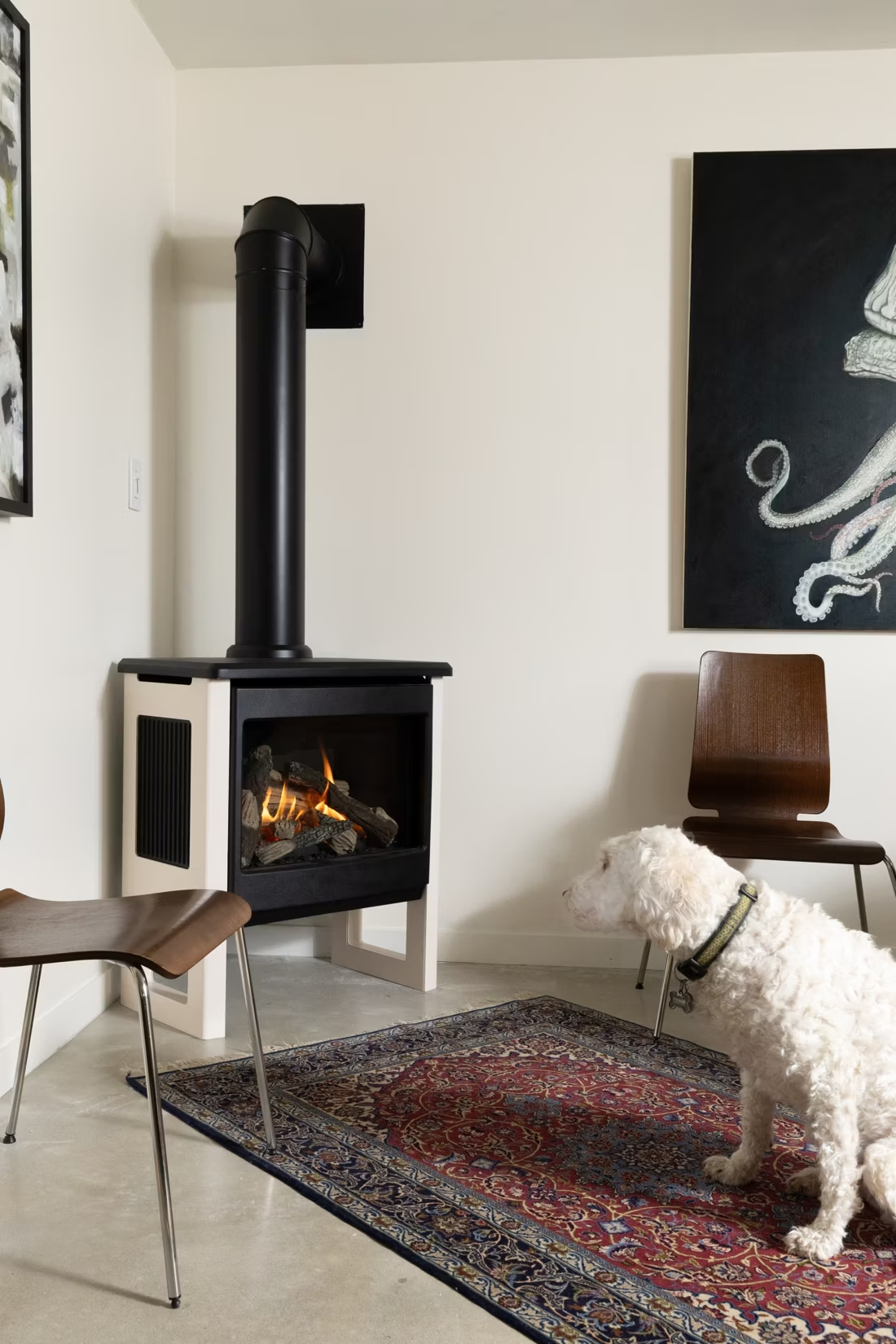
Natural gas service reaches most of Somers Point through South Jersey Gas, while homes out on the barrier islands or off the main distribution line more often run on propane. Either way works well with a modern direct-vent gas fireplace. For the borough's many second homes and shore rentals that sit closed up for stretches in the off-season, gas also means less to manage between visits—no ash to clean out, no flue to inspect before the first cold snap, just a switch or remote when someone's back in the house.
Three steps. No salesperson until you're ready.
Tell us about your project
Your zip code, your situation, and the fuel you're leaning toward—or let the answers point you to one.
See what's actually available
The brands dealers within 100 miles genuinely carry—real options, never a catalog mirage.
Get your dealer & Project Guide
A trusted local dealer, plus the free Project Guide & Parts List that names every component of the job.
Frequently Asked Questions
How much does a gas fireplace installation cost in Somers Point?
A direct-vent gas insert into an existing masonry fireplace typically runs $4,000 to $8,500 in the Somers Point area, depending on the unit and whether new gas line work is needed. A built-in gas fireplace for new construction or a remodel—with framing and full through-wall venting—usually lands between $6,000 and $11,000. Homes near the bay should budget slightly more for stainless steel venting components, which hold up better against salt air corrosion than standard galvanized parts. A local installer will give you a firm number after seeing the space.
Can I convert my existing fireplace to gas, or do I need a new build?
It depends on your home's age. Older homes near downtown Somers Point and along the bay often have a masonry fireplace that's a great candidate for a gas insert conversion—you keep the existing chimney as the venting path and add a stainless liner. Many of the newer shore homes and condos in the area, though, were built without a masonry fireplace at all, so the more common project is a zero-clearance direct-vent gas fireplace built into a wall during a renovation. Either way, the finished look and heat output are similar; the difference is mainly what venting infrastructure you're starting with.
Should I install a natural gas or propane fireplace in Somers Point?
If your home is on South Jersey Gas's distribution line—which covers most of the mainland side of Somers Point—natural gas is usually the simpler and cheaper-to-run option, especially if you already have a gas water heater or range. Homes further out toward the barrier islands, or anywhere the gas main doesn't reach, typically run on propane with either a buried or above-ground tank. Most gas fireplace models can be configured for either fuel; your installer sets the orifice and regulator to match what's available at your address.
Will a gas fireplace still work if the power goes out?
Most will, which matters here—nor'easters and late-summer tropical systems both put Atlantic City Electric's grid under real strain along this stretch of the Jersey Shore. Gas fireplaces with IPI (intermittent pilot ignition) run on battery backup, typically a few AA batteries inside the unit, and will light on demand even with the power out. Valor fireplaces go a step further: their pilot assembly generates its own electricity through the thermocouple, so there's no battery to remember to replace. If storm-driven outages are a real concern for your household, ask your local dealer about ignition type specifically.
What's the difference between a gas fireplace, a gas insert, and a gas stove?
A gas fireplace is a built-in unit framed into a wall—the right choice for new construction or a full remodel, which is common in Somers Point's newer shore builds. A gas insert is sized to slide into an existing masonry firebox, converting an old wood-burning fireplace into a sealed, efficient heat source using the same chimney. A gas stove is a freestanding cabinet-style unit that can go almost anywhere with a clear path to vent outside, which works well in smaller shore cottages or additions that never had a fireplace to begin with.
Do I need a permit to install a gas fireplace in Somers Point?
Yes—a construction permit and a separate gas line permit are required through the Somers Point Construction/Code Enforcement Office, and the gas work itself has to be done by a licensed gas fitter. Because much of Somers Point sits in a coastal flood zone, homes built on pilings or with elevated first floors sometimes need the gas line and shutoff positioned above base flood elevation, which your installer and the permit reviewer will coordinate. Most hearth retailers manage the permitting and inspections as part of the job.
Are vent-free gas fireplaces allowed in New Jersey?
Vent-free (unvented) gas fireplaces are permitted in New Jersey but come with strict room-size and ventilation requirements, plus an oxygen depletion sensor that shuts the unit off if oxygen levels drop. Vented direct-vent units—which pull outside air for combustion and exhaust gases back outdoors through a sealed pipe—are the more common and more broadly recommended choice for Somers Point homes, coastal humidity and salt air being one more reason to keep combustion byproducts out of the living space. Most local installers steer customers toward direct-vent models unless there's a specific reason a vent-free unit is the only option.
How often does a gas fireplace need to be serviced?
Plan on an annual inspection, ideally before the weather turns in the fall. A technician checks the burner, pilot assembly, gas connections, and venting, and cleans the glass and interior—typically a $150 to $225 visit locally. Homes closer to the bay should be a little more diligent about this: salt-laden air can accelerate corrosion on exterior venting caps and termination points faster than it would inland, so an annual look catches problems before they become bigger repairs.
Gas vs. electric fireplace—which makes more sense in Somers Point?
Electric fireplaces are the simplest option—no gas line, no venting, plug-and-play installs that typically run $400 to $1,200, which makes them popular in condos and rental units around town. But Atlantic City Electric's residential rate runs over 22 cents per kWh, among the higher rates in the state, so running an electric unit as a real heat source (not just ambiance) gets expensive fast. A gas fireplace costs more upfront but delivers meaningfully more heat per dollar over a winter, which matters more for a primary residence than for a rarely-used guest room or rental unit where electric's low install cost and zero venting requirements win out.
Why is a fireplace insert so efficient?
An insert does two things: it seals the chimney completely, so you stop losing air you already paid to heat, and it radiates warmth into the room through the firebox and glass. Most add a heat-exchange fan that pulls cool room air underneath, wraps it around the hot firebox, and pushes it back out warm. Your home is more efficient before you've even lit the first fire.
What's the difference between an insert and a zero-clearance fireplace?
An insert is a fireplace that slides into a pre-existing wood-burning fireplace—if you don't have one, there's nothing to insert it into. A zero-clearance fireplace is built into a framed wall, which makes it the answer for remodels and new construction. Simple test: existing masonry fireplace means insert; blank or framed wall means zero-clearance.
What is an in-home preview and do I need one?
It's a visit where a hearth professional measures your space, confirms the model you picked actually works in your home, and walks the specs—framing, gas line, venting, finish work—before anything is ordered. Some details you just can't know until you see the house. Never make a down payment without one; it's the single most-skipped step that burns buyers.
Can I install a fireplace myself?
If you're putting a fire in your house on purpose, it's best to work with an expert. Unless you're genuinely experienced in framing, gas line, vent pipe, and the national code on clearances to combustibles, have a professional do it—and ideally the same company that sells you the fireplace, so warranty, service, and liability all live under one roof.
Nearby Dealers
Hearth shops serving Somers Point and the surrounding area. Every listing shows whether it is a WhyFire partner, a dealer we have verified as authorized for the brands we recommend, or a local business carrying hearth products. No manufacturer pays for placement. How we verify dealers →
The Chimney Doctor Inc.
Quality Home Center
Find your gas fireplace in Somers Point.
Tell us about your home and we'll put together a free Project Guide & Parts List—the right gas fireplace or insert, the vent kit it needs, and a trusted local dealer near Somers Point to install it.
Find Your Fireplace →