
Find a gas fireplace built for Piscataway winters.
Steady, instant heat for the neighborhoods around the Raritan River in Middlesex County—where PSE&G already runs the gas line to most homes. Get matched with a trusted local dealer who can size the right unit for your house.
Every Project Starts From One of These Five Situations
Reliable heat for a river-valley climate.
The Livingston Campus sits low along the Raritan River in Piscataway Township, at about 92 feet of elevation, with the 08854 and 08903 zip codes stretching into residential pockets of Piscataway and New Brunswick. Winters here aren't extreme by national standards, but they're consistent: average lows around 23°F, a solidly cold winter season roughly on par with Columbus, OH, and enough damp, gray stretches in January and February that a lot of homeowners want heat they can turn on without hauling wood or watching a hopper. The campus buildings themselves are mostly academic halls and dormitories, not fireplace candidates, but the surrounding streets of single-family and townhome housing are exactly where this kind of project happens.
Public Service Electric & Gas (PSE&G) serves this part of Middlesex County as both the electric and natural gas utility, which means most homes near campus already have a gas line reaching the house—often the single biggest cost variable in a fireplace project. Compared to a wood-burning setup relying on oak, hickory, or maple cordwood (all common in this part of Central Jersey), a direct-vent gas fireplace or insert gives you push-button heat, no chimney sweeping, and the option to run zone heat in a family room without touching the thermostat for the rest of the house.
Three steps. No salesperson until you're ready.
Tell us about your project
Your zip code, your situation, and the fuel you're leaning toward—or let the answers point you to one.
See what's actually available
The brands dealers within 100 miles genuinely carry—real options, never a catalog mirage.
Get your dealer & Project Guide
A trusted local dealer, plus the free Project Guide & Parts List that names every component of the job.
Frequently Asked Questions
How much does a gas fireplace installation cost near Rutgers Livingston Campus?
In the Piscataway and New Brunswick area, a typical gas fireplace or insert installation runs $4,500 to $11,000. Homes that already have a PSE&G gas line running near the intended location land on the lower end—you're mainly paying for the unit, venting, and labor. Projects that need a new gas line extension from the meter, or venting through a second-story exterior wall, push toward the higher end. Because most of this housing stock is older single-family and townhome construction rather than new build, a firm quote usually depends on an in-home look at your existing chimney or wall layout, which local dealers provide before final pricing.
Can I convert an existing wood-burning fireplace to gas?
Yes, and it's a common request in this part of Middlesex County, where a lot of the housing stock near campus dates to the 1960s-80s and came with a standard masonry fireplace built for oak or hickory cordwood. A gas insert typically runs $4,500 to $9,500 installed, using your existing chimney with a stainless liner as the vent path. Because PSE&G gas service already reaches most homes in Piscataway and New Brunswick, the main cost driver is usually how far the gas line needs to run from an existing appliance (furnace, water heater, or range) to the fireplace, not whether gas is available at all.
Is natural gas available at every address near the Livingston Campus zip codes?
Most of it, yes. PSE&G runs both electric and natural gas service throughout Piscataway Township and New Brunswick, which covers the 08854 and 08903 zip codes that ring the campus. A small number of older or more rural pockets in Middlesex County still rely on propane, so if you're in one of those areas your local dealer will confirm gas availability at your specific address before quoting a direct-vent unit. Either fuel works in the same fireplace body—it's just a matter of which orifice and regulator get installed.
Will a gas fireplace keep working if the power goes out?
Most will, with a caveat. Standard direct-vent gas fireplaces with intermittent pilot ignition (IPI) run on AA batteries as a backup power source, so they'll still light and operate during a PSE&G outage as long as those batteries are fresh—worth checking every fall before the coldest storms of the New Jersey winter hit. Some models, notably Valor's line, generate their own power off the pilot's thermocouple and don't need batteries at all. If backup heat during a storm-related outage matters to you, ask your local dealer to point out which ignition system is in the unit you're considering.
What's the difference between a gas fireplace, insert, and gas stove for a Piscataway-area home?
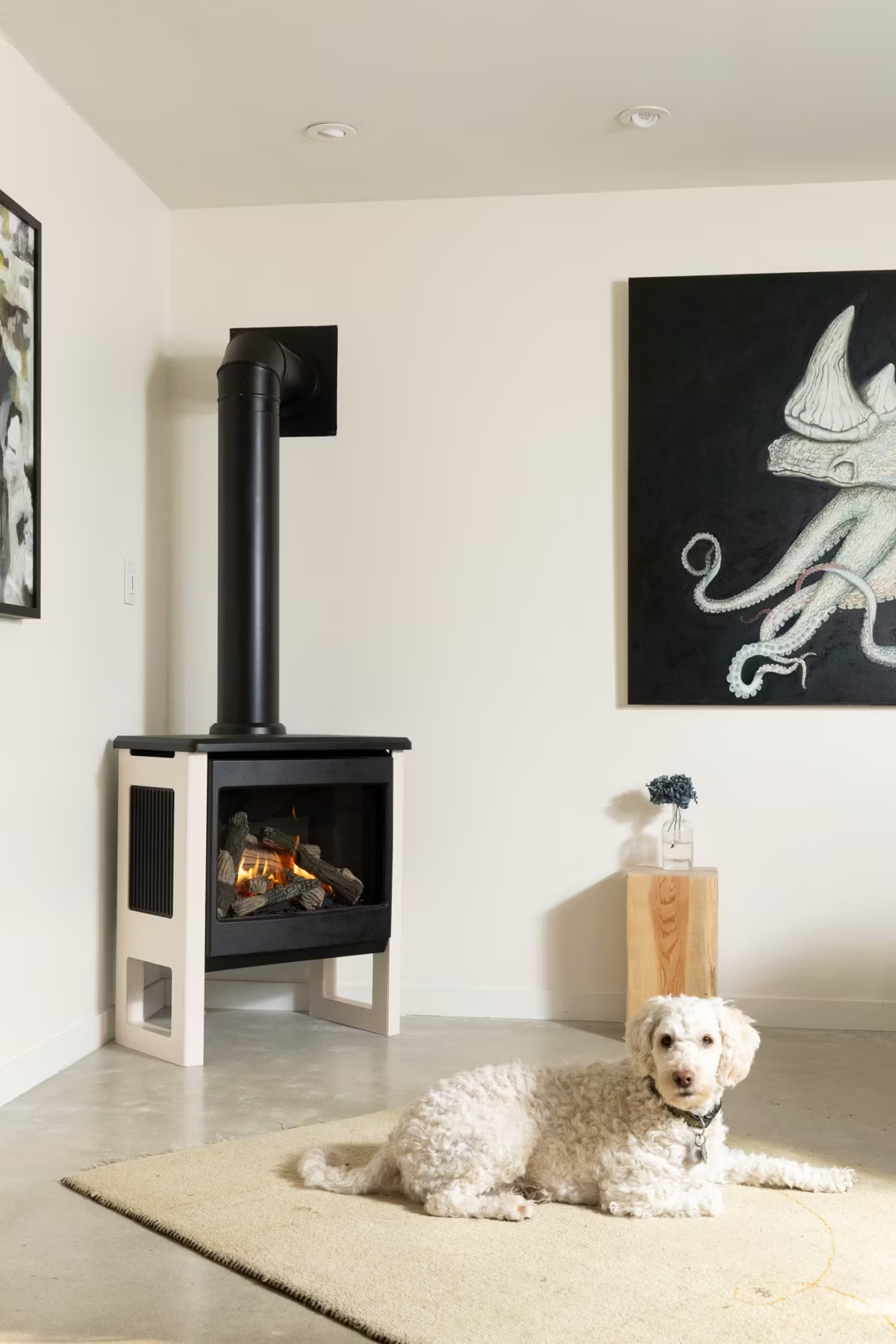
A gas fireplace is a built-in unit framed into a wall—the right call for new construction or a full remodel. A gas insert drops into an existing masonry firebox, which fits a lot of the older fireplace-equipped homes around campus in Piscataway and New Brunswick. A gas stove is a freestanding cabinet unit, often chosen for finished basements or additions where there's no existing chimney or fireplace opening at all. For most homeowners in this area upgrading an underused wood fireplace, an insert is the straightforward path.
Do I need a permit to install a gas fireplace near Rutgers Livingston Campus?
Yes—Piscataway Township and the City of New Brunswick both require a building permit and a separate gas permit for new gas line work or a new fireplace installation, consistent with the New Jersey Uniform Construction Code. A licensed gas-fitter has to sign off on the line itself. In practice, the local dealers who install these units handle the permit filing and inspection scheduling as part of the job, so it's rarely something you manage yourself—just confirm it's included when you get a quote.
Vented vs. vent-free gas fireplaces—which makes sense here?
Direct-vent (sealed combustion, vented outside) units are the standard recommendation and what most local dealers install by default—they pull combustion air from outside and exhaust it back outside, so indoor air quality isn't a concern. Vent-free units are legal in New Jersey under specific room-size and ventilation rules, but they release some combustion byproducts into the living space, which matters more in the tighter, older homes common around Piscataway and New Brunswick. For a primary living-room installation, direct-vent is almost always the better fit; vent-free is occasionally used for supplemental heat in a space that can't be vented to the exterior at all.
How often does a gas fireplace need to be serviced?
Plan on an annual inspection, ideally in early fall before the first cold snap. A technician checks the burner, pilot assembly, venting, and any electronic ignition components, and cleans the glass—a much smaller job than sweeping a wood chimney, but it matters for both safety and keeping the glass from clouding over from mineral deposits in the gas. Local service providers in the Middlesex County area typically charge $150 to $250 for this visit.
Gas vs. wood—which fits a home near the Livingston Campus better?
Wood is still workable in this area—oak, hickory, and maple are all locally available cordwood species, and a wood insert or stove gives you heat that doesn't depend on the electric grid or the gas utility. But given that PSE&G gas service already reaches most homes in the 08854 and 08903 zip codes, and that this area doesn't see the extended sub-zero stretches that make backup wood heat a necessity, most homeowners here choose gas for the convenience: instant on-off, no ash or creosote, and heat output that doesn't vary load to load. Wood tends to appeal more to homeowners who specifically want the ritual of a real fire or who've had extended winter outages in the past.
What's the difference between an insert and a zero-clearance fireplace?
An insert is a fireplace that slides into a pre-existing wood-burning fireplace—if you don't have one, there's nothing to insert it into. A zero-clearance fireplace is built into a framed wall, which makes it the answer for remodels and new construction. Simple test: existing masonry fireplace means insert; blank or framed wall means zero-clearance.
Why is my open fireplace making my house colder?
Open fireplaces suck—literally. As the fire burns, it consumes air your furnace already paid to heat and pulls it out through the chimney, so the house is actually colder after the fire goes out than before you lit it. An insert fixes this: it seals the chimney, puts fixed glass across the front, and turns that hole in your house into a real heat source.
How much should I budget for a fireplace?
For an average home—covering the fireplace, the vent pipe, and basic installation—a budget between $3,900 and $5,500 gives you a lot of options across wood, gas, and pellet. By the time you add finish work, gas line, and electrical, the average complete installation lands between $5,000 and $12,000 all-in. In a remodel or new build, a good rule is to put about 2.5% of the total project cost toward the fireplace.
Does a fireplace add value to my home?
On average, a fireplace adds back to the home about the same amount you spent installing it. Add the monthly savings from heating the rooms you actually use instead of the whole house—often hundreds of dollars a year—and the value case is strong before you even count what a fire does for how your family uses the room.
Nearby Dealers
Hearth shops serving Rutgers University-Livingston Campus and the surrounding area. Every listing shows whether it is a WhyFire partner, a dealer we have verified as authorized for the brands we recommend, or a local business carrying hearth products. No manufacturer pays for placement. How we verify dealers →
Fireplaces R Us
Hot Concepts Fireplaces
Costello's Hearth & Spa - Bernardsville
Appliance Brokers, Ltd.
Island Renovations
Harris Hearth And Home
Fireside Pros/Awning Design
My Deck, Llc
Flemington Supply Co. Inc
Builders Architectural Millwork
Central Jersey Masonry & Chimney Sweep
Find your gas fireplace near Rutgers Livingston Campus.
Tell us about your home in Piscataway or New Brunswick and we'll match you with a trusted local dealer, plus a free Project Guide & Parts List—the exact parts, vent kit, and recommended dealer for your gas fireplace project.
Find Your Fireplace →