
Instant Warmth for Every Rossmoor Home.
Clean, low-maintenance gas heat built for the attached homes and condo-style living rooms of Rossmoor. Find the right unit and connect with a trusted local dealer.
Every Project Starts From One of These Five Situations
Clean, low-maintenance heat built for adult-community living.
Rossmoor, one of the first active adult communities in the country, has been part of Monroe Township since construction began in 1963. Many of the original units came with wood-burning fireboxes that made sense for that era, but with winter lows averaging 21°F and a winter heating season on par with places like Cleveland, OH in this part of Middlesex County, most residents today want heat that turns on with a switch rather than a fire that needs tending, hauling wood through, or cleaning out.
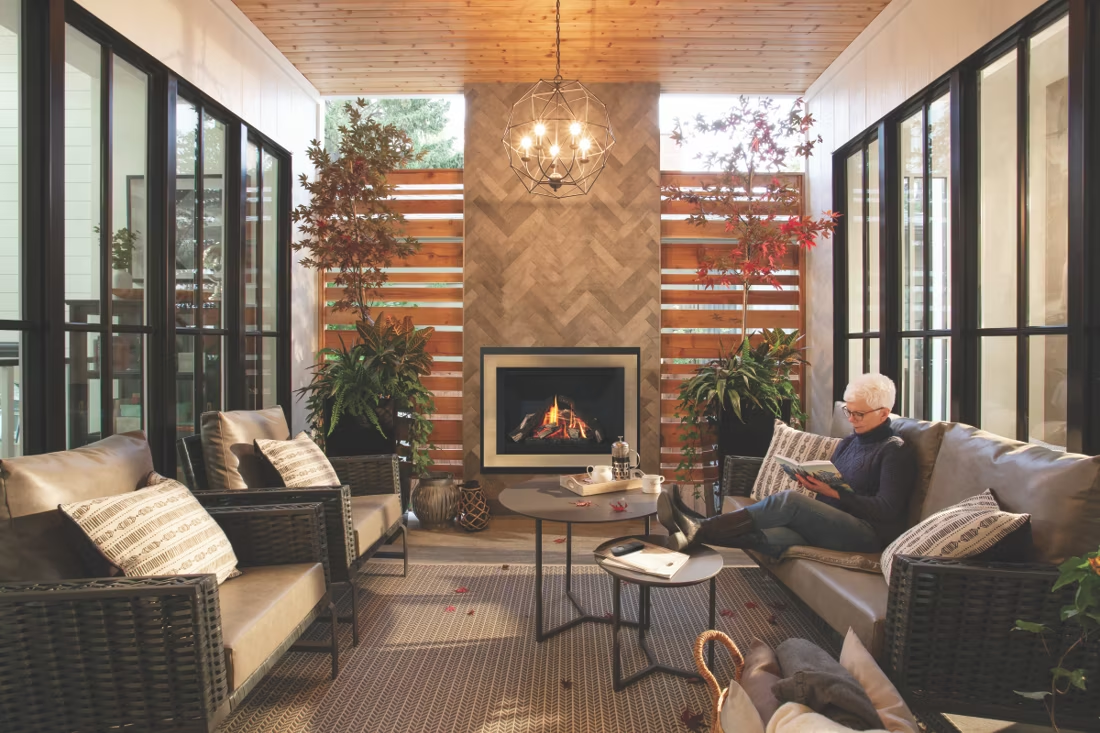
Public Service Electric & Gas (PSE&G) already serves nearly every home in Rossmoor for furnace and water heater service, which means the natural gas line most fireplace installs need is typically already close at hand. A direct-vent gas fireplace or insert delivers steady radiant heat at the flip of a switch, works well in the attached, single-level layouts common throughout the community, and—with the right ignition system—keeps producing heat even when a nor'easter knocks out power along the Jersey Shore corridor.
Three steps. No salesperson until you're ready.
Tell us about your project
Your zip code, your situation, and the fuel you're leaning toward—or let the answers point you to one.
See what's actually available
The brands dealers within 100 miles genuinely carry—real options, never a catalog mirage.
Get your dealer & Project Guide
A trusted local dealer, plus the free Project Guide & Parts List that names every component of the job.
Frequently Asked Questions
How much does a gas fireplace installation cost in Rossmoor?
Most gas fireplace or insert installations in Rossmoor run somewhere between $4,000 and $9,500, with the final number driven mainly by whether a gas line already reaches the fireplace location. Because nearly every home here is already on PSE&G natural gas service for heat and hot water, tying in a fireplace is often a shorter branch-line run than in a home without existing gas—which tends to keep costs toward the lower end. Units requiring new venting through a shared wall or roofline, or a full masonry-to-insert conversion, run toward the higher end. A local dealer will give you a firm number after seeing your specific unit.
Can I convert my original Rossmoor fireplace to gas?
Yes, and it's one of the more common projects in the community given how many units still have their original 1960s-era wood-burning fireboxes. A gas insert typically slides into that existing opening, using a stainless liner run up the existing flue, so the fireplace keeps its look while gaining instant on-off heat and no ash or wood storage. Because Rossmoor is governed by a community association, exterior or structural changes—including new venting that penetrates a shared wall or roof—usually need sign-off from the Rossmoor Community Association's modifications process before a permit is pulled, so it's worth checking with the association office alongside your contractor.
Do I need propane, or is natural gas available in Rossmoor?
Natural gas is the standard here. PSE&G provides both electric and natural gas service throughout Monroe Township, and the large majority of Rossmoor homes are already piped for gas heat and cooking. That makes natural gas the default choice for a fireplace as well—your installer simply taps into the existing gas infrastructure rather than arranging a propane tank. Propane setups are rare in this community and generally only come up for detached structures without an existing PSE&G connection.
Will my gas fireplace still work if the power goes out?
Most modern gas fireplaces will, which matters in a coastal New Jersey winter when nor'easters can take PSE&G power out for a day or more. Units with intermittent pilot ignition (IPI) run on a small battery backup that kicks in automatically and lights the fireplace on demand, no different from normal operation, until power is restored. Some manufacturers, including Valor, go a step further with a pilot system that generates its own electricity through the thermocouple, so there are no batteries to remember at all. Ask your local dealer which ignition system a given model uses before you buy.
Fireplace, insert, or stove—which fits a Rossmoor floor plan?
For most Rossmoor units, a gas insert is the right call because it drops into the fireplace opening you already have and uses the existing chimney chase as its vent path. Freestanding gas stoves are less common here simply because the compact, single-level living rooms typical of the community don't usually have the clearance a floor-standing unit needs. New built-in gas fireplaces come up mostly when a homeowner is doing a fuller renovation and wants to relocate the fireplace to a different wall. A local retailer can walk your specific layout and tell you which option actually fits.
What permits or approvals do I need for a gas fireplace in Rossmoor?
Monroe Township's Construction Code Office requires a building permit and a gas permit for new fireplace installations, and the gas line work has to be done by a licensed gas-fitter. On top of the township requirement, Rossmoor's community association typically needs to review and approve any work that changes exterior venting, roof penetrations, or shared walls, since the homes are part of an association-governed community. Most established local hearth dealers handle the township permitting directly and can tell you what paperwork the association will want as well.
Should I get a vented or vent-free gas fireplace?
New Jersey's Uniform Construction Code permits vent-free gas fireplaces in rooms that meet minimum size and ventilation requirements, but in Rossmoor most installs end up vented anyway, since converting an original wood-burning firebox into a direct-vent insert reuses the chimney chase that's already there. Direct-vent units draw combustion air from outside and exhaust fully outside, which avoids any debate about indoor air quality in a smaller, well-sealed condo-style unit. If you're not working with an existing chimney, ask your dealer to walk through both options against your room's square footage.
How often does a gas fireplace need to be serviced?
Plan on an annual inspection, ideally in early fall before the heating season starts. A technician checks the burner, pilot assembly, gas connections, and venting, and cleans the glass and interior—a lighter-duty visit than a wood chimney sweep but still important given how PSE&G gas appliances share the same fuel supply as your furnace and water heater. Local gas appliance service providers typically charge $150 to $250 for this visit, and it's worth keeping the paperwork if you ever sell, since buyers in an established community like Rossmoor often ask for service records.
Why gas instead of wood or pellet in Rossmoor?
Wood stoves and pellet stoves are essentially off the table here—not because the region can't support them (oak, hickory, and maple are all common regional firewood species), but because Rossmoor's attached construction, shared roof and chimney chases, and community association rules make adding a new wood- or pellet-burning appliance impractical for almost everyone. There's also no realistic space in most units for stacked cordwood or pallets of pellet bags. Gas sidesteps all of that: no fuel storage, no chimney sweeping, and heat that starts the moment you flip a switch—which is why it's the fuel of choice for essentially every fireplace project in the community.
Why is a fireplace insert so efficient?
An insert does two things: it seals the chimney completely, so you stop losing air you already paid to heat, and it radiates warmth into the room through the firebox and glass. Most add a heat-exchange fan that pulls cool room air underneath, wraps it around the hot firebox, and pushes it back out warm. Your home is more efficient before you've even lit the first fire.
What's the difference between an insert and a zero-clearance fireplace?
An insert is a fireplace that slides into a pre-existing wood-burning fireplace—if you don't have one, there's nothing to insert it into. A zero-clearance fireplace is built into a framed wall, which makes it the answer for remodels and new construction. Simple test: existing masonry fireplace means insert; blank or framed wall means zero-clearance.
Does a fireplace add value to my home?
On average, a fireplace adds back to the home about the same amount you spent installing it. Add the monthly savings from heating the rooms you actually use instead of the whole house—often hundreds of dollars a year—and the value case is strong before you even count what a fire does for how your family uses the room.
What is an in-home preview and do I need one?
It's a visit where a hearth professional measures your space, confirms the model you picked actually works in your home, and walks the specs—framing, gas line, venting, finish work—before anything is ordered. Some details you just can't know until you see the house. Never make a down payment without one; it's the single most-skipped step that burns buyers.
Nearby Dealers
Hearth shops serving Rossmoor and the surrounding area. Every listing shows whether it is a WhyFire partner, a dealer we have verified as authorized for the brands we recommend, or a local business carrying hearth products. No manufacturer pays for placement. How we verify dealers →
Appliance Brokers, Ltd.
Island Renovations
Fireside Pros/Awning Design
Central Jersey Masonry & Chimney Sweep
Builders Architectural Millwork
Fireplaces R Us
Better Homes Hearth & Patio
Flemington Supply Co. Inc
My Deck, Llc
Alternate Energy Products
E & E Stoves & Fireplaces
Hot Concepts Fireplaces
H2 LLC
Find your gas fireplace in Rossmoor.
Tell us a bit about your Rossmoor home and we'll put together a free Project Guide & Parts List—the exact parts, including the vent kit, and a trusted local dealer who can install it correctly.
Find Your Fireplace →