
A Straight Answer on Pellet Heat in Paramus.
Pellet stoves are uncommon in this natural-gas suburb—here's when one still makes sense, and how to get it installed by someone who actually does this work.
Every Project Starts From One of These Five Situations
Paramus runs on natural gas, not biomass.
Paramus sits at 51 feet in Bergen County's dense inner suburbs, with a 5A climate zone and a real winter, but a mild one compared to places like Burlington, VT, which sees nearly double that heating load. Most homes here were built on tight subdivision lots with central natural gas furnaces already tied into the metro NYC gas grid, and PSEG serves as both the electric and gas utility for most of the borough. That combination—a mild winter heating load, small lots, and gas already piped to the house—means pellet stoves never became a default heating choice the way they did in rural New England or the upper Midwest.
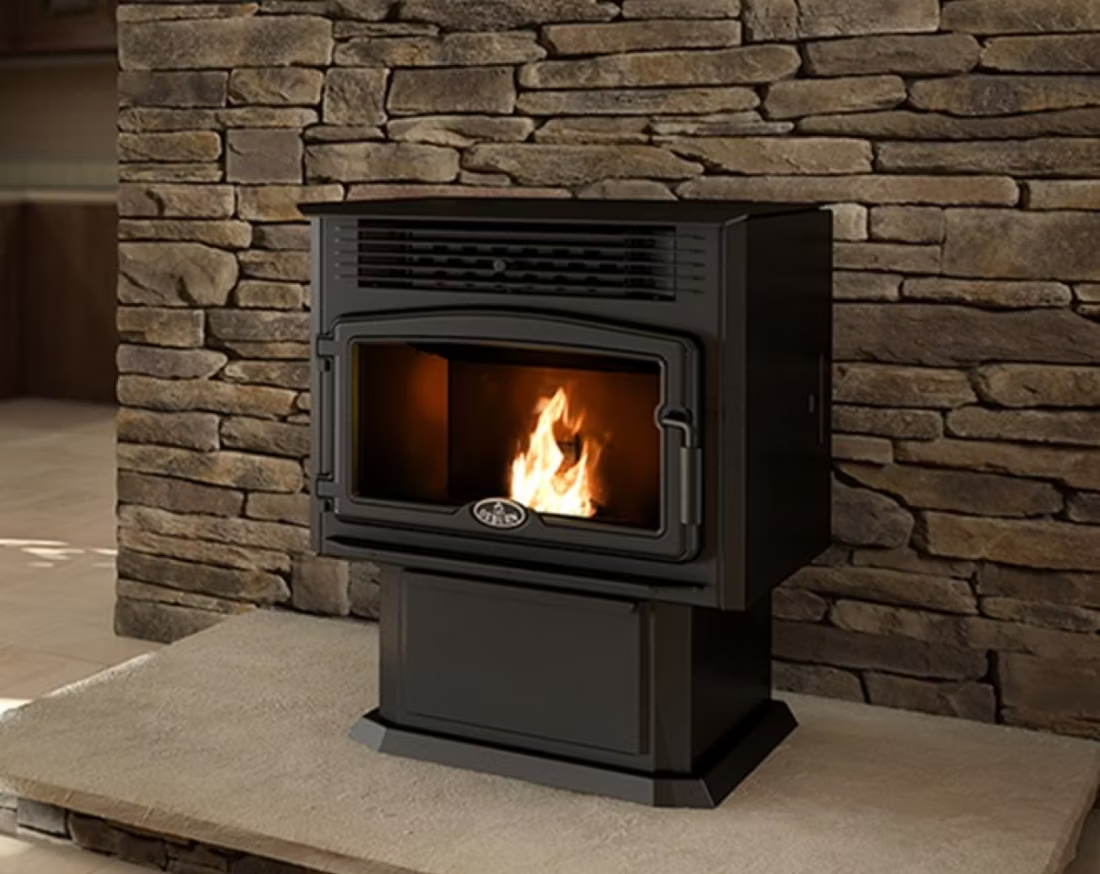
That doesn't mean pellet heat is unavailable—Northeast producers like Energex, Hamer Pellet Fuel, and Greene Team Pellet Fuel all supply the regional market, and a handful of Bergen County hearth dealers will install a unit if you want one. It's a fit for specific situations: supplemental zone heat in a finished basement, a garage workshop that isn't on the main gas line, or homeowners who want a solid-fuel backup that doesn't require the chimney work a wood stove does. It's a smaller, more specialized project here than in colder or more rural markets, which is exactly why matching with a dealer who actually stocks and installs pellet equipment matters more, not less.
Three steps. No salesperson until you're ready.
Tell us about your project
Your zip code, your situation, and the fuel you're leaning toward—or let the answers point you to one.
See what's actually available
The brands dealers within 100 miles genuinely carry—real options, never a catalog mirage.
Get your dealer & Project Guide
A trusted local dealer, plus the free Project Guide & Parts List that names every component of the job.
Frequently Asked Questions
Are pellet stoves common in Paramus?
No—pellet stoves are a niche choice here. Most Paramus homes already have central natural gas heat through PSEG, and the borough's small residential lots don't lend themselves to bulk pellet storage the way rural or exurban properties do. That said, a small but steady number of homeowners install pellet stoves or inserts each year, usually for supplemental heat in a basement or addition, or as a backup heat source that doesn't depend on a working furnace. If that's your situation, it's a workable project—it just requires finding a dealer who regularly handles pellet equipment rather than one who only sells gas fireplaces.
How much does a pellet stove installation cost in Paramus?
Because pellet installs are less common in this market than gas conversions, pricing varies more by dealer than it would in a heavier pellet-use region. As a general guide, a freestanding pellet stove with venting typically runs $3,000 to $6,000 installed nationally, and a pellet insert into an existing masonry fireplace tends to run somewhat higher once a liner and hearth work are factored in. Get quotes from two or three Bergen County dealers rather than assuming a single number—since this isn't a high-volume install for most local installers, quotes can vary more than they would for a standard gas fireplace swap.
Do I need a permit to install a pellet stove in Paramus?
Yes. Like any solid-fuel-burning appliance, a pellet stove or insert requires a construction permit under New Jersey's Uniform Construction Code, processed through the Paramus Construction Department. The permit covers the appliance installation, the venting path, and clearance-to-combustibles verification. A licensed hearth installer will typically pull this permit as part of the job and schedule the required inspection—this is one more reason to work with a dealer who installs pellet equipment regularly rather than a general contractor doing it as a one-off.
Should I get a pellet stove or just stick with gas?
For most Paramus homes, gas is the more natural fit—natural gas service is already run to the house, PSEG supplies it reliably, and a direct-vent gas insert or fireplace installs faster with less ongoing fuel handling than pellet equipment. Pellet makes more sense in specific cases: a room or addition that isn't on the gas line, a desire for a real flame with more visual presence than most gas units offer, or wanting a heat source that isn't tied to the same gas meter as your furnace. If your main goal is convenient, low-maintenance heat, gas is usually the better answer here; if you want a distinct secondary heat source with its own fuel supply, pellet is worth a look.
Will a pellet stove work during a power outage?
Not without a backup power source. Pellet stoves rely on an electric auger to feed fuel and a blower to distribute heat and exhaust combustion gases, so a PSEG outage will shut the unit down even with a full hopper. Homeowners who want emergency heat sometimes pair a pellet stove with a small battery backup or generator sized to run the auger and blower—worth discussing with your installer if outage resilience is part of why you're considering pellet in the first place. If backup heat during outages is the primary goal, a vented gas fireplace with a battery-backed ignition system is usually a more straightforward solution in this area.
What size pellet stove do I need for supplemental heat?
Most Paramus installs are supplemental rather than whole-house, so sizing tends to focus on a specific space—a finished basement, a family room addition, or a garage workshop—rather than the entire home. A small to mid-size pellet stove (rated for roughly 1,000 to 1,800 sq ft) covers most single-room or basement-level installs comfortably given the area's moderate 26°F average winter low. A local dealer will still want to walk the space, since ceiling height, insulation, and how open the room is to the rest of the house all affect the right size more than square footage alone.
Where do I buy pellet fuel near Paramus?
Regional producers including Energex, Hamer Pellet Fuel, and Greene Team Pellet Fuel supply much of the Northeast pellet market, and their bagged fuel shows up at hearth shops and farm-and-home supply stores across North Jersey, though not at every hardware store the way it might in a heavier pellet-use state. Because demand is lower here, it's worth confirming with your installer or a local dealer which brands they carry or can order before committing to a stove, so you're not driving out of the county every time you need fuel.
Is a wood stove a better option than pellet in Paramus?
Neither wood nor pellet is the default heating choice in Paramus—this is a natural-gas suburb, and both solid-fuel options are used mainly for supplemental or specialty heating rather than primary heat. Between the two, wood requires a masonry chimney or Class A pipe and a place to store cordwood, which is a tougher fit on Paramus's smaller residential lots. Pellet equipment vents through a smaller pipe, stores fuel in manageable 40-lb bags rather than stacked cords, and generally suits a tight suburban lot better if you do want a solid-fuel option alongside your existing gas heat.
How do I find someone who actually installs pellet stoves in Bergen County?
This is the real challenge in a market like Paramus—plenty of local dealers sell and service gas fireplaces, but fewer stock and install pellet equipment regularly, since it's a smaller slice of their business. The dealers worth calling are the ones who can name specific pellet brands they carry, quote a venting plan on the spot, and talk through hopper capacity and auger maintenance without hesitation—that's a sign they install these units often enough to know the details, not just once every couple of years.
Why is my open fireplace making my house colder?
Open fireplaces suck—literally. As the fire burns, it consumes air your furnace already paid to heat and pulls it out through the chimney, so the house is actually colder after the fire goes out than before you lit it. An insert fixes this: it seals the chimney, puts fixed glass across the front, and turns that hole in your house into a real heat source.
What's the difference between an insert and a zero-clearance fireplace?
An insert is a fireplace that slides into a pre-existing wood-burning fireplace—if you don't have one, there's nothing to insert it into. A zero-clearance fireplace is built into a framed wall, which makes it the answer for remodels and new construction. Simple test: existing masonry fireplace means insert; blank or framed wall means zero-clearance.
What is an in-home preview and do I need one?
It's a visit where a hearth professional measures your space, confirms the model you picked actually works in your home, and walks the specs—framing, gas line, venting, finish work—before anything is ordered. Some details you just can't know until you see the house. Never make a down payment without one; it's the single most-skipped step that burns buyers.
Can a fireplace actually lower my heating bill?
Yes—by creating a comfort zone. A furnace heats every square foot of the house just to warm the one room you're in; a gas fireplace on low burns roughly a sixth of the gas a typical furnace does. Set the furnace around 55–60 degrees as a baseline, then heat the rooms your family actually uses. Families who heat this way commonly save $20–$60 a month.
Nearby Dealers
Hearth shops serving Paramus and the surrounding area. Every listing shows whether it is a WhyFire partner, a dealer we have verified as authorized for the brands we recommend, or a local business carrying hearth products. No manufacturer pays for placement. How we verify dealers →
Flue Tech
Mcnamara Fireplace And Stove
Kjb Fireplaces
County Woodstoves Inc
Light N Grid
Fireplaces By Design
Westchester Fireplace
Big Apple Fireplaces
Chimney Sweep Energy Barn
Fireplace And Outdoor Living
All Shore Appliance
Harris Hearth And Home
Fire Design
Agi Supply Inc
Hot Concepts Fireplaces
The Valley Fireplace
N & N Services
Pellet Brands Stocked Around Paramus
Manufacturers will point you to the nearest stocking dealer.
Find your pellet stove in Paramus.
Tell us about your space and we'll match you with a Bergen County dealer who actually installs pellet equipment, plus a free Project Guide & Parts List with the exact venting and hardware your project needs.
Find Your Fireplace →