
Warm up Metuchen winters without splitting a log.
Direct-vent gas heat for Metuchen's older colonials and Victorians, powered by the PSE&G gas line most of the borough already runs on. Find the right unit and connect with a trusted local dealer.
Every Project Starts From One of These Five Situations
Steady heat for a mid-Atlantic winter.
Metuchen sits at just 94 feet of elevation in Middlesex County, with a climate zone 4A profile and a solid winter heating season—real winter, with average lows around 24°F, but nothing close to the deep-freeze demands of a place like Burlington, VT. Much of the borough's housing stock dates back to the early 1900s, and a lot of those colonials and Victorians still have the original masonry fireplace sitting cold and unused in the living room.
Public Service Electric & Gas Co. (PSE&G) runs natural gas service through most of Metuchen, which makes a direct-vent gas insert or fireplace one of the simplest upgrades a homeowner here can make. No wood to split or stack, no chimney full of creosote, no permit season to plan around—just a switch or remote and heat within seconds. For a dense borough like Metuchen, where lot sizes and local ordinances make wood-burning installs impractical for most homes, gas has become the default way to bring a real flame back into an old fireplace opening.
Three steps. No salesperson until you're ready.
Tell us about your project
Your zip code, your situation, and the fuel you're leaning toward—or let the answers point you to one.
See what's actually available
The brands dealers within 100 miles genuinely carry—real options, never a catalog mirage.
Get your dealer & Project Guide
A trusted local dealer, plus the free Project Guide & Parts List that names every component of the job.
Frequently Asked Questions
How much does a gas fireplace installation cost in Metuchen?
In the central New Jersey market, a direct-vent gas insert installed into an existing masonry fireplace typically runs $4,000 to $7,500, since most Metuchen homes already have a chimney and, thanks to PSE&G, a nearby gas line. A new built-in gas fireplace for a remodel or an addition—with framing, venting, and a fresh gas line run—usually lands between $7,000 and $12,000. Homes with older knob-and-tube wiring or original masonry that needs a liner before an insert can be installed will sit toward the higher end. A local retailer can give you a firm number after seeing the fireplace opening in person.
Can I convert my old fireplace to gas?
Yes, and it's one of the most common requests among Metuchen's older housing stock. Many of the borough's colonials and Victorians have a masonry firebox that hasn't seen real use in years. A gas insert slides into that existing opening, uses the chimney as a venting path with a stainless liner, and typically costs $4,000 to $8,000 depending on whether new gas line work is needed to reach the fireplace from the meter. Since PSE&G gas already serves most of the borough, the line extension is usually short and straightforward compared to homes further out in rural Middlesex County.
Does my home need to be on natural gas, or can I use propane?
Most Metuchen homes are already on PSE&G natural gas, which makes a gas fireplace a simple add-on appliance rather than a new utility connection. If you're in one of the small pockets of the borough or nearby unincorporated areas without a gas line, propane is a workable alternative—your installer configures the fireplace with a different orifice and pressure regulator, and you'll need either an existing tank or a new above-ground propane tank set outside. Given how built-out Metuchen is, natural gas is the far more common route here.
Will a gas fireplace still work if the power goes out?
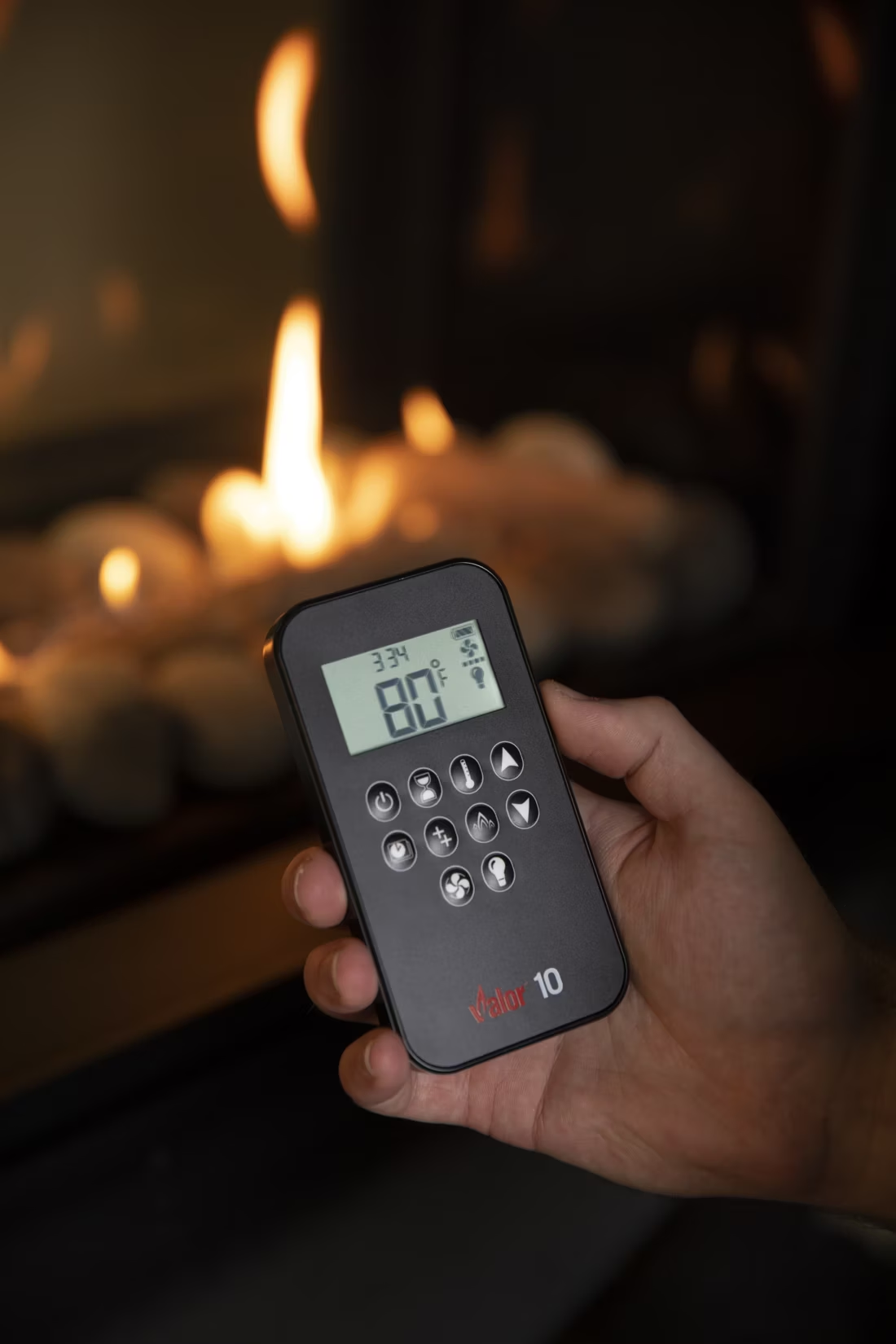
Most modern gas fireplaces will, which matters in a town that sees its share of nor'easter-driven outages. Units with intermittent pilot ignition (IPI) run on a battery backup that kicks in automatically when PSE&G power drops, so the fireplace lights on demand just like normal. Valor fireplaces go a step further—they generate their own electricity through the pilot's thermocouple, so there's no battery to remember to replace. Ask your local retailer which ignition system is on any unit you're considering if outage backup matters to you.
What's the difference between a gas fireplace, gas insert, and gas stove?
A gas fireplace is a fully built-in unit framed into a wall—the right call for new construction or a remodel without an existing hearth. A gas insert is sized to slide into an existing masonry firebox, which describes a large share of the fireplaces sitting unused in Metuchen's older homes. A gas stove is a freestanding cast-iron or steel unit that sits on a hearth pad, similar in footprint to a wood stove but running on gas. For most Metuchen homeowners with an existing fireplace opening, an insert is the straightforward upgrade.
Do I need a permit to install a gas fireplace in Metuchen?
Yes—installing a gas fireplace or insert requires a construction permit through the Metuchen Building Department, and the gas line work itself has to be done by a New Jersey-licensed plumber or gas fitter under the state Uniform Construction Code. Most hearth retailers coordinate the permit, the gas line hookup, and the final inspection as part of the installation, so you're not left managing separate trades. Skipping the permit can create real problems later—insurance claims and home sales in New Jersey both tend to surface unpermitted gas work.
Should I get a vented or vent-free gas fireplace?
Vented, direct-vent units draw combustion air from outside and exhaust it back outside through a sealed pipe—they're the standard recommendation almost everywhere, including Metuchen. Vent-free gas units burn fuel directly into the room and are legal under New Jersey's Uniform Construction Code with proper room-sizing and an oxygen depletion sensor, but they release some water vapor and combustion byproducts into the living space. In tightly built older Metuchen homes with lower ceiling heights and smaller rooms, most local installers steer homeowners toward direct-vent units for that reason. Ask your retailer to walk through both if you're weighing the tradeoff.
How often does a gas fireplace need to be serviced?
Plan on an annual inspection, ideally before the fireplace sees regular use again each fall. A technician checks the burner, pilot assembly, venting, and gas connections, and cleans the glass and interior—a much smaller job than a chimney sweep but just as important for carbon monoxide safety. Local gas appliance service providers in the Metuchen area typically charge $150 to $250 for this visit, and PSE&G periodically reminds customers to schedule appliance checkups as part of general gas safety.
Gas vs. electric fireplace—which makes more sense for my home?
Gas delivers real heat output, works during a PSE&G power outage with the right ignition system, and costs less to run per BTU than electric resistance heat—a meaningful difference given PSE&G's residential electric rate of roughly 19.8 cents per kWh in this area. Electric fireplaces cost far less to install, typically $400 to $1,500, need no venting or gas line at all, and work well for supplemental ambiance in a bedroom or apartment where a gas line isn't practical. For a primary fireplace upgrade in a Metuchen home with existing gas service, gas usually wins on comfort and running cost; electric wins on install simplicity and upfront price.
Can I put a TV above my fireplace?
Yes—with an asterisk. Fireplaces are hot and TVs don't like heat. Either put a mantel between them to deflect rising warmth, or choose a fireplace with heat-management technology that creates a cool zone on the wall above—the wall stays around 125 degrees, barely warm, while the room still gets full heat. If you like clean lines and don't want a mantel, heat management is the answer.
What's the difference between an insert and a zero-clearance fireplace?
An insert is a fireplace that slides into a pre-existing wood-burning fireplace—if you don't have one, there's nothing to insert it into. A zero-clearance fireplace is built into a framed wall, which makes it the answer for remodels and new construction. Simple test: existing masonry fireplace means insert; blank or framed wall means zero-clearance.
How much should I budget for a fireplace?
For an average home—covering the fireplace, the vent pipe, and basic installation—a budget between $3,900 and $5,500 gives you a lot of options across wood, gas, and pellet. By the time you add finish work, gas line, and electrical, the average complete installation lands between $5,000 and $12,000 all-in. In a remodel or new build, a good rule is to put about 2.5% of the total project cost toward the fireplace.
What is an in-home preview and do I need one?
It's a visit where a hearth professional measures your space, confirms the model you picked actually works in your home, and walks the specs—framing, gas line, venting, finish work—before anything is ordered. Some details you just can't know until you see the house. Never make a down payment without one; it's the single most-skipped step that burns buyers.
Nearby Dealers
Hearth shops serving Metuchen and the surrounding area. Every listing shows whether it is a WhyFire partner, a dealer we have verified as authorized for the brands we recommend, or a local business carrying hearth products. No manufacturer pays for placement. How we verify dealers →
Fireplaces R Us
Hot Concepts Fireplaces
Harris Hearth And Home
Costello's Hearth & Spa - Bernardsville
Appliance Brokers, Ltd.
Island Renovations
Fireside Pros/Awning Design
Builders Architectural Millwork
D & D Design Center
Central Jersey Masonry & Chimney Sweep
Find your gas fireplace in Metuchen.
Tell us a bit about your home and we'll match you with the right gas fireplace or insert, plus a free Project Guide & Parts List with your recommended local dealer.
Find Your Fireplace →