
Instant heat for Linden's raw coastal winters.
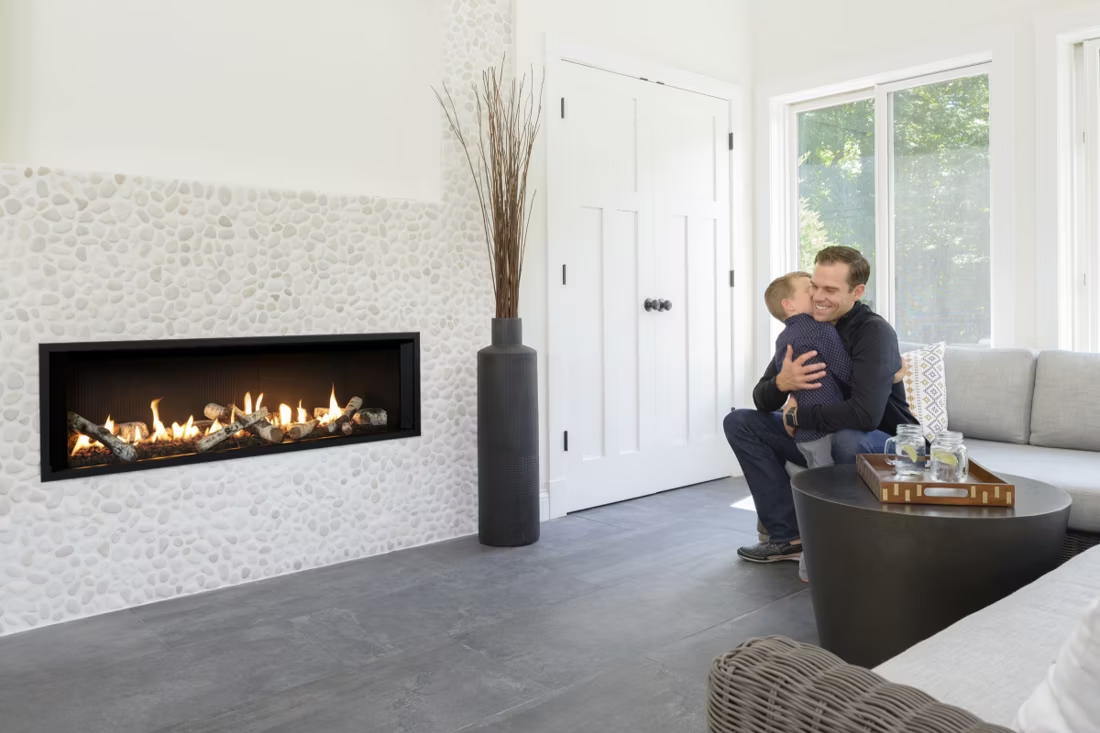
Direct-vent gas heat that works with Linden's rowhouses, capes, and postwar colonials—piped through the natural gas lines most homes already have. Find the right unit and connect with a trusted local dealer.
Every Project Starts From One of These Five Situations
Instant warmth built for Linden's older housing stock.
Linden sits at just 8 feet of elevation along the Arthur Kill in Union County, part of the dense industrial and residential corridor between Newark Airport and the refineries to the south. Winters here are milder than the interior Northeast—average lows around 25°F and roughly 4,856 heating degree days a year, closer to a Philadelphia or Baltimore winter than a Great Lakes one. True wood-burning fireplaces never really took hold in Linden the way they did in more rural parts of the state: small lot sizes, attached and semi-attached housing, and a housing stock built mostly between the 1920s and 1960s meant most homes were designed around coal or gas heat rather than cordwood from the start.
What Linden does have is near-universal natural gas coverage through PSE&G (Public Service Electric & Gas), the same utility that also handles electric service citywide. That makes a direct-vent gas fireplace or insert one of the more straightforward heating upgrades available to Linden homeowners—no new fuel infrastructure required, no propane tank, and no chimney maintenance. For the decorative masonry fireboxes found in many of Linden's older capes and colonials, a gas insert is often the fastest way to turn an unused opening into real, reliable zone heat.
Three steps. No salesperson until you're ready.
Tell us about your project
Your zip code, your situation, and the fuel you're leaning toward—or let the answers point you to one.
See what's actually available
The brands dealers within 100 miles genuinely carry—real options, never a catalog mirage.
Get your dealer & Project Guide
A trusted local dealer, plus the free Project Guide & Parts List that names every component of the job.
Frequently Asked Questions
How much does a gas fireplace installation cost in Linden?
A typical gas fireplace or insert installation in Linden runs roughly $4,500 to $10,000, depending on the unit, the venting path, and whether new gas line work is needed. Homes already piped for natural gas through PSE&G—which is most of Linden—tend to land on the lower end, especially for a direct-vent insert going into an existing masonry opening. New construction, sidewall venting through a shared rowhouse wall, or a built-in fireplace requiring framing and a new gas line run push costs toward the higher end. The City of Linden's Construction Code office requires a permit for the work, which most local installers pull on your behalf.
Can I convert an old fireplace opening to gas in my Linden home?
Yes, and it's one of the more common projects local hearth dealers see here. Many of Linden's 1920s-to-1950s capes and colonials have masonry fireboxes that were originally built for coal, not cordwood—genuine wood burning was never widespread in a city built around small lots and attached housing. A gas insert with a stainless liner run up the existing flue is a natural fit for these openings, typically running $4,500 to $8,500 depending on the model and whether the flue needs relining. The result looks like a traditional fireplace but runs on the natural gas line already serving your furnace and water heater.
Is propane an option in Linden, or is everyone on natural gas?
Natural gas through PSE&G covers essentially all of Linden, so propane fireplaces are the exception here rather than the rule—you'll mostly see propane used for detached structures like garages or sheds that were never connected to gas service. If your home already has a PSE&G gas meter, which the overwhelming majority in Linden do, a natural gas fireplace or insert is almost always the simpler and cheaper path since it skips the tank installation and delivery contracts propane requires.
Will my gas fireplace still work if the power goes out?
Most direct-vent gas fireplaces will, which matters in Linden given how often nor'easters and coastal storms knock out power along the Arthur Kill corridor. Units with intermittent pilot ignition (IPI) run on a battery backup—usually a set of AA batteries inside the unit—that kicks in automatically when the power drops, so the fireplace still lights on demand. Valor fireplaces take it a step further: their pilot assembly generates its own electricity through the thermocouple, so there's no battery to remember at all. Ask your local dealer about the ignition system on any model you're considering if outage reliability matters to you.
What's the difference between a gas fireplace, gas insert, and gas stove?
A gas fireplace is a fully built-in unit framed into a wall—the right choice for new construction or a gut renovation. A gas insert is sized to slide into an existing masonry firebox, which is what most Linden homeowners are working with in their older capes and colonials, and it uses the existing chimney as the vent path with a liner. A gas stove is a freestanding cabinet-style unit that sits on the floor—less common in Linden's rowhouses and smaller floor plans simply because of the space it needs, but a good option for a room without any existing fireplace opening.
Do I need a permit to install a gas fireplace in Linden?
Yes. The City of Linden's Division of Construction Code Enforcement requires a permit for gas fireplace installations, and the gas line connection itself must be run by a New Jersey-licensed gas fitter under the Uniform Construction Code. Most local hearth dealers coordinate both the mechanical permit and the gas work as part of the installation, so you're not left managing separate trades. Union County inspectors will typically want to see the venting termination clearances met before signing off, particularly on attached and semi-attached homes.
Should I get a vented or vent-free gas fireplace?
Vented, direct-vent units draw combustion air from outside and exhaust it back outside—they're the standard recommendation for Linden and comply cleanly with the state's Uniform Construction Code. Vent-free (ventless) units burn directly into the room and are subject to strict room-volume and oxygen-depletion-sensor requirements under New Jersey code; a lot of Linden's smaller rowhouse and cape floor plans simply don't have the cubic footage to meet those minimums, which rules vent-free out for many homes here before cost even comes into it. Direct-vent is also the safer bet in denser housing where bedrooms sit close to living spaces. Your local dealer can confirm which option your specific room qualifies for.
How often should a gas fireplace be serviced in Linden?
Plan on an annual inspection, ideally before the heating season ramps up in the fall. A certified technician checks the burner, pilot assembly, venting termination, and gas connections, and cleans the glass and interior—a much quicker job than chimney sweeping but just as important for safe operation. PSE&G doesn't service fireplace equipment itself, but local hearth and HVAC service companies in Union County typically charge $150 to $225 for a standard annual visit.
Gas fireplace or electric fireplace—which makes more sense in Linden?
It depends on what you're actually trying to heat. PSE&G's residential electric rate in Linden runs close to 20 cents per kWh, notably above the national average, which makes an electric fireplace a fairly expensive way to produce real heat if you're running it for hours at a time. A direct-vent gas fireplace tied into your existing natural gas line delivers more heat per dollar and works during a power outage with battery backup. Electric units still make sense where venting isn't possible at all—a rented unit, an interior room, or a condo association that restricts gas work—since they need only a standard outlet and no chimney or vent kit. For most owner-occupied homes in Linden with gas service already at the meter, gas is the better long-term choice for actual heating performance.
What's the difference between an insert and a zero-clearance fireplace?
An insert is a fireplace that slides into a pre-existing wood-burning fireplace—if you don't have one, there's nothing to insert it into. A zero-clearance fireplace is built into a framed wall, which makes it the answer for remodels and new construction. Simple test: existing masonry fireplace means insert; blank or framed wall means zero-clearance.
Why is my open fireplace making my house colder?
Open fireplaces suck—literally. As the fire burns, it consumes air your furnace already paid to heat and pulls it out through the chimney, so the house is actually colder after the fire goes out than before you lit it. An insert fixes this: it seals the chimney, puts fixed glass across the front, and turns that hole in your house into a real heat source.
How much should I budget for a fireplace?
For an average home—covering the fireplace, the vent pipe, and basic installation—a budget between $3,900 and $5,500 gives you a lot of options across wood, gas, and pellet. By the time you add finish work, gas line, and electrical, the average complete installation lands between $5,000 and $12,000 all-in. In a remodel or new build, a good rule is to put about 2.5% of the total project cost toward the fireplace.
What is an in-home preview and do I need one?
It's a visit where a hearth professional measures your space, confirms the model you picked actually works in your home, and walks the specs—framing, gas line, venting, finish work—before anything is ordered. Some details you just can't know until you see the house. Never make a down payment without one; it's the single most-skipped step that burns buyers.
Find your gas fireplace in Linden.
Tell us about your home and we'll put together a free Project Guide & Parts List—the exact parts, including the vent kit, and a trusted local dealer matched to your Linden gas fireplace project.
Find Your Fireplace →