
Reliable Gas Heat for Jamesburg's Coastal-Plain Winters.
Instant, even heat for Middlesex County's real but manageable winters. Find the right gas fireplace or insert and get matched with a trusted local dealer.
Every Project Starts From One of These Five Situations
Piped-in comfort, no wood pile required.
Jamesburg sits on the flat coastal plain of Middlesex County at just 78 feet of elevation, in climate zone 4A. Winters here average lows around 23°F with a heating season on par with much of the Mid-Atlantic—real cold, but nothing like the deep-freeze winters of a place like Minneapolis or Burlington, VT. Most of the borough's housing stock is older colonials and capes on modest suburban lots, many with an existing masonry fireplace that was never designed to do much more than look nice on a holiday evening.
Natural gas mains reach nearly every block in Jamesburg, with PSE&G the dominant provider across Middlesex County—which is a big part of why gas fireplaces and inserts are the standard choice here rather than wood or pellet. Wood stoves are uncommon on the borough's tight lots, and pellet appliances haven't caught on locally either. A direct-vent gas insert or built-in fireplace gives Jamesburg homeowners instant, thermostat-controlled heat without a woodpile, ash cleanup, or a trip to a permit office for cutting rights.
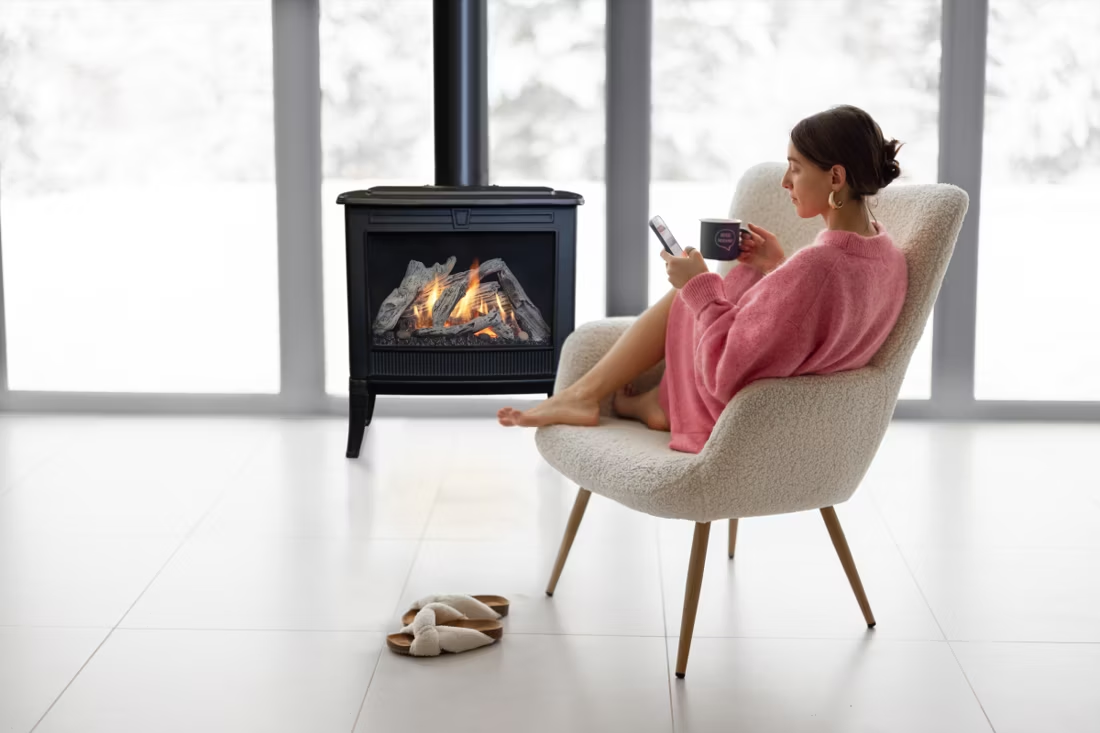
Three steps. No salesperson until you're ready.
Tell us about your project
Your zip code, your situation, and the fuel you're leaning toward—or let the answers point you to one.
See what's actually available
The brands dealers within 100 miles genuinely carry—real options, never a catalog mirage.
Get your dealer & Project Guide
A trusted local dealer, plus the free Project Guide & Parts List that names every component of the job.
Frequently Asked Questions
How much does a gas fireplace installation cost in Jamesburg?
Most gas fireplace and insert installations in Jamesburg run in the $4,000 to $10,000 range, depending on the unit and whether new gas piping is needed. Homes already on a PSE&G gas line—which describes most of the borough—typically land on the lower end if converting an existing masonry fireplace to a direct-vent insert. New construction, room additions, or homes needing a longer gas line run from the meter will sit toward the higher end. A local dealer will give you a firm number after seeing your fireplace or planned location in person.
Can I convert my existing wood-burning fireplace to gas?
Yes, and it's one of the most common projects for the older colonials and capes common around Jamesburg. A direct-vent gas insert slides into your existing masonry firebox, using a stainless liner run up your existing chimney, so you keep the look of your fireplace while gaining real, controllable heat. Because PSE&G gas service already runs to most homes in the borough, the main cost driver is usually just the insert and liner, not new gas line work.
Do I need natural gas, or can I run a fireplace on propane?
Natural gas is the default in Jamesburg—PSE&G's distribution network covers nearly all of Middlesex County, so if your home already has gas service for a furnace, water heater, or range, adding a fireplace is a straightforward tie-in. Propane is really only a consideration for the rare property that sits off the gas main or wants a fireplace in a detached structure like a garage or shed. Most gas fireplace models can be configured for either fuel; your installer sets the correct orifice for whichever you're running.
Will my gas fireplace still work if the power goes out?
Most direct-vent gas fireplaces will, which matters in a JCP&L service area that sees its share of outages during nor'easters and summer storms. Units with intermittent pilot ignition (IPI) run on a small battery backup that keeps the unit operable even with no power. Valor fireplaces go a step further—their pilot assembly generates its own electricity through the thermocouple, so there's no battery to remember at all. Ask your local dealer about the ignition system on any model you're considering if outage backup matters to you.
What's the difference between a gas fireplace, insert, and stove?
A gas fireplace is a built-in unit framed into a wall, typically used in new construction or a remodel where there's no existing fireplace. A gas insert is sized to slide into an existing masonry firebox—the most common route for Jamesburg's older housing stock—using your existing chimney as the venting chase. A gas stove is a freestanding cast-iron or steel unit that sits on the floor and vents through a wall or existing flue, a good option for a room that never had a fireplace at all. Most Jamesburg homeowners with an existing wood fireplace choose an insert.
Do I need a permit to install a gas fireplace in Jamesburg?
Yes. Gas fireplace installations fall under the New Jersey Uniform Construction Code and require both a construction permit and a licensed gas-fitter for the line work, typically pulled through the Jamesburg or Middlesex County construction office depending on jurisdiction. A certified local hearth dealer will usually handle the permit application and schedule the inspection as part of the installation, so you're not coordinating separate trades yourself.
Should I choose a vented or vent-free gas fireplace?
Vented (direct-vent) gas fireplaces draw combustion air from outside and exhaust it back outside through a sealed pipe—they're the more common and more universally recommended choice, and what most Jamesburg installers default to. Vent-free units are permitted in New Jersey under the Uniform Construction Code, but they come with strict room-size minimums and often require a carbon monoxide detector, and they release some combustion byproducts into the room. For year-round comfort in a closed-up New Jersey winter, direct-vent is the safer, better-performing choice for most homes.
How often does a gas fireplace need to be serviced?
Plan on an annual inspection, ideally in early fall before the heating season starts. A technician checks the burner, pilot assembly, venting, and gas connections, and cleans the glass and interior—a service that typically runs $150 to $250 in the Jamesburg area. It's a shorter visit than a wood chimney sweep, but skipping it is how pilot and ignition problems go unnoticed until the coldest night of the year.
Why is gas so much more common than wood in Jamesburg?
Jamesburg's tight suburban lots, dense PSE&G gas infrastructure, and lack of any real wood-cutting access nearby all point homeowners toward gas. Wood stoves and inserts aren't unheard of, but they're uncommon here—a handful of older homes still burn oak or hickory picked up from local tree services, but there's no cutting-permit culture like you'd find near a national forest. For most Jamesburg homeowners, gas delivers the ambiance without the ash, the woodpile, or the chimney maintenance.
Why is a fireplace insert so efficient?
An insert does two things: it seals the chimney completely, so you stop losing air you already paid to heat, and it radiates warmth into the room through the firebox and glass. Most add a heat-exchange fan that pulls cool room air underneath, wraps it around the hot firebox, and pushes it back out warm. Your home is more efficient before you've even lit the first fire.
Why is my open fireplace making my house colder?
Open fireplaces suck—literally. As the fire burns, it consumes air your furnace already paid to heat and pulls it out through the chimney, so the house is actually colder after the fire goes out than before you lit it. An insert fixes this: it seals the chimney, puts fixed glass across the front, and turns that hole in your house into a real heat source.
What is an in-home preview and do I need one?
It's a visit where a hearth professional measures your space, confirms the model you picked actually works in your home, and walks the specs—framing, gas line, venting, finish work—before anything is ordered. Some details you just can't know until you see the house. Never make a down payment without one; it's the single most-skipped step that burns buyers.
How much should I budget for a fireplace?
For an average home—covering the fireplace, the vent pipe, and basic installation—a budget between $3,900 and $5,500 gives you a lot of options across wood, gas, and pellet. By the time you add finish work, gas line, and electrical, the average complete installation lands between $5,000 and $12,000 all-in. In a remodel or new build, a good rule is to put about 2.5% of the total project cost toward the fireplace.
Nearby Dealers
Hearth shops serving Jamesburg and the surrounding area. Every listing shows whether it is a WhyFire partner, a dealer we have verified as authorized for the brands we recommend, or a local business carrying hearth products. No manufacturer pays for placement. How we verify dealers →
Appliance Brokers, Ltd.
Island Renovations
Fireside Pros/Awning Design
Central Jersey Masonry & Chimney Sweep
Builders Architectural Millwork
Fireplaces R Us
Alternate Energy Products
Hot Concepts Fireplaces
H2 LLC
East Coast Energy Products Inc.
Better Homes Hearth & Patio
Flemington Supply Co. Inc
My Deck, Llc
Find your gas fireplace in Jamesburg.
Tell us about your home and we'll match you with a trusted local dealer and send over a free Project Guide & Parts List—the exact parts, vent kit included, for your Jamesburg gas fireplace project.
Find Your Fireplace →