
Keep Your Family Warm and Safe—No Matter What
East Vineland sits in a mild, gas-and-electric market—but if you want a real wood fire for backup heat or ambiance, we can still connect you with a dealer who can do it right.
Every Project Starts From One of These Five Situations
A niche choice in a mild-winter market.
East Vineland sits in climate zone 4A, with winter lows averaging 23°F and a winter heating season that's moderate in length and intensity—noticeably milder than the wood-heating strongholds of the upper Midwest or northern New England, places like Burlington VT or Duluth MN where a wood stove is often the primary heat source. Here, natural gas and electric heat pumps do most of the work, and new construction in Atlantic County rarely includes a wood-burning appliance as a first choice.
That doesn't mean wood is off the table. A smaller number of East Vineland homeowners still want a stove or insert for backup heat during nor'easter-driven power outages, for the ambiance of a real fire, or because oak, hickory, and maple firewood is easy to source locally. Air quality concerns here are minimal—there's no non-attainment designation or burn-ban culture to navigate like you'd find in the Klamath Basin or the Denver metro. What you won't find as easily is a dense network of dedicated wood-stove dealers or public-land cutting permits; sourcing the right installer takes more legwork in a market this size, which is exactly the gap Find My Fireplace exists to close.
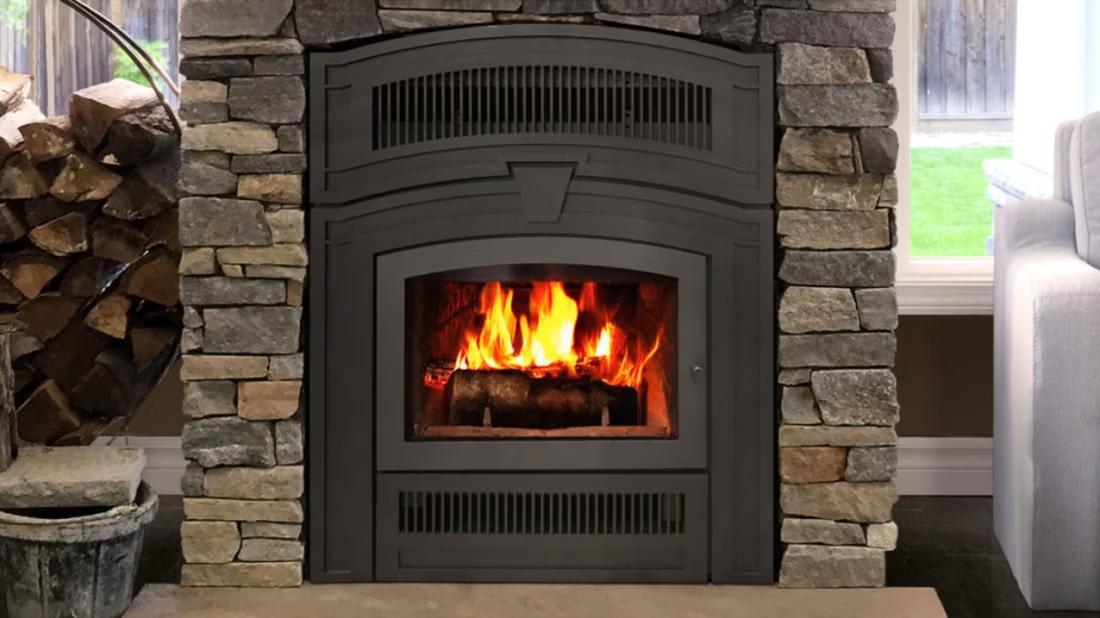
Three steps. No salesperson until you're ready.
Tell us about your project
Your zip code, your situation, and the fuel you're leaning toward—or let the answers point you to one.
See what's actually available
The brands dealers within 100 miles genuinely carry—real options, never a catalog mirage.
Get your dealer & Project Guide
A trusted local dealer, plus the free Project Guide & Parts List that names every component of the job.
Frequently Asked Questions
How much does a wood stove installation cost in East Vineland?
Because wood stoves are a niche request in this part of Atlantic County, there isn't a dense local market quoting standardized pricing the way there is for gas fireplace inserts. As a general benchmark, a straightforward wood stove or insert installation typically runs $3,500 to $8,000, with the total depending on whether you need new Class A chimney pipe, a hearth pad upgrade, or wall clearance modifications. Since relatively few East Vineland homes currently have wood-burning setups in place, expect your dealer to spend extra time assessing the venting path for your specific house before quoting a firm number.
Is a wood stove even worth it in a climate this mild?
With winter lows averaging 23°F and a winter heating season that's moderate compared to colder parts of the country, East Vineland's climate is meaningfully milder than the northern-tier markets where wood stoves run as primary heat around the clock. Here, a wood stove usually makes more sense as supplemental or backup heat—something to run during a nor'easter power outage or on the coldest handful of nights—rather than a stove sized and run like it would be in Fargo ND or Bismarck ND. A mid-size, non-catalytic stove is usually plenty for a South Jersey home; you're unlikely to need the 20+ hour catalytic burn times that cold-climate homes rely on.
Where can I find a certified wood stove installer near East Vineland?
Look for NFI (National Fireplace Institute) or CSIA (Chimney Safety Institute of America) certification—in a small market like East Vineland, the installer you find is more likely to be based out of Vineland proper or elsewhere in Atlantic or Cumberland County rather than right in town. Because wood installs are less common here than gas conversions, it's worth confirming the installer has actually run Class A chimney pipe and set clearances for a solid-fuel appliance recently, not just serviced gas units. A trusted local dealer match through FMF is built specifically to solve this—matching you with someone who has real wood-install experience, not just a general hearth generalist.
What's the difference between a wood stove and a wood insert?
A wood stove is a freestanding unit on its own hearth pad, vented through new or existing chimney pipe—it can go almost anywhere with the right clearances. A wood insert slides into an existing masonry fireplace, using a stainless liner run through your current chimney to convert an open hearth into a sealed, higher-efficiency heat source. Since East Vineland has relatively few homes built with wood-burning in mind from the start, most requests here are inserts going into an existing fireplace that's currently used mainly for looks—the insert turns it into something that can actually offset heating costs during a cold snap or outage.
Do I need a permit to install a wood stove in East Vineland?
Almost certainly yes—a new wood-burning appliance typically requires a building permit through your local municipal construction office, and the unit itself needs to meet current EPA emissions standards. Since East Vineland doesn't have its own dedicated fire-code office, your installer will usually pull the permit through the applicable Atlantic County municipal building department as part of the install. Unlike some western states, New Jersey doesn't impose winter burn curtailment periods here, since East Vineland has no air quality non-attainment designation—so once it's installed and permitted, you're free to burn without seasonal restrictions.
What's the best wood stove for a South Jersey home like this?
Given East Vineland's milder winters, a mid-size non-catalytic stove from a brand like Jøtul, Pacific Energy, or Lopi is usually the right fit—these hold a fire for a solid 8-plus hours, which covers an overnight burn without the extended-hold engineering a catalytic Blaze King is built for further north. If the goal is primarily backup heat for storm-related power outages rather than daily primary heating, sizing slightly smaller than you might in a colder climate is usually the right call—a local dealer can size it against your actual square footage rather than a generic chart.
How often should my chimney be inspected and cleaned?
The CSIA recommends an annual inspection for any wood-burning appliance, and that holds regardless of how mild the climate is—creosote builds up based on burn habits and wood moisture content, not outdoor temperature. For an East Vineland home using a stove mainly for occasional or backup heat, a single inspection and sweep before the season starts (typically September or October) is usually enough. If you're burning more heavily during a stretch of cold weather or storm outages, have it checked again before resuming regular use.
Where can I source firewood near East Vineland?
Oak, hickory, and maple are the common species around Atlantic County, and most homeowners here buy from independent firewood dealers or local tree services rather than cutting their own—there isn't public forest land with cutting permits nearby the way there is in western states. Seasoned hardwood typically runs $250 to $350 per cord in South Jersey, and it's worth asking whether the wood has been seasoned at least six months to a year; oak in particular needs long drying time before it burns clean. Some suppliers also sell partial cords or face cords, which is a reasonable option if you're using wood only for occasional backup heat rather than as a primary fuel.
Wood stove vs. pellet stove—which makes more sense here?
Honestly, both are niche choices in East Vineland—this isn't a market with dedicated pellet retailers on every corner the way it is in the Pacific Northwest, though regional pellet brands like Energex, Hamer, and Greene Team are available through specialty suppliers if you go that route. The practical difference: a wood stove burns cordwood and works with zero electricity, which matters for backup heat during a nor'easter outage. A pellet stove needs power to run its auger and blower, and with Atlantic City Electric's residential rate running around 22.6 cents per kWh—notably higher than the national average—running one as a daily heat source costs more to operate than in many other regions. For most East Vineland homes considering either option mainly for storm resilience, wood is the more dependable backup; pellet suits homeowners prioritizing convenience and consistent power.
Why is a fireplace insert so efficient?
An insert does two things: it seals the chimney completely, so you stop losing air you already paid to heat, and it radiates warmth into the room through the firebox and glass. Most add a heat-exchange fan that pulls cool room air underneath, wraps it around the hot firebox, and pushes it back out warm. Your home is more efficient before you've even lit the first fire.
Why won't my new wood stove get going like my old one?
New wood stoves are 70%+ efficient, so far less heat goes up the flue—which also means less draft to get a fire established. The rule: build a genuinely hot fire for about 45 minutes before you choke it down. Skip that and you get smoke in the room, creosote in the chimney, and a fire that never takes off. Most performance complaints trace straight back to this.
Does a fireplace add value to my home?
On average, a fireplace adds back to the home about the same amount you spent installing it. Add the monthly savings from heating the rooms you actually use instead of the whole house—often hundreds of dollars a year—and the value case is strong before you even count what a fire does for how your family uses the room.
Can a fireplace actually lower my heating bill?
Yes—by creating a comfort zone. A furnace heats every square foot of the house just to warm the one room you're in; a gas fireplace on low burns roughly a sixth of the gas a typical furnace does. Set the furnace around 55–60 degrees as a baseline, then heat the rooms your family actually uses. Families who heat this way commonly save $20–$60 a month.
Nearby Dealers
Hearth shops serving East Vineland and the surrounding area. Every listing shows whether it is a WhyFire partner, a dealer we have verified as authorized for the brands we recommend, or a local business carrying hearth products. No manufacturer pays for placement. How we verify dealers →
McCloskey's Garden & Hearth
The Chimney Doctor Inc.
Find your wood stove in East Vineland.
Wood heat is a smaller niche here, which makes matching with the right dealer even more important. Tell us about your home and we'll send a free Project Guide & Parts List—the exact parts, including the vent kit, and a trusted local dealer who actually installs wood stoves in Atlantic County.
Find Your Fireplace →