
Heat That Fits Cape May's Historic Homes.
No chimney, no venting, no exterior alterations to worry about—just plug-in warmth for Cape May's Victorian cottages and seasonal rentals. Find the right unit and connect with a trusted local dealer.
Every Project Starts From One of These Five Situations
Zero venting for a town built on historic charm.
Cape May sits at just 12 feet above sea level on the southern tip of a New Jersey barrier island, inside the largest concentration of Victorian architecture in the country—the Cape May Historic District, home to more than 600 restored 19th-century buildings under National Historic Landmark protection. With a winter season that's noticeably shorter and milder than you'd find in Duluth, MN or Burlington, VT, and winter lows averaging a relatively mild 28°F, this isn't a climate that demands round-the-clock wood-fired heat. Most Cape May homes need supplemental warmth for shoulder-season chill and the occasional cold snap, not a primary system that runs all winter.
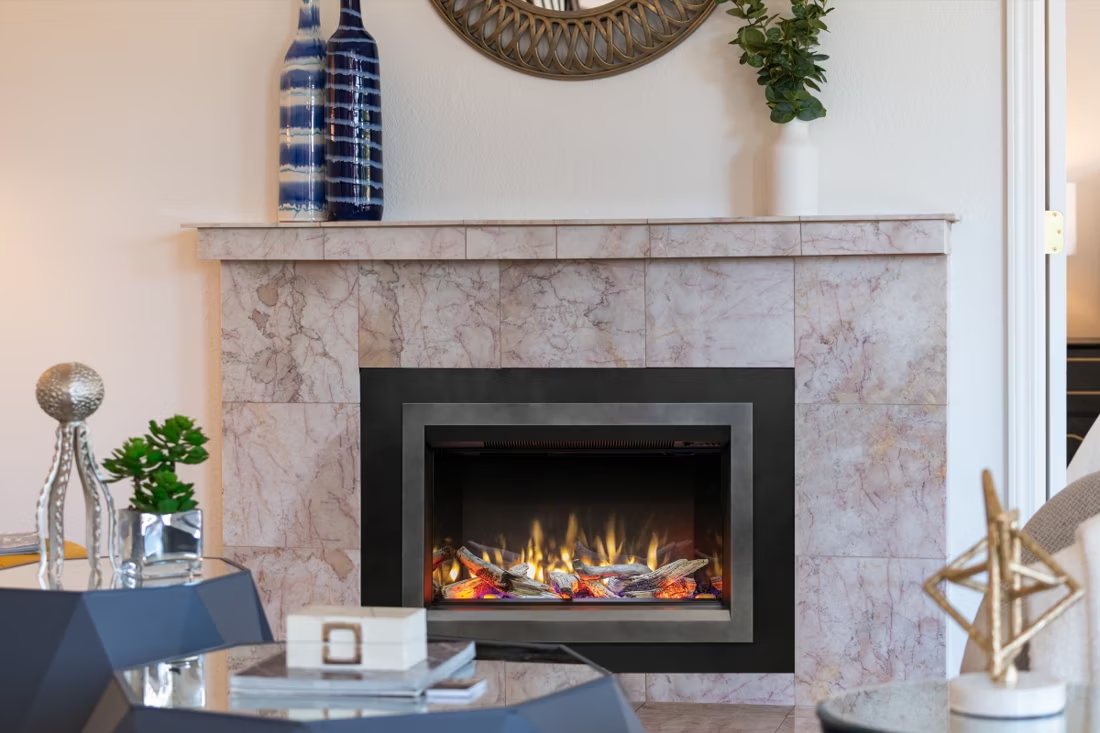
That combination—a mild coastal climate, a historic district with strict exterior-alteration review, and a housing stock full of seasonal Victorian cottages and bed-and-breakfasts—is exactly why wood stoves and pellet stoves are essentially absent here, while electric fireplaces have become a go-to option. An electric insert or wall unit needs no chimney, no flue penetration through a landmark-protected roofline, and no sign-off from the Cape May Historic Preservation Commission, which reviews exterior changes to contributing structures in the district. It simply plugs into a standard or dedicated circuit and runs on power from Atlantic City Electric, the utility serving the whole barrier island.
Three steps. No salesperson until you're ready.
Tell us about your project
Your zip code, your situation, and the fuel you're leaning toward—or let the answers point you to one.
See what's actually available
The brands dealers within 100 miles genuinely carry—real options, never a catalog mirage.
Get your dealer & Project Guide
A trusted local dealer, plus the free Project Guide & Parts List that names every component of the job.
Frequently Asked Questions
How much does it cost to install an electric fireplace in Cape May?
Most electric fireplace projects in Cape May fall into two categories. A plug-in insert or mantel unit that drops into an existing, non-functioning Victorian firebox can run as little as $300 to $1,200 installed, since there's no venting or gas line involved. A built-in wall unit or larger linear fireplace that needs a dedicated 20-amp circuit typically runs $800 to $2,500 once a licensed electrician is involved. Because there's no chimney work, no masonry, and no Historic Preservation Commission review for exterior changes, electric installs in Cape May are usually the fastest and least invasive hearth project a homeowner can take on—especially inside the historic district.
Why don't people install wood or pellet stoves in Cape May?
It comes down to geography and preservation rules. Cape May is a barrier island town at 12 feet of elevation with no surrounding forest land or Forest Service permit offices—firewood isn't a local, low-cost resource the way it is inland. On top of that, most of the housing stock sits inside the Cape May Historic District, where the Historic Preservation Commission reviews exterior changes to the roughly 600 Victorian structures under landmark protection, and running a new stovepipe or Class A chimney through a 19th-century roofline is a hard sell. Between the mild coastal climate—a much shorter, lighter winter heating season than a place like Bozeman, MT—and the preservation constraints, wood and pellet appliances are essentially not part of the local hearth market.
Can an electric fireplace actually heat a Cape May home, or is it just for looks?
Most electric fireplaces sold today include a fan-forced heater that puts out real, usable heat—typically 5,000 to 9,000 BTUs, enough to comfortably warm a single room or open living area. Given Cape May's winter low average of 28°F and its Climate Zone 4A designation, that's usually plenty for zone heating a parlor, sunroom, or bedroom in a Victorian cottage while a central heat pump or furnace handles the rest of the house. Very few Cape May homeowners use an electric fireplace as their sole heat source—it's almost always a supplemental unit that takes the edge off during a cold snap or extends comfortable use of a seasonal room.
Do I need Historic Preservation Commission approval to install an electric fireplace?
In most cases, no. The Cape May Historic Preservation Commission's review authority is triggered by exterior changes to contributing structures—new venting, altered rooflines, added chimneys, or anything visible from the street. Because electric fireplaces don't vent to the outside, installing one inside an existing firebox opening or as a new wall unit typically doesn't require HPC sign-off. You'll still want to confirm with the City of Cape May Construction Code Office if the project involves new electrical circuits, since that work does need a standard electrical permit regardless of the district.
Electric vs. gas fireplace—which makes more sense for a Cape May home?
Both are common here, and the right answer depends on your building. Gas is a strong option if your home already has a gas line and you want higher heat output or the look of a real flame with glowing logs—but it does require venting, which in the historic district often means routing through an existing masonry chimney rather than adding new exterior penetrations. Electric skips that conversation entirely: no venting, no gas line, and no exterior review, which makes it the simpler path for a seasonal cottage, rental property, or a room where running gas line isn't practical. Many owners of the town's Victorian bed-and-breakfasts choose electric specifically because it can go into almost any room without touching the building envelope.
What does an electric fireplace cost to run in Cape May?
Atlantic City Electric's residential rate runs around 22.6 cents per kWh, which is higher than the New Jersey average—worth knowing before you plan on daily use. A typical electric fireplace on its heater setting draws about 1,500 watts, so running it for a full evening (say, 4 hours) costs roughly $1.35 at that rate. Most owners run the flame effect without heat for ambiance most of the year and switch on the heater only during genuinely cold stretches, which keeps the operating cost modest even with the area's above-average electric rates.
Can an electric insert go into my home's existing Victorian fireplace opening?
Yes, and it's one of the most popular projects in Cape May's older homes. Many of the town's Victorian cottages have decorative, non-functioning fireboxes that haven't burned wood in decades. An electric insert sized to fit that opening restores a working, glowing fireplace look without opening up the flue, relining a chimney, or touching anything the Historic Preservation Commission would need to review. It's a straightforward way to bring a period fireplace back to life while keeping the original mantel and surround intact.
Do I need a permit for the electrical work?
If your electric fireplace plugs into an existing standard outlet, no permit is typically required. If you're installing a larger built-in unit that needs a new dedicated circuit—common for linear or larger wall units—that electrical work requires a permit through the City of Cape May Construction Code Office and must be done by a licensed electrician. Most hearth dealers coordinate this as part of the install, but it's worth confirming which category your chosen unit falls into before you buy.
Are electric fireplaces a good fit for Cape May's vacation rentals and B&Bs?
Very much so. With a large share of Cape May's housing stock operating as seasonal rentals and bed-and-breakfast rooms, electric fireplaces solve a real problem: they add ambiance and coziness to a listing without the liability, cleaning, or supervision that a wood-burning unit requires between guest turnovers. Many models include remote or app control, adjustable flame brightness, and automatic shutoff timers—useful features for a unit that will be operated by guests who've never used it before. It's a low-maintenance way to make a Victorian guest room feel warm and inviting in photos and in person.
Can I put a TV above my fireplace?
Yes—with an asterisk. Fireplaces are hot and TVs don't like heat. Either put a mantel between them to deflect rising warmth, or choose a fireplace with heat-management technology that creates a cool zone on the wall above—the wall stays around 125 degrees, barely warm, while the room still gets full heat. If you like clean lines and don't want a mantel, heat management is the answer.
Do electric fireplaces actually produce heat?
Yes—most put out around 4,800–5,000 BTUs from a standard outlet, which comfortably warms a bedroom, office, or den as a comfort-zone heater. What they won't do is carry a whole house the way wood, gas, or pellet can. Think of electric as ambiance-first with honest supplemental heat: flames on with no heat in July, flames plus warmth in January.
Does a fireplace add value to my home?
On average, a fireplace adds back to the home about the same amount you spent installing it. Add the monthly savings from heating the rooms you actually use instead of the whole house—often hundreds of dollars a year—and the value case is strong before you even count what a fire does for how your family uses the room.
Can a fireplace actually lower my heating bill?
Yes—by creating a comfort zone. A furnace heats every square foot of the house just to warm the one room you're in; a gas fireplace on low burns roughly a sixth of the gas a typical furnace does. Set the furnace around 55–60 degrees as a baseline, then heat the rooms your family actually uses. Families who heat this way commonly save $20–$60 a month.
Nearby Dealers
Hearth shops serving Cape May and the surrounding area. Every listing shows whether it is a WhyFire partner, a dealer we have verified as authorized for the brands we recommend, or a local business carrying hearth products. No manufacturer pays for placement. How we verify dealers →
We’ve paused dealer listings for this connection today. Enter your zip or postal code above to find dealers near you, or come back tomorrow.
Popular Electric Brands
Where each brand came from, what's inside it today, and every current model. No brand pays to be here. Not every dealer carries every brand, so enter your zip code to see what's sold near Cape May.
Fireplace Xtrordinair
Fireplace Xtrordinair, now often called FireplaceX, is the fireplace brand of Travis Industries, Inc., of Mukilteo, Washington.
5 electric models →DaVinci
DaVinci Custom Fireplaces is a brand of Travis Industries, Inc., of Mukilteo, Washington, the company behind Lopi and Fireplace Xtrordinair.
5 electric models →Kozy Heat
Kozy Heat was founded in 1976 by Dudley Hussong in Lakefield, Minnesota, and incorporated as Hussong Manufacturing Co., Inc. in 1978.
3 electric models →Forge & Flame
Forge & Flame is the stove brand Hearth & Home Technologies introduced in August 2023 to bring Vermont Castings, Harman, and Quadra-Fire under one name.
1 electric model →Electric Service in Cape May
An electric fireplace's heater draws about 1,500 watts—pennies per hour at local rates.
Atlantic City Electric Co
Find your electric fireplace in Cape May.
Tell us a bit about your home—historic district or not—and we'll help you find a trusted local dealer, plus a free Project Guide & Parts List detailing the exact electric fireplace and equipment your project needs in Cape May.
Find Your Fireplace →