
Real Warmth, No Chimney Required in Brookdale.
Zone heat and ambiance for Essex County's older homes and tight lots—no venting, no masonry work, no permits for most units. Find the right unit and connect with a trusted local dealer.
Every Project Starts From One of These Five Situations
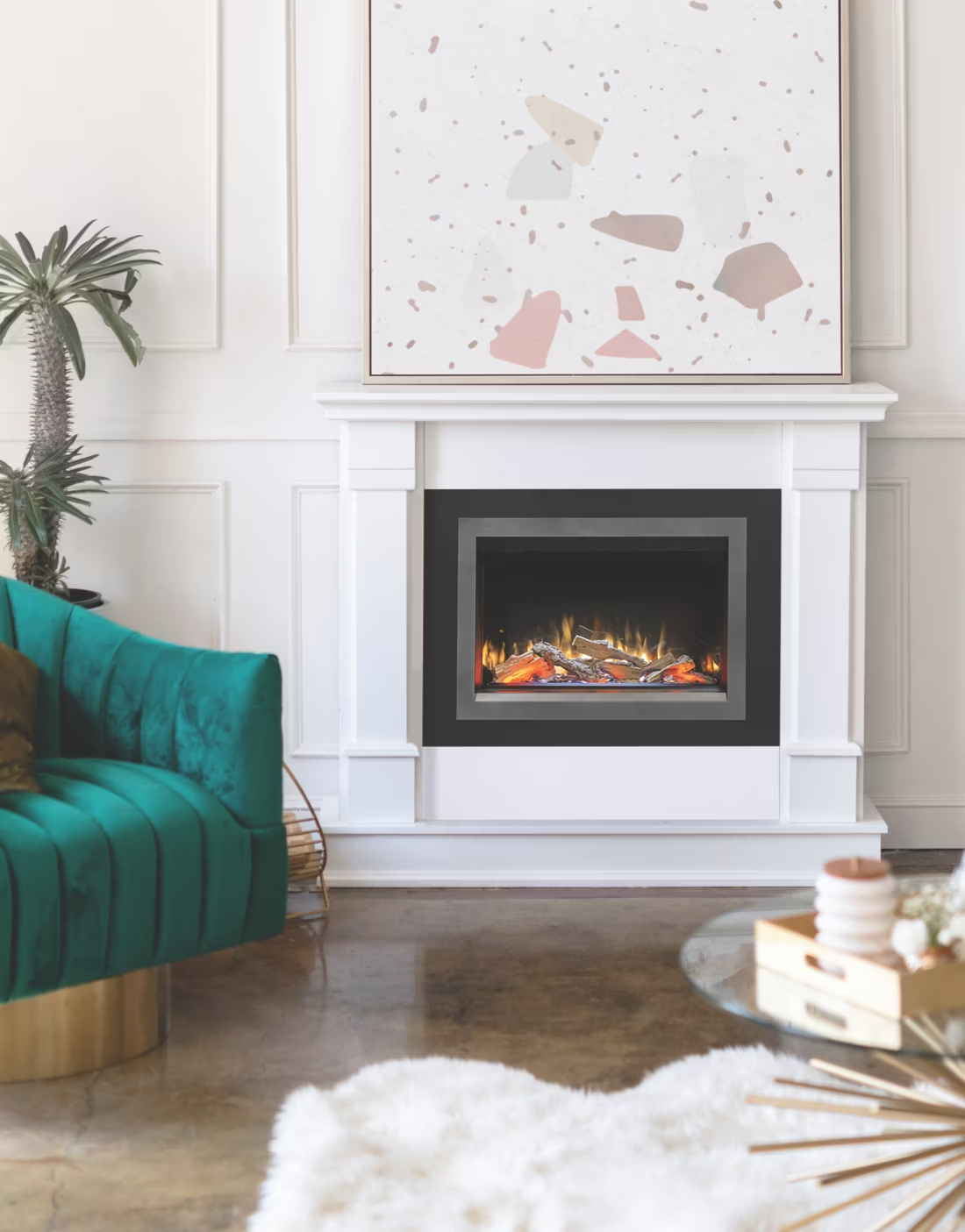
The simplest heat upgrade for Essex County's close quarters.
Brookdale sits inside Bloomfield Township, a dense, close-in Essex County community of narrow lots and older colonial and Tudor-style homes built long before central air was standard. Winters here are real but not extreme—average lows around 22°F and a winter heating season that's just a fraction of what a place like Buffalo, NY sees each year. That milder profile, combined with housing stock where many homes were never built with a chimney or the setback for one, is exactly the situation electric fireplaces are built for.
Wood stoves and pellet inserts are essentially off the table here—there's no national forest cutting permit office nearby, no cheap cordwood supply chain, and township lot sizes and shared walls make chimney or B-vent installations impractical for most Brookdale properties. Gas is available and common in the area, but electric wins for renters, condo owners, and anyone who wants supplemental heat and fireplace ambiance without touching the exterior of the house. PSE&G serves the town's electric accounts at a residential rate around $0.198 per kWh, which is higher than the national average—but with no venting, no gas line, and often no permit at all, the installation savings usually outweigh the higher per-kWh cost for occasional zone heating.
Three steps. No salesperson until you're ready.
Tell us about your project
Your zip code, your situation, and the fuel you're leaning toward—or let the answers point you to one.
See what's actually available
The brands dealers within 100 miles genuinely carry—real options, never a catalog mirage.
Get your dealer & Project Guide
A trusted local dealer, plus the free Project Guide & Parts List that names every component of the job.
Frequently Asked Questions
How much does an electric fireplace installation cost in Brookdale?
It depends heavily on the unit type. A freestanding or wall-mounted plug-in electric fireplace needs nothing more than a standard 120V outlet, so the 'installation' is often just placement and mounting hardware—a few hundred dollars if you hire someone to hang it. A built-in electric insert set into an existing masonry fireplace opening, or a linear electric unit framed into a new wall, runs higher once you factor in an electrician for a dedicated circuit, custom surround work, and finish carpentry. For Brookdale's older homes with existing fireplace openings, converting to an electric insert is usually the most cost-effective upgrade in the hearth category—no chimney relining, no gas line, no exterior venting.
What will it cost to run an electric fireplace on PSE&G power?
PSE&G's residential rate in the Brookdale area runs about $0.198 per kWh. A typical 1,500-watt electric fireplace heater draws 1.5 kW on high, which works out to roughly $0.30 an hour to run at full heat output. Used for a few hours most winter evenings as supplemental heat in a living room or bedroom, that's usually well under $2 a night—far less than running a whole-house furnace longer just to warm one room. Most units also let you run the flame effect with the heater off, which draws only a few watts.
Do I need a permit to install an electric fireplace in Brookdale?
For a plug-in freestanding or wall-mount unit that uses an existing outlet, most Bloomfield Township homeowners don't need a permit at all—it's treated like any other appliance. If you're having an electrician install a new dedicated circuit for a built-in insert or a larger linear unit, that electrical work typically does require a permit through the township building department, which your electrician will usually pull as part of the job. Because there's no gas line, no venting, and no combustion involved, electric installs move through inspection far faster than wood or gas projects.
What's the difference between a plug-in electric fireplace and a built-in electric insert?
A plug-in unit is a self-contained appliance—freestanding, wall-mounted, or a mantel package—that you plug into a standard outlet and can move or take with you if you relocate. A built-in insert is designed to be recessed into a wall cavity or slid into an existing masonry fireplace opening for a flush, finished look, and it's usually wired directly rather than plugged into a visible cord. For Brookdale's older homes with an existing fireplace opening that hasn't been used in years, an insert is the natural upgrade—it reuses the opening you already have without any chimney work. For homes without a fireplace, a plug-in or wall-mount unit is the simpler path.
Will an electric fireplace actually lower my heating bill?
Used correctly—as zone heat for the one or two rooms you spend the most time in—an electric fireplace can meaningfully cut costs by letting you turn the central thermostat down a few degrees in the rest of the house. Given PSE&G's roughly $0.198/kWh rate, it works best as a supplement rather than a whole-home heat source; running electric resistance heat as your only heat for an entire house gets expensive fast at that rate. For Brookdale's moderate winters—averaging in the low 20s rather than the sub-zero nights of colder inland climates—an electric insert in the main living space, paired with your existing furnace, is a realistic way to trim bills without a major system change.
Electric vs. gas fireplace—which makes more sense for my Brookdale home?
Gas is common in this part of Essex County and delivers real, substantial heat output with the ambiance of an actual flame, but it requires a gas line, venting, and a proper installation—a bigger project and cost. Electric skips all of that: no gas line, no venting, and in many cases no permit, at the tradeoff of lower total heat output and a higher per-hour running cost. For a Brookdale homeowner who wants supplemental warmth and the look of a fireplace in a room without existing gas service—a bedroom, a finished basement, an addition—electric is usually the faster and cheaper path. For a primary living room where you want serious heat output, gas is worth the extra install investment.
Why don't more homes in Brookdale use wood stoves?
Wood heat is genuinely uncommon here, and it's worth being upfront about why. Brookdale's lots are tight, many homes share walls or sit close to neighboring property lines, and there's no nearby national forest with a cutting permit office the way there is in more rural parts of the country—cordwood isn't a cheap, local commodity here the way it is upstate. A small number of older detached homes with an existing masonry chimney could still support a wood insert, but for the vast majority of Brookdale properties, electric or gas is the far more practical and code-friendly route to fireplace heat.
Are electric fireplaces safe for older homes without a chimney?
Yes—that's one of their main advantages in a town like Brookdale, where a lot of the housing stock was built decades before central heat and never had a chimney added. Electric units produce no combustion byproducts, no carbon monoxide, and no open flame that needs clearance to combustibles the way a wood or gas unit does, so they can go into rooms where venting a fuel-burning fireplace simply isn't possible—a converted attic bedroom, an interior den, a basement family room. The main safety consideration is matching the unit to a properly rated circuit, which a licensed electrician will handle if you're going with a hardwired insert.
What size electric fireplace or insert do I need?
Electric units are sized by heater wattage and BTU output rather than by home square footage the way a wood stove is. Most standard 1,500-watt units are rated to comfortably heat a single room in the 300-400 square foot range—appropriate for the individual rooms typical of Brookdale's older, more compartmentalized floor plans, rather than an open-concept great room. If you're fitting an insert into an existing fireplace opening, the opening's dimensions will also drive your size options. A local dealer can measure your specific opening and room and tell you which units will actually fit and perform the way you expect.
Can I put a TV above my fireplace?
Yes—with an asterisk. Fireplaces are hot and TVs don't like heat. Either put a mantel between them to deflect rising warmth, or choose a fireplace with heat-management technology that creates a cool zone on the wall above—the wall stays around 125 degrees, barely warm, while the room still gets full heat. If you like clean lines and don't want a mantel, heat management is the answer.
Does an electric fireplace need a vent or chimney?
No—that's its superpower. An electric fireplace needs a wall and an outlet, period. No vent pipe, no gas line, no clearances to design around, which is why it works in bedrooms, offices, apartments, and walls where venting a gas or wood unit would be impractical or impossible. Installation is typically the simplest and least expensive of any fireplace type.
What is an in-home preview and do I need one?
It's a visit where a hearth professional measures your space, confirms the model you picked actually works in your home, and walks the specs—framing, gas line, venting, finish work—before anything is ordered. Some details you just can't know until you see the house. Never make a down payment without one; it's the single most-skipped step that burns buyers.
Can a fireplace actually lower my heating bill?
Yes—by creating a comfort zone. A furnace heats every square foot of the house just to warm the one room you're in; a gas fireplace on low burns roughly a sixth of the gas a typical furnace does. Set the furnace around 55–60 degrees as a baseline, then heat the rooms your family actually uses. Families who heat this way commonly save $20–$60 a month.
Nearby Dealers
Hearth shops serving Brookdale and the surrounding area. Every listing shows whether it is a WhyFire partner, a dealer we have verified as authorized for the brands we recommend, or a local business carrying hearth products. No manufacturer pays for placement. How we verify dealers →
Harris Hearth And Home
Kjb Fireplaces
Hot Concepts Fireplaces
Flue Tech
Fire Design
Big Apple Fireplaces
Fireplaces R Us
Mcnamara Fireplace And Stove
County Woodstoves Inc
Fireplaces By Design
Chimney Sweep Energy Barn
Light N Grid
D & D Design Center
Costello's Hearth & Spa - Bernardsville
N & N Services
Timberline Speciality Products
Timberline Stoves
Electric Service in Brookdale
An electric fireplace's heater draws about 1,500 watts—pennies per hour at local rates.
Public Service Elec & Gas Co
Find your electric fireplace in Brookdale.
Tell us a bit about your home and we'll put together a free Project Guide & Parts List for your Brookdale electric fireplace project, and match you with a trusted local dealer who can install it right.
Find Your Fireplace →