
Warmth That Plugs In, No Chimney Required.
For the tight rowhouses and duplexes of Ampere North, electric heat means no venting, no gas line, and no permit headaches. Find the right unit and connect with a trusted local dealer.
Every Project Starts From One of These Five Situations
The simplest upgrade for Essex County's older housing stock.
Ampere North is a dense, historic corner of Bloomfield Township, built up around the old Crescent Electric Light and Power works a century ago, and it still shows in the housing: narrow lots, attached two- and three-family homes, and a lot of masonry fireplaces that were never really built for heavy wood use. With winter lows averaging 25°F and a moderate heating season typical of Climate Zone 4A, this is real winter, but nothing close to what Burlington VT or Duluth MN see. That matters because it means an electric fireplace doesn't need to carry the whole heating load; it just needs to take the edge off a chilly living room while the furnace handles the rest.
Public Service Electric & Gas Co. (PSE&G) serves both electric and gas here, and at a residential rate of about $0.1981/kWh, most homeowners in Ampere North use electric fireplaces the way they're meant to be used—for ambiance and zone heat in a bedroom, den, or finished basement, not as a primary furnace replacement. Because there's no venting, no gas line, and often no permit required for a plug-in unit, an electric insert or wall unit is usually the fastest hearth upgrade available to homes on these tight, older Essex County lots.
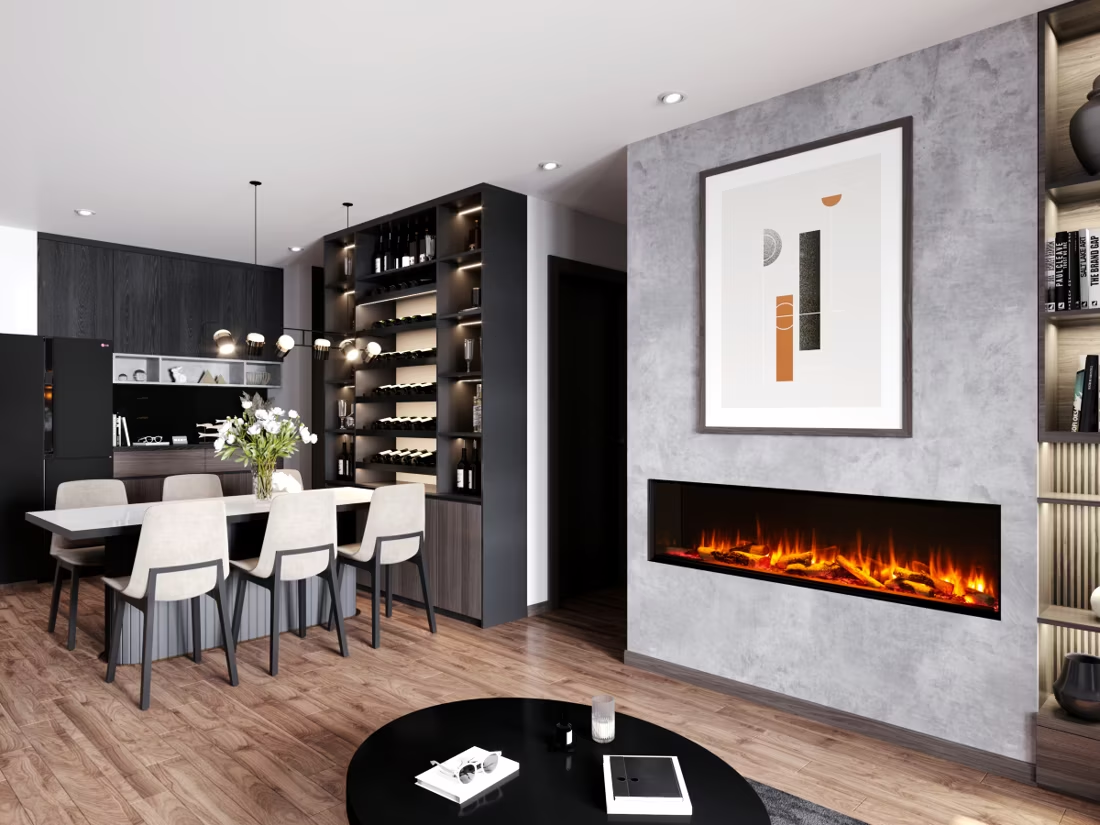
Three steps. No salesperson until you're ready.
Tell us about your project
Your zip code, your situation, and the fuel you're leaning toward—or let the answers point you to one.
See what's actually available
The brands dealers within 100 miles genuinely carry—real options, never a catalog mirage.
Get your dealer & Project Guide
A trusted local dealer, plus the free Project Guide & Parts List that names every component of the job.
Frequently Asked Questions
How much does an electric fireplace installation cost in Ampere North?
A plug-in electric insert or freestanding unit typically runs $300 to $1,500 installed, since it just needs a standard household outlet—many homeowners handle this themselves. A built-in wall unit or full mantel package that requires a dedicated 20-amp circuit runs higher, usually $1,500 to $4,000, once you factor in a licensed electrician's time for the new circuit and any built-in framing or trim work. Local dealers can walk you through both routes depending on whether you're retrofitting an existing fireplace opening or building something new.
Do I need a permit to install an electric fireplace in Ampere North?
A standard plug-in electric fireplace or insert doesn't require a permit—it's no different than plugging in a space heater. If you're installing a built-in wall unit that needs a new dedicated electrical circuit, that work does require an electrical permit through Bloomfield Township's building department, and it has to be pulled by a licensed electrician. Most reputable installers include the permit and inspection as part of the job, which is worth confirming before you sign a contract.
How much does it cost to run an electric fireplace with PSE&G rates?
At PSE&G's residential rate of roughly $0.1981/kWh, a typical 1,500-watt electric fireplace running on high costs about $0.30 an hour to operate. Run it for four hours on a cold evening and you're looking at roughly $1.20—noticeably more than a gas insert would cost for the same heat output, since PSE&G's electric rate runs above the national average. Most owners in Ampere North use the heater setting occasionally on the coldest nights and run the flame effect alone (which draws almost no power) the rest of the time.
Can I install an electric insert into my existing fireplace?
Yes, and it's a common project on these blocks. A lot of the two- and three-family homes in Ampere North have original masonry fireplaces with chimneys that were never relined or maintained for regular wood use, so an electric insert is often the most practical fix—it slides into the existing opening, needs no chimney liner or venting, and doesn't care whether the flue above it is sound. It's also one of the few hearth upgrades a renter or condo owner can typically get approved without touching the building's exterior or structure.
Why don't I see wood-burning stoves in Ampere North?
Wood heat isn't really practical here. Ampere North's lots are small and tightly packed, there's no nearby public forest land for cutting permits the way there is in more rural parts of New Jersey, and storing cords of firewood on a narrow urban lot is a real constraint most homeowners don't have room for. Between that and township fire codes for attached housing, wood stoves are essentially a non-factor in this neighborhood—electric and gas cover the heating and ambiance needs instead.
What's the difference between an electric fireplace, insert, and wall unit?
An electric fireplace is a freestanding or mantel-mounted unit you can place almost anywhere near an outlet. An electric insert is built specifically to slide into an existing masonry fireplace opening, which is common in Ampere North's older rowhouses. A built-in wall unit is recessed into the wall itself, either flush or surface-mounted, and usually looks the most like a real fireplace but requires framing and often a dedicated circuit. For most homes here with an existing fireplace opening, the insert is the simplest and least invasive option.
Will an electric fireplace actually heat my home in Ampere North's winters?
It'll take the chill off a room, but it's not designed to replace your furnace. With winter lows averaging around 25°F and a moderate winter heating season overall, Ampere North sees a real but moderate winter—nothing like International Falls MN or Fargo ND. Most electric units are rated to heat 400 to 1,000 square feet as supplemental zone heat, which is plenty for a den, bedroom, or finished basement, but you'll still want your gas furnace running for the whole house on the coldest days.
Does my electric fireplace work during a power outage?
No—unlike some gas units with battery-backup ignition, an electric fireplace needs continuous electricity to run both the heater and the flame effect, so it goes dark the moment PSE&G power drops. If backup heat during outages is a priority for your household, that's worth discussing with a local dealer, since a gas unit with intermittent pilot ignition is generally the better choice for that specific need. Electric is best understood here as a convenience and ambiance upgrade, not an emergency heat source.
Electric vs. gas—which is right for my home in Ampere North?
Gas fireplaces, which PSE&G also fuels here as both the gas and electric provider, deliver real heat output, work during power outages with the right ignition system, and come with a more authentic flame—but installation involves gas line work and a larger upfront cost. Electric units install faster, cost less upfront, need no venting or gas line, and are often the only realistic option for a rental unit or a home where running new gas line isn't practical. For a lot of Ampere North's attached and multi-family housing, electric wins on simplicity and flexibility; for homeowners wanting a primary heat source with real BTU output, gas is usually the better long-term investment.
Can I put a TV above my fireplace?
Yes—with an asterisk. Fireplaces are hot and TVs don't like heat. Either put a mantel between them to deflect rising warmth, or choose a fireplace with heat-management technology that creates a cool zone on the wall above—the wall stays around 125 degrees, barely warm, while the room still gets full heat. If you like clean lines and don't want a mantel, heat management is the answer.
Does an electric fireplace need a vent or chimney?
No—that's its superpower. An electric fireplace needs a wall and an outlet, period. No vent pipe, no gas line, no clearances to design around, which is why it works in bedrooms, offices, apartments, and walls where venting a gas or wood unit would be impractical or impossible. Installation is typically the simplest and least expensive of any fireplace type.
What is an in-home preview and do I need one?
It's a visit where a hearth professional measures your space, confirms the model you picked actually works in your home, and walks the specs—framing, gas line, venting, finish work—before anything is ordered. Some details you just can't know until you see the house. Never make a down payment without one; it's the single most-skipped step that burns buyers.
Can I install a fireplace myself?
If you're putting a fire in your house on purpose, it's best to work with an expert. Unless you're genuinely experienced in framing, gas line, vent pipe, and the national code on clearances to combustibles, have a professional do it—and ideally the same company that sells you the fireplace, so warranty, service, and liability all live under one roof.
Nearby Dealers
Hearth shops serving Ampere North and the surrounding area. Every listing shows whether it is a WhyFire partner, a dealer we have verified as authorized for the brands we recommend, or a local business carrying hearth products. No manufacturer pays for placement. How we verify dealers →
Harris Hearth And Home
Hot Concepts Fireplaces
Fireplaces R Us
Big Apple Fireplaces
Fire Design
D & D Design Center
Costello's Hearth & Spa - Bernardsville
Flue Tech
Kjb Fireplaces
Mcnamara Fireplace And Stove
County Woodstoves Inc
Chimney Sweep Energy Barn
Timberline Speciality Products
Timberline Stoves
Fireplaces By Design
Light N Grid
N & N Services
Electric Service in Ampere North
An electric fireplace's heater draws about 1,500 watts—pennies per hour at local rates.
Public Service Elec & Gas Co
Find your electric fireplace in Ampere North.
Tell us a bit about your home and we'll match you with the right electric fireplace, insert, or wall unit—and connect you with a trusted local dealer for your free Project Guide & Parts List.
Find Your Fireplace →