
Add real warmth—no chimney required.
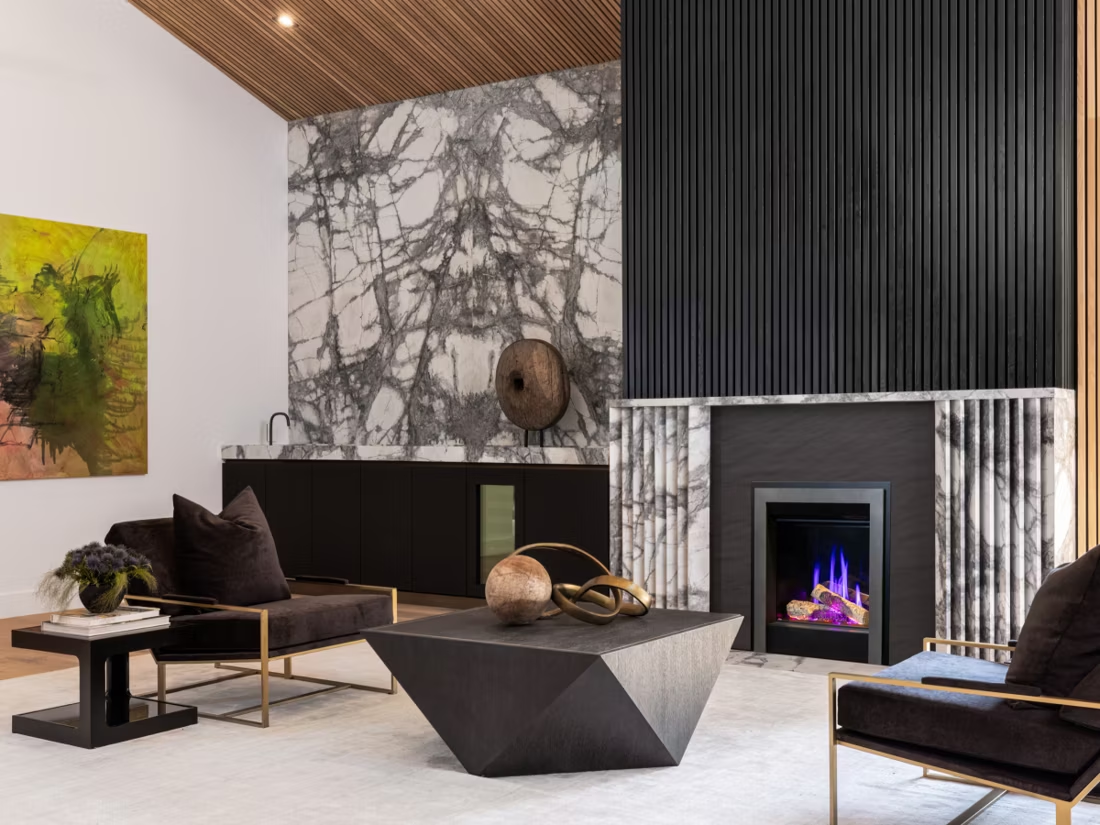
From the Seacoast saltboxes of Hampton and Rye to the colonials of Derry and Salem, electric is the fastest way to add zone heat and real flame to a Rockingham County home without touching the chimney. Find the right unit and connect with a trusted local dealer.
Every Project Starts From One of These Five Situations
Warmth without the venting problem.
Rockingham County runs from the Seacoast towns of Hampton, Rye, and Seabrook inland to Derry, Salem, and Windham near the Massachusetts line—nearly 100,000 people spread across a mix of coastal cottages, dense village centers, and pre-1950 Capes and saltboxes. At climate zone 5A with a long, cold winter heating season and winter lows averaging 15°F, this is real New England cold, and plenty of homes here still lean on wood or oil for primary heat. But a large share of the county's older housing stock has a chimney that's unlined, undersized, or simply not there—and that's exactly where electric fireplaces have found their footing.
An electric insert or built-in unit doesn't need a flue, a gas line, or combustion air—which makes it the practical answer for condos along Hampton Beach with association bylaws against wood burning, rental units in Portsmouth and Exeter, finished basements in Salem and Windham, and any home where opening up a wall for venting isn't realistic. Electric service in the county splits between Eversource, which covers most of the inland towns, and Unitil, which serves much of the Seacoast including Exeter, Hampton, and Seabrook—worth knowing before you size a unit, since rate structures differ. Either way, a properly matched electric fireplace delivers real supplemental warmth and genuine flame appearance with none of the venting or fuel-storage headaches of wood or gas.
Three steps. No salesperson until you're ready.
Tell us about your project
Your zip code, your situation, and the fuel you're leaning toward—or let the answers point you to one.
See what's actually available
The brands dealers within 100 miles genuinely carry—real options, never a catalog mirage.
Get your dealer & Project Guide
A trusted local dealer, plus the free Project Guide & Parts List that names every component of the job.
Frequently Asked Questions
How much does an electric fireplace installation cost in Rockingham County?
A plug-in electric fireplace or freestanding stove that runs off a standard 120-volt outlet typically costs $150 to $1,000 for the unit itself, with no installation labor required beyond plugging it in. A built-in electric insert or wall-mounted unit that needs a dedicated circuit generally runs $1,500 to $4,000 installed, including a licensed electrician's time to run the new circuit. Compare that to the $4,500 to $11,000 a wood or gas project can run in this county once chimney work or gas line extensions are factored in, and it's easy to see why electric is often the choice for a fast supplemental-heat upgrade in an older Rockingham County home.
What size electric fireplace do I need for my home?
Sizing depends on the room, not the whole house—most electric fireplaces are rated to comfortably heat 400 to 1,000 square feet as supplemental zone heat, which fits well with how they're used in Rockingham County: warming a Portsmouth living room, a finished basement in Windham, or a sunroom addition in Exeter, rather than replacing a home's primary heat source. Given the county's long, cold winter heating season and winter lows around 15°F, don't expect an electric unit to carry a drafty older Cape through a January cold snap on its own. A local dealer can walk through your room's square footage, insulation, and existing heat source to recommend the right BTU output.
Do I need a permit to install an electric fireplace in Rockingham County?
A plug-in unit that uses an existing outlet typically doesn't require any permit. A built-in insert or wall-mounted unit that needs a new dedicated circuit does require an electrical permit in most Rockingham County towns—Derry, Salem, Londonderry, Portsmouth, and the rest each handle this through their own building department, and a licensed electrician pulling the permit is standard practice. There's no gas line, no venting, and no chimney inspection involved, which is a big part of why electric projects move faster than wood or gas conversions here.
Can an electric fireplace serve as my primary heat source?
Not realistically, and it's worth being honest about that. With a long, cold winter heating season and winter lows averaging 15°F, electric resistance heat is expensive to run as a whole-home primary source across a Rockingham County winter. Most homeowners here use electric fireplaces for supplemental zone heat—taking the chill off a specific room—or purely for the ambiance of a realistic flame, often alongside a cold-climate heat pump system, which has become increasingly common in the county's newer construction and retrofits.
What's the difference between an electric fireplace, insert, and mantel package?
An electric fireplace insert is designed to slide into an existing masonry or zero-clearance firebox opening, which makes it a popular retrofit for Rockingham County homes with an old, drafty wood fireplace they no longer want to burn. A built-in electric fireplace is framed into a wall during a remodel or new construction, similar to how a gas unit would be installed but without any venting requirement. A mantel package pairs a freestanding or wall-mount electric unit with a surrounding mantel and hearth surface for homes without any existing fireplace opening at all—common in condos and newer builds around Salem and Londonderry.
What's the best electric fireplace for a Rockingham County home?
Look for units with realistic LED flame technology from brands like Dimplex, Napoleon, or Amantii—the flame quality varies significantly between budget and mid-tier models, and it's the main thing people notice day to day. For a fireplace insert going into an existing masonry opening in an older Portsmouth or Exeter home, measure the firebox carefully since older openings run non-standard sizes. For supplemental heat in a finished basement or addition, prioritize a model with a higher wattage heater core rather than just flame appearance. A local dealer can match flame style, heater output, and opening size to your specific room.
How much maintenance does an electric fireplace need?
Very little compared to wood or gas. There's no chimney to sweep, no annual gas line inspection, and no ash or soot cleanup. Maintenance is mostly dusting the unit, occasionally cleaning the glass front, and replacing LED flame bulbs when they eventually dim after years of use—most modern units use long-life LEDs rated for 20,000+ hours. For Rockingham County homeowners who've dealt with annual chimney sweeps on an old wood-burning fireplace, this is one of the biggest appeals of switching to electric.
Will my electric fireplace work during a power outage?
No—and this is an important limitation to plan around. Electric fireplaces require power to run both the flame effect and any heater function, so during a Nor'easter or ice storm that knocks out power along the Seacoast or inland in Rockingham County, an electric unit goes dark along with everything else. If backup heat during outages matters for your household, a wood stove or a gas unit with a battery-backed ignition system is the better choice for that role, with electric reserved for everyday supplemental warmth and ambiance.
Electric vs. gas or wood—which is right for my home?
Wood and gas both deliver real heat output and, in wood's case, work without electricity at all—genuinely useful given how often Rockingham County loses power in winter storms. But both require a chimney, venting, or gas line, along with the permits and installation cost that come with it. Electric skips all of that: no venting, minimal permitting, and a fraction of the installation cost, in exchange for lower heat output and total dependence on grid power. For an older Hampton or Rye home with a compromised chimney, a condo association that restricts burning, or simply a homeowner who wants ambiance and a little supplemental warmth without construction, electric is usually the practical answer.
Can I put a TV above my fireplace?
Yes—with an asterisk. Fireplaces are hot and TVs don't like heat. Either put a mantel between them to deflect rising warmth, or choose a fireplace with heat-management technology that creates a cool zone on the wall above—the wall stays around 125 degrees, barely warm, while the room still gets full heat. If you like clean lines and don't want a mantel, heat management is the answer.
How much does an electric fireplace cost to run?
With the heater on, a typical unit draws about 1,500 watts—at average electric rates that's roughly 20 cents an hour. Run the flame effect alone and it costs pennies; the flames are LED-driven and use about as much power as a light bulb. There's no pilot light, no fuel delivery, and essentially no maintenance.
How much should I budget for a fireplace?
For an average home—covering the fireplace, the vent pipe, and basic installation—a budget between $3,900 and $5,500 gives you a lot of options across wood, gas, and pellet. By the time you add finish work, gas line, and electrical, the average complete installation lands between $5,000 and $12,000 all-in. In a remodel or new build, a good rule is to put about 2.5% of the total project cost toward the fireplace.
What is an in-home preview and do I need one?
It's a visit where a hearth professional measures your space, confirms the model you picked actually works in your home, and walks the specs—framing, gas line, venting, finish work—before anything is ordered. Some details you just can't know until you see the house. Never make a down payment without one; it's the single most-skipped step that burns buyers.
Stove and Fireplace Dealers in Rockingham County
Listings include WhyFire partner dealers, dealers we have verified as authorized for the brands we recommend, and established local businesses that carry hearth products. Every listing shows which one it is. The ones marked Preferred run on WhyFire's software, so they can show you real pricing and book your appointment right here. No manufacturer pays for placement. How we verify dealers →
Drogold Dba A Merrie Sweepe Chimney Service
Home & Hearth
Jackson Fireplace
Northeast Distribution
The Stove Shoppe & Fences
The Fireplace Center
Architectural Fireplaces
Advantage Fireplace, Inc
Somersworth Stove Shop
Find your electric fireplace in Rockingham County.
Tell us about your room, your circuit situation, and what you're hoping to add—warmth, ambiance, or both—and we'll match you with a trusted local dealer along with a free Project Guide & Parts List for your electric fireplace project.
Find Your Fireplace →