
Add Warmth to Any Room—No Chimney Required.
Zone heat and real-flame ambiance for Merrimack County homes—from downtown Concord to Franklin, Hooksett, Bow, and Pembroke—without a chimney, a gas line, or a cord of wood to split. Find the right unit and connect with a trusted local dealer.
Every Project Starts From One of These Five Situations
Real warmth, no venting, no combustion required.
Merrimack County sits in climate zone 6A with winter lows averaging 13°F and a heating season that runs long, stretching from fall well into spring—from the state capital in Concord out through Franklin, Hooksett, Bow, Pembroke, and the smaller towns toward the White Mountain National Forest permit lands to the north. This is hardwood country: maple, birch, beech, and oak stands that have made wood heat a genuine local tradition, with Forest Service cutting permits running about $20 per cord from May through October. Electric fireplaces don't compete with that tradition for whole-home heat, but they've become a common addition in a different role—supplemental warmth in a bedroom, a finished basement, a three-season porch, or an apartment or condo in downtown Concord where a chimney was never an option to begin with.
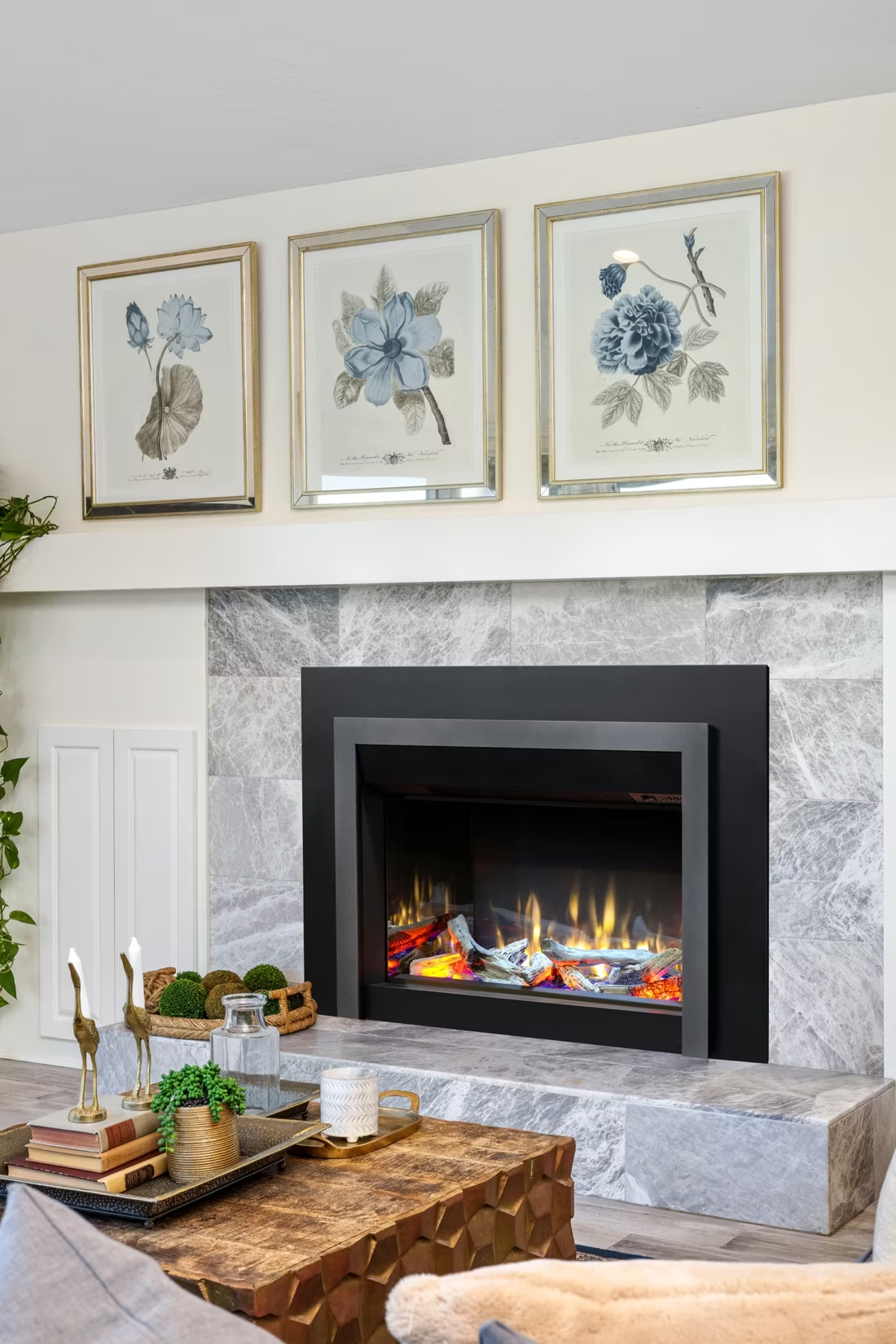
The appeal is straightforward: plug-in and built-in electric units produce instant heat and a realistic flame with no venting, no gas line, and in most cases no chimney sweep or annual inspection. For older Merrimack County homes with an unused masonry fireplace—common in Concord's historic neighborhoods—an electric insert drops into the existing opening for a fraction of the cost of a wood or gas conversion. The tradeoff is honest and worth knowing upfront: at roughly 1,500 watts, electric units are built for zone heating, not for carrying a home through a long, cold New Hampshire winter, and they go dark the moment the power does. Most Merrimack County homeowners who choose electric are pairing it with an existing furnace, heat pump, or wood stove rather than replacing one.
Three steps. No salesperson until you're ready.
Tell us about your project
Your zip code, your situation, and the fuel you're leaning toward—or let the answers point you to one.
See what's actually available
The brands dealers within 100 miles genuinely carry—real options, never a catalog mirage.
Get your dealer & Project Guide
A trusted local dealer, plus the free Project Guide & Parts List that names every component of the job.
Frequently Asked Questions
How much does an electric fireplace installation cost in Merrimack County?
A basic plug-in electric fireplace or insert runs $150 to $600 for the unit itself, and many homeowners simply plug it into an existing outlet with no installation cost at all. Built-in wall units, recessed installations, and inserts that require a dedicated 120V or 240V circuit typically run $400 to $1,500 installed once an electrician is involved. Older homes in Concord's historic districts and other pre-1960s housing stock around the county sometimes need a panel check or circuit upgrade first, which adds to the cost. Custom mantel surrounds and built-in cabinetry work push toward the higher end of that range.
Do I need a permit to install an electric fireplace in Merrimack County?
Plug-in electric fireplaces generally don't require a permit anywhere in Merrimack County since there's no combustion, no venting, and no chimney involved. If your installer is adding a new dedicated circuit or hardwiring a built-in unit, that work typically requires an electrical permit through your town's building department—Concord's Building Inspection Division handles this for city addresses, and surrounding towns like Franklin, Hooksett, and Bow issue their own electrical permits. Most licensed installers pull this permit as part of the job, so you rarely have to handle it yourself.
Will my electric fireplace work during a power outage?
No—and this is the single most important thing to understand before choosing electric as anything more than supplemental heat. Merrimack County sees its share of winter ice storms and downed lines, and an electric fireplace, like an electric-powered heat pump, simply won't run without power from Eversource. If backup heat during outages matters to you, plan on a wood stove, a gas unit with a battery-backed ignition, or a generator alongside your electric fireplace—not instead of a real cold-weather backup plan.
Who is an electric fireplace actually a good fit for?
Electric fireplaces make the most sense in Merrimack County for rooms that need supplemental heat and ambiance rather than primary heating capacity: a Concord condo or apartment without a chimney, a finished basement in Bow or Pembroke, a home office or three-season addition, or a bedroom that runs cold relative to the rest of the house. They're also a common choice for renters and for historic Concord homes where an old masonry fireplace sits unused—an electric insert restores the look and adds real warmth without touching the chimney. If you're heating a whole house through a Merrimack County winter, pair the electric unit with your existing furnace, heat pump, or wood stove rather than relying on it alone.
Can I convert an existing masonry fireplace to electric?
Yes, and it's one of the most popular electric projects in the county's older housing stock, particularly in Concord neighborhoods with original brick fireplaces. An electric insert slides into the existing firebox opening and plugs in or hardwires to a nearby circuit—no liner, no venting, and no chimney work required. Installed cost typically runs $600 to $1,800 depending on the insert's size and whether new wiring is needed to reach the fireplace opening. Many homeowners choose this route specifically because it's dramatically cheaper than a gas or wood conversion into the same masonry opening, even though it won't heat the room the way a wood insert would on a 13°F night.
What does it cost to run an electric fireplace in Merrimack County?
Most electric fireplace inserts and stoves draw about 1,500 watts on the heat setting. At current Eversource residential rates, that works out to roughly $0.30 to $0.40 per hour of heater use—reasonable for warming up a bedroom or den in the evening, but expensive as a stand-in for whole-house heat across a long, cold New Hampshire winter. Most local homeowners run their electric unit for a few hours a day in a specific room rather than leaving it on as a primary heat source.
Electric vs. wood—which is right for my Merrimack County home?
Wood remains the deeper local tradition here, backed by maple, birch, beech, and oak stands and White Mountain National Forest cutting permits running about $20 per cord from May through October—and it keeps working when the power doesn't, which matters through a Merrimack County winter. Electric offers instant flame and heat with none of the splitting, stacking, ash cleanup, or annual chimney sweep that wood requires, but it depends entirely on the grid and costs more per BTU to run. Many county homeowners land on both: a wood stove or insert for primary heat and outage backup, and an electric unit for ambiance and zone heat in a room the wood stove doesn't reach.
What size electric fireplace do I need?
Electric fireplace heaters are built for spot and zone heating rather than whole-room heat loads the way a wood or gas appliance is sized. A typical 1,500-watt unit produces roughly 4,000 to 5,000 BTU—enough to noticeably warm a bedroom, den, or finished basement room in the 300 to 600 square foot range, especially with the door closed. In a 6A climate with winter lows averaging 13°F, don't expect an electric unit to carry a larger open floor plan on its own; size it to the specific room you want warmed and let your furnace or heat pump handle the rest of the house.
Are electric fireplaces cleaner or safer than wood or gas in Merrimack County?
Merrimack County doesn't have the wildfire smoke or winter inversion concerns that drive air quality rules in some parts of the country, so this isn't a major local selling point the way it is elsewhere. That said, electric units do produce zero combustion byproducts, need no chimney sweep or annual gas inspection, and carry none of the carbon monoxide risk that comes with improperly vented combustion appliances. For homeowners who want a real-flame look with the fewest ongoing maintenance and safety checkpoints, electric is the simplest option on the table—you're trading some heat output and outage resilience for that simplicity.
Can I put a TV above my fireplace?
Yes—with an asterisk. Fireplaces are hot and TVs don't like heat. Either put a mantel between them to deflect rising warmth, or choose a fireplace with heat-management technology that creates a cool zone on the wall above—the wall stays around 125 degrees, barely warm, while the room still gets full heat. If you like clean lines and don't want a mantel, heat management is the answer.
Does an electric fireplace need a vent or chimney?
No—that's its superpower. An electric fireplace needs a wall and an outlet, period. No vent pipe, no gas line, no clearances to design around, which is why it works in bedrooms, offices, apartments, and walls where venting a gas or wood unit would be impractical or impossible. Installation is typically the simplest and least expensive of any fireplace type.
Can I install a fireplace myself?
If you're putting a fire in your house on purpose, it's best to work with an expert. Unless you're genuinely experienced in framing, gas line, vent pipe, and the national code on clearances to combustibles, have a professional do it—and ideally the same company that sells you the fireplace, so warranty, service, and liability all live under one roof.
Does a fireplace add value to my home?
On average, a fireplace adds back to the home about the same amount you spent installing it. Add the monthly savings from heating the rooms you actually use instead of the whole house—often hundreds of dollars a year—and the value case is strong before you even count what a fire does for how your family uses the room.
Stove and Fireplace Dealers in Merrimack County
Listings include WhyFire partner dealers, dealers we have verified as authorized for the brands we recommend, and established local businesses that carry hearth products. Every listing shows which one it is. The ones marked Preferred run on WhyFire's software, so they can show you real pricing and book your appointment right here. No manufacturer pays for placement. How we verify dealers →
Abundant Life
Armstrong
The Stove Shoppe- Manchester
Fireside Living- Bedford
Outdoor Enhancements
Find your electric fireplace in Merrimack County.
Tell us a bit about your home and room, and I'll match you with a trusted local Merrimack County dealer and send over a free Project Guide & Parts List—the exact unit, wiring needs, and installed cost for your space, no big-box guesswork.
Find Your Fireplace →