
Real ambiance, zero chimney work.
For Franklin homes without a chimney, or rooms that just need supplemental warmth, an electric fireplace plugs in and goes to work the same day. Find the right unit and get matched with a trusted local dealer.
Every Project Starts From One of These Five Situations
Zone heat for a cold Merrimack County winter.
Franklin sits at 400 feet where the Winnipesaukee and Pemigewasset rivers meet, in a climate zone (6A) with a heating season about as demanding as Burlington, Vermont's—a long, cold winter that keeps furnaces running for months. Winter lows here average around 9°F, and the old mill housing stock around downtown Franklin often means rooms without an existing chimney or flue. That's exactly where electric fireplaces earn their place: no venting, no gas line, no masonry work, just an outlet or a dedicated circuit.
Electricity in Franklin comes from either Public Service Co. of NH (Eversource) or the New Hampshire Electric Cooperative, and residential rates locally run from about $0.187 to $0.236 per kWh—on the higher end nationally. That makes electric fireplaces a smart supplemental heat and ambiance choice rather than a primary furnace replacement: they're excellent for a finished basement, a bedroom, a rental unit, or an apartment above one of Franklin's older commercial buildings where running a chimney simply isn't possible. Most homeowners here still lean on oil, propane, or wood for whole-house heat and add electric for the rooms that need a boost, or the look of a fire without the upkeep.
Three steps. No salesperson until you're ready.
Tell us about your project
Your zip code, your situation, and the fuel you're leaning toward—or let the answers point you to one.
See what's actually available
The brands dealers within 100 miles genuinely carry—real options, never a catalog mirage.
Get your dealer & Project Guide
A trusted local dealer, plus the free Project Guide & Parts List that names every component of the job.
Frequently Asked Questions
How much does an electric fireplace installation cost in Franklin?
Most electric fireplace installations in Franklin run $300 to $1,500. A plug-in insert or wall-mount unit on a standard 120V outlet sits at the low end—often a same-day DIY or a quick electrician visit to confirm the circuit can handle the draw. Built-in models or larger units that need a dedicated 20-amp circuit run higher, since that requires an electrician to run new wiring, and sometimes a mantel or surround built around the unit. There's no chimney, flue, or gas line to budget for, which is the biggest cost difference versus wood or gas options in town.
Will an electric fireplace heat my whole house in a Franklin winter?
No, and it's worth being direct about that. Most electric fireplaces max out around 1,500 watts—roughly 5,000 BTU of supplemental heat, enough to comfortably warm a single room but nowhere near enough for a New Hampshire winter with lows averaging 9°F and a long, demanding heating season stretching over many cold months. Think of it as zone heat for the room you're actually in, not a replacement for your furnace, boiler, or wood stove. Local homeowners typically pair one with existing oil, propane, or wood heat rather than relying on it alone.
Do I need a permit to install an electric fireplace in Franklin?
Usually not for a plug-in unit—there's no combustion, no venting, and no building code trigger. If you're installing a built-in model that requires a new dedicated circuit, an electrician will need to pull an electrical permit through the City of Franklin, since any new circuit work falls under the state electrical code regardless of the appliance. Ask whichever local dealer you're working with whether your chosen model needs new wiring before you budget for the install.
What does it cost to run an electric fireplace given local electricity rates?
At Franklin's typical residential rates of roughly $0.187 to $0.236 per kWh, a 1,500-watt unit running five hours an evening costs somewhere between $1.40 and $1.80 per day, or roughly $40 to $55 a month of regular evening use. That's meaningfully cheaper than heating an entire room with oil or propane, but because PSNH and NH Electric Co-op rates run higher than the national average, it's worth checking your specific utility and rate plan before assuming electric heat is the cheap option—for whole-room primary heat, wood or a well-tuned propane unit is often still less expensive per BTU here.
What's the difference between an electric fireplace, insert, and wall-mount unit?
A freestanding electric fireplace stands on its own like a piece of furniture and can go anywhere with an outlet. An electric insert is built to slide into an existing masonry or wood-fireplace opening, letting you keep the look of an old Franklin farmhouse hearth while retiring the chimney. A wall-mount unit hangs flush like a flat-screen TV and is popular in condos and apartments where floor space is tight. For Franklin's mix of older mill homes with existing fireplace openings, inserts are a common retrofit; newer builds and rentals tend toward wall-mounts or freestanding units.
What's the best electric fireplace for a New Hampshire home?
Look for models with realistic flame technology—brands like Dimplex and Napoleon build units with layered LED and mirror effects that read as a real fire rather than a projector trick, and most offer a heater on/off toggle so you can run the flame year-round for ambiance without heating an already-warm room in July. For Franklin's older housing stock, an insert-style unit sized to fit an existing fireplace opening is usually the cleanest retrofit; a local dealer can measure your opening and confirm clearances.
Is an electric fireplace a good fit for an apartment or older mill building in Franklin?
Yes—this is one of the strongest use cases for electric heat in Franklin. A lot of the city's housing stock is older mill-era construction, and many units lack a working chimney or the ability to add gas service. An electric fireplace needs nothing more than an outlet (or in some cases a dedicated circuit), which makes it one of the few fireplace options a renter or condo owner can install without touching the building's structure or venting.
How much maintenance does an electric fireplace need?
Very little compared to wood or gas. There's no chimney to sweep, no gas line to inspect, and no combustion byproducts to worry about. Maintenance is mostly dusting the unit, occasionally replacing an LED module if one dims after years of use, and keeping the vents on the back of the unit clear of dust so the internal fan doesn't strain. Most units carry a manufacturer's warranty on the heating element and lights that runs several years.
Electric vs. wood—which makes more sense for my Franklin home?
Wood has deep roots here—Merrimack County's maple, birch, beech, and oak are all commonly burned locally, and Forest Service permits through the White Mountain National Forest run about $20 per cord during the May-to-October cutting season. Wood also keeps working during a power outage, which matters given how cold Franklin winters get. Electric can't do that—it needs grid power to run at all. But electric wins on convenience: no cutting, stacking, ash, or chimney maintenance, and it's the only realistic option for a home or apartment without a flue. A lot of Franklin homeowners end up with both: wood or propane for real heat and outage backup, electric for the rooms where ambiance and easy zone heat matter more.
Do electric fireplaces actually produce heat?
Yes—most put out around 4,800–5,000 BTUs from a standard outlet, which comfortably warms a bedroom, office, or den as a comfort-zone heater. What they won't do is carry a whole house the way wood, gas, or pellet can. Think of electric as ambiance-first with honest supplemental heat: flames on with no heat in July, flames plus warmth in January.
Can I put a TV above my fireplace?
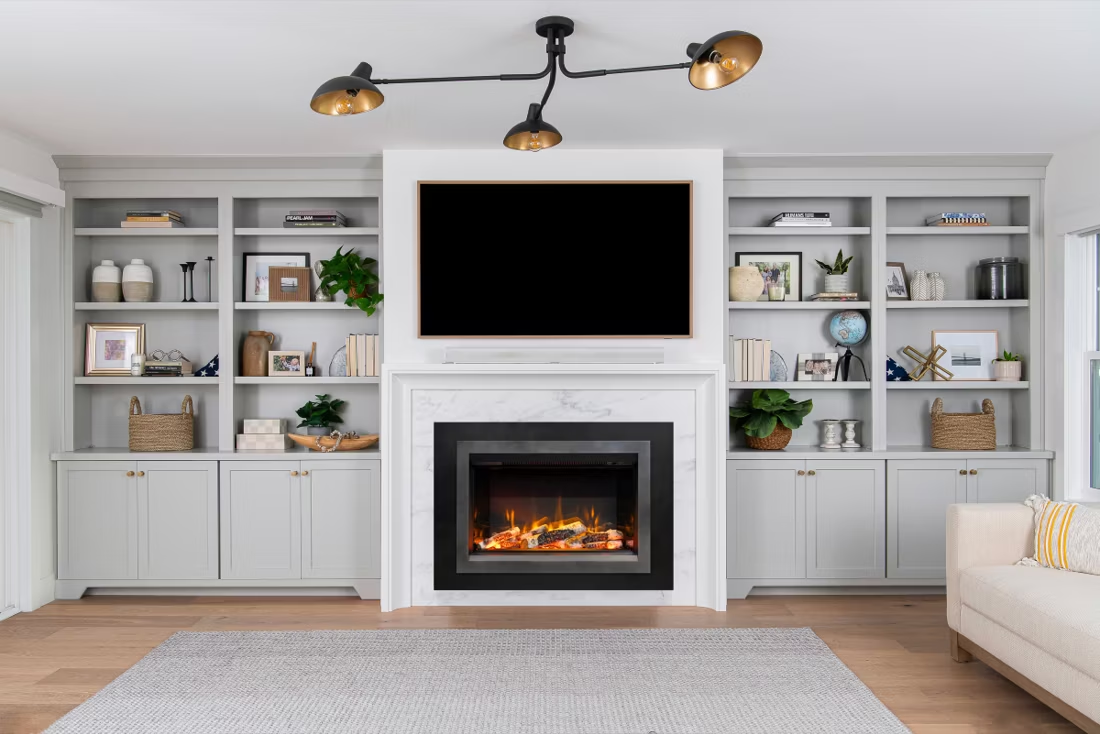
Yes—with an asterisk. Fireplaces are hot and TVs don't like heat. Either put a mantel between them to deflect rising warmth, or choose a fireplace with heat-management technology that creates a cool zone on the wall above—the wall stays around 125 degrees, barely warm, while the room still gets full heat. If you like clean lines and don't want a mantel, heat management is the answer.
Can a fireplace actually lower my heating bill?
Yes—by creating a comfort zone. A furnace heats every square foot of the house just to warm the one room you're in; a gas fireplace on low burns roughly a sixth of the gas a typical furnace does. Set the furnace around 55–60 degrees as a baseline, then heat the rooms your family actually uses. Families who heat this way commonly save $20–$60 a month.
Can I install a fireplace myself?
If you're putting a fire in your house on purpose, it's best to work with an expert. Unless you're genuinely experienced in framing, gas line, vent pipe, and the national code on clearances to combustibles, have a professional do it—and ideally the same company that sells you the fireplace, so warranty, service, and liability all live under one roof.
Nearby Dealers
Hearth shops serving Franklin and the surrounding area. Every listing shows whether it is a WhyFire partner, a dealer we have verified as authorized for the brands we recommend, or a local business carrying hearth products. No manufacturer pays for placement. How we verify dealers →
Outdoor Enhancements
Abundant Life
Electric Service in Franklin
An electric fireplace's heater draws about 1,500 watts—pennies per hour at local rates.
Public Service Co Of Nh
New Hampshire Elec Coop Inc
Find your electric fireplace in Franklin, NH.
Tell us a bit about your home and we'll put together a free Project Guide & Parts List—the right unit, the electrical requirements, and a trusted local dealer matched to your Franklin address.
Find Your Fireplace →