
Warm Up Without Adding to Reno's Winter Smoke.
Clean, instant heat for Truckee Meadows winters—no wood permits, no ash, no smoke on inversion days. Find the right gas unit and connect with a trusted local dealer.
Every Project Starts From One of These Five Situations
Clean heat for a high-desert basin that traps its own smoke.
Reno sits at nearly 4,920 feet in the Truckee Meadows, a valley basin that traps cold air and pollutants during winter temperature inversions. With a fairly long, chilly heating season and average winter lows around 27°F, the city needs real heat through much of the year—but its geography also makes wood smoke a persistent air-quality problem. Washoe County periodically calls Mandatory No-Burn Days during inversion events, and wildfire smoke adds to the concern most summers and falls. That combination is a big part of why wood-burning appliances have fallen out of favor here while gas has become the default choice for both new construction and fireplace upgrades.
Sierra Pacific Power, part of NV Energy, serves natural gas and electricity through most of central Reno and Sparks, though some outlying zip codes—Verdi (89439), Cold Springs (89508), and parts of south Reno (89521)—sit outside the natural gas footprint and rely on propane instead. Either fuel source delivers the same advantage: instant, adjustable heat with no wood smoke to worry about on a red-flag or inversion day, and a fireplace that keeps working with the flip of a switch even if you're above the smog line at 5,000 feet.
Three steps. No salesperson until you're ready.
Tell us about your project
Your zip code, your situation, and the fuel you're leaning toward—or let the answers point you to one.
See what's actually available
The brands dealers within 100 miles genuinely carry—real options, never a catalog mirage.
Get your dealer & Project Guide
A trusted local dealer, plus the free Project Guide & Parts List that names every component of the job.
Frequently Asked Questions
How much does a gas fireplace installation cost in Reno?
Most gas fireplace installations in Reno run in the $4,000 to $10,000 range, depending on the unit, the venting path, and whether new gas line work is needed. A direct-vent insert going into an existing masonry fireplace with gas already run to it lands on the lower end. New construction or a fresh direct-vent fireplace requiring framing and a new gas line sits in the middle to upper end. One detail specific to Reno's elevation: appliances rated for sea-level combustion often need a high-altitude orifice kit or derated input above 4,000 feet, and local installers factor that into the quote so the unit actually performs at nearly 5,000 feet instead of running rich or underfired.
Can I convert my existing wood fireplace to gas in Reno?
Yes, and it's one of the most common projects for older Reno homes built in the 1960s through 1980s with open masonry fireplaces. A gas insert typically uses the existing chimney with a stainless liner, running $4,000 to $9,000 depending on the model and whether new gas piping is required. This conversion has extra appeal locally because it removes the fireplace from Washoe County's Mandatory No-Burn Day restrictions entirely—a gas insert can run on inversion days when a wood-burning appliance in the same house legally cannot.
Do I need natural gas, or should I plan on propane?
It depends on where you are in the valley. Sierra Pacific Power's natural gas lines cover most of central Reno and Sparks, so homes there typically just tap into existing service. Outlying areas—Verdi, Cold Springs, Stead, and stretches of south Reno near 89521—often fall outside the gas main and use propane instead, either from an existing tank or a new tank set by a local propane supplier. Nearly every gas fireplace model can be configured for either fuel; your installer sets the correct orifice and regulator for whichever you have.
Will my gas fireplace work during a power outage?
Most modern gas fireplaces will, which matters in Reno given the wind events that periodically knock out Sierra Pacific Power service during fall and winter storms. Units with IPI (intermittent pilot ignition) run on a small battery backup that kicks in automatically when power drops, so the fireplace lights and operates normally off batteries. Valor fireplaces go a step further—their pilot assembly generates its own electricity through a thermocouple, so there's no battery to remember or replace. Ask your local dealer about the ignition system on any unit you're considering if backup heat during an outage matters to you.
What's the difference between a gas fireplace, gas insert, and gas stove?
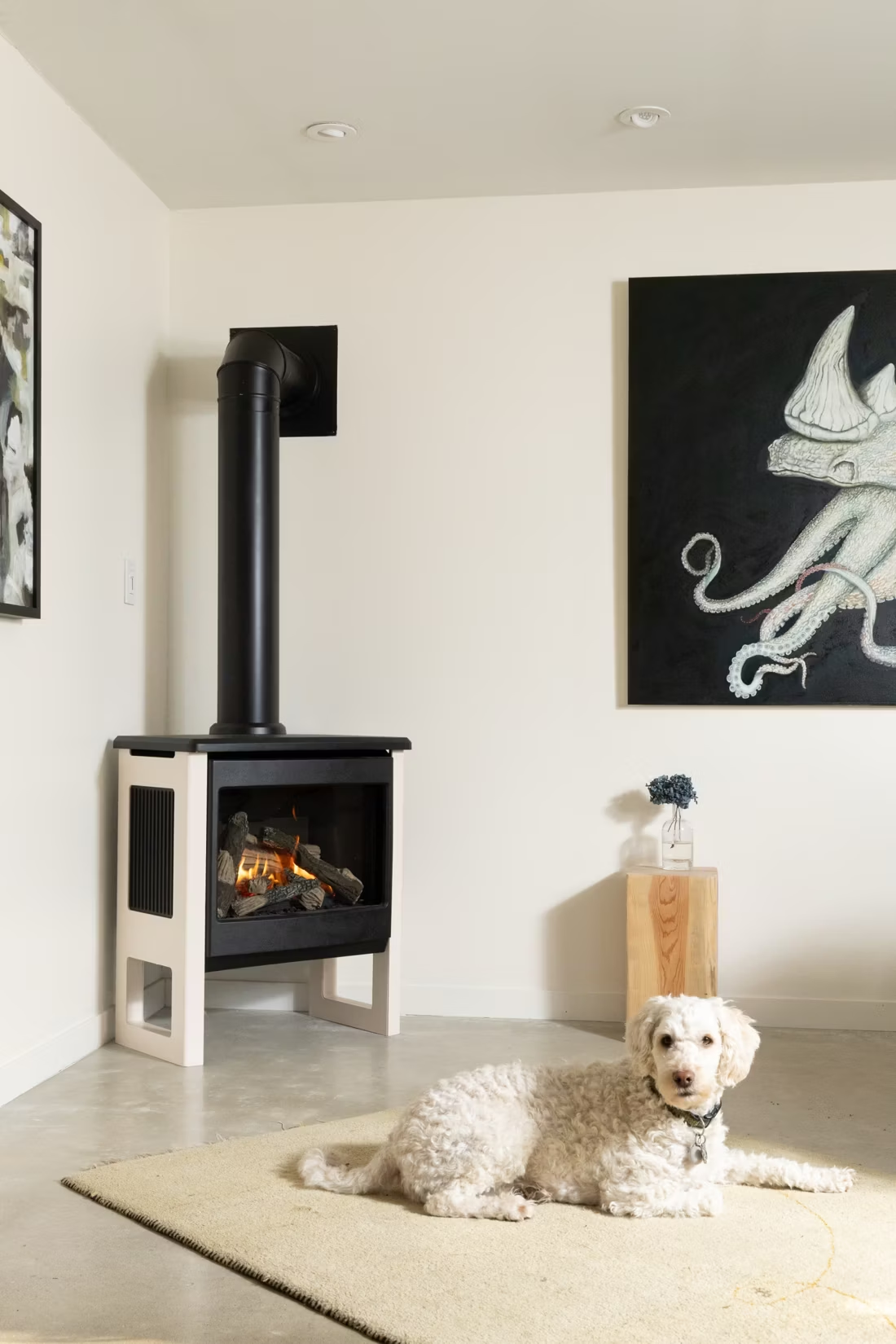
A gas fireplace is a fully built-in unit framed into a wall, typically chosen for new construction or a remodel. A gas insert is sized to slide into an existing masonry firebox, converting an old wood-burning fireplace into a sealed, high-efficiency gas unit that vents through the existing chimney. A gas stove is a freestanding cast-iron or steel unit that sits on the floor like a wood stove but burns gas. For the many Reno ranch and split-level homes built with a traditional masonry fireplace, an insert is usually the straightforward upgrade; new rooms without an existing hearth are better suited to a built-in fireplace or freestanding stove.
Do I need a permit to install a gas fireplace in Reno?
Yes. Inside city limits, that's the City of Reno Building & Safety Division; in unincorporated Washoe County, it's the Washoe County Community Services Department. Both require a building permit for the fireplace itself and a separate gas permit for any new or modified gas piping, which has to be run by a licensed gas-fitter. Most hearth retailers handle this paperwork as part of the installation, coordinating the gas trade, venting, and inspection so you're not managing multiple contractors yourself.
What's the difference between vented and vent-free gas fireplaces, and does Reno's elevation matter?
Vented (direct-vent) gas fireplaces pull combustion air from outside and exhaust it back outside through a sealed pipe—they're the cleanest and most universally code-compliant option. Vent-free units burn directly into the room air and are legal in Nevada but come with strict room-sizing and oxygen-depletion-sensor requirements. Reno's elevation adds a wrinkle either way: at nearly 4,920 feet, air is thinner and appliances calibrated for sea level can burn incorrectly without a high-altitude kit or a factory derate. A local installer familiar with the Truckee Meadows will already account for this—it's not something a big-box installer unfamiliar with mountain-west elevations always catches.
How often should my gas fireplace be serviced?
Plan on an annual inspection, ideally before the heating season ramps up in October or November. A technician checks the burner, pilot assembly, venting, and gas connections, and cleans the glass and interior—a much lighter task than wood-stove chimney sweeping, but still important for safety and efficiency. Local gas appliance service techs typically charge $150 to $250 for this visit, and it's a good time to confirm the battery backup in your ignition system is still holding a charge.
Gas vs. wood—which makes sense for a Reno home?
Wood heat has deep roots in the Great Basin—pinyon, juniper, and sagebrush have warmed homes here for generations, and Forest Service permits through the Humboldt-Toiyabe National Forest still run as little as $10 a cord. But wood-burning appliances are increasingly impractical inside the Truckee Meadows itself: Washoe County's winter inversion pattern triggers Mandatory No-Burn Days that shut down wood stoves and open fireplaces exactly when you'd want to use them, and wildfire smoke compounds the problem most falls. Gas sidesteps all of that—it runs on inversion days, produces no smoke to add to the basin's air quality problems, and delivers instant, adjustable heat. For most homes inside city limits, gas is the more livable choice; wood remains more common on rural, outlying parcels where curtailment rules don't reach.
Why is my open fireplace making my house colder?
Open fireplaces suck—literally. As the fire burns, it consumes air your furnace already paid to heat and pulls it out through the chimney, so the house is actually colder after the fire goes out than before you lit it. An insert fixes this: it seals the chimney, puts fixed glass across the front, and turns that hole in your house into a real heat source.
Is my gas fireplace wasting gas?
If it was installed more than 15 years ago, probably. Older gas fireplaces keep a standing pilot light burning all the time, and that little flame can cost a couple hundred dollars a year. Newer models use pilot-on-demand ignition—the pilot lights only when you use the fireplace and goes out when you turn it off.
What is an in-home preview and do I need one?
It's a visit where a hearth professional measures your space, confirms the model you picked actually works in your home, and walks the specs—framing, gas line, venting, finish work—before anything is ordered. Some details you just can't know until you see the house. Never make a down payment without one; it's the single most-skipped step that burns buyers.
Does a fireplace add value to my home?
On average, a fireplace adds back to the home about the same amount you spent installing it. Add the monthly savings from heating the rooms you actually use instead of the whole house—often hundreds of dollars a year—and the value case is strong before you even count what a fire does for how your family uses the room.
Nearby Dealers
Hearth shops serving Reno and the surrounding area. Every listing shows whether it is a WhyFire partner, a dealer we have verified as authorized for the brands we recommend, or a local business carrying hearth products. No manufacturer pays for placement. How we verify dealers →
Home Energy Experts
Fireplace Distributors Of Nv
Woodstove Dist Inc
Louie's Home Center- Dayton
Find your gas fireplace in Reno.
Tell us about your home and we'll put together a free Project Guide & Parts List—the exact fireplace, venting, and parts your Reno project needs—and match you with a trusted local dealer who can install it correctly at elevation.
Find Your Fireplace →