
Warmth Without the Smoke, Without the Wait.
Clean, instant zone heat for Truckee Meadows homes—no chimney, no wood, no inversion-day burn restrictions. Find the right unit and connect with a trusted local dealer.
Every Project Starts From One of These Five Situations
The smoke-free way to heat the Truckee Meadows.
Reno sits at nearly 4,920 feet in a high-desert basin where winter lows average around 27°F and the region logs a moderate heating season—noticeably milder than places like Bozeman or Duluth, but still cold enough that a lot of homes want supplemental heat in the bedrooms, home office, or converted garage. Reno's other complication is air: winter temperature inversions trap wood smoke over the valley floor, and Washoe County District Health Department issues burn restrictions on high-pollution days that apply to wood stoves and fireplaces. Wildfire smoke in late summer adds another layer of local air-quality pressure.
Electric fireplaces sidestep both issues entirely. There's no combustion, no particulate emissions, and no risk of getting shut down on a Yellow or Red burn day—an electric unit runs exactly the same whether the inversion is sitting over the valley or not. Powered by Sierra Pacific Power at roughly 14.5 cents per kWh, a electric fireplace is also one of the cheapest heating appliances to install: no chimney, no gas line, no venting, often just a standard 120V outlet. For zone heating a single room in a Somersett, Damonte Ranch, or older Old Southwest Reno home, that simplicity is the whole appeal.
Three steps. No salesperson until you're ready.
Tell us about your project
Your zip code, your situation, and the fuel you're leaning toward—or let the answers point you to one.
See what's actually available
The brands dealers within 100 miles genuinely carry—real options, never a catalog mirage.
Get your dealer & Project Guide
A trusted local dealer, plus the free Project Guide & Parts List that names every component of the job.
Frequently Asked Questions
What does it cost to run an electric fireplace in Reno?
At Sierra Pacific Power's residential rate of about $0.1452 per kWh, a typical electric fireplace heater running at 1,500 watts costs roughly 22 cents an hour to run at full heat output. Most units let you run the flame effect alone, without the heater, at 50-100 watts—closer to a penny or two an hour, which is popular in Reno for shoulder-season ambiance in September and October before real heating season starts. Compare that to running central HVAC to warm a whole house just to heat one occupied room, and the per-room cost advantage becomes clear.
Do I need a permit to install an electric fireplace in Reno?
A plug-in electric fireplace or a freestanding unit on a standard 120V outlet typically doesn't require a permit. Built-in wall units or recessed installations that involve new electrical wiring, a dedicated circuit, or cutting into an existing wall do require an electrical permit—through the City of Reno Building Division inside city limits, or the Washoe County Building Division for unincorporated areas like Verdi or Washoe Valley. Most local dealers who handle built-in installs will pull the permit as part of the job.
Will my electric fireplace work during a power outage?
No—this is the one honest tradeoff worth knowing before you buy. Electric fireplaces require power to run both the heater and the flame effect, so during a Sierra-front winter storm outage they go dark along with everything else. If backup heat during outages matters to you—and NV Energy transmission issues have caused multi-day outages in parts of Washoe County during past winter storms—a gas or wood option makes more sense as your primary or backup unit, with electric reserved for everyday zone heating and ambiance.
What's the difference between an electric fireplace, insert, and wall-mounted unit?
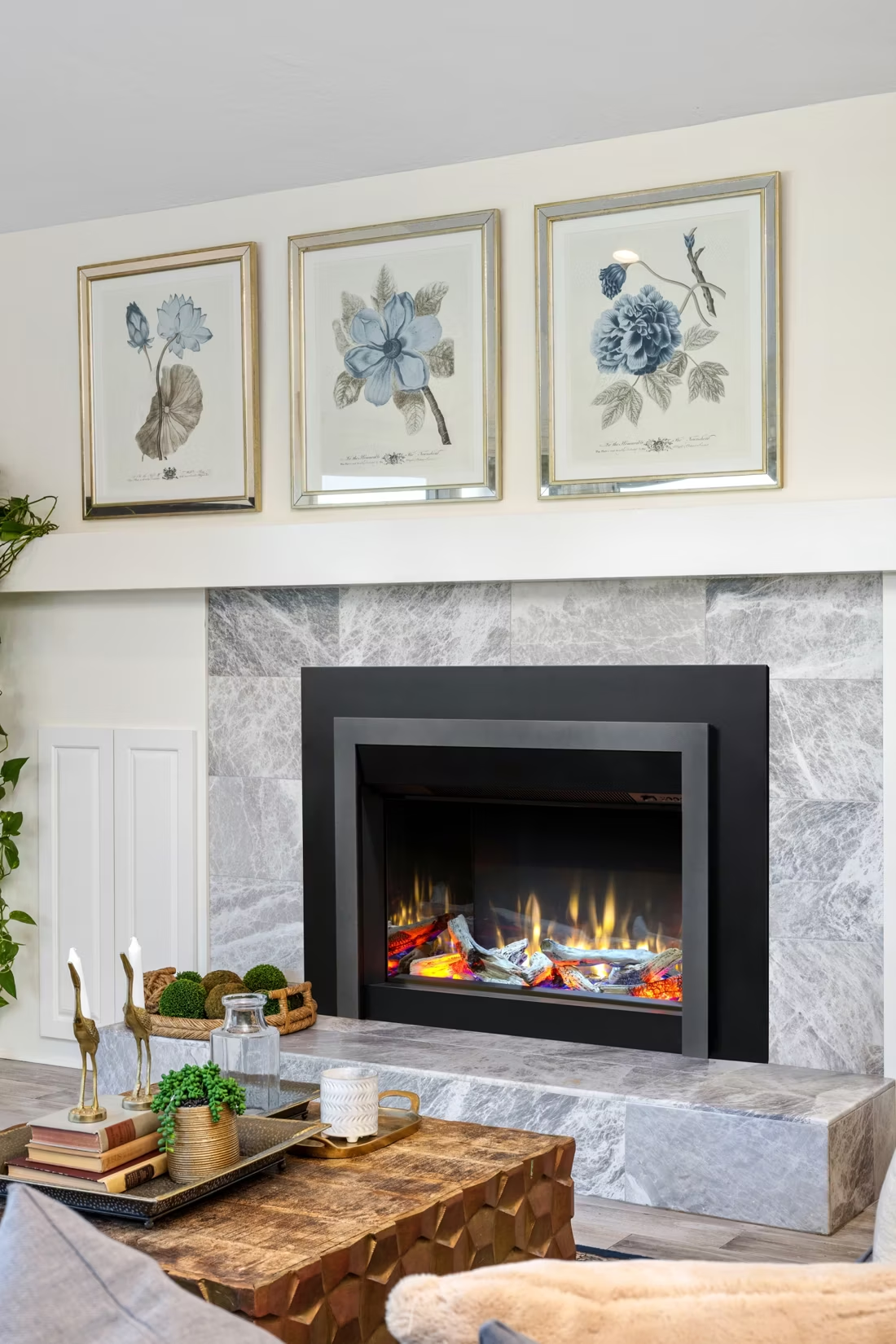
A freestanding electric fireplace looks like a stove or cabinet and can be placed almost anywhere near an outlet—popular in Reno apartments and rentals since it requires no modification to the unit. An electric insert is sized to slide into an existing masonry or wood-burning fireplace opening, which works well in older Old Southwest and Newlands neighborhood homes that have a fireplace but no interest in dealing with wood or chimney maintenance. A wall-mounted or built-in electric fireplace is recessed into a wall like a flat-screen TV and is common in newer Damonte Ranch and Spanish Springs construction where a linear, modern look is the goal. All three plug into a standard outlet unless you're going with a larger built-in that needs a dedicated circuit.
Can an electric fireplace be my main heat source in a Reno winter?
Generally no. With average winter lows around 27°F and a moderate heating season, Reno winters are cold enough that most electric fireplaces—which max out around 5,000-9,000 BTU—work best as supplemental zone heat for a single room rather than whole-home heating. They're excellent for taking the chill off a home office, guest room, or basement without running the furnace, or for older homes where one room runs consistently cold. For whole-home heat in Reno's climate, most households still rely on a gas furnace or heat pump as the primary system.
Are electric fireplaces allowed during Washoe County winter inversion burn restrictions?
Yes, without exception. Washoe County District Health Department's Yellow and Red burn restriction days target wood-burning devices—fireplaces, wood stoves, and fire pits—because of how much particulate they add to an already-trapped inversion layer over the valley. Electric fireplaces produce no combustion byproducts, so they're never subject to those restrictions. For Reno homeowners who want guaranteed heat on the coldest, smokiest days of winter, that's a real practical advantage over a wood-burning option.
What size electric fireplace do I need for my Reno home?
Most electric fireplaces are rated to heat 400-1,000 square feet, but that's under ideal conditions—a single closed-off room, not an open floor plan. For a bedroom or home office in a typical Reno home, a unit in the 750-1,500 watt range comfortably takes the edge off on a 27°F morning. For larger, more open spaces, don't count on the heater function to carry the whole room; size up for the visual impact and treat the heat output as a bonus rather than the primary plan. A local dealer can walk through your specific room dimensions and insulation before you buy.
Electric vs. gas fireplace—which is right for my Reno home?
Gas fireplaces put out real heat—typically 20,000-40,000 BTU—and can serve as genuine supplemental or even primary zone heat, plus most models keep working during a power outage with battery-backup ignition. Electric fireplaces cost far less to install since there's no gas line or venting involved, run on any outlet, and never trigger an inversion-day burn restriction, but they max out around 5,000-9,000 BTU and go dark in an outage. For a Reno homeowner who wants serious heat output and already has gas service, gas usually wins. For ambiance, easy installation in a rental or apartment, or a smoke-free unit that's never affected by an air quality alert, electric is the simpler and cheaper path.
How energy efficient is an electric fireplace compared to a space heater?
Functionally, an electric fireplace is a space heater with a flame-effect display built in—both convert electricity to heat at close to 100% efficiency at the point of use, so the running cost math is the same. At Sierra Pacific Power's roughly $0.1452 per kWh residential rate, a 1,500-watt unit costs about 22 cents an hour whether it's a bare utility heater or a furniture-grade electric fireplace. The real difference is that an electric fireplace looks like a permanent fixture rather than an appliance you tuck away in a closet each spring, which is why most Reno homeowners choose one for a room they use daily rather than for occasional supplemental warmth.
Can I put a TV above my fireplace?
Yes—with an asterisk. Fireplaces are hot and TVs don't like heat. Either put a mantel between them to deflect rising warmth, or choose a fireplace with heat-management technology that creates a cool zone on the wall above—the wall stays around 125 degrees, barely warm, while the room still gets full heat. If you like clean lines and don't want a mantel, heat management is the answer.
Does an electric fireplace need a vent or chimney?
No—that's its superpower. An electric fireplace needs a wall and an outlet, period. No vent pipe, no gas line, no clearances to design around, which is why it works in bedrooms, offices, apartments, and walls where venting a gas or wood unit would be impractical or impossible. Installation is typically the simplest and least expensive of any fireplace type.
Does a fireplace add value to my home?
On average, a fireplace adds back to the home about the same amount you spent installing it. Add the monthly savings from heating the rooms you actually use instead of the whole house—often hundreds of dollars a year—and the value case is strong before you even count what a fire does for how your family uses the room.
Can I install a fireplace myself?
If you're putting a fire in your house on purpose, it's best to work with an expert. Unless you're genuinely experienced in framing, gas line, vent pipe, and the national code on clearances to combustibles, have a professional do it—and ideally the same company that sells you the fireplace, so warranty, service, and liability all live under one roof.
Nearby Dealers
Hearth shops serving Reno and the surrounding area. Every listing shows whether it is a WhyFire partner, a dealer we have verified as authorized for the brands we recommend, or a local business carrying hearth products. No manufacturer pays for placement. How we verify dealers →
Home Energy Experts
Fireplace Distributors Of Nv
Woodstove Dist Inc
Louie's Home Center- Dayton
Electric Service in Reno
An electric fireplace's heater draws about 1,500 watts—pennies per hour at local rates.
Sierra Pacific Power Co
Find your electric fireplace in Reno.
Tell us a bit about your home and we'll put together a free Project Guide & Parts List—the right electric fireplace or insert for your space, plus a trusted local Reno dealer who can install it.
Find Your Fireplace →