
Consistent heat for Humboldt County's high desert winters.
Thermostat-controlled heat for the sagebrush flats and river valleys around Winnemucca—clean-burning, hopper-fed, and easier to source than cordwood in this stretch of northern Nevada. Find the right unit and connect with a trusted local dealer.
Every Project Starts From One of These Five Situations
Clean-burning heat for sagebrush country.
Humboldt County sits in Nevada's high desert basin-and-range country, with Winnemucca at roughly 4,300 feet and open sagebrush steppe stretching toward Paradise Valley and Golconda. With a winter heating load in the same range as Bismarck, ND—winters here run cold and dry, with average lows near 19°F and wind that cuts through poorly sealed older homes. Native fuelwood species like pinyon, juniper, and sagebrush wood are scattered and low-density compared to forested regions, which makes consistent cordwood supply harder to line up here than in a timbered county. That scarcity is a big part of why pellet appliances have found a real foothold in this part of Nevada.
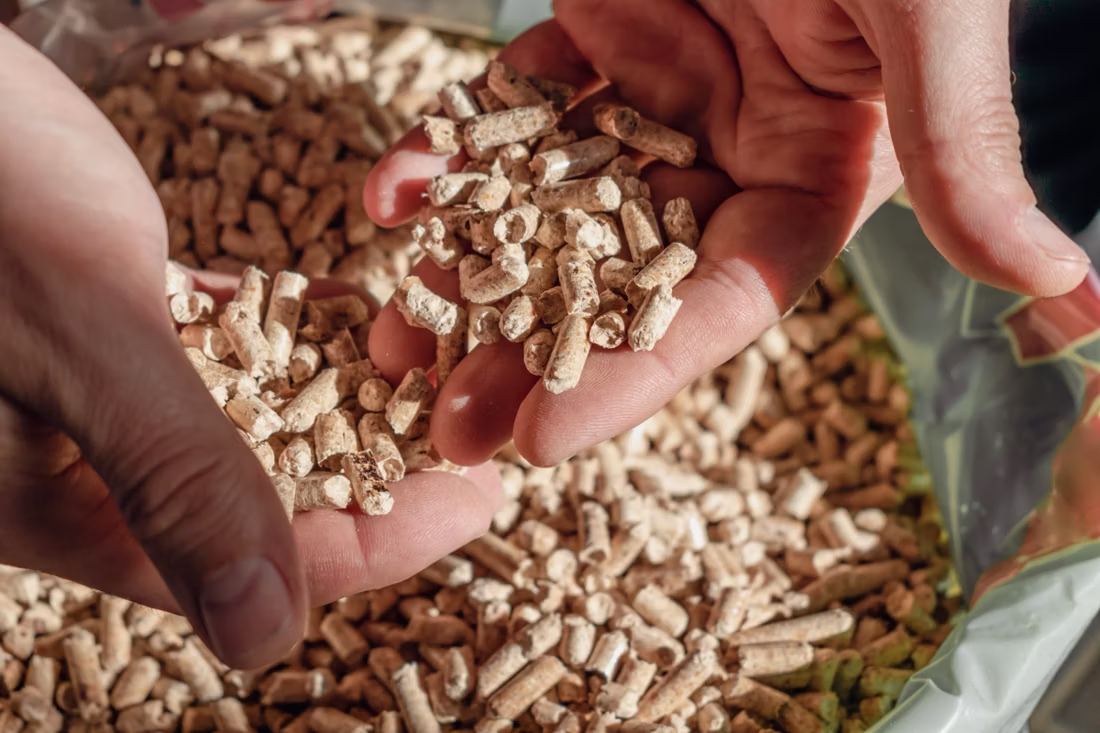
Bagged pellets from Bear Mountain, Lignetics, and Forest Energy are stocked through farm supply and hardware outlets serving Winnemucca and the surrounding ranch communities, so homeowners aren't dependent on cutting or hauling their own wood off open range. A pellet stove or insert also burns cleaner than an open wood fire, which matters when wildfire smoke settles into the valley during late summer and fall—less particulate output means one less strain on air quality during an already smoky stretch. The tradeoff is that pellet stoves need electricity to run the auger and blower, so rural homeowners on this side of the county should plan for a battery backup or generator if winter storms knock out power for more than a few hours.
Three steps. No salesperson until you're ready.
Tell us about your project
Your zip code, your situation, and the fuel you're leaning toward—or let the answers point you to one.
See what's actually available
The brands dealers within 100 miles genuinely carry—real options, never a catalog mirage.
Get your dealer & Project Guide
A trusted local dealer, plus the free Project Guide & Parts List that names every component of the job.
Frequently Asked Questions
How much does a pellet stove installation cost in Humboldt County?
Most pellet stove and insert installations in Humboldt County run in the neighborhood of $3,500 to $7,000, depending on the unit, whether it's a freestanding stove or an insert going into an existing masonry fireplace, and how much venting work is involved. A straightforward insert conversion using an existing chimney with a liner tends to land on the lower end. New construction or a fresh installation in a home with no existing fireplace or vent path runs higher once wall penetration and exterior venting are factored in. A local dealer can give you a firm number after seeing your home, since travel to more remote ranch properties around Paradise Valley or McDermitt can add to the quote.
What size pellet stove do I need for my home?
Sizing depends on square footage, ceiling height, and how well-sealed the home is—and in Humboldt County's wind-exposed, high-desert setting, older ranch houses and mobile homes often leak more heat than their square footage would suggest. Small units (up to roughly 1,000 sq ft) suit a single room or a smaller home; medium units (1,000–2,000 sq ft) cover most main living areas in town around Winnemucca; larger units handle bigger or drafty homes, especially on outlying properties where wind exposure is more constant. A local dealer will walk your space and size it properly rather than going off square footage alone—oversizing wastes pellets, and undersizing leaves you running the stove flat out on the coldest nights.
Pellet stove vs. wood stove—which makes more sense out here?
Wood stoves burn cordwood you can cut or buy locally and keep working with zero electricity, which matters during winter power outages. But in Humboldt County, cordwood species like pinyon, juniper, and sagebrush wood are sparse and scattered across open range rather than dense forest, so a steady firewood supply takes more effort to line up than in a timbered county. Pellet stoves solve that by running on bagged fuel from Bear Mountain, Lignetics, or Forest Energy that's stocked locally, and they burn more consistently with far less ash and creosote. The catch is electricity—a pellet stove's auger and blower won't run without power, so if you're on a rural line prone to outages, pair a pellet stove with a battery backup or keep a small generator on hand. Many households here end up with wood for backup and pellet for daily convenience.
Will my pellet stove still work during a power outage?
Not without backup power. Pellet stoves rely on an electric auger to feed fuel and a blower to circulate heat, so a grid outage stops the stove even with a full hopper. For Humboldt County homes on rural lines where outages can stretch through a storm, the practical fix is a battery backup unit sized for the stove's low draw, or a small generator you can run intermittently. Ask your local dealer which models pair easily with battery backup systems—some newer units are built with this in mind, others require an add-on kit.
Do I need a permit to install a pellet stove in Humboldt County?
Yes—a building permit is generally required for a new pellet stove or insert installation through the Humboldt County Building Department, covering the appliance placement, clearances, and vent termination. Most local dealers handle the permit application and inspection scheduling as part of the installation, so you're not left coordinating it yourself. Unlike a wood stove, there's no cutting permit involved since you're not harvesting fuel from public land—you're simply sourcing bagged pellets locally.
What's the best pellet stove for Humboldt County's climate?
With average winter lows around 19°F and a heavy winter heating load similar to Bismarck, ND, look for a pellet stove with a decent-sized hopper so you're not reloading every few hours during a cold stretch—many mid-size units hold enough pellets for 24+ hours of steady burn on a lower setting. Bear Mountain, Lignetics, and Forest Energy all supply pellets to retailers in this area, and stove compatibility with regional pellet quality (ash content varies by brand and blend) is worth asking about directly. For homes on exposed, wind-scoured lots outside Winnemucca, a slightly larger unit with a strong blower helps push heat through a home that loses warmth faster than a sheltered in-town lot.
Where do I buy pellets locally, and how much do they cost?
Bagged pellets from Bear Mountain, Lignetics, and Forest Energy are typically available through farm supply and hardware retailers serving Winnemucca and the wider county. Pricing runs in the general range of $250 to $350 per ton depending on the brand and blend, though it's worth checking current pricing locally since availability can shift with demand during a hard winter. Buying pellets by the ton (usually 50 bags) ahead of the cold season is the common approach here, since a heavy winter can mean less product on the shelf by January.
How often does a pellet stove need cleaning and maintenance?
A pellet stove needs more frequent attention than a wood stove but far less than a chimney sweep would suggest—most manufacturers recommend cleaning the burn pot and ash pan every few days to weekly during heavy winter use, with a full inspection and deeper clean of the exhaust venting and hopper once a year, typically before burning season starts in the fall. Given how much wildfire smoke already affects air quality in this part of Nevada during late summer, keeping the stove's venting clear and the burn efficient also helps minimize any additional particulate output. Local dealers can handle the annual service, or walk you through doing routine cleaning yourself.
Pellet stove vs. propane—which is right for my Humboldt County home?
Propane is the common alternative fuel for many rural properties in this part of Nevada where natural gas lines don't reach, and a propane stove or fireplace offers instant on-off heat with no fuel handling. A pellet stove trades that convenience for a more affordable fuel per BTU in most winters, plus the appeal of an actual visible flame and real combustion heat rather than a gas burner. The tradeoff is pellet stoves need routine loading and cleaning, and both pellet and propane appliances depend on electricity to some degree—pellet stoves more heavily, since the auger and blower won't run without power. For a primary heat source in an outlying home, some owners keep a wood stove as a no-electricity backup alongside either option.
Why is my open fireplace making my house colder?
Open fireplaces suck—literally. As the fire burns, it consumes air your furnace already paid to heat and pulls it out through the chimney, so the house is actually colder after the fire goes out than before you lit it. An insert fixes this: it seals the chimney, puts fixed glass across the front, and turns that hole in your house into a real heat source.
What's the difference between an insert and a zero-clearance fireplace?
An insert is a fireplace that slides into a pre-existing wood-burning fireplace—if you don't have one, there's nothing to insert it into. A zero-clearance fireplace is built into a framed wall, which makes it the answer for remodels and new construction. Simple test: existing masonry fireplace means insert; blank or framed wall means zero-clearance.
What is an in-home preview and do I need one?
It's a visit where a hearth professional measures your space, confirms the model you picked actually works in your home, and walks the specs—framing, gas line, venting, finish work—before anything is ordered. Some details you just can't know until you see the house. Never make a down payment without one; it's the single most-skipped step that burns buyers.
How much should I budget for a fireplace?
For an average home—covering the fireplace, the vent pipe, and basic installation—a budget between $3,900 and $5,500 gives you a lot of options across wood, gas, and pellet. By the time you add finish work, gas line, and electrical, the average complete installation lands between $5,000 and $12,000 all-in. In a remodel or new build, a good rule is to put about 2.5% of the total project cost toward the fireplace.
Stove and Fireplace Dealers in Humboldt County
Pellet Brands Stocked Around Humboldt County
Manufacturers will point you to the nearest stocking dealer.
Find your pellet stove in Humboldt County.
Tell us a bit about your home and we'll match you with the right pellet stove or insert, plus a free Project Guide & Parts List—the exact parts, including the vent kit, and a trusted local dealer who can install it.
Find Your Fireplace →