
Warm Evenings Without the Wood Smoke.
Enterprise winters rarely dip below freezing, but a direct-vent gas fireplace still delivers instant, radiant warmth on cool desert nights. Find the right unit and connect with a trusted local dealer.
Every Project Starts From One of These Five Situations
The most practical hearth fuel for desert living.
Enterprise sits at 2,465 feet in the Las Vegas Valley, part of Clark County, where winter lows average a mild 38°F and the area has a short, light heating season—just a fraction of the winter heating load that a cold-climate city like Fargo, ND racks up in a single winter. Wood heat is essentially a non-factor here: the native species around the valley are pinyon, juniper, and sagebrush, scrubby desert growth rather than dense cordwood forest, and summer wildfire smoke already puts pressure on valley air quality without adding wood-burning appliances to the mix. Pellet stoves are similarly rare for the same reasons.
That's part of why gas has become the standard hearth fuel for homes across Enterprise and the greater Las Vegas Valley. Southwest Gas Corporation provides natural gas service throughout most of the area, and a direct-vent gas fireplace or insert gives homeowners real, on-demand heat and ambiance without hauling wood, tending coals, or adding particulate smoke to the valley's air. Given that Nevada Power Co and, in some pockets, Southern California Edison serve the area at noticeably different residential rates (0.1533 vs. 0.2825 per kWh), a gas fireplace also offers zone heating that's often cheaper to run on a cool evening than cranking electric resistance heat or the HVAC system.
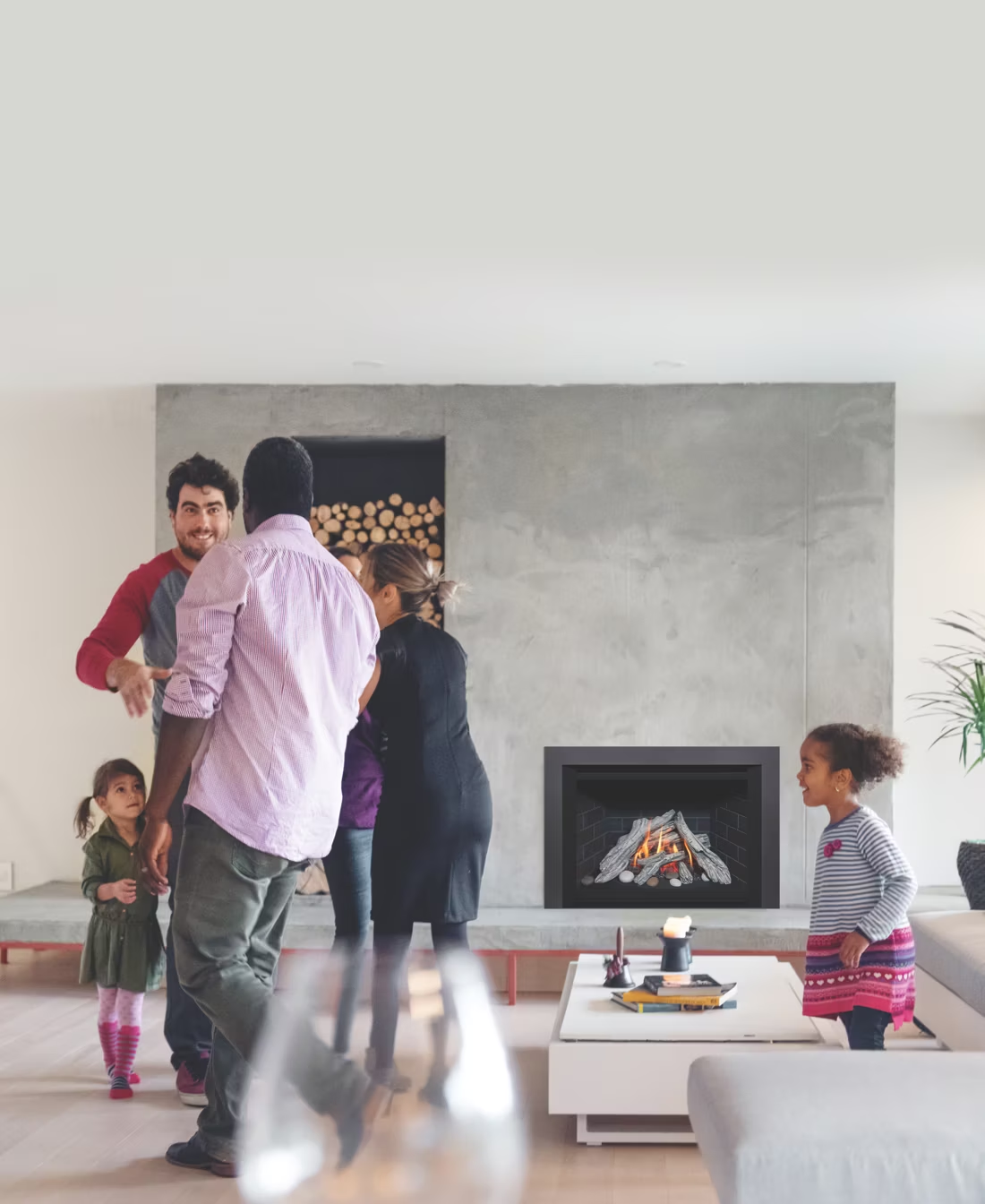
Three steps. No salesperson until you're ready.
Tell us about your project
Your zip code, your situation, and the fuel you're leaning toward—or let the answers point you to one.
See what's actually available
The brands dealers within 100 miles genuinely carry—real options, never a catalog mirage.
Get your dealer & Project Guide
A trusted local dealer, plus the free Project Guide & Parts List that names every component of the job.
Frequently Asked Questions
How much does a gas fireplace installation cost in Enterprise?
Most gas fireplace and insert installations in Enterprise run between roughly $3,500 and $9,500, depending on the unit and whether new gas line work is required. A gas log set or direct-vent insert added to an existing pre-fab fireplace box—common in Las Vegas Valley production homes from the 1990s and 2000s—sits on the lower end. A new built-in direct-vent fireplace for a remodel, with framing and a fresh gas line run from the meter, lands in the middle to upper range. Clark County requires a permit for the gas line and appliance install, which local retailers typically handle as part of the job.
Can I convert my existing fireplace to gas?
Yes, and it's a common project in Enterprise. Many homes built in the Las Vegas Valley during its rapid growth years came with standard wood-burning, pre-fab metal fireplace boxes rather than masonry hearths. Converting one of these to a gas log set or direct-vent gas insert is usually straightforward, since the existing chase and flue can often accommodate the new venting or liner. Costs typically run $3,500 to $7,500 depending on whether the home already has a nearby gas line or one needs to be extended by a licensed gas-fitter.
Do I need natural gas service to install a gas fireplace, or can I use propane?
Nearly every neighborhood in Enterprise has natural gas service through Southwest Gas Corporation, so most homeowners here aren't choosing between gas types the way someone in a rural, unserved area might. If you already have a gas water heater, range, or furnace, adding a fireplace to the existing line is usually simple. Propane is rarely needed in Enterprise itself, though it remains an option for a small number of properties on the outer edges of Clark County that fall outside the Southwest Gas service footprint.
Will my gas fireplace work during a power outage?
Most modern gas fireplaces will, as long as they use IPI (intermittent pilot ignition) with a battery backup—typically a set of AA batteries built into the control module that kick in automatically if Nevada Power Co's grid goes down, which does happen during summer monsoon storms and high-wind events in the valley. Valor units take a different approach: their pilot assembly generates its own electricity through the thermocouple, so there are no batteries to remember or replace. Ask your local dealer which ignition system is on any unit you're considering.
What's the difference between a gas fireplace, gas insert, and gas stove?
A gas fireplace is a fully built-in unit framed into a wall—common in new construction and remodels across newer Enterprise subdivisions. A gas insert slides into an existing fireplace opening, whether that's a masonry hearth or one of the pre-fab metal boxes builders used throughout the Las Vegas Valley, converting it into a sealed, efficient heat source. A gas stove is a freestanding cabinet-style unit that sits on the floor, useful in homes without an existing fireplace opening at all. For most Enterprise homeowners upgrading an existing fireplace, an insert is the most direct route.
Do I need a permit to install a gas fireplace in Enterprise?
Yes. Enterprise is unincorporated Clark County, so permits for both the appliance installation and any new gas line work go through the Clark County Building Department, and the gas line portion must be done by a licensed gas-fitter. Most established hearth retailers in the valley coordinate the permitting, gas line, and inspection as one package, which is one of the main reasons to go through a dealer rather than a handyman install.
What's the difference between vented and vent-free gas fireplaces?
Vented (direct-vent) gas fireplaces draw combustion air from outside and exhaust it back outside through a sealed pipe—they're the most common choice and the safest bet for indoor air quality, which matters in a valley that already deals with summer wildfire smoke and periodic air-quality advisories. Vent-free units burn fuel directly into the room without exterior venting; they're legal in Nevada but come with strict room-size and ventilation requirements, and some homeowners in tightly sealed, energy-efficient Enterprise homes find them less comfortable to live with. Ask a local dealer to walk through both options for your specific room.
How often should my gas fireplace be serviced?
Plan on an annual inspection, ideally in early fall before the cooler months. A technician checks the burner, pilot assembly, gas connections, and venting, and cleans the glass and interior. In Enterprise's desert environment, fine dust can work its way into venting components and burner ports over time, so annual service matters even though gas appliances need far less maintenance than a wood-burning setup. Expect to pay roughly $150 to $250 for a standard inspection and cleaning.
Gas vs. electric fireplace—which makes more sense in Enterprise?
Gas fireplaces deliver real, radiant heat output and work during power outages if equipped with battery-backup or self-powering ignition—a real consideration given the summer storms that occasionally knock out Nevada Power Co service. Electric fireplaces cost far less to install (often under $1,000 for a plug-in insert or built-in unit), produce zero combustion byproducts, and can be placed almost anywhere without venting or a gas line. In Enterprise's mild climate, where heating needs are modest most of the year, electric units work well as supplemental ambiance in bedrooms or secondary rooms, while gas remains the better fit for a great room or primary living space where real heat output and a live flame matter. Local retailers carry both and can help weigh the tradeoff against your electric utility's rate.
Can I put a TV above my fireplace?
Yes—with an asterisk. Fireplaces are hot and TVs don't like heat. Either put a mantel between them to deflect rising warmth, or choose a fireplace with heat-management technology that creates a cool zone on the wall above—the wall stays around 125 degrees, barely warm, while the room still gets full heat. If you like clean lines and don't want a mantel, heat management is the answer.
Is my gas fireplace wasting gas?
If it was installed more than 15 years ago, probably. Older gas fireplaces keep a standing pilot light burning all the time, and that little flame can cost a couple hundred dollars a year. Newer models use pilot-on-demand ignition—the pilot lights only when you use the fireplace and goes out when you turn it off.
What is an in-home preview and do I need one?
It's a visit where a hearth professional measures your space, confirms the model you picked actually works in your home, and walks the specs—framing, gas line, venting, finish work—before anything is ordered. Some details you just can't know until you see the house. Never make a down payment without one; it's the single most-skipped step that burns buyers.
How much should I budget for a fireplace?
For an average home—covering the fireplace, the vent pipe, and basic installation—a budget between $3,900 and $5,500 gives you a lot of options across wood, gas, and pellet. By the time you add finish work, gas line, and electrical, the average complete installation lands between $5,000 and $12,000 all-in. In a remodel or new build, a good rule is to put about 2.5% of the total project cost toward the fireplace.
Nearby Dealers
Hearth shops serving Enterprise and the surrounding area. Every listing shows whether it is a WhyFire partner, a dealer we have verified as authorized for the brands we recommend, or a local business carrying hearth products. No manufacturer pays for placement. How we verify dealers →
Premier Bbq & Fire
Proficient Patios & Backyard Designs
Sunshield Awning Co.
Vista Bbq Outfitters
Penguin Fireplace & Design
Silver State Specialties, LLC
Southwest Plumbing Supply- Mesquite
Find your gas fireplace in Enterprise, Nevada.
Tell us about your home and we'll match you with a trusted local dealer and send over a free Project Guide & Parts List—the exact fireplace, insert, or stove plan for your Enterprise home, including the vent kit.
Find Your Fireplace →