
Set-and-forget heat for Elko County's high desert winters.
From Elko and Spring Creek out to Wells, Carlin, and West Wendover, pellet stoves deliver thermostat-steady heat through the long Great Basin winter—no wood splitting, no overnight tending. Find the right unit and connect with a trusted local dealer.
Every Project Starts From One of These Five Situations
Consistent warmth without babysitting a fire.
Elko County sprawls across roughly 17,000 square miles of Great Basin high desert—one of the largest counties in the country—with valley floors sitting around 5,000 feet and the Ruby Mountains rising past 11,000. Winters here run long and cold: an average low near 16°F and a winter heating load that puts Elko County in the same territory as places like Bismarck, ND or Fargo. Ranch homes, ag properties, and subdivisions like Spring Creek all face the same reality—a lot of cold nights to get through between fall and late spring.
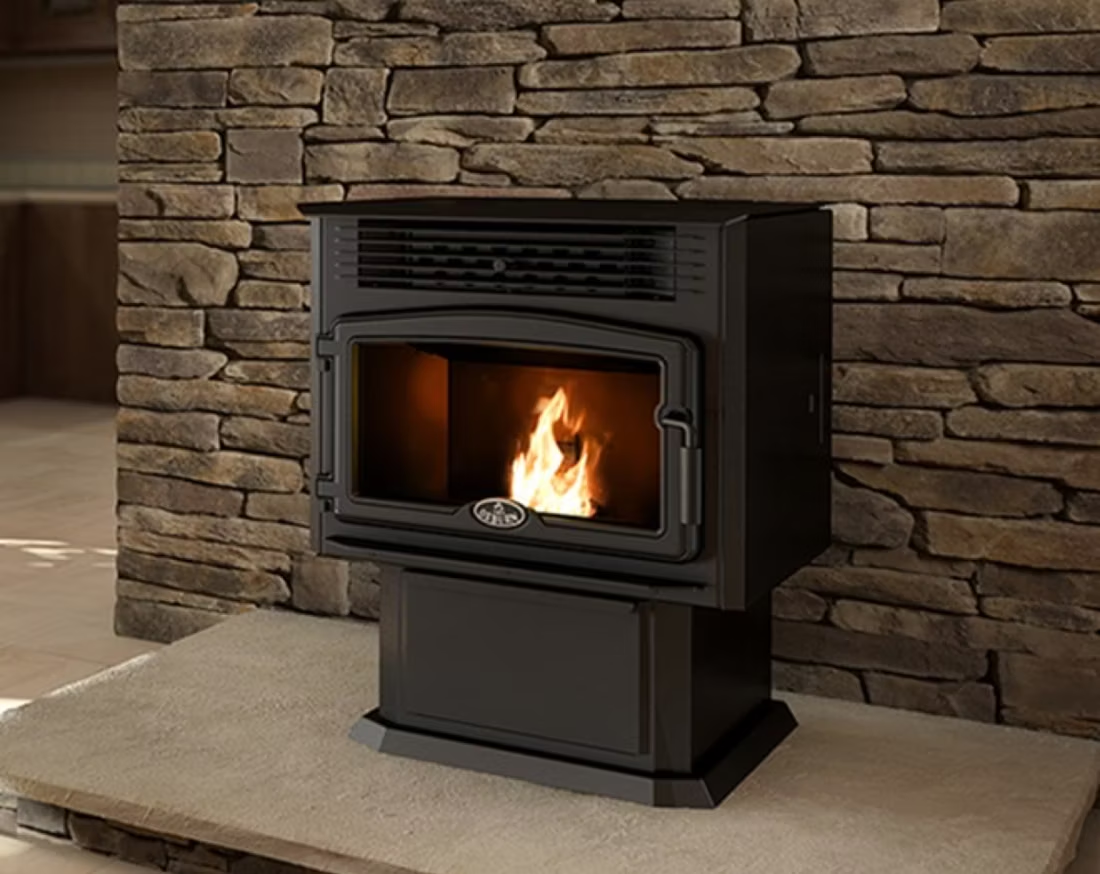
Traditional wood heat has deep roots here, with pinyon, juniper, and sagebrush all common as cut firewood on Great Basin range and BLM land, but a lot of Elko County households—especially those without the time or storage space for a full cord supply—lean on pellet stoves instead. Bagged pellets from brands like Bear Mountain, Lignetics, and Forest Energy are widely stocked at farm and hardware stores along the I-80 corridor, so restocking the hopper doesn't require a trip to Reno or Salt Lake. A properly sized pellet stove holds a steady, thermostat-controlled burn through single-digit nights without the up-all-night reloading a wood stove demands.
Three steps. No salesperson until you're ready.
Tell us about your project
Your zip code, your situation, and the fuel you're leaning toward—or let the answers point you to one.
See what's actually available
The brands dealers within 100 miles genuinely carry—real options, never a catalog mirage.
Get your dealer & Project Guide
A trusted local dealer, plus the free Project Guide & Parts List that names every component of the job.
Frequently Asked Questions
How much does a pellet stove installation cost in Elko County?
Most pellet stove installations across Elko County land somewhere between $3,000 and $6,500 for a freestanding unit, depending on the stove, the length of venting run, and whether an existing masonry fireplace needs a liner for a pellet insert conversion. Homes on ranch properties or outlying areas around Wells, Jarbidge, or Mountain City sometimes see a modest travel charge added to the quote given the distances involved. A local dealer will walk your home and give you a firm number—hopper size and venting path are the two biggest cost drivers, not the stove's sticker price.
What size pellet stove do I need for my home?
Sizing depends on square footage, ceiling height, and how drafty the home is—a common issue in older ranch construction around Elko County. As a rough guide, small pellet stoves (up to 1,000 sq ft) suit a single living area or a smaller Spring Creek home, medium stoves (1,000–2,000 sq ft) cover most main floors, and large stoves (2,000+ sq ft) can carry a well-insulated whole house. Homes at higher elevation toward the Ruby Mountains foothills or up near Jarbidge should size up, since the heating load only gets tougher the higher you go. A local dealer will size your space for free during an in-home visit—oversizing wastes pellets and undersizing leaves you cold on the worst nights.
Where can I find certified pellet stove installers near me?
Look for NFI (National Fireplace Institute) certified technicians—that credential covers proper venting, clearance, and combustion-air setup for pellet appliances specifically. Given how spread out Elko County is, most certified installers are based in or around the city of Elko and cover a wide service radius, including Spring Creek, Carlin, and Wells; expect a travel charge for installs farther out toward West Wendover or Jarbidge. Pellet stoves rely on electronic ignition, an auger motor, and a combustion blower, so an installer familiar with the specific appliance matters more here than with a simple wood stove—mismatched venting is the most common source of nuisance shutdowns.
What's the difference between a pellet stove and a pellet insert?
A pellet stove is a freestanding appliance that sits on its own hearth pad and vents through a wall or roof—it can go almost anywhere with the right clearances, which makes it a good fit for ranch homes and additions without an existing fireplace. A pellet insert is built to slide into an existing masonry fireplace opening, using a stainless liner run up the old chimney and converting a drafty open hearth into a sealed, high-efficiency heat source. For Elko County homes with an older masonry fireplace already in place, an insert is usually the more cost-effective upgrade; homes without one typically go with a freestanding stove instead.
Do I need a permit to install a pellet stove in Elko County?
Yes—new pellet stove installations require a building permit through the Elko County building department, covering the venting path, hearth clearances, and electrical connection for the unit. Within the city of Elko, permits are handled at the city level; in unincorporated parts of the county, they run through the county office. Most established local dealers include the permit and inspection as part of their installation package, so you're not left coordinating it yourself.
What's the best pellet stove for Elko County's climate?
For the cold, dry winters common across Elko County, look at higher-BTU pellet stoves from brands like Harman or Quadra-Fire, which are built for longer burn times and consistent output at low outdoor temperatures. Homes at higher elevation—toward the Rubies or up near Jarbidge—benefit from a larger hopper capacity so you're not refilling every few hours on the coldest nights. Pellet fuel itself is easy to source locally, with Bear Mountain, Lignetics, and Forest Energy all commonly stocked at regional farm and hardware stores. Talk to a local dealer about your square footage and elevation for a specific model recommendation.
How often does a pellet stove need cleaning and maintenance?
Pellet stoves need more frequent light maintenance than wood stoves but far less deep cleaning. Plan on emptying the ash pan and wiping the glass every few days during regular use, a full cleaning of the burn pot, auger, and exhaust fan every few weeks, and a professional annual inspection before each heating season—ideally in late summer ahead of Elko County's cold snap. Neglecting the exhaust fan or auger is the most common cause of pellet stoves losing efficiency or shutting down mid-winter, so staying on top of this schedule matters more than it does for a simple wood-burning unit.
Where can I buy pellets in Elko County?
Bagged pellets from Bear Mountain, Lignetics, and Forest Energy are commonly stocked at hardware and farm supply stores in and around Elko, and many households buy several tons at a time ahead of winter given how far it can be to restock from outlying properties around Wells or Jarbidge. Buying early in the fall—before the first cold snap drives demand up—is the standard local strategy, and some dealers offer better per-ton pricing on early bulk orders.
Pellet stove vs. wood stove—which is right for my Elko County home?
Wood stoves work without electricity, which matters during winter storms when rural power lines around Elko County can go down, and pinyon, juniper, and sagebrush are all locally available firewood species on Great Basin range and BLM land. Pellet stoves need electricity to run the auger and combustion blower—a battery backup can bridge a short outage, but they're not a true off-grid heat source. In exchange, pellet stoves offer thermostat-controlled, hands-off heat and none of the splitting, stacking, or hauling that wood requires—a real advantage for ranch households without time to manage a woodpile. For homes with reliable power and a priority on convenience, pellet usually wins; for remote properties where outages are a real concern, wood is worth serious consideration as at least a backup.
Why is my open fireplace making my house colder?
Open fireplaces suck—literally. As the fire burns, it consumes air your furnace already paid to heat and pulls it out through the chimney, so the house is actually colder after the fire goes out than before you lit it. An insert fixes this: it seals the chimney, puts fixed glass across the front, and turns that hole in your house into a real heat source.
Are pellet stoves loud?
They make some noise—there are two fans running plus an auger motor that turns as it feeds pellets. But there's a real range: premium models are engineered quiet, and the best offer a whisper-quiet mode you can comfortably watch TV next to. If noise matters in your room, ask to hear a stove running before you buy—it's a five-minute test that saves years of annoyance.
How much should I budget for a fireplace?
For an average home—covering the fireplace, the vent pipe, and basic installation—a budget between $3,900 and $5,500 gives you a lot of options across wood, gas, and pellet. By the time you add finish work, gas line, and electrical, the average complete installation lands between $5,000 and $12,000 all-in. In a remodel or new build, a good rule is to put about 2.5% of the total project cost toward the fireplace.
Can I install a fireplace myself?
If you're putting a fire in your house on purpose, it's best to work with an expert. Unless you're genuinely experienced in framing, gas line, vent pipe, and the national code on clearances to combustibles, have a professional do it—and ideally the same company that sells you the fireplace, so warranty, service, and liability all live under one roof.
Stove and Fireplace Dealers in Elko County
Pellet Brands Stocked Around Elko County
Manufacturers will point you to the nearest stocking dealer.
Find your pellet stove in Elko County.
Tell us a bit about your home and we'll match you with a trusted local dealer and send over a free Project Guide & Parts List—the exact parts, vent kit, and recommended installer for your pellet stove project in Elko County.
Find Your Fireplace →