
Find your pellet stove in York County.
Steady, low-maintenance heat for the flat, wind-exposed winters of York County—from the city of York to Waco, McCool Junction, and the farms in between. Get matched with a trusted local dealer.
Every Project Starts From One of These Five Situations
Consistent heat that doesn't demand a woodpile.
York County sits on the open plains of south-central Nebraska, where winter winds sweep across the fields with nothing to slow them down and average lows settle around 14°F. With a heating season on par with Madison, Wisconsin, homes here need heat that's dependable through long stretches of cold, not just for the occasional cold snap. Pellet stoves have found a real foothold in the county for exactly that reason: load the hopper, set the thermostat, and the stove maintains a steady output without the daily work of splitting oak or hickory rounds.
For homeowners in York, Waco, or out on the county's farmsteads, pellets also solve a storage problem that firewood doesn't: a pallet of bagged pellets from a brand like Lignetics or Indeck Energy Services takes up a fraction of the space a cord of wood does, and stays dry in a garage or outbuilding without seasoning. Combined with the automated feed and thermostatic control, that makes pellet stoves a strong fit for the county's rural properties and in-town homes alike, especially where a homeowner wants supplemental zone heat without tending a fire multiple times a day.
Three steps. No salesperson until you're ready.
Tell us about your project
Your zip code, your situation, and the fuel you're leaning toward—or let the answers point you to one.
See what's actually available
The brands dealers within 100 miles genuinely carry—real options, never a catalog mirage.
Get your dealer & Project Guide
A trusted local dealer, plus the free Project Guide & Parts List that names every component of the job.
Frequently Asked Questions
How much does a pellet stove installation cost in York County?
A typical pellet stove or insert installation in York County falls in the $4,500 to $7,500 range, depending on the unit, whether you're installing into an existing masonry fireplace or as a freestanding stove, and the venting path required. Installing a pellet insert into an existing chimney opening is usually on the lower end since much of the structural work is already in place. New freestanding installations in a home without an existing fireplace—common on newer county properties—run toward the higher end once wall penetration and venting are factored in. A local dealer will give you a firm number after seeing your space.
What size pellet stove do I need for my home?
Sizing depends on square footage, insulation, and whether the stove is your primary heat or a supplemental zone heater. York County's older farmhouses and exposed rural sites tend to lose heat faster in the near-constant wind than a comparably sized in-town home in York, so sizing up slightly is common advice from local dealers. Smaller units (under 1,000 sq ft) suit a single large room or open-concept living area; mid-size units (1,000-2,000 sq ft) cover most main living spaces; larger units can handle a well-insulated whole home. A dealer sizing your space in person will also account for ceiling height and how open the floor plan is—both matter as much as square footage.
Where can I find pellet stove dealers near me in York County?
Look for dealers who carry established pellet stove brands and can speak specifically to sourcing fuel locally—pellets from Lignetics and Indeck Energy Services are the regional standards stocked by area farm and hardware suppliers. A qualified installer will also be comfortable pulling the required building permit and sizing the direct-vent run for your specific wall or roof configuration. Avoid installs from anyone who isn't a certified hearth professional; pellet stoves have specific electrical and venting requirements that a general contractor may not be familiar with.
What's the difference between a pellet stove and a pellet insert?
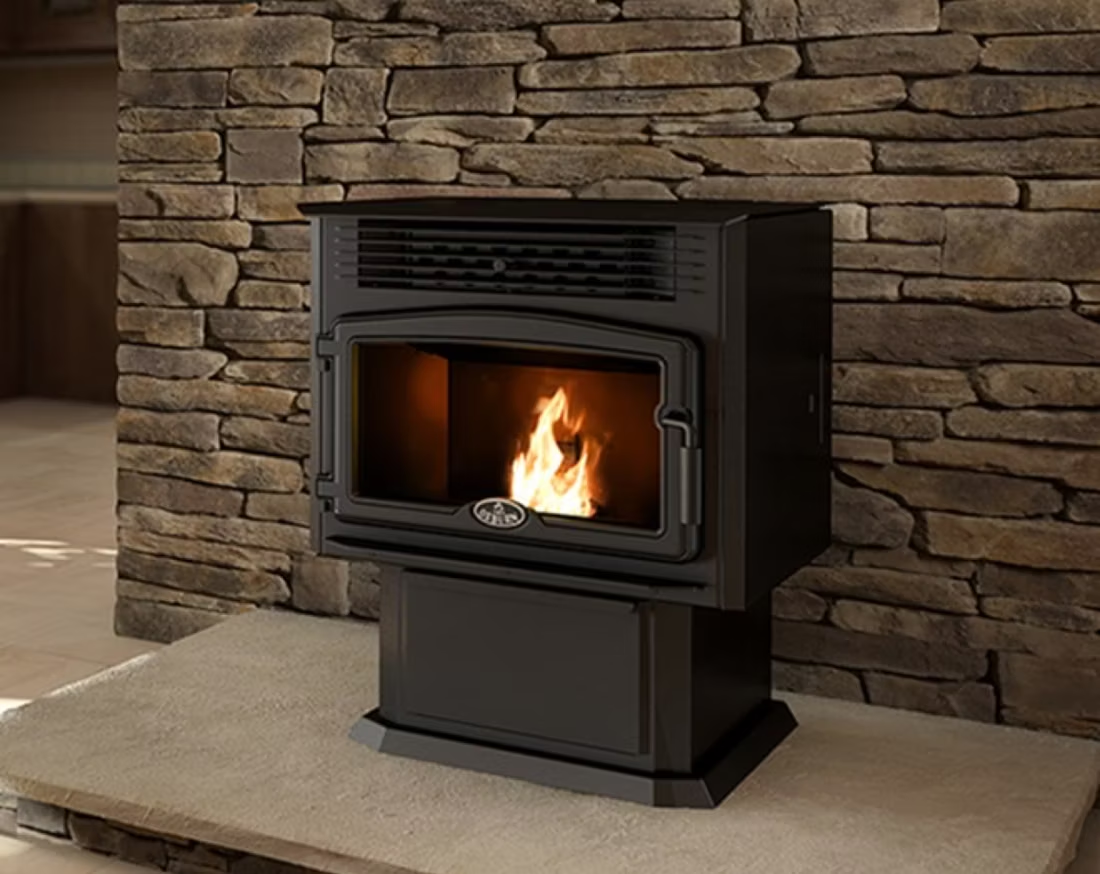
A pellet stove is a freestanding unit that sits on its own hearth pad and vents through a wall or existing chimney chase—it can go almost anywhere with the right clearances. A pellet insert is built to slide into an existing masonry fireplace opening, turning an old, inefficient hearth into a controlled, thermostatic heat source. For older homes in York or the smaller towns around the county with an existing brick fireplace, an insert is usually the more cost-effective path since it reuses the chimney. Homes without an existing fireplace opening typically go with a freestanding stove instead.
Do I need a permit to install a pellet stove in York County?
Yes—a building permit is generally required for a new pellet stove installation in York County, covering the appliance placement, clearances, and venting termination. Most local dealers handle the permit application as part of the installation process, so you're not left navigating it alone. Because York County has no air quality non-attainment designation or winter burn restrictions like some western states, there are no curtailment periods to worry about—you can run your pellet stove on the coldest nights without checking an advisory first.
What's the best pellet stove for York County's climate?
With average winter lows around 14°F and a heating season that runs long by plains standards, look for a pellet stove with a solid BTU output and a hopper large enough to get you through an overnight burn without a refill—a 40 to 60 pound hopper is common in this climate zone. Models with a good reputation for running clean on regionally available pellets (Lignetics and Indeck Energy Services both distribute into the area) tend to perform more consistently than units tuned for premium low-ash pellets that may not be locally stocked. Ask your dealer which brands they've had the best service experience with locally—that track record matters more than spec-sheet comparisons.
How often does a pellet stove need cleaning and maintenance?
Pellet stoves need more frequent light cleaning than wood stoves but far less structural maintenance. Plan on emptying the ash pan every few days during regular winter use, cleaning the burn pot weekly to keep the auger feeding pellets efficiently, and scheduling a full professional inspection and deep clean once a year, typically before the season starts in the fall. For York County homes running a pellet stove as primary heat through the full winter, a mid-season service check is a reasonable add if you're burning heavily. The dealers who sell pellet stoves locally typically offer this service directly.
Where can I buy pellets in York County?
Bagged pellets from Lignetics and Indeck Energy Services are the two regional brands most commonly stocked by farm supply and hardware retailers serving York County. Prices generally run in line with regional Midwest averages, and buying a season's supply early in the fall—before demand peaks during the first cold snap—is the standard local strategy to avoid shortages. Because pellets store easily in a garage or outbuilding without seasoning like firewood, many county homeowners buy a full winter's worth (typically 2-3 tons for a primary heat setup) in one trip.
Pellet stove vs. wood stove—which is right for my York County home?
Wood stoves burn cordwood—often locally sourced oak, hickory, or cottonwood—work without electricity, and offer the lowest ongoing fuel cost if you're cutting or buying wood cheaply, which matters during a winter storm power outage on the plains. Pellet stoves require electricity to run the auger and blower, so they're not a backup option during an outage unless paired with a battery backup, but they offer far more consistent, hands-off heat output and none of the splitting, stacking, and seasoning work wood requires. For York County homeowners without easy access to firewood or without the time to manage a woodpile, pellet is often the easier daily choice. For rural properties where power outages during ice storms are a real concern, many homeowners keep a wood stove as backup even if pellet is their primary unit.
What's the difference between an insert and a zero-clearance fireplace?
An insert is a fireplace that slides into a pre-existing wood-burning fireplace—if you don't have one, there's nothing to insert it into. A zero-clearance fireplace is built into a framed wall, which makes it the answer for remodels and new construction. Simple test: existing masonry fireplace means insert; blank or framed wall means zero-clearance.
Why is my open fireplace making my house colder?
Open fireplaces suck—literally. As the fire burns, it consumes air your furnace already paid to heat and pulls it out through the chimney, so the house is actually colder after the fire goes out than before you lit it. An insert fixes this: it seals the chimney, puts fixed glass across the front, and turns that hole in your house into a real heat source.
How much should I budget for a fireplace?
For an average home—covering the fireplace, the vent pipe, and basic installation—a budget between $3,900 and $5,500 gives you a lot of options across wood, gas, and pellet. By the time you add finish work, gas line, and electrical, the average complete installation lands between $5,000 and $12,000 all-in. In a remodel or new build, a good rule is to put about 2.5% of the total project cost toward the fireplace.
Can a fireplace actually lower my heating bill?
Yes—by creating a comfort zone. A furnace heats every square foot of the house just to warm the one room you're in; a gas fireplace on low burns roughly a sixth of the gas a typical furnace does. Set the furnace around 55–60 degrees as a baseline, then heat the rooms your family actually uses. Families who heat this way commonly save $20–$60 a month.
Stove and Fireplace Dealers in York County
Pellet Brands Stocked Around York County
Manufacturers will point you to the nearest stocking dealer.
Get your York County pellet stove Project Guide & Parts List.
Tell us about your home and we'll match you with a trusted local dealer and put together a free Project Guide & Parts List for your pellet project—the exact parts, including the vent kit, and the dealer we recommend for the install.
Find Your Fireplace →